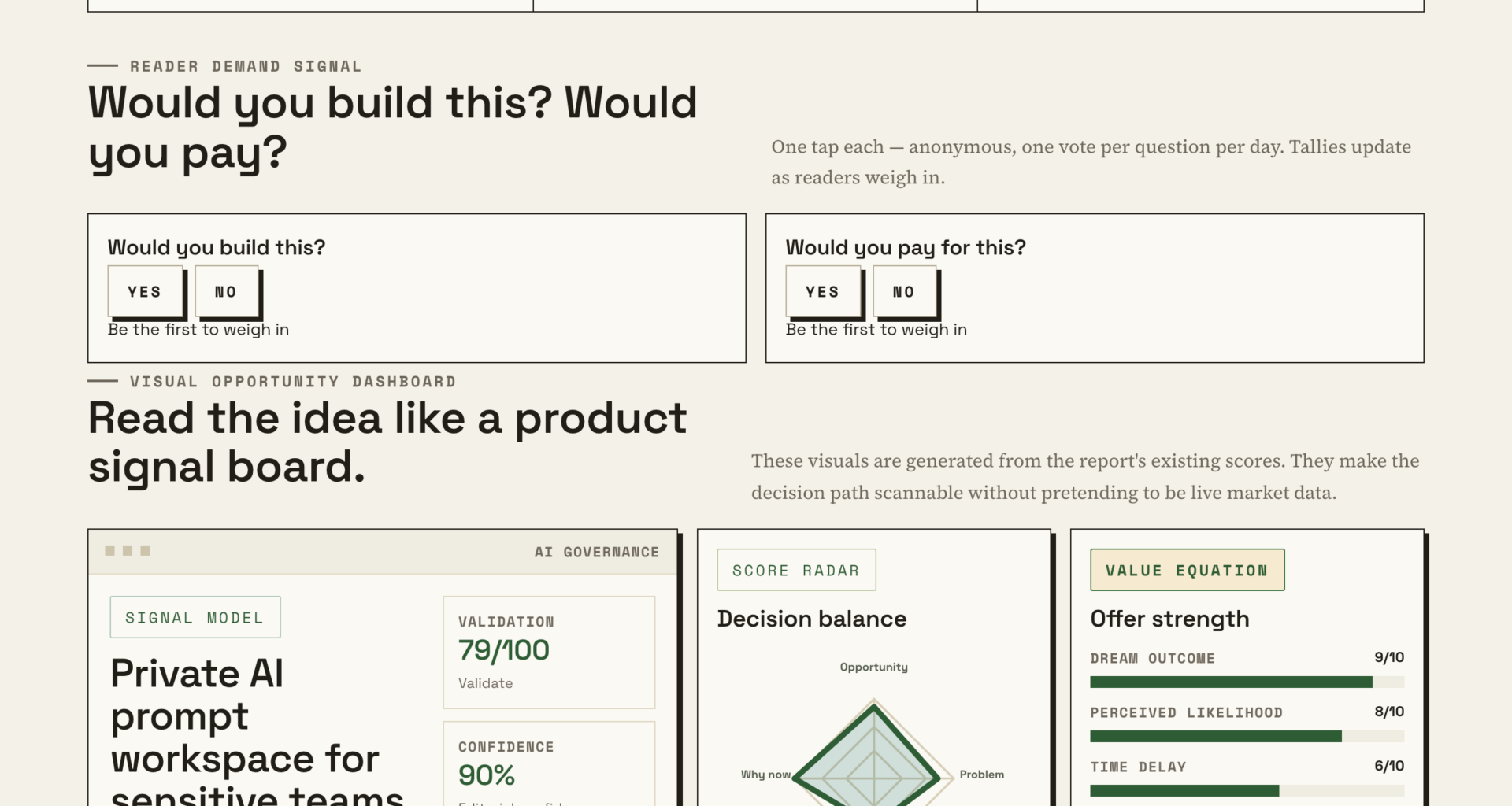

📊 Full opportunity report: Private AI Prompt Workspace For Sensitive Teams on IdeaNavigator AI — validation score, market gap, and execution plan.

Get business pricing on tech for your team
- Business-only prices and quantity discounts
- Tax-exempt purchasing
- Multiple users, one account, clear invoices
TL;DR
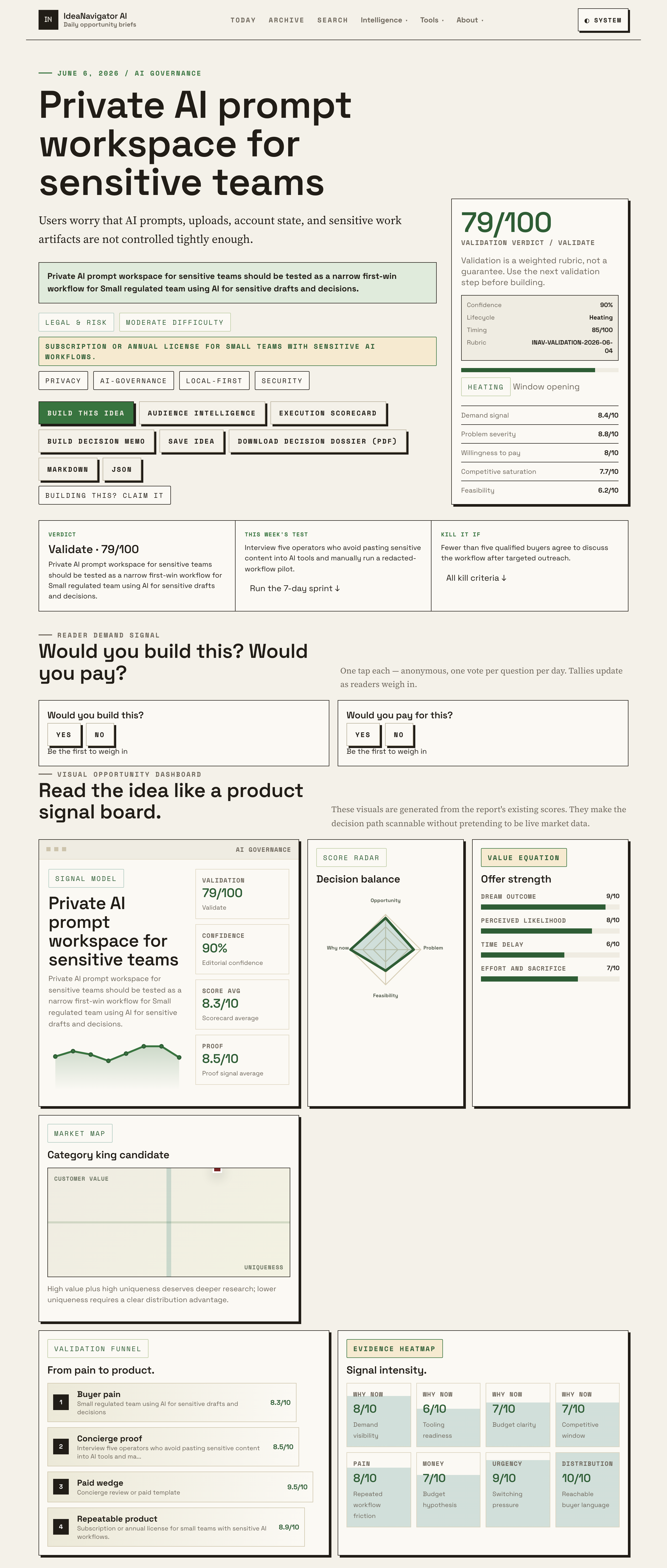
IdeaNavigator AI is testing a new private prompt workspace tailored for small teams managing sensitive data. This local-first tool aims to enhance control, security, and auditability in AI workflows. The development addresses growing concerns over data privacy and compliance.
IdeaNavigator AI has announced the start of pilot testing for a private, local-first prompt workspace designed specifically for small regulated teams working with sensitive AI workflows. This development aims to address concerns about data control, security, and auditability in AI-assisted decision-making processes.
The new workspace focuses on providing teams with tools such as redaction checklists, source notes, review statuses, and exportable audit logs. It is intended for teams that require tight control over sensitive prompts, uploads, and artifacts generated during AI interactions. The initial testing involves five operators who have avoided pasting sensitive data into AI platforms, instead opting for manual redaction workflows, according to IdeaNavigator AI.
The product is designed as a subscription or annual license offering tailored for small teams needing enhanced data governance. Its primary market is AI governance, especially among regulated industries where data privacy and compliance are critical.
Why Controlled AI Workflows Matter for Sensitive Data
This development addresses a growing need among small, regulated teams to maintain strict control over sensitive information when using AI tools. As AI adoption accelerates in sectors like healthcare, finance, and legal services, ensuring data privacy, auditability, and compliance becomes essential. The private workspace aims to reduce risks associated with data leaks, unauthorized access, and compliance violations, making AI safer for sensitive workflows.
Products Worth Considering

Samsung 27-inch Odyssey OLED G6 QHD Gaming Monitor

Logitech MX Mechanical Wireless Illuminated Keyboard, Tactile Quiet, Graphite

Samsung Odyssey OLED G5 27-Inch QHD Gaming Monitor
As an affiliate, we earn on qualifying purchases.
Increasing Demand for Data-Controlled AI Tools in Regulated Sectors
Recent trends show more organizations in regulated industries integrating AI into their workflows, yet many remain cautious about data security. Traditionally, teams manually redact or obscure sensitive information before inputting data into AI platforms, which is time-consuming and error-prone. The current development by IdeaNavigator AI responds to this challenge by offering a dedicated environment that prioritizes local data control and audit trails.
Previous solutions have focused on cloud-based AI services, raising concerns about data privacy. This new workspace aims to provide a local-first alternative, enabling teams to work securely while maintaining necessary records for audits and compliance checks.
“This tool could significantly reduce the risk of data leaks and improve compliance for teams handling sensitive information.”
— an anonymous researcher
Details on Deployment and User Adoption Still Unclear
It is not yet clear how widely the private workspace will be adopted beyond the initial pilot, or how it will integrate with existing AI platforms. The scope of features and user interface details remain under development, and the effectiveness of the tool in real-world scenarios has yet to be validated through broader testing.
Next Steps Include Broader Pilot Testing and Feedback
IdeaNavigator AI plans to expand pilot testing to additional small teams, gather user feedback, and refine the workspace before a wider release. Future updates may include enhanced automation, integration with popular AI platforms, and expanded compliance features. Monitoring how early adopters use the tool will be crucial to shaping its final form.
Key Questions
Who is the target user for this private AI prompt workspace?
The primary target users are small, regulated teams that handle sensitive data and require strict control over AI workflows, including legal, healthcare, and financial sectors.
What features will the workspace include?
Initial features include redaction checklists, source notes, review statuses, and exportable audit logs to ensure transparency and control over sensitive prompts and data.
When will the product be generally available?
There is no confirmed release date yet. The current phase involves pilot testing, with broader availability expected after feedback and refinement.
How does this differ from existing AI tools?
Unlike cloud-based AI platforms, this workspace emphasizes local data control and comprehensive audit trails, tailored specifically for sensitive workflows in regulated environments.
Will this solution integrate with other AI services?
Integration plans are under consideration, but details remain undisclosed. Future versions may support broader platform compatibility.
Source: IdeaNavigator AI