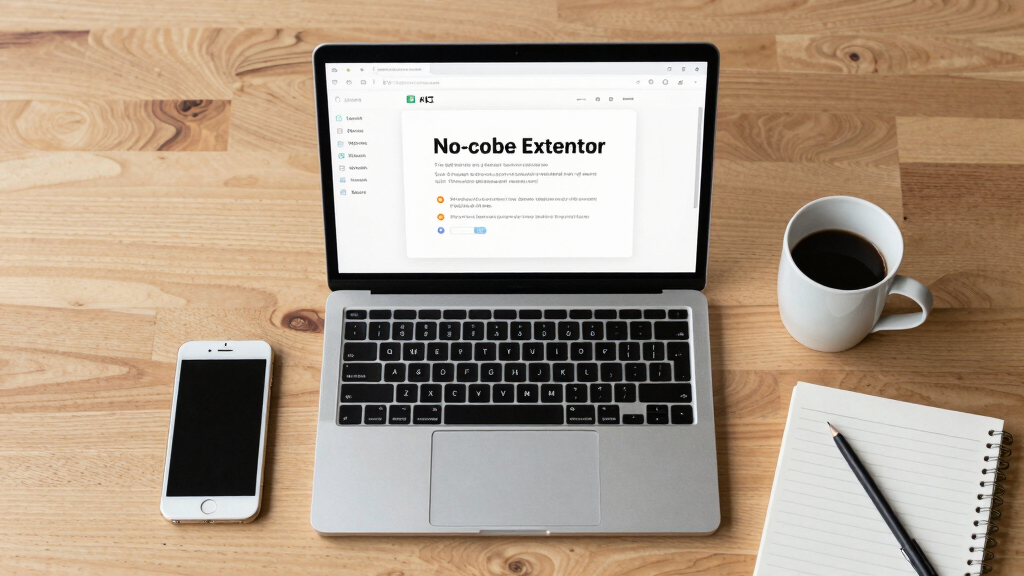

📊 Full opportunity report: How Non-Developers Can Build Chrome Extensions With No-Code Tools on IdeaNavigator AI — validation score, market gap, and execution plan.

Get business pricing on tech for your team
- Business-only prices and quantity discounts
- Tax-exempt purchasing
- Multiple users, one account, clear invoices
TL;DR
A new web app enables non-developers to generate Chrome extensions using natural language descriptions. This leverages AI to lower technical barriers and expand browser automation creation.
A new no-code platform now allows non-developers to create Chrome extensions by describing desired browser behaviors in natural language, eliminating the need for coding knowledge. This development opens the door for prosumers, marketers, and internal teams to build custom browser automations without hiring developers or understanding Manifest V3.
The platform is designed for users who want to implement simple browser automations, such as highlighting prices or scraping content, without writing code. It generates valid Manifest V3 extensions—including manifest files, content scripts, and UI components—based on user prompts. The system offers one-click local installation and a guided process for publishing to the Chrome Web Store, with options for private distribution.
Leveraging AI code generation, the platform translates natural language descriptions into functional extensions, starting with a limited set of capabilities like DOM manipulation, page scraping, and API calls. It offers a freemium SaaS model, with free tiers for basic use and paid plans ($12-49/month) for advanced features, team sharing, and publishing assistance. The initiative aims to democratize extension creation, especially for users who find traditional development pathways too complex or costly.
Implications for Browser Automation Accessibility
This development significantly lowers the technical barriers for creating Chrome extensions, enabling a broader range of users—such as marketers, internal ops teams, and indie hackers—to craft custom browser tools. It could accelerate the adoption of browser automation, improve productivity, and foster innovation in how users personalize their browsing experience. Additionally, it signals a shift toward AI-assisted development in the no-code space, expanding the reach of automation technology beyond traditional developers.
As an affiliate, we earn on qualifying purchases.
Growing No-Code and AI-Driven Extension Tools
The rise of no-code and low-code platforms has transformed software development, with the market projected to reach approximately $28.75 billion by 2026. In the Chrome extension ecosystem, over 190,000 extensions are available, but most require technical expertise to build or customize. Recent launches of AI-powered extension builders like Kromio, Emergent, Toolmark, and Manus in 2025-2026 indicate increasing demand for accessible creation tools. This trend aligns with broader shifts in AI-enabled app development, where natural language prompts can generate functional software components, making browser automation more accessible to non-developers.
“The new platform could democratize extension development, enabling users who lack coding skills to create powerful browser automations.”
— an anonymous researcher
As an affiliate, we earn on qualifying purchases.
Uncertainties Around Safety and Adoption
It is not yet clear how widely this platform will be adopted by non-technical users or how effectively it will address security concerns related to generated extensions. The safety and review process for user-created extensions remains a concern, especially for those distributing publicly. Additionally, the scalability of the platform’s capabilities beyond initial features and its ability to handle complex automations are still developing aspects.
As an affiliate, we earn on qualifying purchases.
Next Steps for Platform Validation and Expansion
The platform plans to validate its approach through a landing page offering custom extension creation services, measuring user engagement and retention. Future updates may include expanding supported capabilities, integrating more advanced AI prompts, and scaling the publishing process. Monitoring user feedback and extension performance will be crucial to refining the service and ensuring safe, reliable automation tools for non-developers.
AI-powered Chrome extension creator
As an affiliate, we earn on qualifying purchases.
As an affiliate, we earn on qualifying purchases.
Key Questions
Can non-developers create complex Chrome extensions with this tool?
Currently, the platform focuses on simple automations like DOM manipulation and scraping. Complex extensions may require additional development or manual coding, but future updates could expand capabilities.
Is the generated extension safe to install and use?
The platform generates extensions with vetted capabilities and minimal permissions to enhance safety, but users should review generated code before installation, especially for public distribution.
How does the platform handle Chrome Web Store publishing?
It offers an assisted process for packaging and submitting extensions, including private distribution options for teams and enterprises, with plans to streamline submission workflows further.
What are the costs involved in using this no-code extension builder?
The service offers a free tier with usage caps and paid monthly plans ranging from $12 to $49 for unlimited builds, team sharing, and publishing support.
When will more advanced automation features be available?
Details are still emerging, but the platform aims to expand its capabilities based on user feedback and demand, potentially adding more complex automation options in future updates.
Source: IdeaNavigator AI
Halloween Picks
halloween
As an affiliate, we earn on qualifying purchases.