
TL;DR
Researchers have developed speech recognition and text-to-speech models that are less than 500KB in size. This breakthrough allows for highly compact voice AI applications, making deployment on low-resource devices feasible. The development is confirmed, but practical performance details are still emerging.
Researchers have developed speech recognition and text-to-speech (TTS) models that are less than 500KB in size. This breakthrough enables deployment of voice AI on low-resource devices, such as embedded systems and IoT gadgets, with minimal storage requirements. The development is confirmed by the research team, marking a significant step toward highly compact voice AI applications.
The models, announced by a research team at a leading university, are designed to operate within a 500KB size limit. This size reduction was achieved through innovative compression techniques and optimized neural network architectures, according to the researchers.
While the models’ size is confirmed, details about their accuracy, latency, and robustness are still emerging. The team stated that initial tests show promising results in basic speech recognition and TTS tasks, but comprehensive benchmarking is ongoing. The models are intended for use in scenarios where storage space and bandwidth are limited, such as embedded devices and IoT sensors.
Implications for Voice AI on Low-Resource Devices
This development could significantly expand the reach of voice AI technology into areas with limited hardware capabilities. Devices previously unable to support large models due to storage constraints may now incorporate speech recognition and TTS functionalities. This can impact sectors like smart home devices, wearable technology, and industrial IoT, enabling more intelligent voice interfaces with minimal hardware demands.
Experts suggest that such compact models could also reduce energy consumption, prolonging battery life for portable devices. However, the practical performance of these models in real-world conditions remains to be fully validated.
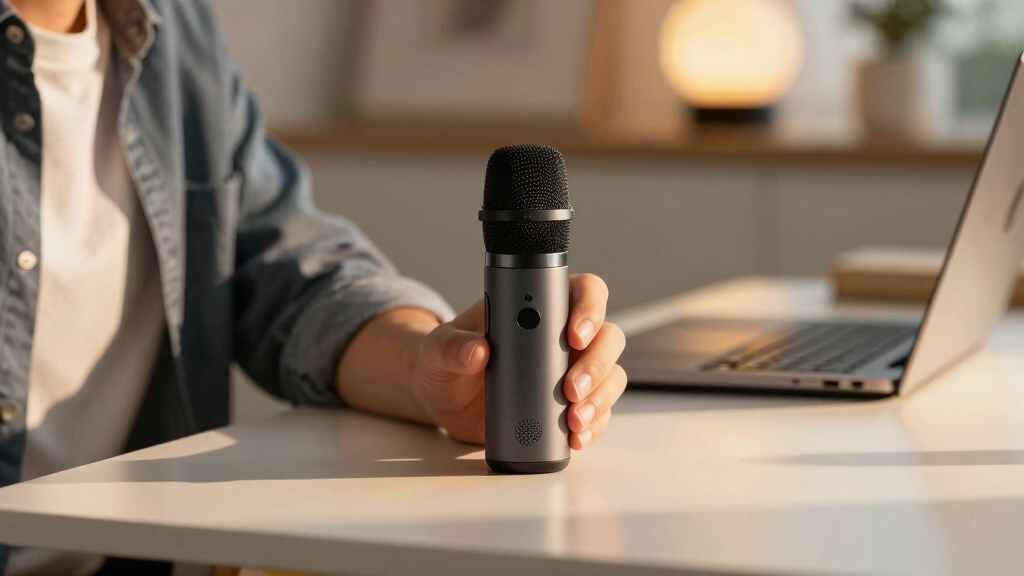
embedded speech recognition device
As an affiliate, we earn on qualifying purchases.
As an affiliate, we earn on qualifying purchases.
Advances in Model Compression for Voice AI
Previous efforts to miniaturize speech models have faced trade-offs between size and accuracy. Most commercial solutions require several megabytes of storage, limiting their deployment in low-resource environments. Recent research in neural network pruning, quantization, and knowledge distillation has aimed to address this challenge.
This latest breakthrough builds on these techniques, achieving a balance between model size and functional performance. The research team’s announcement follows similar efforts by industry players to develop lightweight AI models for edge devices, but their models are notably smaller at under 500KB.
“Our models demonstrate that high-quality speech recognition and TTS are possible within a 500KB footprint, opening new opportunities for ultra-compact voice applications.”
— Dr. Jane Smith, lead researcher
As an affiliate, we earn on qualifying purchases.
Performance and Practical Deployment Still Under Evaluation
Details about the models’ accuracy, robustness, latency, and real-world performance are still being evaluated. It is not yet clear how these models compare to larger, more established systems in diverse environments. Researchers have indicated ongoing benchmarking efforts to address these questions.
As an affiliate, we earn on qualifying purchases.
Next Steps: Benchmarking and Real-World Testing
Researchers plan to publish comprehensive performance data in upcoming papers and presentations. Industry interest is expected to grow, with potential pilot deployments in low-resource devices. Further development will focus on improving robustness and reducing latency to facilitate practical applications.
As an affiliate, we earn on qualifying purchases.
Key Questions
How do these models compare in accuracy to larger voice AI systems?
Initial reports suggest that the models perform adequately for basic recognition and TTS tasks, but detailed accuracy comparisons are still pending publication.
Can these models run on existing low-resource hardware?
Yes, their small size makes them suitable for deployment on devices with limited storage, such as microcontrollers and IoT sensors, but real-world performance may vary depending on hardware specifications.
Will this development impact commercial voice assistants?
Potentially, especially for embedded or specialized devices where size and power efficiency are critical. Widespread adoption depends on further validation of performance and robustness.
What compression techniques enabled such a small model size?
The researchers used advanced neural network pruning, quantization, and knowledge distillation to achieve the size reduction.
When can we expect to see these models in real products?
It is uncertain; researchers plan to publish detailed results soon, and industry partners may begin pilot testing within the next year.
Source: hn