
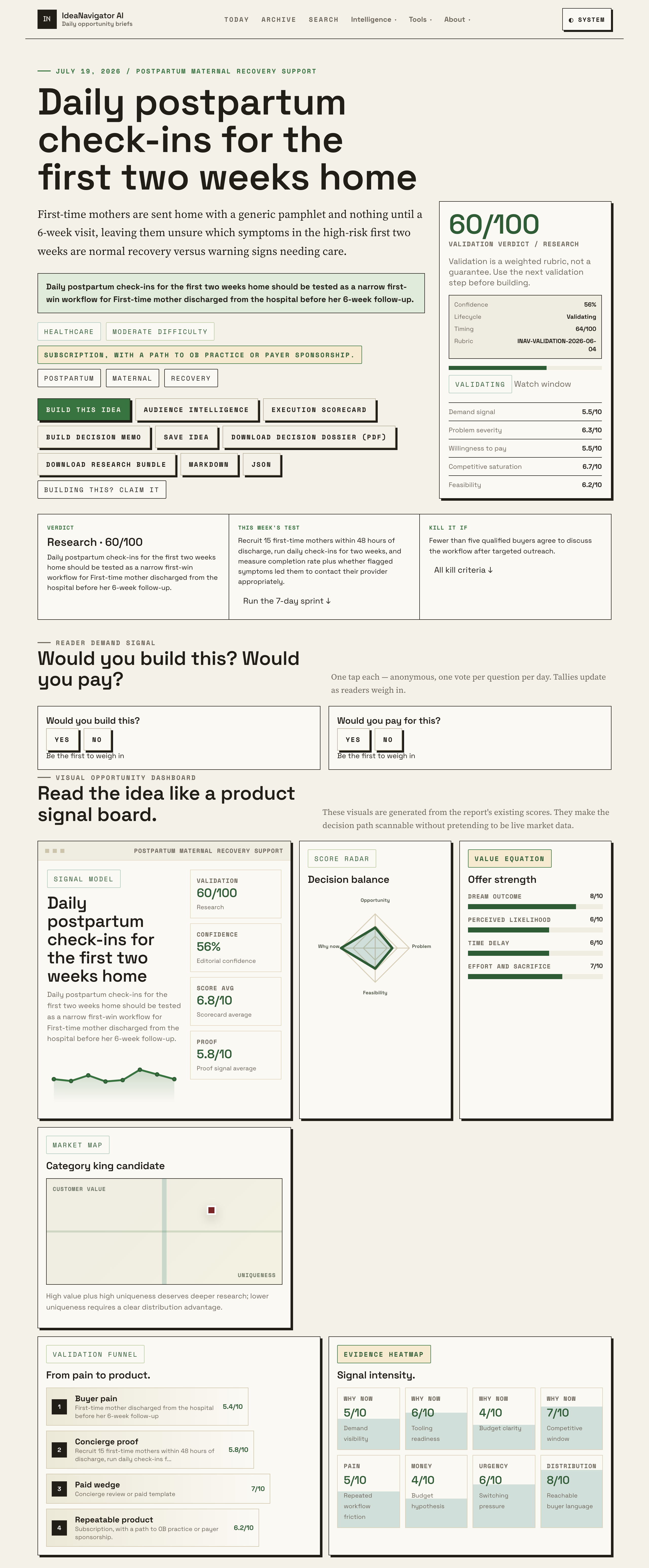
📊 Full opportunity report: The Importance Of Routine Daily Postpartum Checks on IdeaNavigator AI — validation score, market gap, and execution plan.
TL;DR
Implementing daily postpartum check-ins for first-time mothers discharged early could close a vital care gap. This approach aims to identify warning signs sooner and improve recovery outcomes. The concept is currently being tested through a pilot program.
Daily postpartum check-ins for the first two weeks after discharge are being tested as a targeted approach to support first-time mothers who leave the hospital before their six-week follow-up. This initiative aims to address a recognized care gap and improve maternal health outcomes during the high-risk early recovery period.
The proposed intervention involves a structured program where new mothers, especially first-time mothers, receive daily personalized check-ins via smartphone during the first two weeks at home. These check-ins are designed to monitor recovery, surface warning signs, and prompt contact with healthcare providers if necessary. The approach is based on the understanding that the current standard—discharge with a pamphlet and a six-week follow-up—leaves a critical window where complications can go unnoticed.
According to an initiative tested by IdeaNavigator AI, the program begins with creating a recovery profile based on delivery details, feeding method, and mental health baseline. It then delivers daily targeted questions and tips, encouraging mothers to report symptoms that may indicate issues such as infection, bleeding, or mental health concerns. The pilot involves recruiting 15 first-time mothers within 48 hours of discharge, with success measured by completion rates and whether flagged symptoms led to appropriate medical contact.
Why Daily Postpartum Checks Could Transform Maternal Care
This initiative could significantly reduce postpartum complications by enabling earlier detection of warning signs, especially in the critical first two weeks after birth. For first-time mothers, who often lack experience in identifying normal versus concerning symptoms, daily check-ins offer tailored guidance and reassurance. If proven effective, this model could become a standard part of postpartum care, decreasing hospital readmissions and improving maternal mental health outcomes.
postpartum recovery monitor
As an affiliate, we earn on qualifying purchases.
As an affiliate, we earn on qualifying purchases.
Addressing the Postpartum Care Gap for First-Time Mothers
Currently, most new mothers are discharged with minimal guidance and are scheduled for a follow-up at six weeks postpartum. This leaves a vulnerable period during the first two weeks, when complications like infections, hemorrhage, or mental health crises are most likely to occur. Maternal-health awareness campaigns have highlighted this gap, prompting interest in innovative solutions such as daily remote check-ins. Smartphone technology now makes these personalized, daily interactions feasible, offering a promising way to enhance postpartum support.
“Implementing daily check-ins could be a game-changer in postpartum care, especially for first-time mothers discharged early. It allows for real-time monitoring and early intervention.”
— an anonymous researcher
baby and mother health check device
As an affiliate, we earn on qualifying purchases.
As an affiliate, we earn on qualifying purchases.
Uncertainties About Effectiveness and Scalability
It is not yet clear whether daily check-ins will significantly reduce postpartum complications across diverse populations or how well mothers will adhere to the program over time. The pilot study is small, and broader testing is needed to confirm efficacy, cost-effectiveness, and integration into standard care pathways.
postpartum care app for new moms
As an affiliate, we earn on qualifying purchases.
As an affiliate, we earn on qualifying purchases.
Next Steps for Validating and Expanding Postpartum Check-Ins
The pilot involving 15 first-time mothers will conclude within a few months, with researchers analyzing completion rates, symptom reporting accuracy, and subsequent healthcare contacts. If results are promising, larger-scale studies and partnerships with healthcare providers or payers are planned to validate and potentially implement this approach widely. Ongoing development will also focus on refining the user experience and ensuring accessibility for diverse populations.
maternal health tracking device
As an affiliate, we earn on qualifying purchases.
As an affiliate, we earn on qualifying purchases.
Key Questions
How do daily postpartum check-ins work?
They involve daily personalized questions delivered via smartphone to monitor recovery, surface warning signs, and prompt contact with healthcare providers if needed.
Who is this program designed for?
Primarily for first-time mothers discharged early from the hospital, especially those at higher risk of complications during the first two weeks postpartum.
What are the benefits of daily check-ins?
They can enable earlier detection of issues, provide reassurance, and potentially reduce hospital readmissions by prompting timely medical attention.
Are there any risks or downsides?
The main uncertainties involve adherence and whether the system accurately identifies all critical symptoms; further research is needed to address these concerns.
What happens after the pilot study?
If successful, researchers plan to expand the program, validate its effectiveness in larger populations, and explore integration into routine postpartum care.
Source: IdeaNavigator AI