
TL;DR
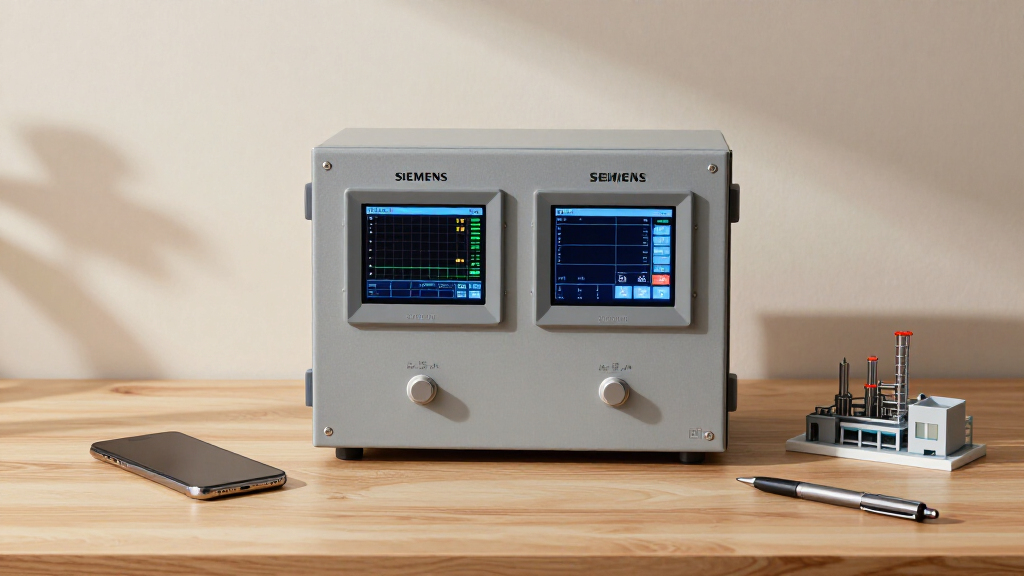
Siemens is advancing its strategy to leverage AI for manufacturing by developing an Industrial Foundation Model and partnering with NVIDIA. This approach focuses on physical-world data to optimize factory operations, marking a shift from chat-based AI to industrial AI.
Siemens has revealed a strategic partnership with NVIDIA to develop an Industrial AI Operating System designed to embed artificial intelligence across the entire manufacturing lifecycle. This initiative aims to harness proprietary industrial data and domain expertise to boost factory efficiency, marking a significant shift in how AI is applied in industry.

Get business pricing on tech for your team
- Business-only prices and quantity discounts
- Tax-exempt purchasing
- Multiple users, one account, clear invoices
The core of Siemens’ approach is the Industrial Foundation Model (IFM), announced at Hannover Messe 2025, which processes 3D models, 2D drawings, and sensor data to optimize engineering and automation. Siemens and NVIDIA are working together to accelerate GPU-based simulation, enabling faster, more accurate digital twins and generative simulation capabilities. The first fully AI-driven manufacturing site is planned for 2026 at Siemens’ Electronics Factory in Erlangen, Germany. Siemens also plans to introduce Digital Twin Composer and collaborate with clients like PepsiCo to simulate factory upgrades and supply chain optimizations.
Siemens emphasizes that its data advantage stems from decades of proprietary industrial data, including engineering models, automation logic, and operational telemetry, which it claims no startup or research lab can easily replicate. The partnership leverages NVIDIA’s hardware and software frameworks, with Siemens providing domain-specific expertise. The initiative aims to embed AI deeply into manufacturing processes, transforming passive simulations into active, real-time engineering tools.
Implications of Siemens’ Industrial AI Strategy
This development signals a major shift in industrial manufacturing, where AI is expected to move beyond simple automation to active, intelligent systems that optimize operations in real time. Siemens’ focus on physical data and domain expertise could provide a competitive edge, potentially leading to more efficient factories, reduced costs, and faster innovation cycles. For industry stakeholders, this represents a move toward more autonomous, adaptable manufacturing environments that could redefine supply chains and production standards globally.
Products Worth Considering

Bose QuietComfort Headphones (2nd Gen), Wireless Over-Ear Noise-Cancelling Headphones, Black

Amazon Kindle Paperwhite (2024, 16 GB) – 7-inch Display, Black

Bose Smart Dolby Atmos Soundbar, All-in-One Soundbar for TV, A.I. Dialogue Mode, Voice Control and Amazon Alexa Built-in, Supports Bluetooth
As an affiliate, we earn on qualifying purchases.
Background on Siemens’ Industrial AI Initiatives
Siemens has long been a leader in industrial automation and software, with extensive data from decades of factory operations. Its previous announcements, including the Industrial Foundation Model at Hannover Messe 2025, laid the groundwork for integrating AI into physical systems. The company’s strategy increasingly emphasizes AI-driven digital twins and simulation, aiming to revolutionize manufacturing processes. The partnership with NVIDIA, announced at CES 2026, builds on this foundation, positioning Siemens as a key player in the emerging field of physical AI for industry.
“”Industrial AI is no longer a feature; it’s a force that will reshape the next century.””
— Roland Busch, Siemens CEO
Unconfirmed Aspects of Siemens’ Industrial AI Plans
While Siemens has announced ambitious plans and partnerships, specific details about hardware configurations, deployment timelines beyond 2026, and validated performance metrics remain undisclosed. The extent of AI integration in existing factories and the pace of adoption across the industrial sector are still uncertain. Additionally, the reliance on NVIDIA’s infrastructure raises questions about hardware sovereignty and performance validation in real-world settings.
Upcoming Milestones and Deployment Expectations
Siemens plans to launch its fully AI-driven factory in Erlangen in 2026, serving as a blueprint for global replication. The Digital Twin Composer and industrial copilots are expected to be introduced mid-2026, with pilot projects like PepsiCo’s facility upgrades testing the technology. Industry observers will monitor performance results, customer adoption rates, and the development of standards for industrial AI integration in the coming months.
Key Questions
What is the Industrial Foundation Model?
The Industrial Foundation Model (IFM) is Siemens’ specialized AI model designed to process and contextualize 3D models, 2D drawings, and industrial data to optimize engineering and automation processes.
How does Siemens’ partnership with NVIDIA enhance manufacturing?
The partnership provides GPU-accelerated simulation, generative digital twins, and an integrated platform to embed AI across the entire manufacturing lifecycle, aiming to improve efficiency and automation.
Will this AI technology be applicable to all factories?
Implementation will likely depend on existing infrastructure, data availability, and customer readiness. Siemens’ initial focus is on high-tech factories like the Erlangen site, with broader adoption expected over the next decade.
What are the risks or limitations of Siemens’ approach?
Key uncertainties include reliance on NVIDIA’s hardware, unvalidated performance metrics, and long sales cycles in industrial settings. These factors could slow adoption or limit immediate impact.
How does this differ from general-purpose AI models?
Siemens’ AI is tailored for physical-world data, such as 3D models and sensor telemetry, rather than text or internet data, making it more relevant and effective for industrial applications.
Source: ThorstenMeyerAI.com