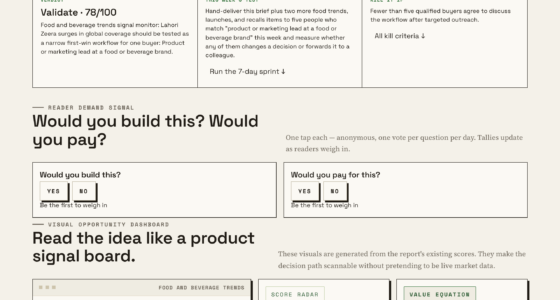

📊 Full opportunity report: Mastering AI Integration: From Support Systems To Core Business Functions on ThorstenMeyerAI.com — validation score, market gap, and execution plan.

Get business pricing on tech for your team
- Business-only prices and quantity discounts
- Tax-exempt purchasing
- Multiple users, one account, clear invoices
TL;DR
OpenAI has publicly described a transition in enterprise AI from assisting workers to executing tasks independently. The details remain unconfirmed, with no specific deployment data or security safeguards disclosed. This shift could impact how businesses automate workflows and manage operational risks.
OpenAI has publicly outlined a shift in enterprise AI application, moving from systems that assist workers with drafting, summarizing, and answering questions to those that can execute specific business tasks directly. This change signals a potential evolution in how AI is integrated into core operations, though no deployment figures or case studies have been provided.
The company’s recent publication emphasizes a framework where AI moves beyond support roles toward automating parts of workflows that traditionally require human intervention. This includes tasks such as updating records, initiating processes, or interacting with other software systems. However, OpenAI has not disclosed which industries or companies are implementing these systems, nor provided measurable outcomes or safety protocols.
While the concept suggests benefits like reduced manual handoffs and faster processing, it also raises operational risks, such as the potential for errors affecting customer data or business decisions. OpenAI did not specify whether these systems operate fully autonomously, under supervision, or within tightly controlled automation environments.
Implications of AI Moving Toward Autonomous Business Operations
This development could significantly alter enterprise workflows by enabling AI systems to perform complex, multi-step tasks independently. Such automation promises increased efficiency and reduced manual labor but also introduces new operational risks, including potential errors, security concerns, and regulatory compliance issues. The lack of detailed safeguards or proven deployment results means companies must proceed cautiously. The shift could redefine responsibilities, accountability, and trust in AI-driven processes across industries.As an affiliate, we earn on qualifying purchases.
Background on Enterprise AI and OpenAI’s Framing
Historically, enterprise AI has been implemented primarily as assistive tools—drafting documents, summarizing meetings, or providing coding suggestions—where human oversight remains integral. OpenAI’s recent framing suggests a transition toward systems capable of executing tasks directly, akin to workflow automation but powered by language-based reasoning.
Until now, most deployments involved semi-autonomous AI with human-in-the-loop controls. The company’s announcement indicates a conceptual move, with no specific products or case studies publicly available. The evolution reflects broader industry trends toward fully autonomous AI in business processes, but concrete evidence remains pending.
As an affiliate, we earn on qualifying purchases.
Unconfirmed Aspects of AI Execution in Business
It is unclear which companies are actively deploying execution-oriented AI systems, what specific tasks they perform, or how frequently human intervention occurs. The safety measures, error rates, and performance metrics remain unspecified. Additionally, whether these systems operate fully autonomously or under supervision has not been clarified. The lack of concrete deployment data means the actual impact and safety of this shift are still unknown.
As an affiliate, we earn on qualifying purchases.
Next Steps for Verifying and Implementing AI Execution
The next phase will involve OpenAI or client companies releasing case studies demonstrating real-world deployments, measurable results, and safety protocols. Monitoring these releases will clarify how widely this approach is adopted, its effectiveness, and the safeguards in place. Further, industry and regulatory bodies may begin assessing the operational and security implications of autonomous AI in enterprise environments.
As an affiliate, we earn on qualifying purchases.
Key Questions
What does OpenAI mean by moving from assistance to execution?
It refers to AI systems performing specific business tasks directly, such as updating records or initiating processes, rather than just supporting humans with suggestions or summaries.
Are companies already using autonomous AI for business operations?
There is no publicly verified evidence of widespread deployment. OpenAI’s framing is conceptual, and actual implementations remain unconfirmed.
What are the potential risks of AI systems executing tasks independently?
Risks include operational errors, data security breaches, regulatory non-compliance, and unintended actions affecting customers or business data. Safeguards and human oversight are critical.
Will this shift reduce the need for human workers?
While automation could reduce manual effort in some processes, the overall impact on employment depends on implementation, oversight, and the nature of tasks automated.
Source: ThorstenMeyerAI.com
Fall Picks
fall essentials
As an affiliate, we earn on qualifying purchases.