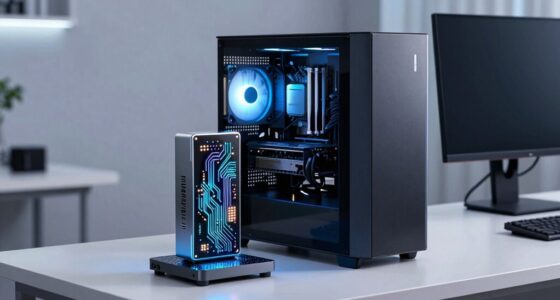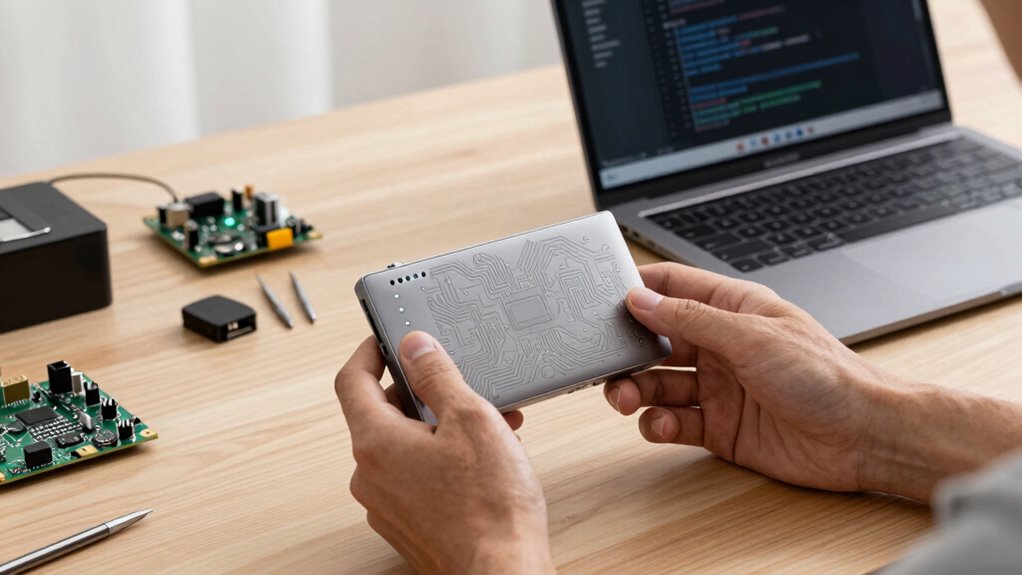

When choosing an edge AI development kit, focus on its sensor support, power efficiency, and processing power to meet your project’s needs. Make sure it offers versatile interfaces like GPIO, I2C, SPI, or UART for easy sensor integration. Look for low-power modes and adjustable settings for extended operation in remote areas. Compatibility with popular AI frameworks and seamless connectivity help streamline development. Keep exploring further details to find the ideal kit for your application.
Get ready for Prime Big Deal Days — try Prime free
Exclusive member deals on October 6–7, plus fast free delivery. Cancel anytime.
As an affiliate, we earn on qualifying purchases.
Key Takeaways
- Ensure robust sensor integration options compatible with your specific sensors and interfaces.
- Prioritize power efficiency features like low-power modes and dynamic scaling for remote deployments.
- Select a kit with sufficient processing power for real-time AI inference and low latency performance.
- Confirm hardware and software compatibility with your chosen AI frameworks and development tools.
- Consider connectivity options and expandability to support future system growth and integration needs.
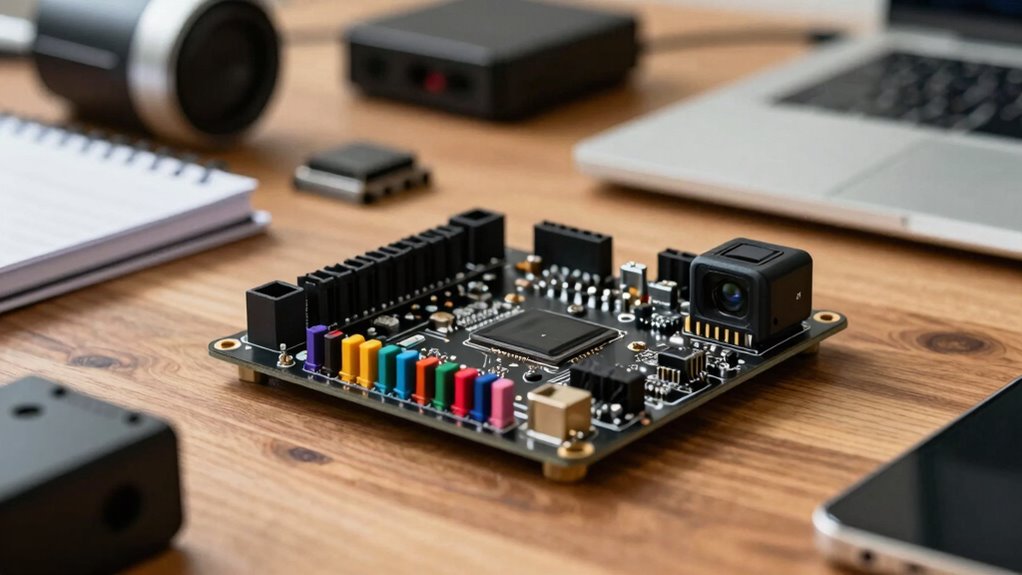
Selecting the right Edge AI development kit is crucial for guaranteeing your project’s success, especially as more applications demand real-time processing and low latency. When choosing a kit, you need to take into account how well it supports sensor integration. Your project’s sensors are the eyes and ears of your system, capturing essential data that must be processed quickly and accurately. A kit with robust sensor integration capabilities allows you to connect diverse sensors—cameras, microphones, temperature sensors, or motion detectors—without hassle. This flexibility means you can tailor your setup to meet specific needs, whether it’s for smart surveillance, industrial automation, or health monitoring. Look for kits that offer a variety of interfaces, such as GPIO, I2C, SPI, and UART, so you can easily connect different sensor types and expand your system later on. Additionally, considering power optimization is essential for ensuring your device can operate efficiently in various environments, especially where power sources are limited. Edge AI devices often operate in environments where power availability is limited, so selecting a kit that emphasizes power efficiency can make or break your project. Efficient power management ensures your device runs longer, reduces heat generation, and conserves energy, all of which are essential for deployment in remote or embedded settings. Many development kits come with power-saving modes or adjustable power settings that help you optimize consumption based on your workload. Think about whether the kit supports low-power states, dynamic voltage and frequency scaling, or other power-saving features, especially if your project involves battery-powered devices. The processing power of the kit is equally important, as it determines how well your AI models will run and how quickly your system can respond. Beyond sensor integration and power optimization, keep in mind other aspects like connectivity options, and software support. You’ll want a kit that provides enough computational capacity to run your AI models efficiently while maintaining low latency. Carefully evaluating hardware compatibility can help avoid integration issues and ensure a smoother development process. Understanding these factors can help you make a more informed decision tailored to your specific project requirements. Additionally, consider the compatibility with AI frameworks****, as seamless integration with popular tools can significantly streamline your development process.
Edge AI development kit with sensor support
As an affiliate, we earn on qualifying purchases.
As an affiliate, we earn on qualifying purchases.
Frequently Asked Questions
How Do I Evaluate the Long-Term Support for a Development Kit?
You evaluate long-term support by checking if the manufacturer regularly provides firmware updates and maintains a clear update roadmap. Also, look into community support; active forums and user groups indicate ongoing engagement. These factors guarantee your development kit stays compatible with new features and security patches, reducing future risks. A strong support system helps you troubleshoot issues quickly and keeps your Edge AI project sustainable over time.
Are There Compatibility Issues With Existing Hardware or Software?
Compatibility issues can be a thorn in your side, like a knot that’s hard to untie. You should carefully check the development kit’s hardware integration capabilities with your existing devices, making sure connectors and interfaces match. Also, verify software compatibility, ensuring the kit supports your current operating systems and frameworks. Doing thorough research and testing beforehand helps prevent integration headaches later, keeping your project on track.
What Is the Total Cost of Ownership Over the Project’s Lifespan?
The total cost of ownership depends on a thorough cost analysis, including upfront expenses, maintenance, and scalability. You should also consider vendor reputation, as reliable vendors often provide better support and fewer hidden costs over the project’s lifespan. By evaluating these factors, you can make an informed decision, ensuring your investment remains manageable and effective throughout the development and deployment of your Edge AI project.
How Scalable Is the Development Kit for Future Project Expansions?
You’ll find that the development kit’s scalability depends heavily on its hardware flexibility and software adaptability. If it offers modular hardware options, you can easily upgrade or expand components as your project grows. Similarly, software that supports updates and integration guarantees future expansions are seamless. Look for kits designed with these features, so your project can evolve without costly overhauls, making your investment more future-proof.
What Security Features Are Included in the Development Kit?
You’ll find that the development kit includes robust security features like hardware security modules, ensuring your data stays protected at the physical level. It also offers advanced software encryption protocols, safeguarding your applications and communications from intrusions. These layers of security create a fortress around your project, giving you confidence to innovate without fear. As you explore, you’ll realize that these built-in protections are the silent guardians of your edge AI deployment.
As an affiliate, we earn on qualifying purchases.
Conclusion
In the end, picking the right Edge AI development kit is like choosing your own adventure—consider your project’s needs, budget, and future scalability. Don’t just rely on yesterday’s tech; think ahead, as if you’re planning for a Jetsons-style future. With the right kit, you’ll be ready to innovate at the edge, turning sci-fi dreams into reality. So, take your time, choose wisely, and get ready to code your way into the next big thing.
single board computer for AI projects
As an affiliate, we earn on qualifying purchases.
As an affiliate, we earn on qualifying purchases.
AI development kit with GPIO I2C SPI UART
As an affiliate, we earn on qualifying purchases.
As an affiliate, we earn on qualifying purchases.
NFL season / tailgating Picks
team gear
As an affiliate, we earn on qualifying purchases.