Edge cameras are specialized devices that process data locally, offering real-time insights for applications like surveillance or autonomous vehicles. They require proper sensor calibration to guarantee accurate images and reliable analysis, especially across changing environments. Power management is essential to prevent overheating and extend device lifespan while maintaining performance. Combining calibration and power strategies improves system dependability and responsiveness. Keep exploring to discover how these fundamentals can optimize your vision solutions.
Open a free Amazon Business account
Business pricing, bulk buying and tax-exempt orders.
As an affiliate, we earn on qualifying purchases.
Key Takeaways
- Edge cameras process data locally to enable real-time insights and reduce latency for applications like surveillance and autonomous vehicles.
- Proper sensor calibration ensures accurate, reliable images, critical for precise object detection and tracking.
- Power management techniques optimize energy use, extend device lifespan, and support complex vision tasks in resource-limited environments.
- Integrating calibration and power strategies enhances system robustness, maintaining performance under varying environmental conditions.
- Balancing processing demands and power consumption improves responsiveness, reduces reliance on cloud processing, and enables smarter edge solutions.
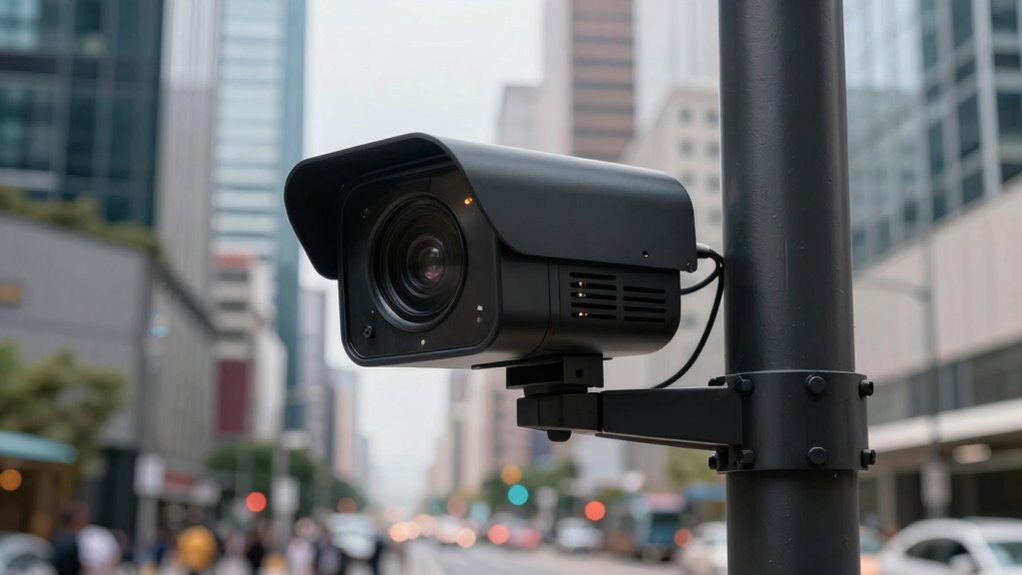
In today’s fast-paced world, edge cameras and computer vision hardware are transforming how we capture and analyze visual data. These devices are revolutionizing industries by providing real-time insights directly at the source, reducing latency, and minimizing the need to transmit large amounts of data to centralized servers. As you explore these technologies, understanding the importance of sensor calibration becomes crucial. Sensor calibration ensures that the camera’s sensors are accurately aligned and functioning correctly, which is vital for producing reliable images and precise analysis. Without proper calibration, images might be distorted or misaligned, leading to errors in object detection or tracking. You need to regularly calibrate your edge cameras, especially when deploying them in changing environments or after physical adjustments, to maintain high accuracy and consistent performance. Additionally, implementing proper calibration routines can help extend the lifespan of your hardware by preventing misalignment-related issues that may cause hardware strain or errors. Proper calibration also plays a critical role in maintaining sensor accuracy over time, especially in varying environmental conditions. Ensuring consistent sensor performance is essential for reliable data collection and analysis, further emphasizing the importance of regular calibration. Incorporating environmental considerations into calibration routines can help account for factors like temperature and humidity that affect sensor performance. Additionally, being aware of hardware limitations can inform better calibration and maintenance practices, ultimately enhancing system reliability. Power management is another essential aspect when working with edge cameras and computer vision hardware. Unlike traditional systems that rely on constant power supply, edge devices often operate in remote or resource-constrained settings where power efficiency becomes critical. You should focus on optimizing power consumption to extend device lifespan and ensure uninterrupted operation. Many hardware solutions incorporate intelligent power management features, allowing you to adjust processing loads, manage sleep modes, and prioritize critical functions. By doing so, you not only save energy but also prevent overheating and hardware degradation, which can compromise the system’s reliability over time.
Furthermore, efficient power management directly impacts the device’s ability to perform complex computer vision tasks in real-time. When your hardware consumes less power, it can operate longer on battery or limited power sources, making it more suitable for applications like surveillance, autonomous vehicles, or industrial automation. Balancing power use and processing demands requires understanding the hardware’s capabilities and configuring them appropriately. Additionally, integrating power management strategies with sensor calibration routines can streamline maintenance and ensure your edge devices remain accurate and efficient under various conditions. Ultimately, mastering sensor calibration and power management enables you to deploy more robust, reliable, and efficient edge camera systems. These components work together to deliver high-quality visual data analysis at the edge, reducing dependency on cloud processing and enhancing responsiveness. As technology advances, you’ll find that fine-tuning these aspects allows your systems to adapt better to different environments, operate longer without intervention, and provide more precise insights, empowering your projects with smarter, more capable computer vision solutions.
As an affiliate, we earn on qualifying purchases.
Frequently Asked Questions
How Do Edge Cameras Differ From Traditional Security Cameras?
Edge cameras differ from traditional security cameras by processing data locally, reducing reliance on cloud storage. You’ll notice features like infrared imaging for clear night vision and advanced motion detection that trigger alerts instantly. With edge cameras, you get faster response times and enhanced privacy because sensitive footage stays on the device. This makes them ideal for real-time security, offering smarter, more efficient surveillance compared to traditional cameras that rely heavily on remote processing.
What Are the Key Factors in Choosing Computer Vision Hardware?
When choosing computer vision hardware, you weigh sensor calibration precision against power consumption efficiency. You need accurate sensors that deliver reliable data without draining resources, so you can maintain smooth operation. Consider hardware that balances high-quality calibration with low power use, ensuring longevity and cost-effectiveness. This juxtaposition helps you select equipment that meets your performance needs while minimizing operational costs, ultimately optimizing your computer vision system’s effectiveness.
How Is Data Security Managed With Edge-Based Vision Systems?
You manage data security in edge-based vision systems by implementing data encryption to protect sensitive information during transmission and storage. Access control is vital, so you set strict permissions to limit who can view or modify data. Regular updates and firmware patches also help prevent vulnerabilities. By combining data encryption and access control, you guarantee your system remains secure, maintaining data integrity and confidentiality at all times.
Can Edge Cameras Operate Effectively in Low-Light Conditions?
Did you know that infrared imaging can improve low-light performance by up to 90%? Edge cameras equipped with advanced light sensitivity and infrared capabilities operate effectively in low-light conditions, capturing clear images where visible light falls short. These cameras utilize infrared LEDs to illuminate scenes invisibly, allowing you to monitor or analyze environments even in complete darkness, ensuring continuous security and operational efficiency regardless of lighting conditions.
What Are the Maintenance Requirements for Computer Vision Hardware?
You need to regularly check your computer vision hardware to guarantee hardware durability. Schedule routine maintenance to clean sensors, lenses, and cooling systems, preventing dust buildup and overheating. Keep firmware updated and inspect connections for wear or damage. Proper maintenance scheduling extends hardware life, maintains peak performance, and reduces downtime. By staying proactive, you ensure your system runs smoothly and reliably over time.
computer vision hardware power management
As an affiliate, we earn on qualifying purchases.
As an affiliate, we earn on qualifying purchases.
Conclusion
As you explore the domain of edge cameras and computer vision hardware, you’re subtly opening the door to a world of seamless innovation. Embracing these technologies gently enhances your capabilities, offering a refined touch to your projects. With each step, you’re quietly elevating efficiency and insight, setting the stage for sophisticated solutions that blend effortlessly into your environment. Ultimately, you’re gently guiding your journey toward smarter, more intuitive systems that quietly redefine the future.
As an affiliate, we earn on qualifying purchases.
autonomous vehicle vision sensors
As an affiliate, we earn on qualifying purchases.
As an affiliate, we earn on qualifying purchases.
NFL season / tailgating Picks
team gear
As an affiliate, we earn on qualifying purchases.