

TL;DR
Deep learning trains networks by comparing predictions with target answers and adjusting internal weights to reduce error. The method, described in a 1986 paper, underpins many current AI tools, but its results depend on training data and model design—not just size.
A November 17, 2026, explainer from Thorsten Meyer AI outlines how deep-learning systems learn from examples: they make predictions, measure errors and adjust internal weights to improve later results. The method helps explain how AI tools perform tasks such as image recognition and text generation, while also clarifying why they can make mistakes and why a larger model is not automatically better.

Get business pricing on tech for your team
- Business-only prices and quantity discounts
- Tax-exempt purchasing
- Multiple users, one account, clear invoices
Deep-learning models are built from layers of mathematical units called artificial neurons. Each unit combines its inputs using learned weights, adds a bias and applies an activation function. A network passes an example through its layers in a forward pass to produce an answer. During training, a loss function measures the difference between that answer and a target, and back-propagation and gradient descent are used to adjust the weights.
The explainer traces the central training idea to a paper by David Rumelhart, Geoffrey Hinton and Ronald Williams, published in Nature in October 1986. The paper described repeatedly changing network weights to reduce the difference between actual and desired outputs. The basic loop remains: make a guess, measure how wrong it is, adjust the weights and try again across many examples.
Training and use are separate stages. Training changes the weights; during ordinary use, the model applies those learned weights to new inputs. The piece also cites ImageNet results: the best reported error rate fell from 28.2% in 2010 to 3.57% in 2015, while winning networks grew from eight layers in 2012 to 152 layers in 2015. These figures describe that image-recognition competition, not AI performance generally.

How Training Shapes AI Results
The training process matters because it helps explain both what AI systems can do and where their outputs come from. A model is not typically given a hand-written rule for every cat image or customer reply. Instead, its weights are adjusted using examples, allowing it to find patterns that help reduce errors on the training task. Those patterns are learned from data, not proof that the system understands a subject as a person does.
That distinction is useful for people choosing or evaluating AI tools. A model may produce fluent or confident answers even when its training examples do not support them. The explainer identifies several limitations: systems can guess when uncertain, reflect gaps in their data and perform less reliably when the real-world input differs from what they encountered during training. Results depend on data and training choices as well as model size.
The article points to DeepMind’s Chinchilla as an example of scale not being the only factor. It reports that the 70-billion-parameter model, trained on 1.4 trillion tokens, outperformed Gopher, which had 280 billion parameters and was trained on 300 billion tokens. This comparison supports a limited point: more parameters alone do not guarantee better results. It does not establish that one training recipe or model will win across every task.
Products Worth Considering
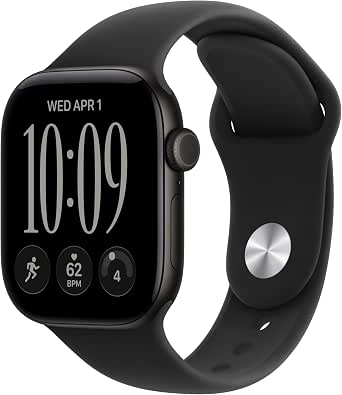
Apple Watch Series 12 GPS Smartwatch, 42 mm

Bose SoundLink Plus Portable Bluetooth Speaker, Black

Jackery Fridge Guard 1024Wh Backup Power Station with Mount
As an affiliate, we earn on qualifying purchases.
From 1986 Training Theory to Today
The underlying idea predates today’s widely used AI products by decades. In their 1986 Nature paper, Rumelhart, Hinton and Williams described a procedure for changing the connection weights in a network to reduce the gap between its output and a desired answer. The paper’s account, as quoted by Thorsten Meyer AI, is recognizable as the core of modern network training: predict, compare and adjust.
“Deep” refers to the number of layers in a network. The explainer, drawing on the 2016 textbook Deep Learning by Ian Goodfellow, Yoshua Bengio and Aaron Courville, describes layers as a hierarchy: earlier layers can respond to simple features such as edges, while later layers combine features into more complex patterns. These representations develop during training because they help reduce the model’s error; they are not necessarily programmed in as explicit stages.
The ImageNet figures offer one historical example of how deeper networks and improved recognition scores coincided in a particular benchmark. They should not be read as a universal measure of AI progress: the numbers cover a specific image challenge and a specific period. The source also says its worked numerical example is illustrative, using a single neuron and simplified arithmetic rather than presenting results from a tested commercial system.
“understand the world in terms of a hierarchy of concepts, with each concept defined through its relation to simpler concepts.”
— Ian Goodfellow, Yoshua Bengio and Aaron Courville, in Deep Learning, as quoted by Thorsten Meyer AI
Limits of the Reported Comparisons
The explainer provides historical benchmark figures and one model comparison, but it does not set out enough detail to assess how those results transfer to present-day systems or other tasks. In particular, it does not give a full account of the evaluation conditions behind the Chinchilla-Gopher comparison. The comparison should be treated as an example, not a general ranking of models.
The article also does not quantify how often models guess, inherit gaps in their data or fail on inputs unlike their training examples. Those weaknesses vary by system and application, and the source does not provide rates that would support a numerical estimate. It remains unclear from this material how well any particular AI tool will perform in a reader’s workplace or under a specific real-world test.
The source is an AI-assisted explainer published by Thorsten Meyer AI, not a new peer-reviewed study or a report of new experiments. Its training explanation cites established textbooks, course notes and a historical paper, while the neuron calculation is identified as an illustrative example. No new experimental result is reported.
Testing Models in Real Use
The source announces no new study, product release or follow-up date. For readers assessing an AI tool, the practical next step is to test it on representative tasks and compare its output with known answers or expert review. A useful evaluation should account for the intended task, input data and acceptable error rate, rather than relying on a model’s size or a general benchmark alone.
Further reporting would be needed to establish how current systems perform across different jobs, how often they fail under unfamiliar conditions and which training choices explain those differences. Until such evidence is provided, the explainer’s main takeaway remains a description of the method: deep learning learns by adjusting weights from examples, and its reliability depends on more than depth or parameter count.
Key Questions
What does deep learning mean?
Deep learning is a way to train a neural network with multiple layers. The layers process information in stages, combining simpler patterns into more complex representations.
How does a neural network learn?
During training, the network makes a prediction and a loss function measures the gap between that prediction and a target answer. Back-propagation and gradient descent help adjust the network’s weights to reduce that error over repeated examples.
Does a larger AI model always perform better?
No. The source cites DeepMind’s Chinchilla and Gopher as an example in which the model with fewer parameters performed better in the reported comparison. Parameter count is only one factor; the source does not claim that this result applies to every task.
Why can deep-learning systems give wrong answers?
As described in the explainer, models can make guesses when uncertain, reflect gaps in their training data or struggle with inputs that differ from those data. Performance depends on the task and data, and the source does not quantify these failure rates.
Does a trained model keep learning every time someone uses it?
Not in the ordinary use described by the explainer. Training adjusts the weights; when a user supplies an input, the model applies its learned weights to produce an output. Using a model and retraining it are separate processes.
Source: Thorsten Meyer AI