📊 Full opportunity report: 10 AI Breakthroughs Poised To Transform 2026 on ThorstenMeyerAI.com — validation score, market gap, and execution plan.

Get business pricing on tech for your team
- Business-only prices and quantity discounts
- Tax-exempt purchasing
- Multiple users, one account, clear invoices
TL;DR
Ten AI breakthroughs are projected to significantly impact technology and society by 2026. These developments include advances in natural language processing, autonomous systems, and AI hardware, shaping the future landscape.
Industry analysts and researchers anticipate that by 2026, ten major AI breakthroughs will significantly influence technology, economy, and daily life. For a detailed overview, see the original analysis. These developments, rooted in ongoing research and recent innovations, are expected to redefine what AI can achieve and how it integrates into society.
According to sources such as Thorsten Meyer AI and leading tech research, these breakthroughs include progress in natural language understanding, autonomous systems, AI hardware efficiency, and ethical AI frameworks. For example, advancements in large language models (LLMs) aim to make AI more context-aware and reliable, while innovations in AI chips promise faster, more energy-efficient processing.
Industry leaders also highlight breakthroughs in AI-driven automation for industries like healthcare, manufacturing, and transportation, potentially enabling fully autonomous vehicles, robotic surgery, and intelligent supply chains. Moreover, new methods for explainable AI are expected to improve transparency, fostering greater trust and adoption across sectors. Discover how AI tools are transforming industries in this article.
The 10 picks
- 1
 ASUS ROG Astral NVIDIA GeForce RTX 5080 16GB GDDR7 OC Edition Gaming Graphics…View on Amazon →
 - 2
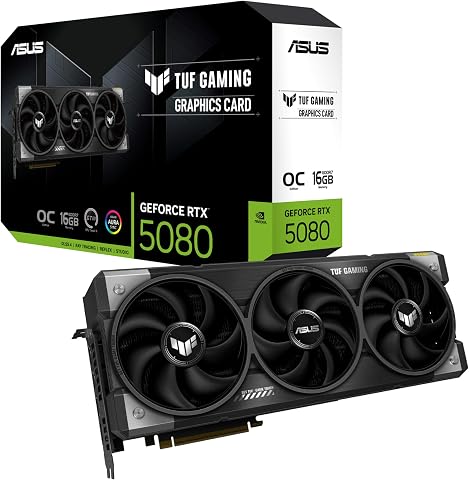 ASUS TUF Gaming GeForce RTX 5080 16GB GDDR7 OC Edition Graphics CardView on Amazon →
 - 3
 PNY NVIDIA GeForce RTX 5080 Epic-X ARGB OC Triple Fan Graphics Card (16GB GDD…View on Amazon →
 - 4
 GIGABYTE GeForce RTX 5070 Ti Gaming OC 16G Graphics CardView on Amazon →
 - 5
 ASUS Prime NVIDIA GeForce RTX 5070 OC Edition Graphics Card (12GB GDDR7, PCIe…View on Amazon →
 - 6
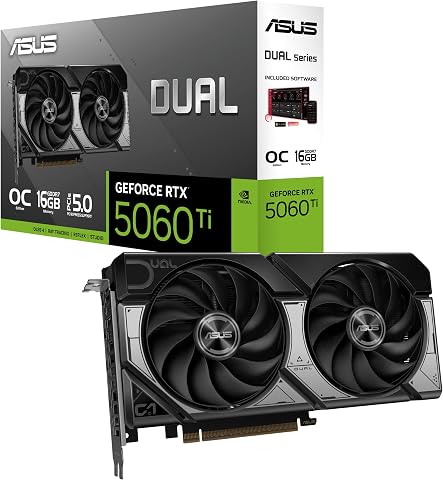 ASUS Dual NVIDIA GeForce RTX 5060 Ti 16GB GDDR7 OC Edition Graphics CardView on Amazon →
 - 7
 XFX Swift AMD Radeon RX 9060 XT OC Triple Fan Gaming Edition with 16GB GDDR6View on Amazon →
 - 8
 GIGABYTE Radeon RX 9060 XT Gaming OC ICE 16G Graphics CardView on Amazon →
 - 9
 ASUS Dual NVIDIA GeForce RTX 5060 8GB GDDR7 OC Edition Graphics CardView on Amazon →
 - 10
 GIGABYTE GeForce RTX 5060 WINDFORCE OC 8G Graphics CardView on Amazon →
Impacts of 2026 AI Innovations on Society and Economy
The projected AI breakthroughs for 2026 are poised to reshape multiple aspects of society, from healthcare and transportation to employment and ethics. Enhanced AI capabilities could improve medical diagnostics, enable safer autonomous vehicles, and automate complex tasks, boosting productivity and innovation.
However, these advancements also raise concerns about job displacement, data privacy, and ethical use of AI. Understanding these impacts is crucial for policymakers, businesses, and consumers to prepare for a future where AI plays an even larger role in daily life.
Recent AI Progress and Trends Leading to 2026
Over the past few years, AI has seen rapid progress driven by improvements in deep learning, increased computational power, and more extensive datasets. Notable milestones include the development of GPT-4, advancements in reinforcement learning, and breakthroughs in AI hardware like specialized chips for faster processing.
Industry forecasts suggest that these trends will accelerate, with ongoing research aimed at addressing current limitations such as AI explainability, robustness, and energy consumption. The convergence of hardware and algorithmic innovations sets the stage for the anticipated breakthroughs by 2026.
“Advances in explainable AI and hardware efficiency will be critical for broader adoption and trust in AI systems by 2026.”
— Dr. Jane Liu, AI researcher
Unconfirmed Aspects and Challenges for 2026 AI Advances
While predictions are optimistic, it remains unclear how quickly some breakthroughs will be achieved or adopted at scale. Challenges such as ethical concerns, regulatory hurdles, and technical limitations in areas like AI safety and robustness could delay or alter these developments. Additionally, the exact timeline for maturation of certain technologies remains uncertain, with some breakthroughs possibly requiring more time or facing unforeseen obstacles.
Next Steps for AI Development and Monitoring
Researchers and industry leaders will continue to publish breakthroughs, with key conferences and collaborations shaping the trajectory toward 2026. Monitoring progress in AI hardware, safety, and ethics will be essential, alongside policy developments to manage societal impacts. Stakeholders should prepare for incremental implementation and ongoing evaluation of these emerging technologies.
Key Questions
Which AI breakthroughs are most likely to impact daily life by 2026?
Advances in natural language understanding, autonomous systems like self-driving vehicles, and AI-powered healthcare diagnostics are expected to have the most immediate impact on daily life.
Are these AI developments guaranteed to happen by 2026?
No, these are projections based on current trends and recent research. Technical, ethical, and regulatory challenges could influence the timeline and scope of these breakthroughs.
How might AI breakthroughs affect employment and economy?
Potential benefits include increased productivity and new industries, but there are concerns about job displacement in certain sectors. Policymakers and businesses will need to address these shifts proactively.
What are the main risks associated with these AI advancements?
Risks include ethical issues, data privacy concerns, and the possibility of AI systems behaving unpredictably or maliciously if not properly managed.
Source: ThorstenMeyerAI.com
Columbus Day / Indigenous Peoples' Day Picks
long weekend sales
As an affiliate, we earn on qualifying purchases.