
📊 Full opportunity report: AI-Designed Station 36: A New Benchmark In Shortwave Numbers Listening on ThorstenMeyerAI.com — validation score, market gap, and execution plan.

Get tech for your team delivered free — and shop member deals
- Fast, free delivery on millions of items
- Access to Prime Big Deal Days deals on October 6–7
- Prime Video, Amazon Music and more included
TL;DR
An AI-designed web experience called Station 36 recreates a vintage shortwave numbers station listening post. It features interactive controls, spectral waterfall visuals, and authentic sounds, marking a new development in digital radio simulation.
Station 36, an AI-designed web interface mimicking a vintage shortwave numbers station listening post, has been unveiled, offering an immersive experience that combines historical aesthetics with modern web technology. This development represents a significant step in digital radio simulation, providing users a tactile and authentic environment to explore secretive radio signals.
The platform features an interactive control panel built with inline SVG, styled with a vintage palette of bakelite brown-black, amber, cyan, and authentic vintage aesthetics. Users can tune the receiver’s dial, view spectral waterfall visuals, and listen to synthesized radio signals, static, Morse code, and voice cadences, all generated in real-time via Web Audio API. The entire site is self-contained, with no external dependencies, ensuring a seamless, authentic experience.
According to the creators, the interface aims to evoke the tactile joy of manual signal hunting, reminiscent of Cold War-era radio listening posts. The spectral waterfall displays real-time signal activity, while the audio synthesizes authentic static, heterodyne whistles, and Morse code bursts, activated only when the receiver is powered on. The design emphasizes authenticity, from the color scheme to the hardware-like controls, and includes an interactive logbook with redactions and hidden messages.
Developed entirely by AI, Station 36 is part of a larger project featuring 175 unique web experiences, each crafted to evoke different historical or fictional environments, with this one focusing on clandestine radio operations. The project was executed with meticulous attention to detail, from the SVG architecture to the audio synthesis, and is intended as both an artistic and educational showcase of AI’s capabilities in web design and simulation.
Innovative Fusion of Vintage Aesthetics and AI Technology
This development matters because it demonstrates how AI can be used to create highly detailed, authentic digital recreations of historical radio environments. It offers enthusiasts, researchers, and educators a new tool for exploring the secretive world of shortwave numbers stations, which have historically been difficult to simulate accurately in digital formats. The project also pushes the boundaries of web-based interactive design, showing how complex hardware and audio simulations can be achieved without external dependencies.
For the broader community, Station 36 exemplifies a new approach to digital preservation and artistic expression, blending nostalgia with cutting-edge technology. It highlights the potential for AI to contribute to immersive experiences that are both educational and artistically compelling, fostering a deeper understanding of Cold War-era clandestine communications and radio culture.
As an affiliate, we earn on qualifying purchases.
Historical and Technical Foundations of Shortwave Numbers Stations
Shortwave numbers stations have been a secretive communication method since the Cold War, used primarily for transmitting coded messages to agents and operatives worldwide. These stations are characterized by their distinctive Morse code, voice cadences, and spectral signals, often transmitted on unpredictable frequencies to evade detection.
Historically, enthusiasts and researchers have sought to recreate and decode these signals, but digital simulations have been limited in authenticity. Recent advances in AI-driven web development have opened new possibilities for immersive recreations, combining historical accuracy with interactive technology. The development of Station 36 builds on these trends, offering a virtual environment that mimics the tactile and auditory experience of traditional radio listening posts.
Prior to this, most digital efforts relied on static recordings or simplified visualizations, lacking the dynamic, real-time interactivity now possible through AI and modern web APIs. The project represents a convergence of historical interest and technological innovation, aiming to preserve and explore clandestine radio culture in a new digital form.
“Station 36 exemplifies how AI can craft highly authentic, interactive environments that recreate the tactile and auditory experience of vintage radio listening posts.”
— an anonymous researcher
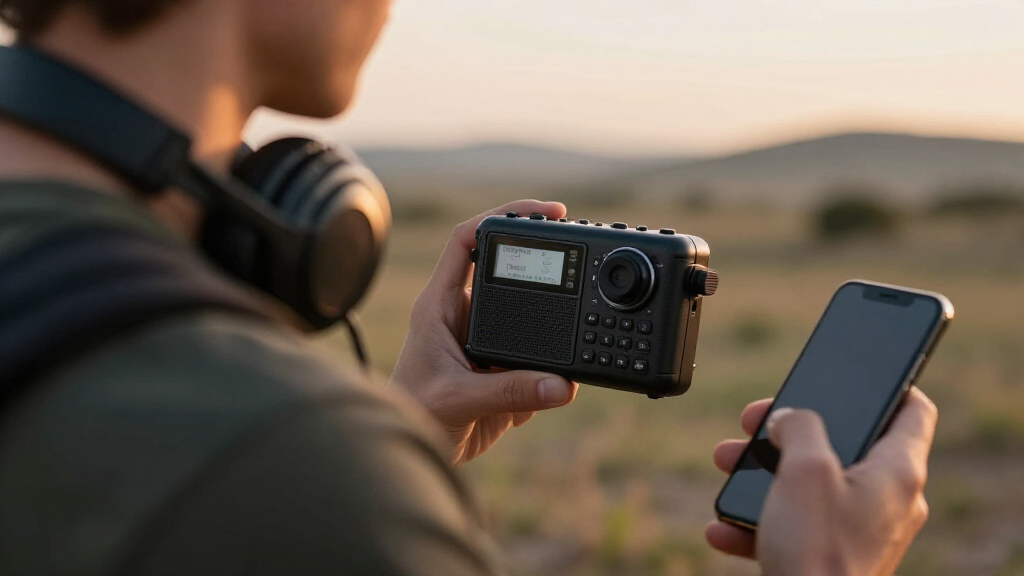
shortwave radio with spectral waterfall display
As an affiliate, we earn on qualifying purchases.
As an affiliate, we earn on qualifying purchases.
Unconfirmed Aspects and Future Enhancements
It is still unclear how accurately the synthesized signals replicate real-world shortwave transmissions, as there has been no independent verification of the audio authenticity. Additionally, the extent to which the site can simulate the full range of clandestine radio signals remains to be tested by expert users. The long-term durability and potential for expansion or integration with real-world radio data are also still under discussion.
digital radio receiver with Morse code decoding
As an affiliate, we earn on qualifying purchases.
As an affiliate, we earn on qualifying purchases.
Next Steps for Development and Community Engagement
Developers plan to gather user feedback to refine the realism and interactivity of Station 36. Future updates may include more complex signal patterns, enhanced audio fidelity, and potential integration with live radio feeds or decoding tools. There is also interest in expanding the project into educational modules for radio enthusiasts and historians, and showcasing similar AI-crafted environments from other historical periods.
As an affiliate, we earn on qualifying purchases.
Key Questions
How authentic are the signals and sounds in Station 36?
The signals are synthesized to mimic the static, Morse code, and voice cadences typical of shortwave numbers stations, but their absolute authenticity compared to real transmissions has not been independently verified.
Can I listen to real shortwave numbers stations through this platform?
No, Station 36 does not connect to live broadcasts. It features AI-generated signals designed for educational and aesthetic purposes only.
Is the experience accessible on all devices?
The platform is optimized for desktop browsers at widths of 390px, 834px, and 1440px, with high accessibility standards, but full interactivity may be limited on mobile devices.
Will there be more environments like Station 36?
Yes, the project includes 175 AI-crafted web experiences, each exploring different themes, with plans for future updates and new environments based on user feedback and technological advances.
Source: ThorstenMeyerAI.com
Halloween Picks
halloween
As an affiliate, we earn on qualifying purchases.