
TL;DR

Get tech for your team delivered free — and shop member deals
- Fast, free delivery on millions of items
- Access to Prime Big Deal Days deals on October 6–7
- Prime Video, Amazon Music and more included
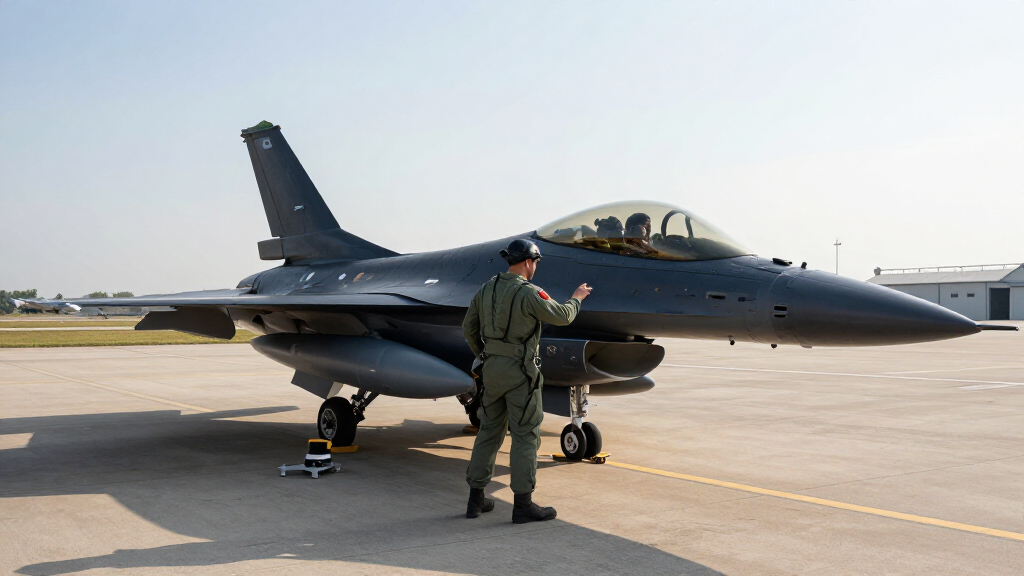
DARPA and the U.S. Air Force conducted a successful flight of an F-16 fighter jet controlled entirely by AI. This marks a significant step in autonomous military aviation technology, with implications for future combat and training.
DARPA and the U.S. Air Force have successfully conducted a flight of an F-16 fighter jet operated entirely by artificial intelligence during a recent demonstration. This achievement marks a significant milestone in autonomous military aviation, with potential implications for future combat operations and pilot training. The flight was conducted as part of a collaborative research effort aimed at advancing AI-driven aircraft control systems.
The flight took place on March 15, 2024, at Edwards Air Force Base in California. According to officials, the AI system managed all aspects of the jet’s flight, including navigation, targeting, and evasive maneuvers, without human intervention. DARPA (Defense Advanced Research Projects Agency) and the U.S. Air Force’s research units jointly developed the AI software, which was integrated into the F-16’s flight control systems.
Officials from DARPA confirmed that the AI-controlled F-16 successfully completed a series of predefined flight maneuvers, including simulated combat scenarios, demonstrating the system’s potential for autonomous operation. The aircraft was monitored remotely by human operators but was not directly controlled during the flight, marking a step toward fully autonomous combat aircraft.
Implications for Autonomous Military Aviation
This demonstration signifies a major advancement in autonomous military technology, suggesting that future fighter jets could operate with minimal or no human pilot input. Such capabilities could reduce risks to pilots in combat zones and enable new operational tactics. Experts note that this development could also influence future procurement, training, and strategic planning for the U.S. military, as AI-driven aircraft become more feasible.
AI flight control system for aircraft
As an affiliate, we earn on qualifying purchases.
As an affiliate, we earn on qualifying purchases.
Background on AI Development in Military Aircraft
Over the past decade, the U.S. military has invested heavily in AI research for defense applications, including autonomous drones and simulated combat systems. DARPA has previously announced projects focused on AI-enabled unmanned systems, but fully autonomous fighter jets have remained a longer-term goal due to technical and safety challenges. The recent flight of the AI-controlled F-16 represents a notable milestone in this ongoing effort.
While the concept of AI pilots has been explored in simulations, actual flight demonstrations like this are rare and indicate a maturing of the technology. The U.S. Air Force has expressed interest in integrating AI systems to augment human pilots or, eventually, operate independently in certain scenarios.
“This flight demonstrates the potential for AI to transform future air combat, reducing risks to human pilots while expanding operational capabilities.”
— Dr. Steven Walker, DARPA Director
As an affiliate, we earn on qualifying purchases.
Technical and Safety Challenges Remain Unresolved
It is not yet clear how the AI system performs in more complex combat scenarios or under real-time threat conditions. Experts caution that further testing is needed to assess reliability, safety, and ethical considerations before such systems can be deployed operationally. Additionally, questions remain about the integration of AI with existing military command and control structures.
autonomous drone and aircraft kits
As an affiliate, we earn on qualifying purchases.
As an affiliate, we earn on qualifying purchases.
Next Steps Include Broader Testing and Regulatory Review
DARPA and the U.S. Air Force plan to conduct additional test flights to evaluate the AI system under varied conditions, including simulated combat environments. They also aim to develop guidelines and regulations for the deployment of autonomous aircraft. Public and congressional oversight will likely influence the pace and scope of further development.
As an affiliate, we earn on qualifying purchases.
Key Questions
What does this flight mean for future combat aircraft?
This demonstration suggests that fully autonomous fighter jets could become a reality, potentially reducing pilot risk and enabling new tactics. However, widespread deployment remains years away and depends on further testing and regulatory approval.
Are human pilots still involved in these autonomous flights?
In the recent test, human operators monitored the flight remotely, but the AI system managed all flight operations. Future developments may see AI operating independently or alongside human pilots in hybrid roles.
What are the main concerns about autonomous fighter jets?
Concerns include safety, reliability, ethical use, and the risk of unintended escalation or malfunction. Experts emphasize the need for rigorous testing and oversight before operational deployment.
When might autonomous fighter jets be used in combat?
It is uncertain; experts estimate several years of further development, testing, and regulatory approval are needed before autonomous jets could see combat use, if at all.
Source: hn
Fall Picks
fall essentials
As an affiliate, we earn on qualifying purchases.