
TL;DR

Get business pricing on tech for your team
- Business-only prices and quantity discounts
- Tax-exempt purchasing
- Multiple users, one account, clear invoices
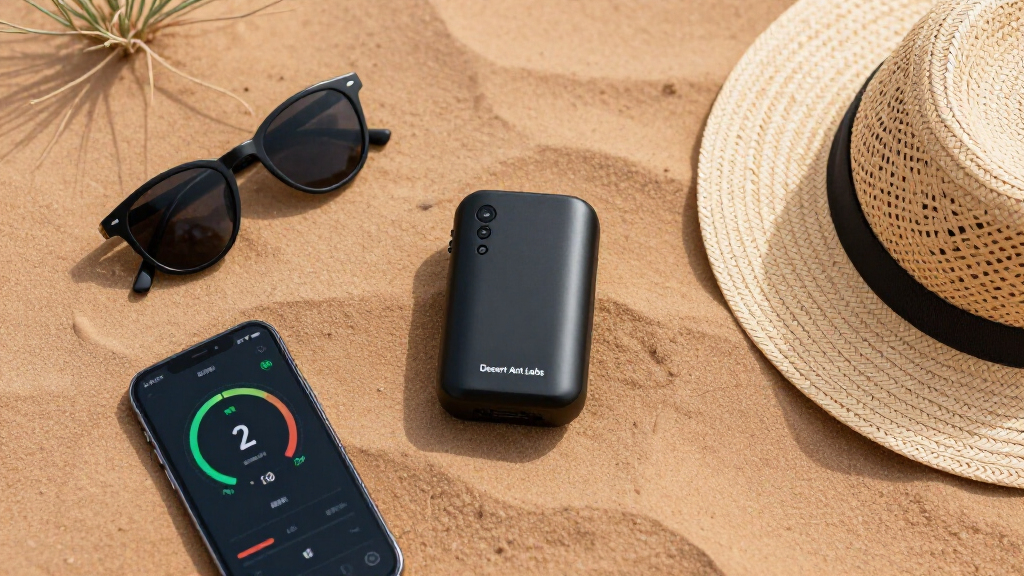
Desert Ant Labs has announced the development of lightweight AI models that operate locally on user devices. This innovation aims to enhance privacy and performance by eliminating reliance on cloud computing. The news reflects a growing trend toward on-device AI, though details about the models’ capabilities and deployment are still emerging.
Desert Ant Labs has introduced a new suite of lightweight AI models designed to operate directly on user devices, such as smartphones and embedded systems. This development aims to improve data privacy, reduce latency, and lessen dependence on cloud infrastructure. The announcement underscores a rising industry focus on on-device AI solutions, though specific technical details and deployment timelines remain undisclosed.
According to Desert Ant Labs, the new models are optimized for speed and efficiency, capable of running on low-power hardware without sacrificing core functionalities. The models are described as ‘local,’ meaning they do not require constant internet connectivity to function, which enhances user privacy and reduces latency issues common with cloud-based AI. While the company has not released detailed specifications or performance benchmarks, early indications suggest these models could be used in various applications, from mobile apps to IoT devices. Industry analysts note that this move aligns with broader trends in AI development, where companies are increasingly prioritizing privacy-preserving techniques and edge computing. The models’ ability to operate on-device could also mitigate concerns about data security breaches, as sensitive information remains on the device rather than transmitted to remote servers. However, it is not yet clear how these models compare in accuracy and complexity to larger, cloud-based counterparts, or what hardware requirements they will entail for end users.Implications for Privacy and AI Deployment
This announcement signals a potential shift in the AI landscape toward more privacy-centric, on-device solutions. By enabling models to run locally, Desert Ant Labs addresses concerns over data security and latency, which are significant hurdles for cloud-dependent AI systems. For consumers, this could mean enhanced privacy and faster response times in applications like voice assistants, image recognition, and real-time translation. For developers, it opens new avenues for creating AI-powered products that do not rely on constant internet access, broadening the scope of AI deployment in remote or resource-constrained environments.
Furthermore, this trend could influence industry standards, encouraging other AI companies to develop and release similar lightweight, local models. As AI models become more efficient, the possibility of widespread on-device AI becomes increasingly feasible, potentially transforming how AI services are integrated into everyday devices and systems.
on-device AI model for smartphones
As an affiliate, we earn on qualifying purchases.
As an affiliate, we earn on qualifying purchases.
Growing Interest in On-Device AI Solutions
Interest in on-device AI has been rising over the past few years, driven by increasing concerns over data privacy, security, and the need for faster processing speeds. Major tech companies have invested heavily in edge AI, with some launching dedicated hardware to support local models. The trend is also reflected in industry reports showing a spike in searches and coverage related to lightweight, fast AI models capable of running on low-power devices. However, most existing solutions are either proprietary or still in developmental stages, and widespread adoption remains limited.
The recent trend signals a possible acceleration in the deployment of on-device AI, although specific details about Desert Ant Labs’ models and their performance are still emerging. The industry is watching for how these models will compare to existing solutions in terms of accuracy, hardware compatibility, and ease of integration.
privacy-focused AI assistant device
As an affiliate, we earn on qualifying purchases.
As an affiliate, we earn on qualifying purchases.
Details About Model Capabilities and Deployment Still Unclear
It is not yet confirmed how advanced or accurate Desert Ant Labs’ models are compared to larger cloud-based AI systems. Specific technical specifications, hardware requirements, and deployment timelines have not been disclosed, leaving questions about practical usability and scalability.
Further details from the company are awaited, and industry experts are cautious about the immediate impact until more concrete data is available.
As an affiliate, we earn on qualifying purchases.
Expected Follow-Up Announcements and Performance Data
Desert Ant Labs is likely to release additional technical details, performance benchmarks, and deployment plans in the coming months. Industry observers anticipate further demonstrations of the models’ capabilities, as well as potential partnerships with device manufacturers or app developers. Monitoring these developments will be key to understanding how this technology might reshape on-device AI applications.
lightweight AI model for mobile apps
As an affiliate, we earn on qualifying purchases.
As an affiliate, we earn on qualifying purchases.
Key Questions
What are the main advantages of on-device AI models?
On-device AI models offer enhanced privacy, reduced latency, and lower reliance on internet connectivity, making AI applications faster and more secure for users.
Will these models work on all devices?
It is unclear which hardware platforms Desert Ant Labs’ models will support initially. Compatibility will depend on hardware capabilities and software integration, which remain undisclosed.
How do these models compare to cloud-based AI in terms of accuracy?
Specific performance metrics have not been released. It remains uncertain whether the lightweight models can match the accuracy of larger, cloud-based counterparts.
When will these models be available to the public?
Deployment timelines have not been announced. More information is expected in upcoming company disclosures or industry events.
Could this trend impact data privacy regulations?
Potentially, as more AI processing occurs locally, reducing data transmission to servers. This could influence future privacy standards and compliance requirements.
Source: hn
Halloween Picks
halloween
As an affiliate, we earn on qualifying purchases.