
🔍 Read the full analysis: Get The Most Out Of AI With These 9 Mirrorless Cameras In 2026 on ThorstenMeyerAI.com

Get business pricing on tech for your team
- Business-only prices and quantity discounts
- Tax-exempt purchasing
- Multiple users, one account, clear invoices
TL;DR
In 2026, the best mirrorless cameras are those that balance AI features, image quality, and usability. This guide highlights the top 10 models suited for various needs, from beginners to professionals.
As of March 2026, the market for mirrorless cameras optimized for AI features is expanding rapidly, with at least 10 models standing out for their performance, usability, and AI integration. These cameras are essential tools for photographers and content creators seeking to leverage AI-powered autofocus, scene recognition, and editing tools to enhance their workflow and results.
The top 10 mirrorless cameras in 2026 include models from Canon, Nikon, Sony, and other leading brands, each offering unique advantages for different users. For more detailed reviews, see the original analysis. Canon’s EOS R6 Mark II remains the overall top pick, praised for its versatility and high performance in both stills and video. The Nikon Z50 II offers a compact, beginner-friendly experience with AI-enhanced autofocus, while Sony’s ZV-E10 is tailored for vloggers and content creators with advanced AI-driven features for video stabilization and scene detection.
Other notable models include the Panasonic Lumix GX800 II, which emphasizes portability and AI scene recognition, and the Fujifilm X-T5 II, known for its color science and AI-assisted editing tools. These models have been selected based on their balance of image quality, AI capabilities, ease of use, and value for different user segments, from casual shooters to professional content creators. Check out 11 Best Mirrorless Cameras for Beginners in 2026 for beginner-friendly options.
The 10 picks
- 1
 Canon EOS R6 Mark II Mirrorless Camera RF24-105mm F4-7.1 IS STM Lens KitView on Amazon →
 - 2
 Nikon Z50 II with Two Lenses – Compact Mirrorless Camera with 20.9MP Sensor,…View on Amazon →
 - 3
 Canon EOS R50 Mirrorless Camera with 18-45mm & 55-210mm Lenses BundleView on Amazon →
 - 4
 Sony ZV-E10 APS-C Mirrorless Camera with 16-50mm LensView on Amazon →
 - 5
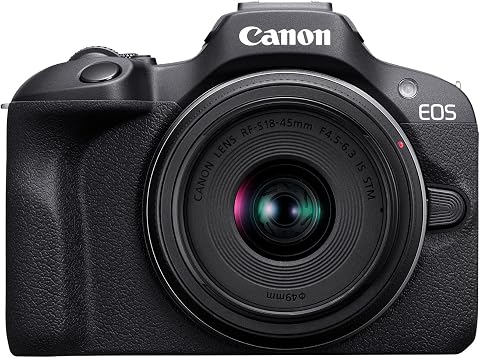 Canon EOS R100 Mirrorless Camera with RF-S18-45mm F4.5-6.3 IS STM Lens KitView on Amazon →
 - 6
 Sony Alpha a6400 Mirrorless Camera with 16-50mm LensView on Amazon →
 - 7
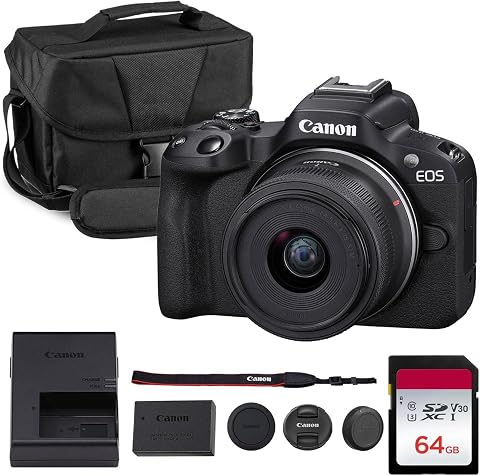 Canon EOS R50 Mirrorless Camera with 18-45mm Lens BundleView on Amazon →
 - 8
 Canon EOS R50 Mirrorless Camera RF-S18-45mm F4.5-6.3 IS STM Lens KitView on Amazon →
 - 9
 Canon EOS R100 Mirrorless Camera Kit with 18-45mm & 55-210mm Lenses, 24MP Sen…View on Amazon →
 - 10
 Canon EOS R100 Mirrorless Camera with RF-S 18-45mm Lens BundleView on Amazon →
Why AI-Optimized Cameras Matter in 2026
These cameras are transforming how users capture and process images by integrating advanced AI features that improve autofocus, scene recognition, and post-processing. For photographers and content creators, AI integration means faster workflows, better results in challenging conditions, and new creative possibilities. As AI becomes more embedded in camera systems, choosing a model that leverages these capabilities can significantly enhance productivity and output quality in 2026 and beyond.
Evolution of Mirrorless Cameras and AI Features
Over the past few years, mirrorless cameras have increasingly incorporated AI-driven technologies, such as eye and subject tracking, automatic scene optimization, and real-time editing. In 2026, these features are now standard in many models, with some offering dedicated AI processors. The shift reflects a broader industry trend toward smarter, more intuitive imaging tools that help users achieve professional-quality results with minimal effort.
This evolution was driven by advancements in machine learning, sensor technology, and processing power, making AI features more accurate and accessible. Major brands have competed to embed AI deeply into their ecosystems, resulting in a diverse range of options tailored for different skill levels and creative goals.
Uncertainties Surrounding Future AI Developments
While current models incorporate impressive AI features, it is still unclear how rapidly these capabilities will evolve in the coming years. Some experts question whether AI will become truly autonomous or remain dependent on user input. Additionally, the long-term reliability and data privacy implications of AI-driven cameras are still under discussion, with no definitive consensus.
It is also uncertain how future firmware updates or new hardware releases will enhance or alter AI functionalities, making it difficult to predict the longevity of current models’ AI advantages.
Upcoming Trends and Next-Generation AI Cameras
Manufacturers are expected to continue refining AI features, with future models likely to offer even more sophisticated scene recognition, real-time editing, and integration with cloud-based workflows. Firmware updates may unlock new AI capabilities, while hardware innovations could lead to smaller, more powerful sensors and processors. Consumers should watch for announcements at major industry events scheduled for late 2026 and 2027, which will reveal the next wave of AI-enhanced mirrorless cameras.
Investors and users should also consider how AI integration will influence software ecosystems, with more seamless workflows between cameras, editing tools, and cloud services becoming standard.
Key Questions
Which mirrorless camera offers the best AI features in 2026?
The Canon EOS R6 Mark II is widely regarded as the top overall choice for AI features, offering advanced autofocus, scene recognition, and user-friendly interfaces.
Are AI features in cameras worth the extra cost?
For many users, AI features improve autofocus accuracy, scene optimization, and workflow efficiency, making them valuable investments, especially for professional or content creation purposes.
Can beginners benefit from AI in mirrorless cameras?
Yes, many AI-enabled cameras include automatic modes and guided settings that help beginners learn photography while producing high-quality results.
Will AI features make cameras obsolete in the future?
While AI enhances camera capabilities, it is unlikely to replace traditional photography skills entirely. Instead, it will serve as a powerful tool to augment user creativity and efficiency.
What should I consider when choosing an AI-enabled mirrorless camera?
Consider your primary use—whether photography, videography, or content creation—and evaluate factors like sensor size, autofocus performance, lens ecosystem, and portability to find the best fit for your needs.
Source: ThorstenMeyerAI.com
Halloween Picks
halloween
As an affiliate, we earn on qualifying purchases.