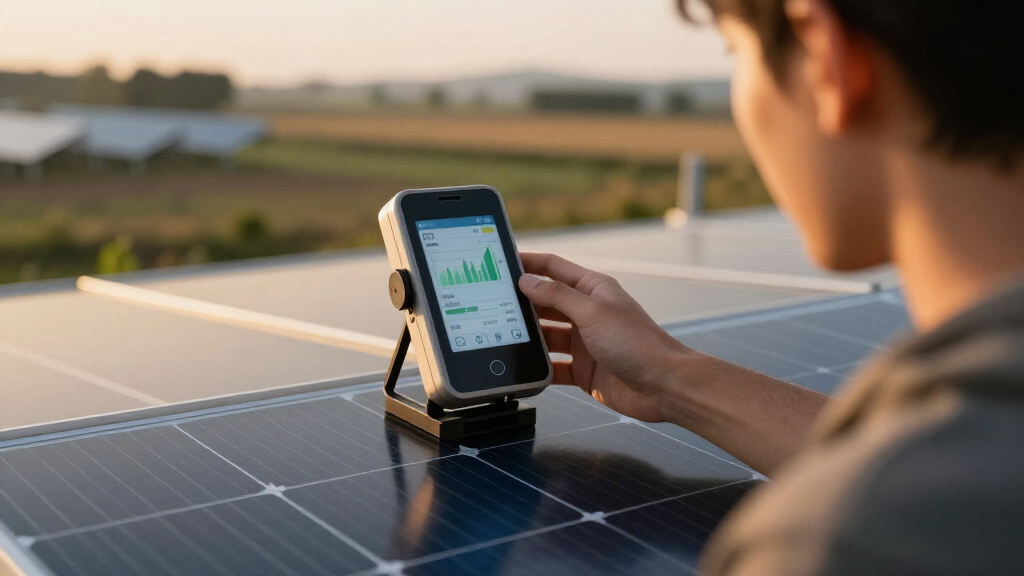

📊 Full opportunity report: Measuring AI Impact With Agents Per Gigawatt on ThorstenMeyerAI.com — validation score, market gap, and execution plan.

Get business pricing on tech for your team
- Business-only prices and quantity discounts
- Tax-exempt purchasing
- Multiple users, one account, clear invoices
TL;DR
A new measure, agents per gigawatt, is emerging as the key metric for AI capacity, linking energy production directly to autonomous cognitive work. This shift redefines how industry and nations gauge their AI and economic strength.
Thorsten Meyer has introduced the concept that agents per gigawatt is the new fundamental measure of AI and economic power, emphasizing the role of energy in enabling autonomous cognition. This idea shifts focus from traditional metrics like GDP to a direct accounting of energy-to-intelligence conversion, reflecting the current AI buildout and energy dynamics.
According to Meyer, the binding constraint on AI capacity is now power supply, specifically the number of gigawatts of electricity available to run autonomous agents. Each agent, a stream of tokens performing cognitive tasks, requires compute power, which in turn depends on chips and energy. As AI models and hardware improve, the industry’s focus is on increasing the agents per gigawatt ratio.
This metric encapsulates the entire AI buildout: data centers, hardware advancements, and energy infrastructure. Meyer argues that the industry is effectively in a race to maximize this ratio, with hardware innovations like low-voltage inference and optical transceivers aimed at boosting energy efficiency and cognitive throughput. The concept also reframes national AI power, emphasizing sovereignty based on energy-controlled infrastructure rather than traditional measures like model releases or publications.
Every era measures power in whatever is scarce: land, then steel, then GDP. The binding constraint is changing again — and the new unit is how much autonomous cognition a nation or company can produce per unit of energy it can command.
▲ Opinion & analysis · not investment adviceMore agents means more tokens, which takes compute, which takes chips, which take one thing above all — power. The energy story and the AI story became the same story.
Once you hold it, the separate stories of the moment stop being separate — they’re all the same ratio, seen from different angles.
Adopting it drags three things into the open that softer framings let you avoid.
And the unit rewards concentration — unless we deliberately build against it.
Implications of the Agents-Per-Gigawatt Metric
This new metric offers a clear, quantifiable way to measure AI capacity and national power, directly linking energy infrastructure to autonomous cognition. It highlights the importance of energy policy, hardware efficiency, and infrastructure investment in the AI era. Countries and companies that can maximize agents per gigawatt will have a competitive advantage in deploying AI at scale, affecting geopolitical dynamics and economic growth.
Furthermore, this shift underscores the interdependence of energy and AI development. As AI buildouts accelerate, the race to secure reliable power supplies and improve energy-to-cognition conversion efficiency becomes central to technological leadership and sovereignty, especially for nations like Europe that face energy vulnerabilities.
As an affiliate, we earn on qualifying purchases.
Evolution of Metrics in Technological Power
Historically, national and economic strength was measured by land, industrial output, and GDP. As AI and autonomous systems grow, these metrics become less relevant, replaced by indicators of autonomous cognitive capacity. Meyer’s proposal builds on the recognition that energy consumption is now the key bottleneck, shifting the focus from labor and capital to power infrastructure.
The concept of agents per gigawatt aligns with recent hardware trends, such as specialized inference chips and energy-efficient architectures, which aim to maximize cognitive output per unit of energy. This reflects a broader transition from physical and human capital to energy and infrastructure-centric metrics.
"The honest unit of productive capacity is not the number of chips or models but the rate at which energy converts into intelligence."
— Thorsten Meyer
AI compute power measurement tools
As an affiliate, we earn on qualifying purchases.
As an affiliate, we earn on qualifying purchases.
Unresolved Questions About the New Metric
It is not yet clear how quickly the industry will adopt and standardize the agents-per-gigawatt metric. The precise measurement methods, benchmarks, and implications for existing infrastructure are still under development. Additionally, the impact on national policies and international competition remains to be fully understood.
As an affiliate, we earn on qualifying purchases.
Next Steps in Measuring and Implementing Capacity
Industry stakeholders are likely to begin developing standardized metrics and reporting frameworks for agents per gigawatt. Hardware innovations, such as more energy-efficient chips and cooling systems, will be prioritized to improve this ratio. Governments may also start integrating this metric into national AI strategies, emphasizing energy infrastructure investments and sovereignty considerations.
energy monitoring for data centers
As an affiliate, we earn on qualifying purchases.
As an affiliate, we earn on qualifying purchases.
Key Questions
How does agents per gigawatt differ from traditional AI metrics?
It directly measures the energy required to run autonomous agents, focusing on energy-to-cognition conversion rather than hardware counts or model sizes.
Why is energy now the critical constraint for AI capacity?
Because autonomous agents require significant compute power, which depends on energy supply; hardware efficiencies and energy infrastructure determine how many agents can be run simultaneously.
Will this metric influence national AI policies?
Yes, countries may prioritize energy infrastructure and hardware innovation to increase their agents-per-gigawatt capacity, affecting geopolitical competition.
Is this concept applicable to all types of AI systems?
It primarily applies to large-scale autonomous agents and infrastructure-driven AI deployments, less so to smaller or less energy-dependent systems.
Source: ThorstenMeyerAI.com
Halloween Picks
halloween
As an affiliate, we earn on qualifying purchases.