
📊 Full opportunity report: Monitoring Youth Pitcher Arm Load Across A Changing Schedule on IdeaNavigator AI — validation score, market gap, and execution plan.

Get business pricing on tech for your team
- Business-only prices and quantity discounts
- Tax-exempt purchasing
- Multiple users, one account, clear invoices
TL;DR
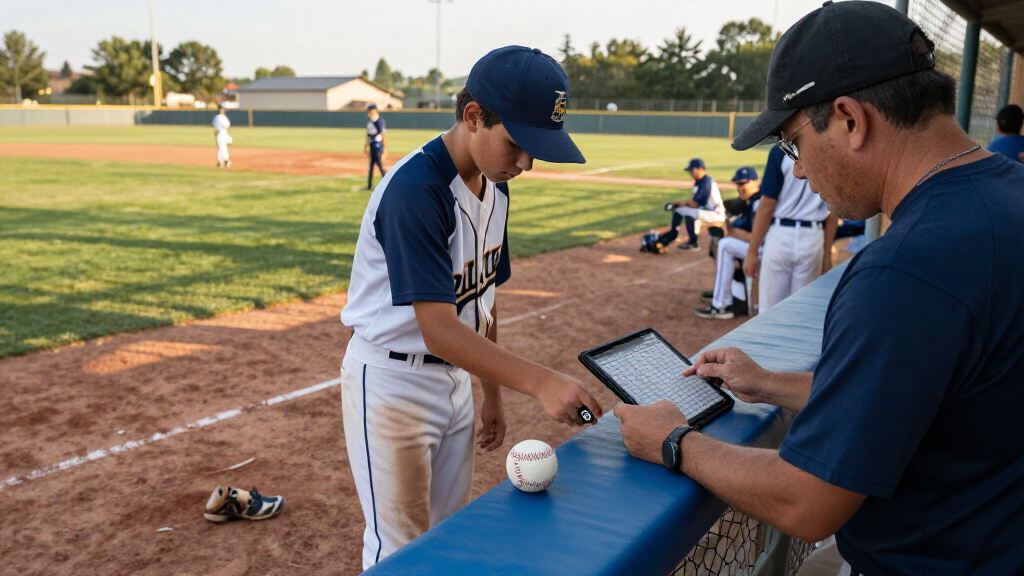
IdeaNavigator AI has outlined an early product concept for parents tracking a young pitcher’s workload across school, travel and showcase teams. The proposal calls for a 200-family season test, but no app launch, trial results or evidence of reduced injuries is reported.
IdeaNavigator AI has proposed testing an arm-load tracking app for parents of youth pitchers who play across school, travel and showcase teams, with a suggested pilot involving 200 travel-ball families over one season. The proposal addresses a scheduling problem: separate teams may not share pitching records, making it harder for families to see a child’s workload across the full season. No pilot, product launch or injury-prevention outcome is reported.
The proposed minimum product would let parents log pitching outings in seconds or import records from GameChanger. It would combine activity across teams, compare a pitcher’s rolling workload with age-based guidelines, flag set thresholds and help schedule rest. The concept also calls for a shareable workload report for each coach, giving teams a common record rather than relying on separate team-level counts.
IdeaNavigator AI frames the likely first customer as a parent whose child pitches across multiple seasons and teams. Its suggested business model is an annual family subscription, with possible team licenses later. Those are proposals, not reported commercial arrangements: no pricing, product availability, development schedule or participating teams are specified.
For validation, the proposal recommends recruiting 200 travel-ball families, measuring whether parents log consistently over a season and auditing whether app flags change rest decisions. That plan would test adoption and influence on family decisions. It would not, on its own, establish that the app prevents injuries or that its thresholds accurately predict an individual pitcher’s risk.
A consolidated record could help families and coaches notice workload that is invisible when each team tracks only its own games and practices. The app concept responds to a practical gap: a young player can move between school, travel and showcase schedules while no single team holds the complete pitching history. A parent-facing log could make that history easier to share when schedules overlap or rest decisions arise.
The potential value depends on whether the information is reliable and acted on. Parents would need to record outings accurately, coaches would need to review and respect shared reports, and the app’s guideline-based flags would need clear limits. If a pilot shows that families use the tool but that coaches do not change decisions, the product’s practical effect may be limited. If flags do alter rest choices, that would show influence on decisions—not proof of fewer elbow injuries.
The distinction matters because the proposal is an early product hypothesis, not medical guidance or an evaluated intervention. Families should not treat an app alert as a diagnosis or substitute for advice from qualified health professionals. The central question is whether a simple, cross-team record can improve communication without giving users a false sense that risk is fully measured.
youth baseball pitching workload tracker
As an affiliate, we earn on qualifying purchases.
As an affiliate, we earn on qualifying purchases.
Why Fragmented Schedules Matter
Youth pitchers may play for school, travel and showcase teams whose schedules and recordkeeping systems are separate. The proposal says cumulative arm load can therefore go untracked across a child’s commitments. It also points to Pitch Smart guidelines as an existing reference, while arguing that guidelines do not themselves coordinate or enforce workload limits across a fragmented schedule.
The proposal cites rising youth elbow-surgery rates and the expansion of travel baseball as reasons to examine the issue, but it supplies no figures, study citations or time period for those claims. They should be understood as the rationale offered for the idea, not independently documented findings in this report. Likewise, the statement that injuries once associated mainly with professional players are now reaching high school athletes is not accompanied by supporting data here.
The proposed app would not change team schedules or create shared league rules. Its narrower task would be to gather information from families and make it available to coaches. Whether that approach fills a meaningful gap depends on how well existing tools and team processes already capture a player’s activity, and on whether families can keep the record current during a busy season.
As an affiliate, we earn on qualifying purchases.
Pilot Results Have Not Been Reported
No pilot has been reported, and the proposal does not identify a launch date, developer, clinical partner or participating families. It is also unclear how the app would define an outing, account for practices and warm-ups, handle missing records, or select the age-based thresholds used to flag workload. The proposal names GameChanger as a possible import route but gives no technical details about access or compatibility.
The proposed season test would measure logging consistency and whether flags influenced rest decisions. It does not specify how those outcomes would be measured, how families would be recruited, or whether the app’s guidance would be reviewed by medical or sports-science professionals. No evidence is provided that the proposed tracking method reduces injury rates. Claims about climbing surgery rates and the spread of youth elbow injuries also remain unquantified in the proposal.
youth sports injury prevention monitor
As an affiliate, we earn on qualifying purchases.
As an affiliate, we earn on qualifying purchases.
Testing Adoption and Rest Decisions
The next stated step is to recruit 200 travel-ball families for a season-long test, then assess how consistently they log outings and whether risk flags affect rest decisions. No start date or recruitment announcement is provided. Until such a test is conducted and its methods and results are made public, the app remains a concept with a proposed validation plan rather than a proven injury-prevention tool.
If a pilot proceeds, useful reporting would distinguish routine use from changes in decisions and would explain how workload thresholds were chosen. Longer-term injury outcomes would require separate evidence; a single season of app use or a change in rest scheduling would not establish that injuries were prevented.
Source: IdeaNavigator AI
baseball pitch count app for parents
As an affiliate, we earn on qualifying purchases.
As an affiliate, we earn on qualifying purchases.
Key Questions
Has the youth pitcher tracking app launched?
No launch is reported. IdeaNavigator AI describes a product concept and a proposed test; it does not name an available app or release date.
What would the proposed app track?
Parents would log or import pitching outings across teams. The concept would combine records, compare rolling workload with age-based guidelines, flag thresholds and produce reports that can be shared with coaches.
Would the app prove that a pitcher is safe to play?
No. The proposal offers no evidence that its alerts predict individual injury risk or prevent injuries. Any workload report would be a tracking aid, not a diagnosis or guarantee of safety.
How would the idea be tested?
The suggested test is to recruit 200 travel-ball families for one season, track how consistently they log outings and assess whether alerts change rest decisions. No test results or start date are reported.
Source: IdeaNavigator AI
Halloween Picks
halloween
As an affiliate, we earn on qualifying purchases.