
TL;DR

Get business pricing on tech for your team
- Business-only prices and quantity discounts
- Tax-exempt purchasing
- Multiple users, one account, clear invoices
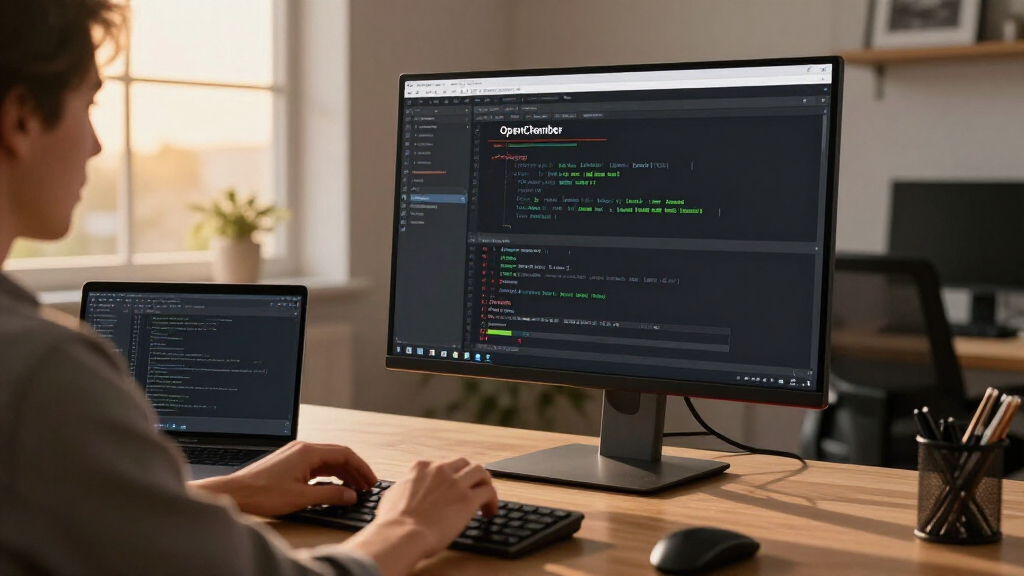
OpenChamber has announced a new development environment designed for building, testing, and deploying autonomous AI agents. The platform aims to streamline agent development and foster innovation in AI research. Details are still emerging about its capabilities and adoption.
OpenChamber has unveiled a new platform called ‘OpenChamber: An Agentic Development Environment’, designed to facilitate the creation, testing, and deployment of autonomous AI agents. This development aims to provide researchers and developers with a comprehensive toolkit to accelerate AI innovation and experimentation. The platform’s launch marks a notable advancement in AI development environments, with potential implications for both industry and academia.
The platform, announced publicly on March 2024, offers a suite of tools that enable users to design, simulate, and evaluate autonomous agents within a controlled environment. According to OpenChamber, the environment supports iterative development, real-time testing, and integration with existing AI frameworks. It is designed to reduce the complexity typically involved in agent development, making it accessible to a broader range of users, from researchers to hobbyists.
While specific technical features remain under wraps, OpenChamber has emphasized that the platform incorporates advanced simulation capabilities, including dynamic environment modeling and multi-agent interactions. The company stated that the environment aims to foster experimentation with agent behaviors, decision-making processes, and learning algorithms. The platform is currently in a closed beta phase, with plans for wider release later in 2024.
Potential Impact on AI Development and Research
The launch of OpenChamber’s agentic environment could significantly influence how AI agents are developed and tested. By providing a streamlined, accessible platform, it may lower barriers to experimentation, enabling more rapid innovation. This could accelerate progress in autonomous systems, reinforcement learning, and multi-agent coordination. Industry experts suggest that such tools are vital for translating research into practical applications, including robotics, gaming, and autonomous vehicles.
Moreover, the platform’s emphasis on simulation and testing may improve safety and reliability in AI deployment, addressing concerns about unanticipated behaviors in autonomous agents. If widely adopted, OpenChamber’s environment might set new standards for AI development workflows and collaboration across sectors.
AI development environment software
As an affiliate, we earn on qualifying purchases.
As an affiliate, we earn on qualifying purchases.
Background on AI Development Environments and OpenChamber
Over recent years, AI development has increasingly relied on specialized environments that enable testing and simulation of autonomous agents. Companies like OpenAI, DeepMind, and others have developed platforms focused on reinforcement learning and agent training, but many remain complex and resource-intensive. OpenChamber, founded in 2022, has positioned itself as an innovator aiming to democratize access to agent development tools.
The company announced its initial plans for an agentic environment in late 2023, emphasizing ease of use and integration with existing AI frameworks. The current announcement of the new platform represents a step toward realizing that vision, with a focus on providing a comprehensive, user-friendly environment for experimentation and deployment. Prior to this, OpenChamber had released several smaller tools and frameworks aimed at AI research communities.
“Our new environment is designed to empower researchers and developers to innovate more rapidly with autonomous agents, reducing barriers and fostering collaboration.”
— OpenChamber spokesperson
autonomous AI agent testing platform
As an affiliate, we earn on qualifying purchases.
As an affiliate, we earn on qualifying purchases.
Details on Platform Capabilities and Adoption Unclear
It is not yet clear how widely the platform will be adopted outside of early testers, nor what specific technical features will be available in the initial release. OpenChamber has not disclosed detailed specifications or compatibility requirements, and the extent of integration with existing AI frameworks remains uncertain. Additionally, the long-term impact on AI safety and regulation is still to be evaluated.
As an affiliate, we earn on qualifying purchases.
Upcoming Beta Release and Community Engagement
OpenChamber plans to open the platform to a broader group of developers and researchers later in 2024, following ongoing beta testing. The company has indicated that user feedback will shape future updates and features. Industry analysts expect a series of updates, tutorials, and community events aimed at promoting adoption and collaboration. Monitoring how the platform performs in real-world testing will be critical to understanding its full impact.
multi-agent AI simulation software
As an affiliate, we earn on qualifying purchases.
As an affiliate, we earn on qualifying purchases.
Key Questions
What is OpenChamber’s new platform designed to do?
It is a development environment aimed at creating, testing, and deploying autonomous AI agents efficiently and effectively.
When will the platform be available to the public?
OpenChamber plans a wider release later in 2024, following ongoing beta testing with selected users.
What are the main features of the platform?
Specific features are not fully disclosed, but it is expected to include simulation tools, multi-agent interaction capabilities, and integration options with existing AI frameworks.
How might this platform influence AI research?
By simplifying agent development and testing, it could accelerate innovation, improve safety testing, and foster collaboration across sectors.
Are there any concerns about safety or regulation?
While the platform aims to improve testing, broader safety and regulatory implications remain to be seen as adoption grows.
Source: hn
Halloween Picks
halloween
As an affiliate, we earn on qualifying purchases.