

Relying on a single, rigid workflow can trap your team in endless rework, delays, and inefficiencies. When you stick to one process, it often causes bottlenecks, mismatched tasks, and limited flexibility for handling different project needs. This leads to frustration, missed deadlines, and reduced innovation. Recognizing these signs is essential, because diversifying workflows and embracing adaptability can save time and boost productivity. Discover how to transform your processes for better agility and efficiency.
Key Takeaways
- Relying on a single workflow limits flexibility, causing repetitive rework when tasks don’t fit predefined steps.
- It prevents adaptation to changing project needs, leading to delays and repeated revisions.
- A rigid workflow hampers process improvements, making small adjustments require major rework.
- Lack of diversified workflows causes bottlenecks, forcing tasks to bounce back for corrections.
- Overdependence on one system reduces team agility, increasing the likelihood of endless rework cycles.
Why Relying on a Single Workflow Limits Your Team’s Flexibility

Relying on a single workflow can severely restrict your team’s ability to adapt to changing priorities or unexpected challenges. When you depend on just one process, it limits how quickly you can implement workflow automation to streamline tasks. This rigidity hampers team collaboration, making it harder for team members to shift focus or handle urgent issues efficiently. Without multiple workflows in place, your team may waste time trying to force everything through a single system, leading to delays and frustration. Embracing diverse workflows allows your team to respond more flexibly to evolving demands, ensuring smoother project management. Ultimately, a single workflow reduces your team’s agility, preventing it from fully leveraging workflow automation and effective collaboration during critical moments.
How Strict Adherence to One Process Creates Bottlenecks and Rework
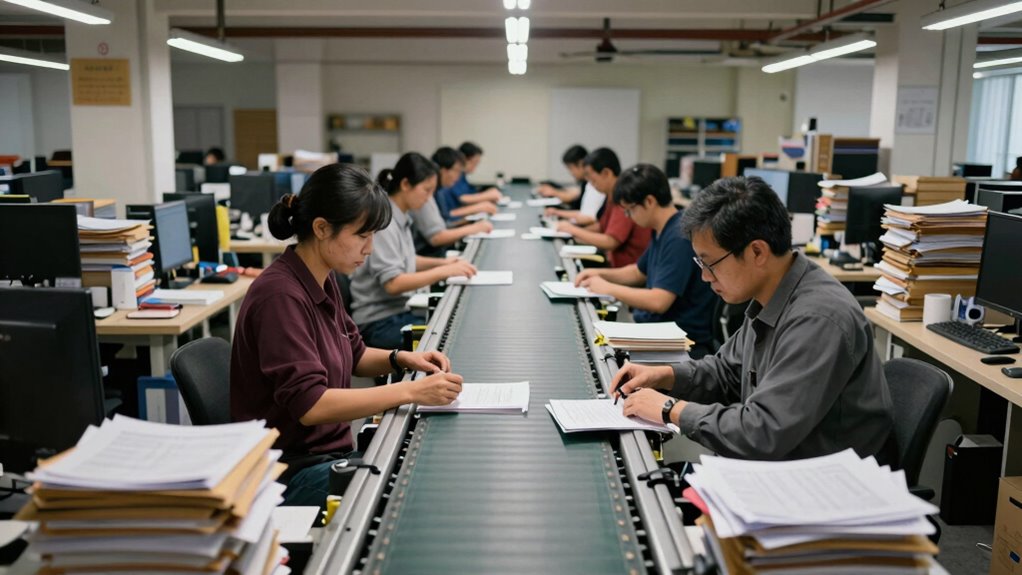
Strictly sticking to a single process often causes bottlenecks that slow down your entire workflow. When you enforce process rigidity, team members become less adaptable, forcing tasks to queue up at certain stages. This inflexibility can also hinder the implementation of small, practical modifications, which are essential for continuous improvement. As a result, workflow bottlenecks form, delaying project completion and increasing frustration. Instead of streamlining, strict adherence to one process can trap your team in a cycle of rework, with each delay compounding the next. Recognizing that no single process fits every situation is key to maintaining a smooth, efficient workflow. Incorporating flexible procedures enables teams to respond more effectively to unforeseen challenges and adjust workflows as needed, promoting a culture of continuous improvement.
Recognizing the Signs That Your Workflow Is Causing Delays and Frustration

If you notice frequent missed deadlines or repetitive task cycles, your workflow might be causing delays. These signs indicate that your processes aren’t flowing smoothly, leading to frustration. Recognizing these patterns is the first step to fixing the underlying issues.
Missed Deadlines Often
Have you noticed you’re missing deadlines more often than you’d like? This usually signals flaws in your workflow, often linked to poor collaborative planning and resource allocation. When teams aren’t aligned or resources are mismanaged, tasks fall behind, causing delays. You might find parts of projects piling up or tasks taking longer than expected, even when effort is consistent. These signs point to a workflow that isn’t optimized, leading to frustration and missed commitments. Addressing this requires evaluating how well your team communicates and whether resources are distributed effectively. Without proper workflow management, deadlines slip, and rework becomes inevitable. Recognizing these warning signs early helps you implement adjustments before delays cascade, keeping your projects on track and reducing stress for everyone involved. Incorporating support breakfast strategies can also foster team cohesion and improve overall productivity. Additionally, utilizing tools that facilitate task tracking can help identify bottlenecks and streamline processes. Conducting regular process reviews can reveal hidden obstacles that contribute to delays, allowing targeted improvements.
Repeated Task Cycles
Repeated task cycles often signal underlying workflow issues that lead to delays and frustration. When you notice yourself repeating the same tasks without progress, it indicates your workflow lacks flexibility, causing bottlenecks. These endless task cycles can stall projects and drain energy. To identify this problem, look for signs like:
- Tasks bouncing back for revisions repeatedly
- No clear progress despite effort
- Frequent rework due to unclear processes
If your team is stuck in these patterns, it’s a sign your workflow needs adjustment. Improving workflow flexibility allows task cycles to flow smoothly, reducing rework and delays. Recognizing these signs early helps you break free from unnecessary repetition and streamlines your processes. Additionally, effective workflow management tools can help monitor and optimize task sequences to prevent such issues.
The Hidden Costs of Endless Rework on Projects and Team Morale

Endless rework on projects doesn’t just drain time and resources; it secretly chips away at team morale and productivity. When rework becomes frequent, your team’s resource allocation suffers, forcing team members to revisit tasks instead of focusing on new or complex work. This cycle stalls skill development, as team members spend more time fixing errors than learning and growing. Over time, frustration builds, leading to decreased motivation and collaboration. The hidden costs extend beyond immediate project delays—they impact long-term performance and innovation. Recognizing these costs motivates you to address root causes of rework, streamline workflows, and foster an environment where team members can develop their skills without constantly fixing preventable mistakes. Implementing best practices in project management can significantly reduce rework and its associated costs. Additionally, understanding the importance of quality assurance helps prevent errors before they occur, saving time and resources. A proactive approach to continuous improvement ensures that recurring issues are identified and resolved, further decreasing rework rates. Incorporating effective communication strategies can also help clarify expectations and prevent misunderstandings that lead to rework. Emphasizing early detection of issues through regular reviews can mitigate the accumulation of errors later in the process, ultimately reducing rework and boosting project success. Ultimately, reducing rework boosts morale and enhances overall project success.
How to Identify When You Need Multiple Workflows for Better Flexibility

Knowing when to implement multiple workflows begins with observing your team’s capacity to adapt and handle different types of tasks efficiently. If your team struggles with a single process, or if tasks vary considerably in complexity, it’s a sign you need more workflow diversification. Look for these indicators:
- Repeated bottlenecks that delay project timelines
- Frequent rework due to mismatched task requirements
- Difficulty maintaining process flexibility across projects
Implementing multiple workflows helps tailor your approach to specific needs, increasing efficiency and reducing frustration. It allows your team to switch seamlessly between tasks, enhancing overall productivity. Recognizing these signs ensures you’re not stuck with a one-size-fits-all process that hampers progress. By diversifying workflows, you create a more adaptable environment that responds better to changing demands.
Managing Multiple Workflows Without Confusing Your Team

To manage multiple workflows effectively, you need clear definitions for each process so your team knows exactly what to do. Consistent communication protocols help prevent confusion and guarantee everyone stays on the same page. When both are in place, your team can handle multiple workflows smoothly without mistakes or misunderstandings. Implementing a Gold IRA rollover process with well-defined steps can further streamline retirement asset management.
Clear Workflow Definitions
Managing multiple workflows can quickly become confusing if you don’t establish clear definitions for each one. Clear workflow definitions help your team understand roles, expectations, and boundaries, reducing errors and delays. To achieve this, focus on:
- Defining each workflow’s scope to address process variation and ensure flexibility where needed.
- Clarifying steps, responsibilities, and decision points to prevent overlaps.
- Documenting workflows thoroughly so everyone has a reference for what’s expected.
- Incorporating connected equipment and apps to monitor and optimize workflow efficiency in real time. Recognizing how smart home automation integrates into workflows can further streamline operations and reduce manual oversight. Additionally, understanding the butter basics can serve as a metaphor for smooth operations, ensuring that every component functions cohesively without unnecessary rework. Establishing standard operating procedures can also provide consistency and clarity across different workflows.
This clarity promotes workflow flexibility, allowing your team to adapt without losing sight of the overall process. Well-defined workflows eliminate ambiguity, streamline handoffs, and minimize rework. When everyone understands the distinct workflows, your team works more efficiently and confidently, avoiding confusion and costly mistakes.
Consistent Communication Protocols
When coordinating multiple workflows, establishing consistent communication protocols is essential to prevent confusion and guarantee smooth operations. You need clear, collaborative communication channels that everyone understands and uses uniformly. This prevents team members from missing critical updates or working at cross purposes. To achieve this, adopt flexible strategies that fit your team’s needs, such as standardized meeting schedules, shared documentation, or designated communication tools. Consistent protocols create a common language, reducing misunderstandings and streamlining decision-making. Regularly reinforce these standards and adjust them as needed to accommodate changes. Incorporating media literacy can also help your team critically evaluate information and avoid misunderstandings stemming from misinformation. Additionally, understanding AI ethics can guide teams in making responsible decisions about technology use and communication. Building a communication framework that emphasizes clarity and accountability further supports effective workflow management. By maintaining clarity and consistency in your communication, you ensure that multiple workflows run seamlessly, and your team stays aligned, confident, and productive.
How to Foster Continuous Improvement and Flexibility in Your Processes

Ever wondered how some organizations stay agile and continually improve their processes? The key lies in fostering process adaptability and embracing innovation strategies. To do this, you should:
- Encourage feedback loops that identify bottlenecks and areas for growth
- Regularly review and refine workflows to respond to changing needs
- Promote a culture open to experimentation and learning from failures
- Incorporate creative technology to enhance storytelling and operational efficiency
Tools and Techniques for Effectively Managing Adaptive Workflows
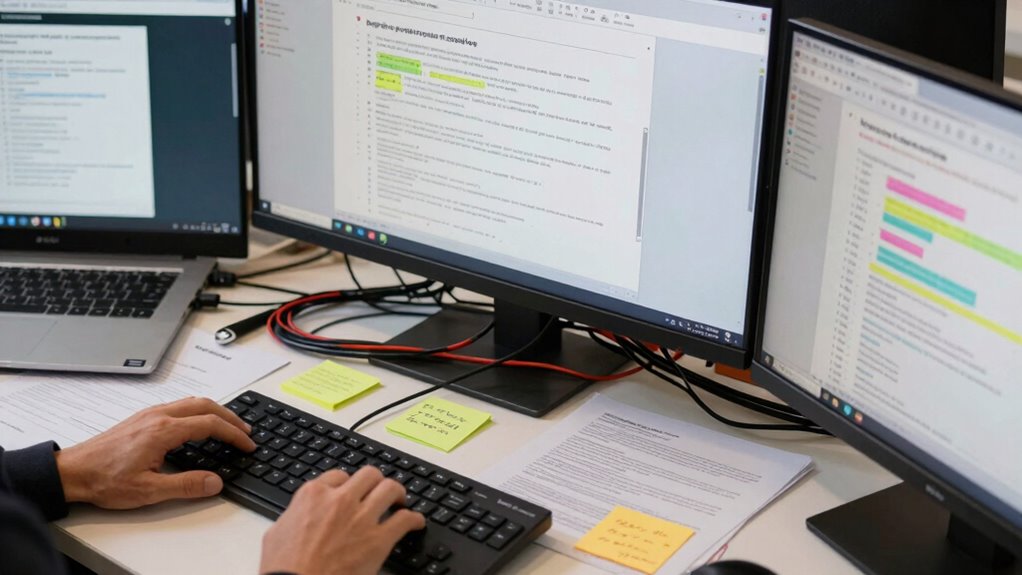
To effectively manage adaptive workflows, leveraging the right tools and techniques is essential. Tools like Kanban boards and project management software help increase workflow flexibility by visualizing tasks and adjusting priorities on the fly. Agile methodologies, such as Scrum or Lean, promote process adaptability, enabling teams to respond quickly to changing requirements. Regular stand-ups and retrospectives facilitate transparency and continuous feedback, ensuring your workflow remains responsive. Utilizing data analytics and real-time dashboards provides insights into bottlenecks and inefficiencies, supporting informed decision-making. Embracing flexible tools and techniques empowers you to maintain momentum despite uncertainties, fostering a culture of adaptability. With these strategies, you can sustain process flexibility and keep your team aligned, even as project scopes evolve.
Examples of Teams Successfully Diversifying Their Workflows

Many successful teams have diversified their workflows by adopting multiple approaches tailored to their unique project needs. This workflow diversification enhances process flexibility, allowing teams to adapt quickly and reduce bottlenecks. For example, a software development team might combine Agile sprints with Kanban boards to optimize task management and speed. Another team could integrate design thinking with traditional project management to foster innovation while maintaining structure. Additionally, marketing teams often blend content calendars with real-time analytics, enabling swift adjustments based on campaign performance. These strategies demonstrate how diversifying workflows helps teams stay agile, improve collaboration, and prevent endless rework. Embracing such process adaptability ensures that each project benefits from the most effective approach, ultimately leading to more efficient outcomes.
Frequently Asked Questions
How Do I Determine Which Workflows Suit Different Project Types?
To determine which workflows suit different project types, focus on workflow customization to match project needs. Assess each project’s scope, complexity, and team dynamics, then adapt your workflows accordingly. Guarantee your workflows align with project goals and deliverables, avoiding a one-size-fits-all approach. Regularly review and adjust your processes to optimize efficiency and ensure smooth project execution, fostering better project alignment and reducing rework.
What Are Common Pitfalls When Implementing Multiple Workflows?
When implementing multiple workflows, you might fall into the trap of over-standardization, which hampers flexibility, or neglect process automation, leading to inefficiencies. You should guarantee each workflow is tailored to specific project needs without sacrificing consistency. Avoid creating silos by maintaining clear standards for workflow standardization, and leverage automation tools to streamline repetitive tasks. This approach helps prevent confusion, reduces errors, and keeps your projects running smoothly.
How Can Team Members Adapt to Changing Workflows Effectively?
Think of adapting to changing workflows like learning a new dance—cross-training adaptability helps you stay in step. You must stay open to change and practice flexibility. Use clear communication strategies, like regular check-ins, to stay aligned with your team. For example, when your team adopted a new project management tool, open conversations and shared training sessions helped everyone adjust quickly, avoiding confusion and delays.
What Metrics Best Measure Workflow Flexibility and Efficiency?
To measure workflow flexibility and efficiency, track metrics like process automation rates and resource allocation effectiveness. Automation shows how well your team adapts to change by reducing manual tasks, while resource allocation indicates how efficiently you assign personnel and tools. Monitor these metrics regularly to identify bottlenecks, optimize workflows, and guarantee your team remains agile when adapting to evolving project needs, minimizing rework and boosting productivity.
How Do Organizational Culture and Leadership Influence Workflow Diversity?
Think of your organization as a garden where culture influence and leadership impact shape growth. When leaders foster openness and adaptability, they encourage workflow diversity, allowing teams to thrive with varied approaches. Conversely, a rigid culture stifles innovation, causing uniformity and rework. Your leadership sets the tone, guiding how flexible and diverse workflows develop, ultimately determining your team’s ability to adapt and succeed in a changing environment.
Conclusion
Sticking to one workflow might seem simpler, but it often leads to endless rework and frustration. The real question is—are you prepared to embrace flexibility before your team hits a breaking point? Discover the secret to staying ahead: adapt, diversify, and refine your processes. The next move could transform your projects forever. Are you ready to open a new level of efficiency and resilience? The choice is yours—dare to take it.