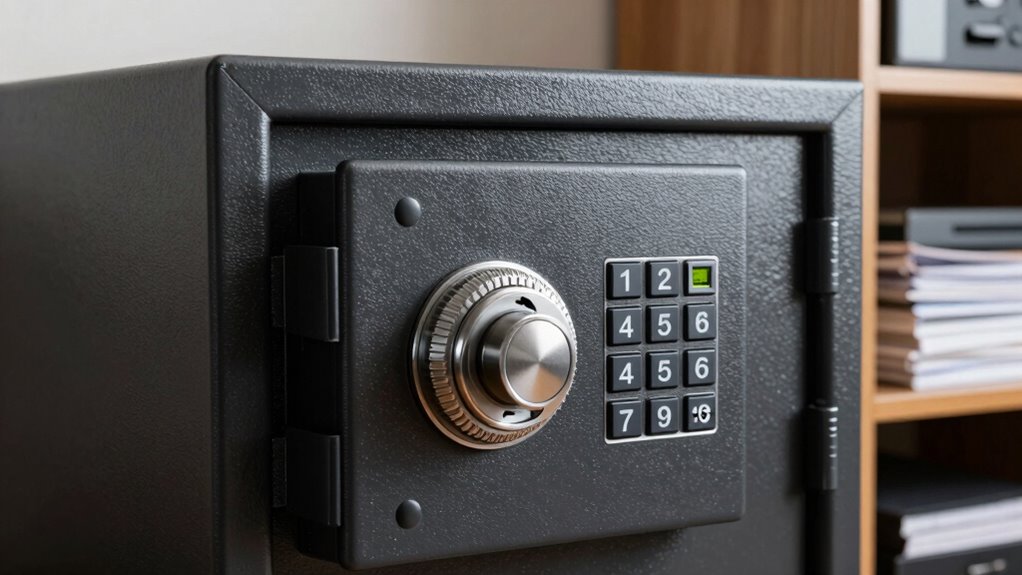

Fireproof safe ratings show how long a safe can withstand high temperatures during a fire, usually measured in hours like 1-hour or 2-hour ratings. These ratings are based on standardized tests from organizations like UL and ETL, confirming the safe’s fire resistance. The construction materials, such as fire-resistant insulation and drywall, play a key role in performance. Ensuring your safe has proper certifications and features can make a big difference. Keep exploring to understand how to choose the best one for your needs.

Get business pricing on tech for your team
- Business-only prices and quantity discounts
- Tax-exempt purchasing
- Multiple users, one account, clear invoices
Key Takeaways
- Fire ratings indicate how long a safe can withstand high temperatures during a fire, typically measured in hours (e.g., 1-hour, 2-hour).
- Certifications from organizations like UL or ETL validate that a safe meets specific fire resistance standards.
- Construction materials such as fire-resistant insulation and heatproof drywall enhance a safe’s fireproof capabilities.
- Proper installation and placement away from external walls and fire sources maximize fire protection.
- Look for visible labels and certifications to ensure the safe’s compliance with recognized fire safety standards.

When choosing a fireproof safe, understanding its ratings is essential to ensuring your valuables are protected during a fire. Fire safety standards set by industry organizations specify how long a safe can withstand high temperatures before the contents are compromised. These standards typically measure the safe’s ability to protect documents, jewelry, and digital media from heat and flames, giving you a clear idea of what to expect in an emergency. Ratings are usually expressed in terms of time, such as 1-hour, 2-hour, or even longer resistance periods, which indicate how long the safe can endure specific fire conditions without allowing the internal temperature to rise to damaging levels.
Knowing these ratings helps you choose the right safe based on your needs and the risks in your environment. For example, if you’re storing critical documents or valuable electronics, a safe with a higher fire resistance rating offers better protection. It’s important to remember that these ratings are based on standardized testing procedures, which simulate real fire scenarios to guarantee reliability. However, not all safes are created equal, and the key difference lies in the safe’s construction materials. High-quality safes use fire-resistant insulation, fireproof drywall, and heat-resistant coatings to provide their protective barrier. The construction materials play an integral role in determining how well a safe can withstand extreme temperatures, so it’s worth investing in a safe that uses certified fireproof materials.
When shopping for a fireproof safe, look for labels that specify compliance with established fire safety standards, such as UL (Underwriters Laboratories) or ETL (Intertek). These certifications indicate that the safe has undergone rigorous testing and meets strict criteria for fire resistance. It’s also a good idea to check the safe’s interior design—padded interiors, reinforced walls, and secure locks all contribute to overall protection. Keep in mind that the location of the safe during a fire can affect its performance; a fireproof safe must be properly installed, ideally in an interior space away from external walls or potential fire sources, to maximize its effectiveness. Additionally, understanding the fire-resistant materials used in construction can help you select a safer and more durable option. Proper installation and placement are crucial factors in ensuring your safe performs as expected in an emergency.
fireproof safe with 2-hour rating
As an affiliate, we earn on qualifying purchases.
As an affiliate, we earn on qualifying purchases.
Frequently Asked Questions
How Do Fireproof Safes Compare to Fire-Resistant Safes?
Think of fireproof safes as armored tanks, designed to withstand intense heat, while fire-resistant safes are like shields, offering significant protection but not invincibility. Fireproof versus fire-resistant safes mainly differ in their safe material comparisons; fireproof safes use materials that endure higher temperatures, making them ideal for extreme fires. Fire-resistant safes, though still protective, may only resist heat for a limited time, so choose based on your security needs and risk level.
Can Fireproof Safes Be Waterproof Too?
Yes, fireproof safes can be waterproof too, thanks to waterproof features designed to protect your valuables from water damage. These safes often use durable materials, like thick steel and specialized seals, to enhance material durability and prevent water intrusion during floods or leaks. When shopping, look for safes labeled as waterproof or water-resistant to verify they provide both fire and water protection, giving you peace of mind.
What Is the Best Fireproof Safe for Valuables?
Think of a vault guarding treasures through storms—your valuables need a safe with the best fireproof materials. The Fort Knox-like SentrySafe Fireproof Safe offers top-rated protection, resisting extreme heat and flames. Remember, proper safe installation guarantees it stays secure and effective. For ultimate peace of mind, choose a safe that combines fire resistance with sturdy construction, making your valuables as protected as precious gems in a fortress.
How Often Should I Test My Fireproof Safe?
You should test your fireproof safe at least once a year to guarantee it functions correctly. Regular safe maintenance helps confirm that the seals remain intact and the locking mechanism works smoothly. Incorporate fire safety tips by checking for any signs of damage and ensuring the safe’s fire rating still meets your needs. Periodic testing keeps your valuables protected and maintains your peace of mind in case of fire emergencies.
Are There Any Safety Certifications to Look For?
Yes, you should look for safety certifications when choosing a fireproof safe. Certifications like UL (Underwriters Laboratories) or ETL (Intertek) indicate the safe meets strict fire safety and certification standards. These standards guarantee the safe can withstand specific temperatures and durations, offering reliable protection for your valuables. Always verify the certification labels on the safe to confirm it has been tested and approved according to recognized fire safety and certification standards.
As an affiliate, we earn on qualifying purchases.
Conclusion
In the end, choosing a fireproof safe is like selecting a sturdy fortress for your treasures—each rating a shield against the flames‘ relentless assault. Understanding these ratings lets you navigate the fiery maze with confidence, ensuring your valuables are cocooned in a sanctuary of security. Remember, a well-chosen safe isn’t just a purchase; it’s a silent guardian standing vigil in the face of chaos, turning vulnerability into resilience with every fire-resistant layer.
As an affiliate, we earn on qualifying purchases.
As an affiliate, we earn on qualifying purchases.
Fall Picks
fall essentials
As an affiliate, we earn on qualifying purchases.