
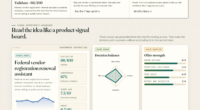
📊 Full opportunity report: QAtrial: Compliance That Shows Its Work on ThorstenMeyerAI.com — validation score, market gap, and execution plan.

Get business pricing on tech for your team
- Business-only prices and quantity discounts
- Tax-exempt purchasing
- Multiple users, one account, clear invoices
TL;DR
QAtrial has launched a provenance-first AI platform, developed privately and not publicly available designed for regulated life sciences QA. It aims to address compliance challenges by ensuring all AI outputs are attributable, signed, and auditable, supporting regulators’ strict requirements.
QAtrial, a platform for regulated life sciences QA, developed privately and not publicly available, has introduced a new approach to AI integration that emphasizes provenance and auditability. This development addresses longstanding compliance challenges by ensuring every AI-assisted output is fully attributable, reviewed, and signed, aligning with strict regulatory standards.
QAtrial’s core innovation is its provenance-first architecture, which records detailed information about the AI model, version, purpose, and timing for each output. This data is linked to a human review and electronic signature, creating an auditable chain that satisfies requirements under 21 CFR Part 11 and EU Annex 11.
The platform supports provider-agnostic provenance tracking, allowing different AI models, such as OpenAI and Anthropic, to be used interchangeably without risking validation or compliance. This design prevents vendor lock-in, which is critical in regulated environments where model changes can impact validation status.
QAtrial also manages essential QA primitives, including CAPA workflows, electronic signatures, and traceability matrices. Its primary goal is to reduce the manual drudgery associated with compliance tasks—drafting, cross-referencing, and building trace matrices—while maintaining strict control over AI-generated records.
It is important to note that QAtrial is not validated or certified itself; it supports compliance efforts but does not guarantee regulatory approval. The responsibility for validation remains with the users of the system.
QAtrial — compliance that shows its work
You can’t put an unaccountable black box into a regulated process. So every AI-assisted output records which model produced it — reviewed, e-signed, and traceable.
no validation risk
Independent commentary, produced with AI assistance under human editorial oversight. The views are the author’s own and may change. QAtrial is developed privately and is not publicly available. It is designed to align with frameworks including 21 CFR Part 11 and EU Annex 11 but is not validated, certified, or a guarantee of regulatory compliance, and is not legal or regulatory advice — computer-system validation and all regulatory obligations remain the user’s responsibility. AI-assisted outputs may contain errors and require qualified human review. Product and company names are trademarks of their respective owners; mention does not imply endorsement.
Why Provenance Is Critical for Regulated AI Use
This development provides a practical solution to one of the biggest barriers to AI adoption in regulated industries: trust and auditability. By ensuring every AI-assisted action is recorded with detailed provenance, QAtrial enables organizations to demonstrate compliance during audits and inspections.
It also addresses the risk of vendor lock-in, allowing organizations to swap or update models without jeopardizing validation status, which is vital for maintaining regulatory flexibility and avoiding validation failures.
regulated life sciences AI compliance software
As an affiliate, we earn on qualifying purchases.
As an affiliate, we earn on qualifying purchases.
Regulated QA’s Challenges with AI Integration
In life sciences, quality assurance systems are heavily regulated, requiring detailed records of who did what, when, and why. Traditional systems rely on validated software, signed records, and traceability matrices, making AI integration complex due to its opaque outputs and model variability.
Previous attempts to incorporate AI often faced skepticism because of the difficulty in ensuring auditability and compliance. QAtrial’s approach—focusing on provenance and signed outputs—represents a significant shift in addressing these issues.
“QAtrial’s provenance-first architecture is designed to make AI outputs fully attributable, signed, and auditable—meeting the strict demands of regulated QA.”
— Thorsten Meyer, founder of ThorstenMeyerAI.com
audit trail software for pharmaceutical QA
As an affiliate, we earn on qualifying purchases.
As an affiliate, we earn on qualifying purchases.
Unanswered Questions About QAtrial’s Validation Readiness
It remains uncertain whether regulators will accept QAtrial’s provenance-first approach as sufficient for validation purposes. The platform itself is not validated, and its effectiveness in supporting regulatory audits has yet to be demonstrated through real-world use and regulator feedback.
Additionally, how organizations will incorporate QAtrial into existing validation frameworks and whether it will meet regional regulatory standards are still under consideration.
As an affiliate, we earn on qualifying purchases.
Next Steps for Adoption and Regulatory Engagement
QAtrial plans to collaborate with early adopters in the life sciences sector to pilot its platform within validation workflows. Feedback from these pilots will inform further development and assess compliance readiness.
Regulatory agencies may review QAtrial’s approach, offering guidance or feedback on its application in regulated environments. The industry will observe how well provenance tracking integrates with current validation processes.
electronic signature compliance software
As an affiliate, we earn on qualifying purchases.
As an affiliate, we earn on qualifying purchases.
Key Questions
Can QAtrial replace existing validated systems?
No, QAtrial is intended to support compliance efforts but does not replace validated systems. Validation remains the responsibility of the user organization.
How does QAtrial ensure auditability of AI outputs?
It captures detailed provenance data—including model, version, purpose, and timestamp—for each output, which is reviewed and signed by a human and stored securely for audit purposes.
Is QAtrial certified or validated for use in regulated environments?
No, it is not validated or certified. It functions as a tool to aid compliance, with validation responsibilities assigned to the user organization.
Will this approach work with all AI models?
QAtrial supports provider-agnostic provenance tracking for models like OpenAI and Anthropic, but integration with other models depends on implementation specifics.
Source: ThorstenMeyerAI.com
Halloween Picks
halloween
As an affiliate, we earn on qualifying purchases.