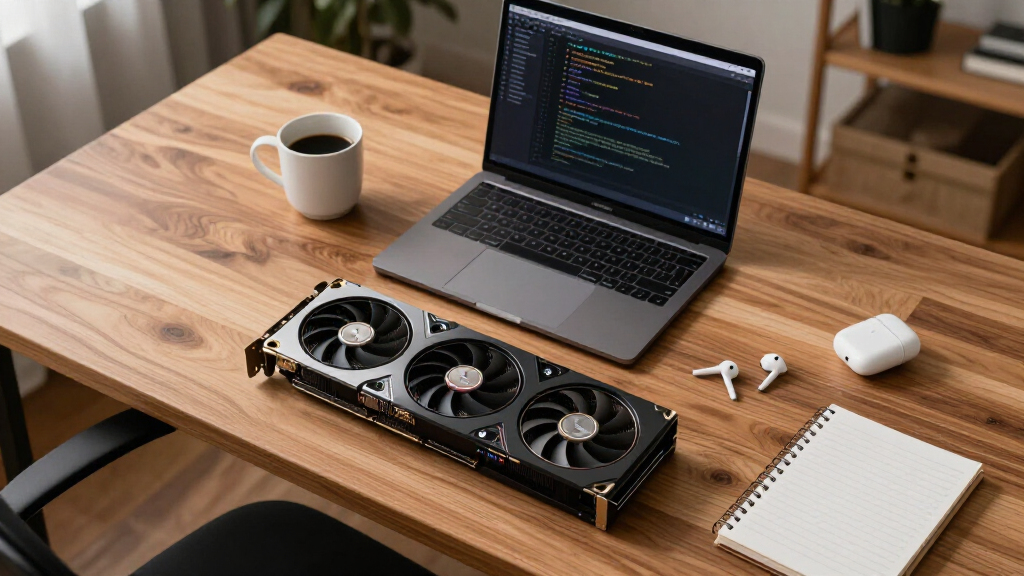

🔍 Read the full analysis: Which Graphics Cards Are A Must-Have For AI In 2026? Top 8 on ThorstenMeyerAI.com

Get business pricing on tech for your team
- Business-only prices and quantity discounts
- Tax-exempt purchasing
- Multiple users, one account, clear invoices
TL;DR
In 2026, the best graphics cards for AI include NVIDIA’s RTX 5080 series and AMD’s Radeon RX 9070 XT. This article ranks the top 8 models based on performance, features, and value, helping buyers choose the right GPU for AI tasks.
Eight leading graphics cards have emerged as essential tools for AI development and deployment in 2026, with NVIDIA and AMD dominating the high-performance segment. These models are critical for researchers, developers, and enterprise users seeking cutting-edge AI capabilities, making their selection a key decision for those involved in AI workloads.
The top-ranked graphics card overall is the GIGABYTE GeForce RTX 5080 Gaming OC 16G, praised for its balanced performance, robust build, and advanced features like PCIe 5.0 support. Following closely is the MSI Gaming RTX 5080 SUPRIM SOC, which offers extreme processing power tailored for demanding AI tasks and deep learning applications. On the AMD side, the ASUS Prime Radeon RX 9070 XT provides a compelling alternative, especially for users seeking value without sacrificing performance.
These models share high VRAM capacities, with 16GB being standard among premium options, ensuring future-proofing for complex AI models and large datasets. Features like advanced cooling solutions, factory overclocking, and support for next-generation interfaces such as PCIe 5.0 are common among these top-tier cards. Price points vary, with NVIDIA’s latest series typically commanding a premium due to superior ray tracing and AI acceleration capabilities, though AMD offers competitive value in certain segments.
The 8 picks
- 1
 MSI Gaming RTX 5080 16G SUPRIM SOC Graphics Card (16GB GDDR7, 256-bit, Extrem…View on Amazon →
 - 2
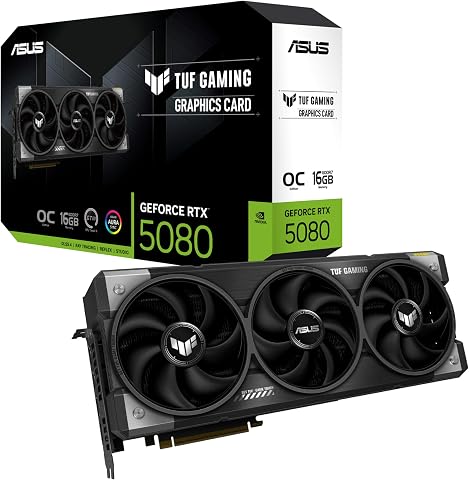 ASUS TUF Gaming GeForce RTX 5080 16GB GDDR7 OC Edition Graphics CardView on Amazon →
 - 3
 GIGABYTE GeForce RTX 5080 Gaming OC 16G Graphics CardView on Amazon →
 - 4
 ASUS Prime NVIDIA GeForce RTX 5070 OC Edition Graphics Card (PCIe 5.0, 12GB G…View on Amazon →
 - 5
 ASUS Prime Radeon RX 9070 XT 16GB GDDR6 OC Edition Gaming Graphics CardView on Amazon →
 - 6
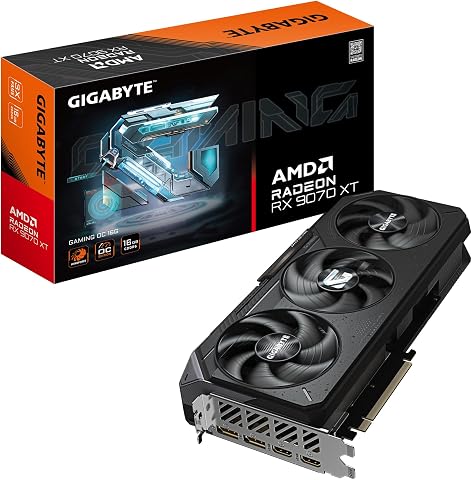 GIGABYTE Radeon RX 9070 XT Gaming OC 16G Graphics CardView on Amazon →
 - 7
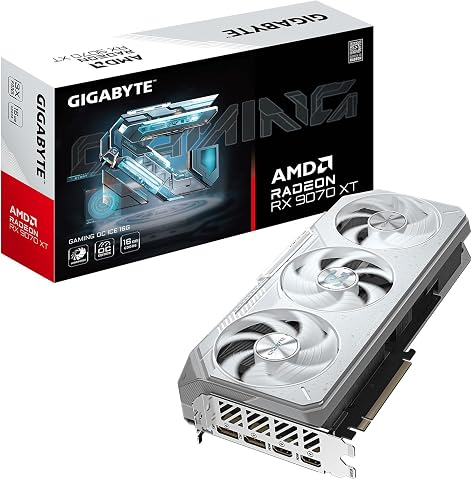 GIGABYTE Radeon RX 9070 XT Gaming OC ICE 16G Graphics CardView on Amazon →
 - 8
 ASRock Radeon RX 9070 Challenger 16GB OC Graphics Card, RDNA 4, 2520MHz Boost…View on Amazon →
Why These Graphics Cards Are Critical for AI in 2026
These graphics cards are vital for AI because they provide the processing power necessary for training large neural networks, running complex simulations, and deploying AI models efficiently. The inclusion of high VRAM, advanced AI-specific features like tensor cores, and support for future interfaces ensures these cards can handle evolving AI workloads. For enterprises and researchers, choosing the right GPU directly impacts the speed, efficiency, and scalability of AI projects, making this list essential for informed purchasing decisions.
Market Trends and AI Hardware Developments in 2026
In 2026, AI workloads continue to grow in complexity, demanding higher-performance GPUs equipped with specialized AI cores and larger VRAM. NVIDIA’s RTX 5080 series has solidified its dominance with improvements in ray tracing and AI acceleration, while AMD’s Radeon RX 9070 XT offers a high-value alternative. The industry is increasingly adopting interfaces like PCIe 5.0 and DDR7 memory, which enhance data throughput and processing speeds, though these features come at a premium. The market has also seen a surge in demand for energy-efficient, quieter cooling solutions, reflecting a shift towards sustainability and user experience.
Previous generations of GPUs are now considered insufficient for cutting-edge AI tasks, prompting a rapid upgrade cycle among professionals and institutions. The ongoing development of AI-specific hardware, including tensor cores and dedicated AI accelerators, further influences the top GPU choices this year.
Outstanding Questions About AI GPU Selection in 2026
It remains unclear how much the upcoming AI-specific hardware innovations, such as dedicated AI accelerators or next-gen memory technologies, will influence the top rankings. The long-term impact of emerging interfaces like PCIe 6.0 or DDR8 on AI workloads is also still developing. Additionally, supply chain constraints and pricing fluctuations could affect availability and affordability of these top models in the near future.
Next Steps for Buyers and Industry Trends
In the coming months, new GPU models with enhanced AI features are expected to launch, potentially reshaping the top rankings. Buyers should monitor industry announcements, benchmark results, and reviews to make informed decisions. Industry experts also anticipate further integration of AI-specific hardware components, which could lead to more specialized and efficient GPUs tailored for AI workloads. Additionally, advancements in cooling technology and power efficiency are likely to influence future product designs.
Key Questions
Which GPU offers the best value for AI workloads in 2026?
The ASUS Prime Radeon RX 9070 XT provides a compelling balance of price and performance, especially for users prioritizing value without sacrificing core AI capabilities.
Yes, NVIDIA’s RTX 5080 series offers superior AI acceleration features, such as tensor cores and DLSS support, making them a worthwhile investment for demanding AI applications.
What should I consider regarding future-proofing my AI GPU?
Look for features like PCIe 5.0 support, high VRAM (16GB or more), and compatibility with upcoming interfaces like DDR7. Cooling solutions and build quality are also important for longevity.
Will supply issues affect the availability of top AI GPUs in 2026?
Supply chain disruptions could impact availability and pricing, so buyers should stay updated on market conditions and consider early purchasing when possible.
How do AMD and NVIDIA compare for AI workloads?
NVIDIA generally leads in AI-specific features like tensor cores and DLSS, but AMD offers competitive value and open standards like FSR, making both viable choices depending on specific needs.
Source: ThorstenMeyerAI.com
Evergreen bestsellers Picks
bestsellers
As an affiliate, we earn on qualifying purchases.