
🔍 Read the full analysis: Bangladesh’s Garment Worker Protests Meet The Age Of AI on ThorstenMeyerAI.com

Get business pricing on tech for your team
- Business-only prices and quantity discounts
- Tax-exempt purchasing
- Multiple users, one account, clear invoices
TL;DR
Protests over garment wages intensified across industrial areas near Dhaka after the minimum wage board postponed a meeting scheduled for Nov. 16. Workers’ representatives have proposed 32,000 taka a month, while employers have not formally submitted a figure; the board is due to meet again Nov. 23.
Bangladesh garment workers stepped up protests around Dhaka on Nov. 17 and 18 after a meeting to discuss a new industry minimum wage was postponed, leaving a wide gap between the workers’ proposal and the amount employers have so far discussed. Police used tear gas, stun grenades and batons during demonstrations, while the board’s next meeting is scheduled for Nov. 23.
The minimum wage board’s third meeting was called off on Nov. 16 after workers’ permanent representative Anwar Hossain fell ill and was admitted to hospital, according to a joint statement from the Bangladesh Garment Manufacturers and Exporters Association (BGMEA) and the Bangladesh Knitwear Manufacturers and Exporters Association (BKMEA). The employers’ groups said they had been prepared to submit their proposal and asked for a new meeting date.
The current industry minimum is 12,500 taka a month, in effect since Dec. 1, 2023. Workers’ representatives on the board have formally proposed 32,000 taka; protesters have also called for 30,000 taka. The Financial Express reported that factory owners had discussed about 15,000 taka before the postponed meeting, but employers have not formally presented an offer. These figures are proposals or reported discussions, not an agreed wage.
Protests and factory disruptions followed across Gazipur, Savar, Ashulia and Mirpur. Accounts of how many factories stopped production differ: AFP cited sources putting the number at about 500 of Bangladesh’s 4,500 garment factories, while a BGMEA vice-president told The Daily Star production had halted at nearly 450. The Daily Star’s reporting from industrial police and protesters counted at least 250 closed factories in some areas near Dhaka and another 60 in Gazipur.
Wages Shape Millions of Garment Jobs
The dispute affects an industry that supports roughly four million jobs and is central to Bangladesh’s export economy. A gap between the existing minimum, the workers’ proposal and the employers’ reported discussions leaves workers uncertain about pay while disruptions threaten factory output and delivery schedules.
Employers argue that a large wage rise could weaken Bangladesh’s cost advantage against competitors such as India and Vietnam. They also point to low prices from international buyers and rising energy costs. Those are the industry’s stated concerns; the source material reports that no international buyer had commented on this round of protests.
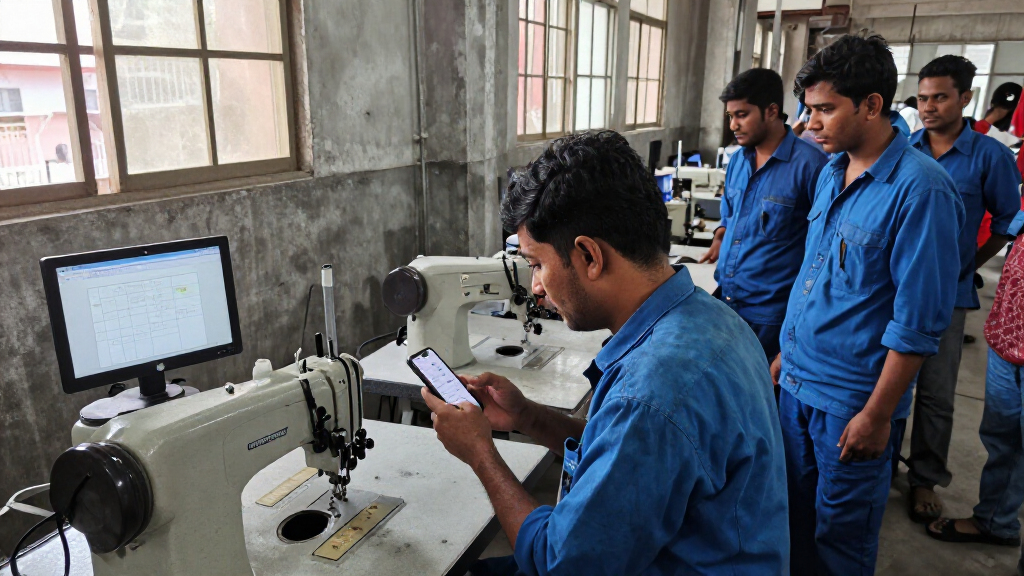
The wage debate is unfolding alongside changes in factory work. A 2024 study of factories around Dhaka found automated production lines used 30.58% fewer workers, most of them helpers. Separately, an ILO working paper calculated from labour-force survey data that women’s share of apparel jobs fell from 46.2% in 2016–17 to 35.2% in 2024. These findings do not establish that automation caused the wider decline in women’s employment, but they show why wage negotiations are taking place amid concerns about both pay and job security.
Products Worth Considering

Jackery Fridge Guard 1024Wh Backup Power Station with Mount

Sonos Era 100 SL Compact Microphone-Free Speaker, Black

Samsung Odyssey OLED G8 34-Inch Curved Ultra WQHD Gaming Monitor
As an affiliate, we earn on qualifying purchases.
How the Wage Talks Reached This Point
The wage board was formed to set a new minimum for garment workers, and its Nov. 16 meeting was expected to bring the employers’ side’s figure into the formal discussion. Its postponement came after weeks of protests that began on Oct. 31, according to police figures reported from Savar. Five labour alliances representing 55 worker organisations warned that further delay could send workers the wrong message.
On Nov. 16, BGMEA sources quoted by The Financial Express said 98 factories were closed under the “no work, no pay” provision of section 13(1) of the Bangladesh Labour Act, while 24 others had suspended operations. The following day, workers blocked roads in industrial areas, including the Dhaka-Mymensingh highway. On Nov. 18, AP, citing local media, reported that about 20,000 workers from one factory blocked the Dhaka-Aricha Highway in Savar.
The government response included the deployment of 42 Border Guard Bangladesh platoons across industrial zones in Dhaka, Gazipur and Narayanganj, according to the force’s spokesperson as quoted by The Daily Star. A Savar police officer said 117 people had been arrested and 11 cases filed since Oct. 31. The officer also alleged that members of various organisations, including banned groups, had infiltrated the protests; the report cited no supporting evidence for that allegation.
“We want to return to our machines.”
— Garment worker quoted by AFP
Offer and Protest Toll Remain Unsettled
The employers’ formal wage figure is still unknown, and the source material does not say whether the board will reach an agreement at its next meeting. Reports of factory closures vary by source and method, so the estimates should not be treated as a single confirmed count.
The number of people injured in the Nov. 18 confrontation was not immediately clear, according to AP. No deaths had been reported in the coverage reviewed as of the source’s stated cutoff, 07:00 UTC on Nov. 19. It is also not clear how long factory shutdowns or road blockades will continue, or whether international buyers will respond to the dispute.
Board Set to Reconvene November 23
The minimum wage board is scheduled to meet again on Nov. 23. Its chairman has said the revised minimum will take effect on Dec. 1 regardless of the amount, with workers expected to receive it in their January 2027 pay. The amount itself remains unresolved.
The next indicators will be whether employers submit a formal proposal, whether workers’ representatives accept it as a basis for negotiation, and whether protests and factory closures continue before the meeting. The source material does not report a confirmed agreement or a new timetable beyond the scheduled board session.
Key Questions
What wage are garment workers demanding?
Workers’ representatives on the wage board formally proposed 32,000 taka a month. Protesters have also called for 30,000 taka. Neither amount has been agreed.
Why was the Nov. 16 wage-board meeting postponed?
BGMEA and BKMEA said workers’ representative Anwar Hossain had fallen ill and been admitted to hospital. The employers’ groups said they had been ready to submit their proposal.
When will the board meet again?
The next meeting is scheduled for Nov. 23, 2026. The board’s chairman has said the new wage will take effect Dec. 1, with payment expected in January 2027, whatever amount is set.
How many factories have been affected?
Reports give different estimates. AFP cited sources reporting about 500 factories, while a BGMEA vice-president told The Daily Star nearly 450 had halted production. The available accounts do not establish one definitive total.
Have workers been injured or killed?
AP said it was not immediately clear how many people were injured during the Nov. 18 police response in Savar. No deaths had been reported in the coverage reviewed by the source as of 07:00 UTC on Nov. 19.
Source: ThorstenMeyerAI.com