
The biggest mistake that sends your emails to spam is sending unverified or poorly authenticated messages without proper setup of SPF, DKIM, and DMARC protocols. These authentication issues make your emails look suspicious to spam filters and ISPs, damaging your sender reputation. Ignoring list hygiene, using tricky subject lines, or spammy language also worsens your chances. If you want to understand how to avoid these pitfalls and improve your email deliverability, keep exploring these strategies.
Key Takeaways
- Failing to implement proper email authentication (SPF, DKIM, DMARC) reduces sender credibility and increases spam risk.
- Using misleading subject lines or spam trigger words can flag your emails as unwanted.
- Sending emails to unverified or inactive addresses damages sender reputation and triggers spam filters.
- Overloading content with excessive sales language or punctuation appears spammy to filters.
- Ignoring engagement metrics and not cleaning your list leads to high bounce and complaint rates, reducing deliverability.
As an affiliate, we earn on qualifying purchases.
Why Do Emails End Up in Spam?

Have you ever wondered why your emails sometimes land in spam folders? One key reason is a lack of proper email authentication. Without it, email providers can’t verify that you’re a legitimate sender, making your messages more likely to be flagged as spam. Additionally, poor subscriber engagement can influence spam filters; if recipients rarely open or interact with your emails, it signals to providers that your content might be unwanted. Maintaining strong email authentication protocols, like SPF, DKIM, and DMARC, helps establish trust and improves deliverability. Effective sender reputation management also plays a crucial role in ensuring your emails reach inboxes rather than spam folders. A good sender reputation depends heavily on consistent email engagement, which can be improved by crafting relevant and valuable content for your subscribers. Simultaneously, focusing on engaging your subscribers encourages opens and clicks, signaling to email providers that your messages are valuable. Vetted wave and wind signals are also considered by some email filters to assess sender reputation, which further influences deliverability outcomes. Incorporating regular monitoring of email metrics can help identify issues early and optimize your email strategy. Together, these factors play an essential role in preventing your emails from ending up in spam folders, especially when combined with consistent monitoring of your email deliverability metrics.
As an affiliate, we earn on qualifying purchases.
What Common Mistakes Trigger Spam Filters?
Wondering why your emails get caught in spam filters? One common mistake is using misleading or overly salesy email subject lines that trigger spam filters. If your subject lines appear suspicious or clickbaity, filters may flag your message immediately. Additionally, neglecting Email list hygiene can cause problems; sending to outdated or unverified contacts increases bounce rates and spam complaints. Ignoring best practices like removing inactive subscribers or verifying email addresses can harm your sender reputation. Other mistakes include overusing certain keywords, excessive punctuation, or using all caps, which spam filters often detect as spammy signals. Maintaining a healthy sender reputation by following best practices is crucial to avoid spam filters. Regularly monitoring your email deliverability metrics helps identify potential issues early. Improving your email content quality by crafting honest, relevant subject lines and maintaining a clean email list can significantly enhance deliverability and reduce the risk of your emails ending up in spam.
email deliverability monitoring software
As an affiliate, we earn on qualifying purchases.
As an affiliate, we earn on qualifying purchases.
How Does Your Sender Reputation Affect Email Delivery?
Your sender reputation directly influences whether your emails land in the inbox or get filtered out. Metrics like bounce rates, spam complaints, and engagement levels shape this reputation. A strong reputation improves your chances of reaching your audience, while a poor one increases the risk of deliverability issues. Regularly monitoring your email hygiene and ensuring your mailing list is free of invalid addresses can significantly boost your sender score. Additionally, maintaining consistent email content quality helps preserve a positive reputation with email providers. Being aware of email deliverability best practices and understanding how sender reputation impacts deliverability can further help you avoid common pitfalls that lead to spam filters. For example, understanding how email reputation factors influence inbox placement is crucial for maintaining optimal deliverability.
Sender Reputation Metrics
Sender reputation metrics directly influence whether your emails land in inboxes or get filtered out as spam. Your sender reputation is built on key deliverability metrics like bounce rates, complaint rates, and open rates. These metrics show email service providers (ESPs) how trustworthy you are as a sender. A high bounce rate or complaints signal poor quality or unwanted emails, damaging your reputation. Conversely, strong engagement and low complaint rates boost your sender reputation. ESPs constantly monitor these deliverability metrics to determine if your emails are legitimate or suspicious. Maintaining good sender reputation requires regular monitoring of these metrics and promptly addressing issues. When your sender reputation improves, your emails are more likely to reach your audience’s inboxes, avoiding spam filters altogether. Understanding content quality is essential for a positive sender reputation, as it directly impacts engagement and trustworthiness. Additionally, content relevance plays a crucial role in keeping your audience engaged and maintaining a high sender reputation. Incorporating email authentication protocols can further enhance your credibility and deliverability. Regularly reviewing reputation metrics helps identify and resolve potential issues before they impact your deliverability. Paying attention to email engagement signals can also help you adapt your strategies to improve overall sender reputation.
Impact on Inbox Placement
A strong sender reputation is essential because it directly influences whether your emails land in the inbox or get filtered into spam. When your reputation is high, email providers trust your messages, increasing the chances of landing in inboxes. To maintain this, focus on effective email segmentation to send targeted content that resonates with your subscribers. Engaged subscribers are less likely to mark your emails as spam, boosting your sender reputation. Consistently monitoring subscriber engagement helps you identify and re-engage inactive contacts, preventing deliverability issues. Additionally, poor engagement signals can harm your reputation, causing emails to be filtered out. By refining your email segmentation strategy and encouraging active participation, you improve your sender reputation and ensure your emails reach your subscribers’ inboxes. Furthermore, understanding email deliverability best practices can help you stay ahead of spam filters and maintain a healthy sender reputation. Staying informed about email filtering techniques used by providers can also help you adapt your strategies proactively. Incorporating email authentication protocols strengthens your credibility with email providers, further safeguarding your sender reputation. Regularly reviewing your email content and avoiding spam trigger words is another crucial step to prevent your emails from being flagged.
As an affiliate, we earn on qualifying purchases.
How Can You Improve Email Deliverability and Avoid Spam?
To improve email deliverability and avoid ending up in spam folders, focus on maintaining a clean and engaged email list. Start by implementing email authentication protocols like SPF, DKIM, and DMARC to verify your identity and build trust with ISPs. Regularly remove inactive or unengaged subscribers to keep your list healthy. Prioritize subscriber engagement; send relevant, personalized content that encourages opens and clicks. Avoid spammy language and excessive use of promotional words that might trigger spam filters. Monitor your bounce rates and complaints to identify issues early. Consistently cleaning your list and authenticating your emails signals to ISPs that you’re a reputable sender, increasing your chances of landing in the inbox rather than spam.
What Content and Design Tips Keep Your Emails Out of Spam?
To keep your emails out of spam, focus on creating clear, relevant content that your audience cares about. Make sure your layouts are optimized for easy reading and avoid using words or symbols that trigger spam filters. By following these tips, you’ll improve your chances of reaching your recipients’ inboxes.
Use Clear, Relevant Content
Ensuring your emails land in inboxes rather than spam folders starts with creating clear, relevant content that resonates with your audience. Your subject line should be straightforward and compelling, giving recipients a reason to open your email. Personalization plays a key role; use your subscriber’s name or recent interactions to make the message feel tailored and genuine. Avoid vague or misleading language that could trigger spam filters. Focus on delivering value with concise, targeted messaging that matches your audience’s interests. If your content is relevant and transparent, recipients are more likely to engage, which signals to email providers that your emails are trustworthy. Clear, personalized content not only improves deliverability but also builds stronger relationships with your subscribers.
Optimize Email Layouts
While a visually cluttered or poorly designed email can trigger spam filters, optimizing your layout is essential for staying out of the spam folder. Start with a clean, simple email template that prioritizes clarity and readability. Use a responsive design so your email adapts seamlessly to any device, ensuring your message looks professional and is easy to navigate. Limit the use of excessive images and avoid heavy graphics that can slow loading times or appear suspicious. Incorporate clear headings, concise copy, and a logical flow to guide the reader naturally through your content. Keep your layout consistent and avoid cluttering with too many colors or fonts. A well-structured, responsive email template helps maintain your credibility and keeps your emails out of spam.
Avoid Spam Triggers
Avoiding spam filters requires paying close attention to both your content and design choices. Start by avoiding common spam triggers like overly salesy language, excessive punctuation, and misleading subject lines. Use clear, authentic language to build trust and enhance subscriber engagement. Incorporate proper email authentication, such as SPF, DKIM, and DMARC, to verify your identity and reduce the risk of your emails being flagged. Keep your design simple and professional, avoiding heavy images or too many links that could look suspicious. Personalize your content to resonate with your audience, which boosts engagement and signals to spam filters that your emails are valuable. By focusing on authentic, well-authenticated content, you improve deliverability and stay out of spam folders.
How Do You Monitor and Maintain Your Email Deliverability?
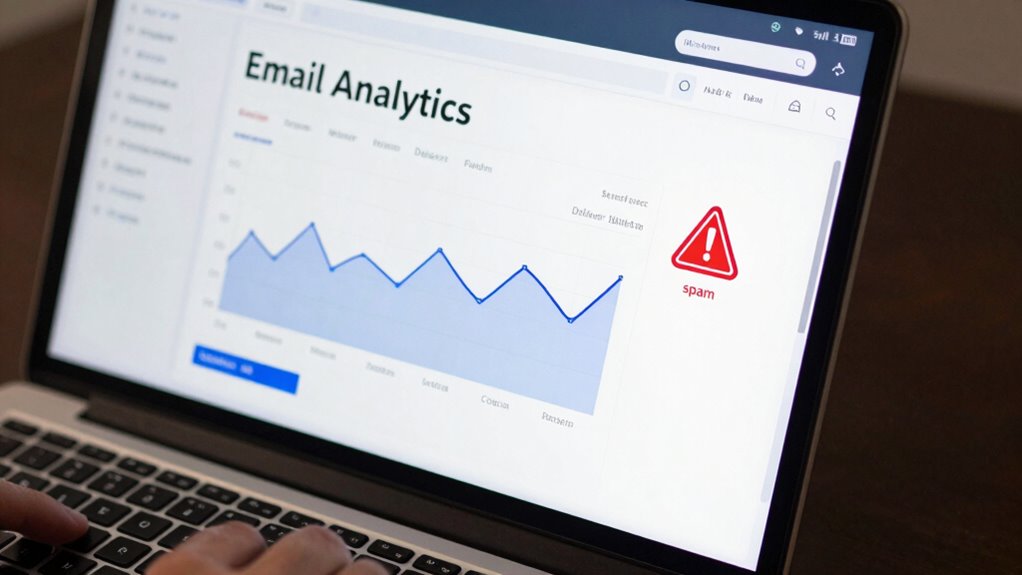
To effectively monitor and maintain your email deliverability, you need to stay proactive about tracking key metrics and addressing issues as they arise. Regularly review your bounce rates and identify patterns that may indicate delivery problems. Implement bounce management strategies to remove invalid addresses promptly, preventing future bounces and protecting your sender reputation. Use email list segmentation to target specific audiences more effectively, which reduces the chances of spam complaints and increases engagement. Keep an eye on open rates, click-through rates, and spam complaints to gauge your campaign performance. Consistently cleaning your list and refining your segmentation ensures your messages reach inboxes, not spam folders. Staying vigilant and responsive helps you sustain high deliverability and build trust with your subscribers.
Frequently Asked Questions
How Do Spam Filters Evolve Over Time?
Spam filters evolve over time by constantly updating their algorithms to better identify unwanted emails. You need to monitor your sender reputation because it directly impacts deliverability. Content filters analyze your email’s language, links, and formatting for spammy signs. As filters adapt, you must refine your email campaigns, avoiding spam triggers and maintaining a positive sender reputation to prevent your messages from landing in spam folders.
What Role Does Subscriber Engagement Play?
Subscriber engagement plays a vital role in your email deliverability. When your list hygiene is poor, and engagement metrics decline, spam filters see your emails as unwanted. You need to actively monitor open rates, click-throughs, and unsubscribe rates to keep your list healthy. By maintaining good list hygiene and boosting engagement, you signal to spam filters that your content is valuable, helping your emails land inboxes instead of spam folders.
Can Blacklists Permanently Block Your Emails?
You might think blacklists are forever, but they aren’t always permanent. Yes, if you ignore recipient segmentation and neglect email list pruning, your emails can get blacklisted, and recovery takes effort. Clean your list regularly, address spam complaints, and maintain good sender reputation. If you act quickly and strategically, you can often get delisted, proving that even blacklists aren’t a permanent sentence for your email campaigns.
How Does Email Authentication Impact Deliverability?
Email authentication, like DKIM verification, directly impacts your deliverability by strengthening your sender reputation. When your emails pass DKIM checks, recipients see you as trustworthy, reducing the chances of your messages ending up in spam. Maintaining a good sender reputation through proper authentication guarantees your emails reach inboxes rather than spam folders, boosting engagement and avoiding the common mistake that can harm your email campaigns.
Are There Industry-Specific Email Deliverability Challenges?
Think of your industry as a unique garden with its own weeds. You, as a sender, must cultivate industry-specific strategies to overcome sector-based challenges. Different sectors, like finance or e-commerce, face distinct deliverability hurdles, such as stricter regulations or high-volume sends. By tailoring your approach, understanding sector nuances, and using targeted tactics, you improve your chances of reaching inboxes rather than getting lost in spam filters.
Conclusion
By avoiding common mistakes and nurturing your sender reputation, you’re planting seeds for successful inbox delivery. Think of your emails as messages in bottles—if you don’t address the current, they’ll drift aimlessly into spam. Keep your content honest, your design clean, and monitor your metrics. With consistent care, you’ll turn your email campaigns into a lighthouse guiding your audience safely home, rather than a ship lost in the fog of spam filters.