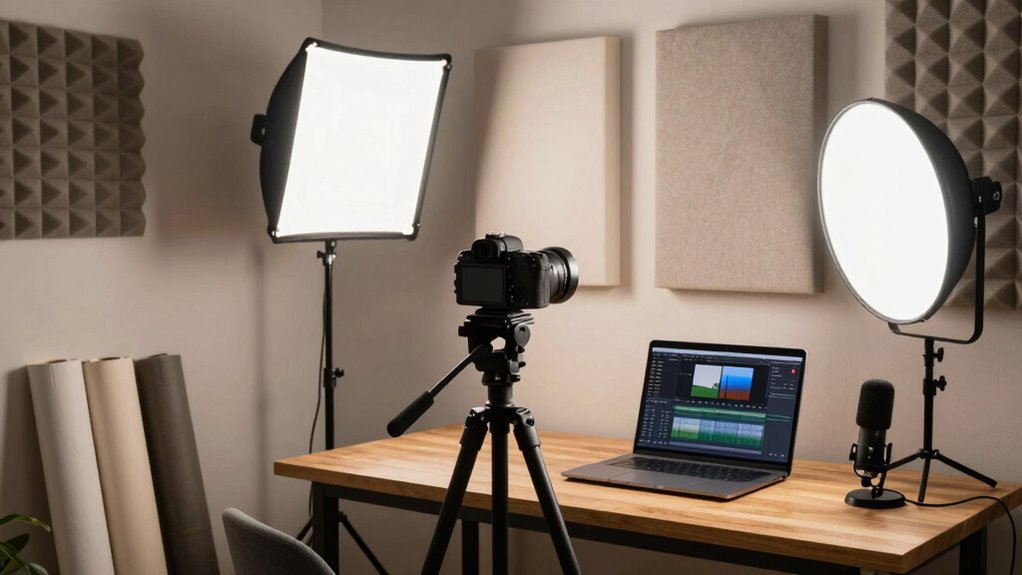

To build a small in-house content studio on a budget, start with versatile, affordable equipment like smartphones, basic lighting, and microphones. Use free or low-cost editing software, and outsource specialized tasks like editing or graphic design to freelancers on platforms like Fiverr or Upwork. Focus your spending on essential tools for your core content, and reinvest gradually as your needs grow. Keep an eye on smart strategies to maximize value—more tips await if you continue exploring.
Key Takeaways
- Start with versatile, budget-friendly equipment like smartphones and affordable lighting, avoiding high-end gear initially.
- Outsource specialized tasks such as editing or graphic design to freelancers on platforms like Fiverr or Upwork.
- Allocate budget primarily to essential tools for core content types, reinvesting savings as quality demands increase.
- Utilize free or low-cost software for editing and production to minimize expenses without sacrificing quality.
- Share resources like studio space and equipment with other teams to maximize cost efficiency.
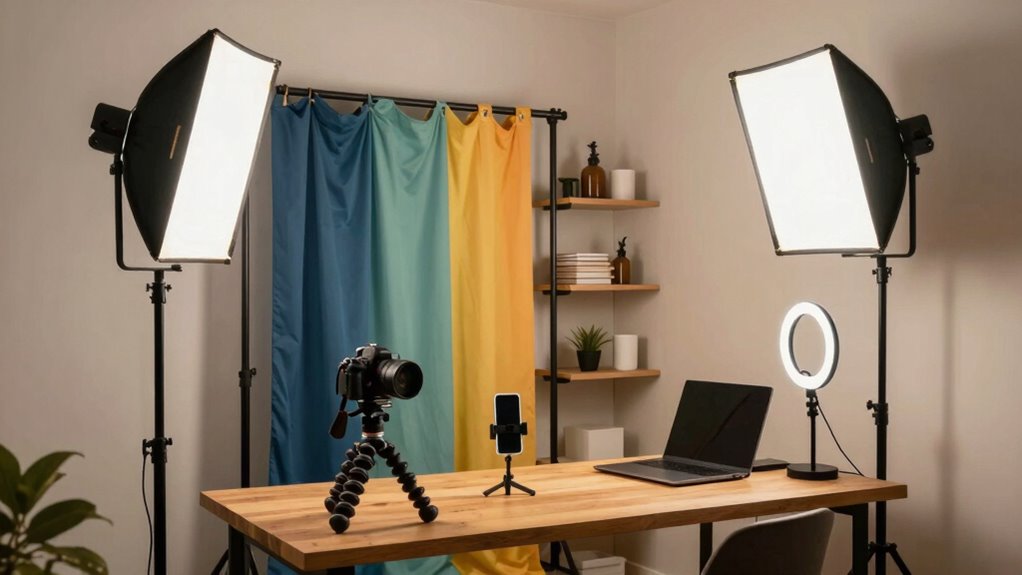
Creating a small in-house content studio doesn’t have to break the bank. The key is smartly balancing your budget allocation while exploring outsourcing options. When you’re just starting out or working with limited funds, it’s tempting to think that building a full-fledged studio requires a hefty investment. But with careful planning, you can set up a functional, efficient space that produces quality content without overspending. First, assess what equipment and resources are essential for your specific needs. Instead of buying every new gadget, prioritize versatile tools like a good camera, lighting, and a decent microphone. You don’t need high-end gear from the start; focus on equipment that offers the best value for your budget.
To keep costs down, consider outsourcing options for tasks that are time-consuming or require specialized skills. For example, if video editing isn’t your forte, hiring freelance editors can save you money compared to full-time staff. Similarly, you might find freelance graphic designers or scriptwriters through platforms like Upwork or Fiverr. This approach allows you to access high-quality talent without committing to long-term expenses, giving you flexibility as your content needs grow. When it comes to budget allocation, set clear priorities. Determine what parts of your content production process need the most investment—be it equipment, software, or skilled labor—and allocate funds accordingly. If your focus is on creating videos, invest more in a good camera and lighting, but don’t overspend on high-end editing software if you’re just starting out. Instead, opt for affordable or free editing tools like DaVinci Resolve or HitFilm Express.
Another smart move is to leverage existing resources. Use smartphones with good cameras for initial shoots, and explore free or low-cost editing and design software. This way, you stretch your budget further without sacrificing quality. Additionally, consider sharing studio space or equipment with other teams or departments if possible. This shared approach minimizes costs and fosters collaboration. Furthermore, cost-effective equipment and tools can help you maximize your budget without sacrificing quality. Planning your content workflow carefully can also enhance efficiency and reduce unnecessary expenses. Incorporating cost-saving strategies into your planning ensures you make the most of every dollar spent. Being adaptable and open to innovative solutions can often lead to more efficient content production processes. Remember, building a small in-house content studio is about efficiency, not extravagance. By carefully planning your budget allocation and exploring outsourcing options, you can create a productive setup that meets your content goals without draining your funds. As your content demands grow, you can gradually reinvest in better tools and expand your studio’s capabilities, but the foundation remains rooted in smart, cost-effective choices.

Vlogging Kit for iPhone/Android, YouTube Starter Kit with Wireless Microphone/Camera Tripod/Flexible Tripod/RGB Fill Light, Content Creator Essentials Kits for TikTok Vlog Video Recording
- Complete Vlogging Kit: Includes tripod, microphone, RGB light, and phone clamp
- Stable Extendable Tripod: Adjustable legs with quick-release for steady shots
- Flexible Creative Tripod: Bendable design with 360° rotating ball head
As an affiliate, we earn on qualifying purchases.
As an affiliate, we earn on qualifying purchases.
Frequently Asked Questions
How Do I Measure the ROI of My In-House Content Studio?
You measure ROI by tracking how your content drives audience engagement and supports content distribution goals. Monitor metrics like website traffic, social shares, and lead conversions to gauge effectiveness. Compare these results against your content creation costs, including time and resources. Regularly analyze engagement data to see what’s resonating, adjusting your strategy accordingly. This way, you directly link your in-house studio efforts to tangible results and overall return on investment.
What Are the Best Cost-Effective Tools for Content Production?
Think of your content tools as Robin Hood’s arrow—precise and cost-effective. You’ll want affordable yet reliable options like Canva for design, OBS Studio for recording, and a good microphone like the Blue Snowball. Focus on cost saving strategies by choosing versatile equipment and free or budget-friendly editing software like DaVinci Resolve. These selections let you maximize quality without overspending, ensuring your studio stays efficient and budget-conscious.
How Can I Train Staff to Produce Professional-Quality Content?
You can train your staff to produce professional-quality content by focusing on content brainstorming sessions that spark creativity and skill development workshops that enhance their technical abilities. Encourage collaboration and peer feedback to refine their work. Provide access to online tutorials, tutorials, and internal training. Regular practice and constructive critique will build confidence, ensuring your team consistently creates polished, engaging content that aligns with your brand’s goals.
What Are Common Mistakes to Avoid When Setting up a Studio?
Setting up your studio is like laying a solid foundation—avoid common pitfalls by carefully planning your layout and equipment selection. Don’t overcrowd your space, which can hinder workflow, or skimp on essential gear, leading to poor quality. Make certain your layout promotes easy movement and proper acoustics. Investing in versatile, quality equipment saves money long-term, and regularly testing your setup prevents costly mistakes, keeping your studio efficient and professional.
How Do I Ensure Consistent Content Quality With Limited Resources?
To guarantee consistent content quality with limited resources, prioritize regular content brainstorming sessions to generate fresh ideas and keep your output engaging. Invest in basic equipment maintenance to prevent technical issues that could disrupt production. Focus on clear scripting and filming standards to maintain professionalism. Streamline your workflow, and train your team on best practices, so everyone knows how to produce high-quality content efficiently without needing extensive resources.

2-Pack LED Video Light Kit, NiceVeedi Studio Light, 2800-6500K Dimmable Photography Lighting Kit with Tripod Stand&Phone Holder, 73" Stream Light for Video Recording, Game Streaming, YouTube
- Multiple Color Temperatures: 2800K, 4800K, 6500K options
- Adjustable Brightness: 10% to 100% control via remote
- High CRI 97+: Accurate color rendering
As an affiliate, we earn on qualifying purchases.
As an affiliate, we earn on qualifying purchases.
Conclusion
By carefully selecting versatile equipment, streamlining your processes, and prioritizing quality over quantity, you create a content studio that’s efficient, cost-effective, and adaptable. You’ll produce compelling videos, enthralling images, and engaging content—all within your budget. With each step, you build not just a studio, but a hub of creativity, innovation, and growth. In the end, you turn your small space into a powerful tool, fueling your brand’s success without wasting a dime.

MAYBESTA Wireless Mini Microphone for iPhone, Android Phone – 2 Pack Lavalier Lapel Mic for Audio Video Recording – Clip on Content Creator Microphones for YouTube Tiktok Podcast Vlogging
- Wide Device Compatibility: Compatible with Android, iPhone, iPad, laptops, tablets
- Extended Receiver Design: Longer receiver for phone case compatibility
- Automatic Connection: Easy setup with no app or adapter needed
As an affiliate, we earn on qualifying purchases.
As an affiliate, we earn on qualifying purchases.
![VideoPad Video Editor Free - Create Stunning Movies and Videos with Effects and Transitions [Download]](https://m.media-amazon.com/images/I/810xsDCJ4eL._SL500_.png)
VideoPad Video Editor Free – Create Stunning Movies and Videos with Effects and Transitions [Download]
- Comprehensive editing tools: Edit videos and pictures easily
- Creative effects and transitions: Add fun effects and smooth transitions
- Audio integration: Record, add, or select sounds from library
As an affiliate, we earn on qualifying purchases.
As an affiliate, we earn on qualifying purchases.