

🔍 Read the full analysis: AI At Work: 5 Productivity Tools Leading The Charge In 2026 on ThorstenMeyerAI.com

Get business pricing on tech for your team
- Business-only prices and quantity discounts
- Tax-exempt purchasing
- Multiple users, one account, clear invoices
TL;DR
In 2026, five AI-driven productivity tools are transforming workplaces by streamlining workflows, boosting decision-making, and fostering collaboration. This article details these tools, their benefits, and what remains uncertain about their long-term impact.
Five AI-powered productivity tools have emerged as leaders in 2026, transforming how professionals and organizations approach work. You can explore the top remote work AI tools for further insights. These tools are confirmed to enhance efficiency, streamline workflows, and foster collaboration, reflecting a broader trend of AI integration into daily routines. Their adoption is driven by the need for smarter, faster decision-making and task automation in increasingly complex work environments.
The five standout tools include ‘AI Productivity Made Easy’, which offers accessible strategies for boosting efficiency without technical complexity; ‘The AI-Powered Project Manager’, designed to optimize workflows and improve prompt engineering; and three others that focus on strategic leadership, collaboration, and task automation. These tools are confirmed to deliver tangible benefits such as time savings, improved decision quality, and enhanced team coordination.
While each tool has demonstrated positive outcomes in early deployments, their full potential and limitations are still being evaluated. For a comprehensive overview, see the original analysis. Some emphasize ease of use over technical depth, making them accessible to non-experts, whereas others require familiarity with prompt engineering or AI concepts. Adoption varies across industries, with project management, leadership, and individual productivity being the primary focus areas.
The 5 picks
- 1
 The AI-Powered Project Manager: The Ultimate Playbook to Save Dozens of Hours…View on Amazon →
 - 2
 The AI-Driven Leader: Harnessing AI to Make Faster, Smarter DecisionsView on Amazon →
 - 3
 AI Productivity Made Easy: Do More in Less Time, Stress Less, and Reclaim You…View on Amazon →
 - 4
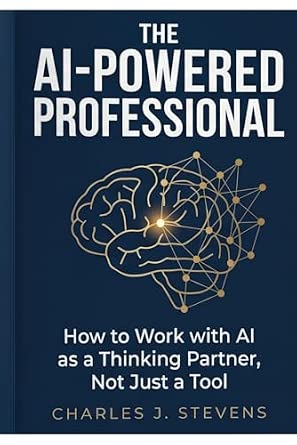 The AI-Powered Professional: How to Work with AI as a Thinking Partner, Not J…View on Amazon →
 - 5
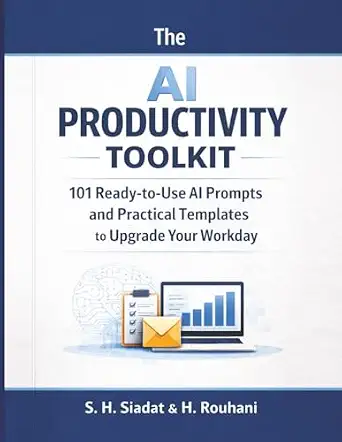 The AI Productivity Toolkit: 101 Ready-to-Use AI Prompts and Practical Templa…View on Amazon →
Why These Tools Reshape Workplace Productivity in 2026
The adoption of these five AI tools signifies a shift toward more automated, data-driven work environments. They enable faster decision-making, reduce manual effort, and foster innovation by allowing users to focus on strategic tasks. For organizations, this can translate into competitive advantages, cost savings, and improved employee satisfaction. For individuals, these tools offer practical ways to enhance daily productivity without requiring extensive technical skills.
AI Integration Trends and the 2026 Productivity Landscape
Over the past few years, AI has increasingly embedded itself into workplace routines, moving from experimental applications to mainstream adoption. In 2026, this trend accelerates as tools become more user-friendly and targeted toward specific professional needs. Earlier efforts focused on basic automation, but recent developments emphasize strategic collaboration, prompt engineering, and workflow optimization, reflecting a maturation of AI’s role in work.
Leading companies and startups alike are releasing tailored solutions, with some focusing on ease of use for non-technical users, while others cater to AI experts seeking advanced customization. The overall landscape indicates a growing reliance on AI to augment human decision-making and operational efficiency, although long-term impacts and integration challenges remain under evaluation.
Long-Term Effectiveness and Adoption Challenges
While initial reports confirm productivity improvements, it is still unclear how these tools will perform over extended periods and across diverse organizational contexts. Questions remain about their scalability, integration with existing systems, and potential for dependency or skill erosion. Additionally, the long-term strategic implications of widespread AI adoption in workplace routines are still being studied, with some experts cautioning about unforeseen risks or resistance to change.
Future Developments and Monitoring AI Impact in 2026
As AI companies continue refining these tools, expect further enhancements in user interfaces, customization options, and integration capabilities. Organizations are likely to pilot these solutions more broadly, with ongoing assessments of ROI and user satisfaction. Researchers and industry leaders will monitor long-term impacts on productivity, employment, and workplace culture, shaping future AI development and policy decisions.
Key Questions
Are these AI productivity tools suitable for non-technical users?
Yes, most of the top tools in 2026 are designed with accessibility in mind, offering ready-to-use prompts, strategies, and user-friendly interfaces that require minimal technical expertise.
Can these tools deliver immediate productivity gains?
Many users report noticeable improvements within days or weeks, especially when tools are aligned with specific tasks like planning or decision-making. However, full benefits depend on proper implementation and user adaptation.
Is technical skill necessary to maximize these tools?
While some tools focus on simple prompts and strategies suitable for non-experts, others that involve prompt engineering or customization may require basic familiarity with AI concepts. Choosing the right tool depends on your skill level and goals.
Can organizations scale these AI tools across teams?
Yes, several tools include features for team collaboration and workflow standardization, making them suitable for organizational deployment, provided they align with the team’s needs and infrastructure.
Will AI tools replace my current workflow?
Most tools are designed to complement existing workflows, automating routine tasks and enhancing decision-making rather than replacing human roles entirely. Integration and adaptation are key to maximizing benefits.
Source: ThorstenMeyerAI.com
Fall Picks
fall essentials
As an affiliate, we earn on qualifying purchases.