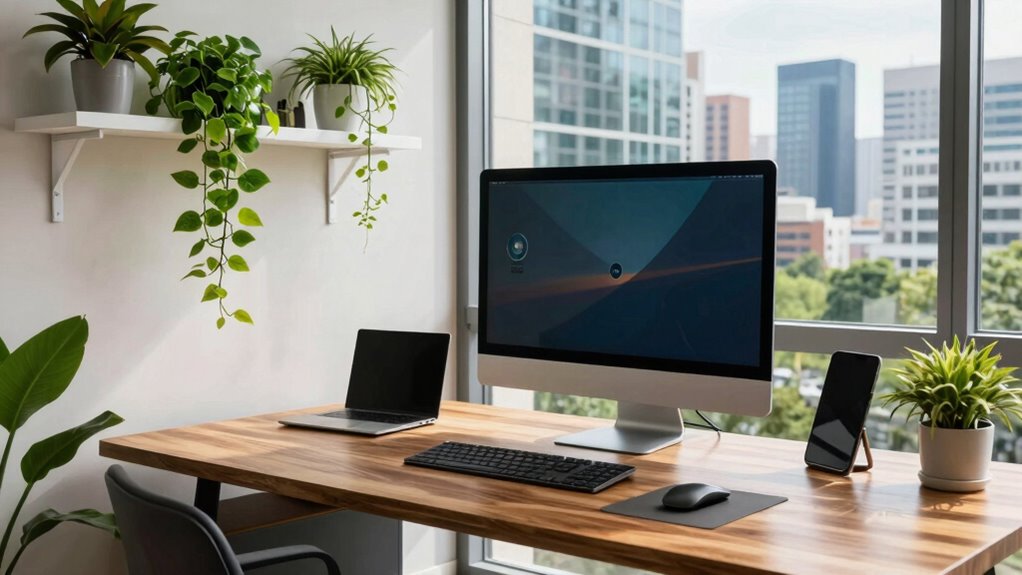

Designing your environment intentionally has a much stronger impact on your focus and productivity than simply trying new apps. A clutter-free space with natural lighting, calming colors, and visual cues can boost your mood and help you concentrate better. Using mindfulness techniques in an organized setting further enhances your attention. By aligning your workspace with your work habits, you’ll experience sustained focus over time. Keep exploring to discover how optimizing your environment can release your full potential.

Get tech for your team delivered free — and shop member deals
- Fast, free delivery on millions of items
- Access to Prime Big Deal Days deals on October 6–7
- Prime Video, Amazon Music and more included
Key Takeaways
- An organized, intentional workspace reduces mental clutter and distractions more effectively than relying solely on new productivity apps.
- Natural lighting, calming elements, and visual cues enhance focus and mood, supporting sustained attention without app dependence.
- Designing designated zones and environment signals align physical space with work routines, improving focus more than app-based tools.
- Mindfulness practices integrated with a well-structured environment strengthen concentration and resistance to distractions.
- A thoughtfully designed environment becomes a long-term, natural productivity enhancer, surpassing temporary boosts from new apps.
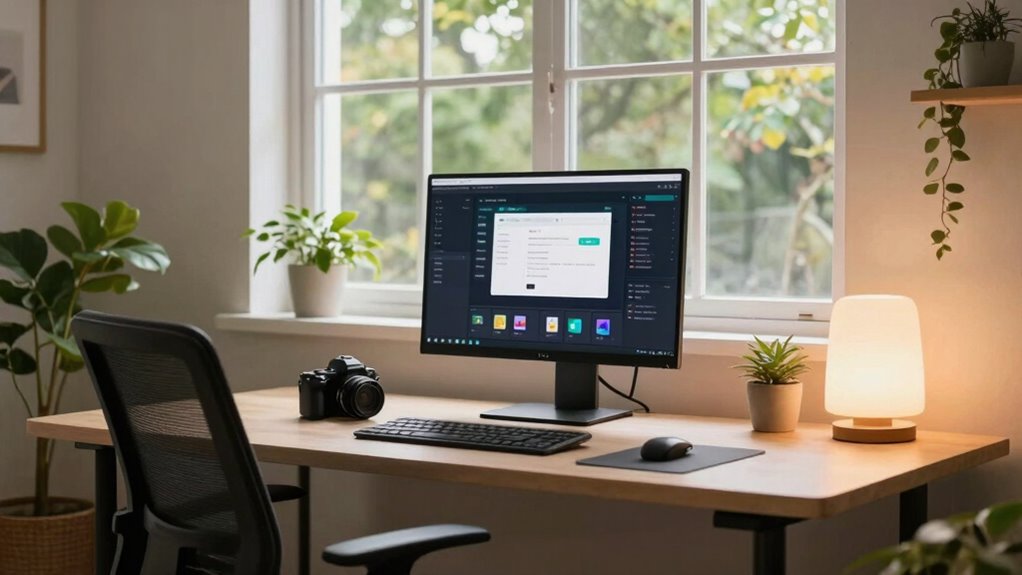
In today’s fast-paced world, simply adding new apps often isn’t enough to boost your productivity. Instead, focusing on how you design your environment can have a more profound impact on your ability to concentrate and get things done. Your physical workspace plays a crucial role in shaping your mindset and focus. When your environment is cluttered or distracting, it’s harder to stay on task, no matter how many productivity tools you try. By intentionally shaping your surroundings, you can create a space that naturally encourages focus and reduces mental clutter.
One effective way to establish a more productive environment is by integrating mindfulness techniques into your daily routine. These practices help you become more aware of your distractions and manage them better. For instance, taking a few deep breaths before starting work can ground you and clear your mind. Mindfulness encourages you to be present in the moment, making it easier to resist the urge to check social media or get sidetracked by non-essential tasks. When combined with a clean, organized physical workspace, these techniques enhance your ability to focus. A tidy environment minimizes visual distractions, allowing your mind to settle and concentrate on what truly matters.
Designing your workspace isn’t just about aesthetics; it’s about optimizing your mental state. Think about the lighting—natural light is best because it boosts alertness and mood. Keep your workspace free of unnecessary clutter, which can be overwhelming and drain your mental energy. Incorporating environmental cues such as specific colors or objects can help reinforce your focus and work habits. Incorporating calming elements like plants or soothing colors** can help create a space that feels inviting rather than stressful. This physical setup supports your mental state, making it easier to enter a state of flow and sustain deep focus for longer periods. Additionally, a well-designed environment can serve as a visual cue that signals your brain to shift into work mode, further enhancing your focus. Creating an environment aligned with your work habits** can significantly improve your overall productivity.
Furthermore, your environment should align with your work habits. If you find yourself distracted easily, consider creating zones within your workspace—one for focused work and another for breaks. Use mindfulness techniques during transitions to reset your attention. Simple habits, like stretching or brief meditation, can serve as mental reset buttons, reinforcing your focus when you return to work. Research shows that physical environment significantly influences mental clarity and motivation. Over time, this environment becomes a powerful tool that naturally fosters productivity, often more effectively than constantly searching for new apps or software solutions. When you prioritize designing a supportive physical workspace, you set a foundation that nurtures sustained attention and efficiency, making your productivity efforts more sustainable and meaningful.
As an affiliate, we earn on qualifying purchases.
Frequently Asked Questions
How Quickly Can a Focus Environment Be Implemented?
You can implement a focus environment in just a few hours by optimizing ambient acoustics and lighting. Start by reducing noise distractions with soundproofing or ambient music, then adjust lighting to create a calm, well-lit space. Simple changes like positioning desks near natural light or adding soft lamps can make a significant difference quickly. With these tweaks, you’ll notice improved focus almost immediately, making your environment more productive and conducive to concentration.
What Initial Costs Are Involved in Redesigning an Environment?
When redesigning an environment, your initial costs include budget considerations for furniture, lighting, and acoustics, which can vary widely. You’ll also need to account for cultural adaptations, ensuring the space supports diverse work styles and comfort preferences. Investing in these elements upfront can require a significant but worthwhile expenditure, as a well-designed focus environment boosts productivity and well-being, ultimately delivering long-term value that outweighs the initial investment.
Can Focus Environment Design Be Customized for Individual Needs?
Yes, focus environment design can be customized for your needs. Think of it as tailoring a suit—personalization options allow you to select colors, layouts, and tools that suit your style. Ergonomic considerations act as the foundation, ensuring comfort and efficiency. By blending these elements, you create a workspace that aligns with your unique preferences, boosting productivity and well-being while making your environment truly your own.
How Do You Measure the Effectiveness of a Focus Environment?
You measure the effectiveness of your focus environment by observing your productivity and stress levels. Incorporate mindfulness techniques, like breathing exercises, to gauge mental clarity, and adjust ambient lighting to see its impact on concentration. If you notice increased focus, reduced distractions, and a calmer state, your environment is working. Regularly reflect on these factors, and tweak your setup to optimize your focus and overall well-being.
What Are Common Challenges in Transitioning to Focus Environment Design?
Have you considered how ambient noise and ergonomic furniture could challenge your shift? Common hurdles include managing ambient noise that disrupts concentration and ensuring ergonomic furniture fits diverse needs. You might struggle to create a space that balances quietness with necessary collaboration zones or to train staff to adapt. Overcoming these challenges requires thoughtful planning, clear communication, and patience, but the improved focus environment will greatly boost productivity in the long run.
As an affiliate, we earn on qualifying purchases.
Conclusion
You might think new apps are the answer to staying focused, but the truth is, designing your environment has a deeper impact. By creating a space that minimizes distractions and promotes productivity, you harness your environment’s power to shape your habits. Research suggests that our surroundings influence our behavior more than we realize. So, instead of constantly chasing the latest app, invest in crafting a focus environment—you’ll find it’s a more sustainable and effective way to stay on task.
As an affiliate, we earn on qualifying purchases.
As an affiliate, we earn on qualifying purchases.
Halloween Picks
halloween
As an affiliate, we earn on qualifying purchases.