

Managing asynchronous teams requires clear, precise communication to prevent misunderstandings and ensure everyone stays aligned. Use detailed updates, shared documentation, and project management tools to centralize information. Set expectations for response times and encourage proactive check-ins to foster transparency and trust. Regularly clarify priorities and flag risks early. Building a communication culture and leveraging the right tools help bridge time zone gaps. Keep exploring these strategies to master effective asynchronous team management.
Key Takeaways
- Use clear, precise language and structured documentation to minimize misunderstandings in written communication.
- Establish response time expectations and encourage regular progress updates to maintain workflow momentum.
- Leverage collaborative tools and shared platforms for centralized information and transparent project tracking.
- Schedule periodic synchronous meetings to foster team alignment and strengthen trust among members.
- Train team members on effective communication practices and create a culture of proactive, transparent updates.
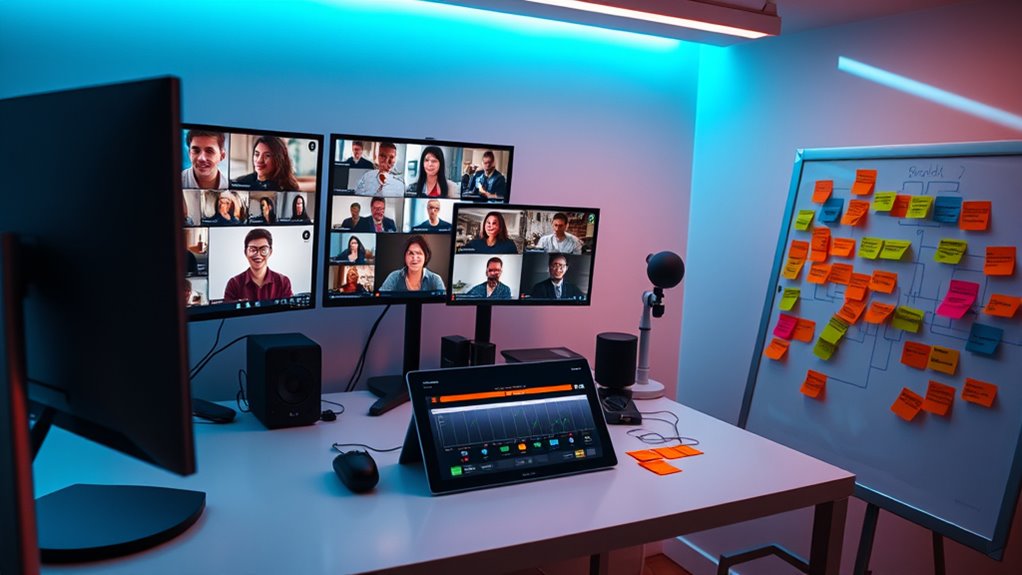
Managing asynchronous teams requires a different approach than traditional in-person or real-time collaboration. When your team operates across different time zones and schedules, communication challenges become more prominent. Unlike face-to-face interactions, where you can quickly clarify a point or gauge reactions, asynchronous work relies on written updates, messages, and shared documents. This can lead to misunderstandings or misinterpretations if not managed carefully. To overcome these hurdles, you need effective productivity strategies that guarantee everyone stays aligned and informed.
First, clarity is essential. When communicating, be precise and thorough. Avoid vague language and assume your team members might read your messages hours or even days after you send them. Use clear subject lines, bullet points, and summaries to highlight key points. This makes it easier for others to grasp your message quickly and reduces the need for lengthy back-and-forth clarifications. Also, establish expectations for response times so team members know when to expect replies and can plan their work accordingly. Setting these boundaries helps prevent delays and keeps projects moving forward.
Prioritize clarity with precise language, clear subject lines, and defined response expectations to streamline asynchronous communication.
Another crucial productivity strategy involves leveraging the right tools. Use project management platforms, shared calendars, and collaboration apps to centralize information. When updates are stored in one accessible location, team members can easily find what they need without endless email chains or lost messages. This transparency minimizes communication gaps and keeps everyone on the same page. Additionally, encourage your team to document their work thoroughly—status updates, decisions, and next steps—so others can follow the progress even if they weren’t involved in every discussion.
To address communication challenges, foster a culture of proactive updates. Rather than waiting for issues to escalate, encourage team members to share progress regularly, flag risks early, and ask for input when needed. This proactive approach helps prevent misunderstandings and keeps the workflow steady. Also, consider scheduling periodic check-ins or virtual meetings, even if they’re brief, to sync up on priorities and address any concerns. These synchronous moments can complement asynchronous workflows and build a sense of connection and trust.
Finally, invest in training your team on effective written communication and the use of collaboration tools. When everyone understands best practices, messages become clearer, and productivity strategies become more effective. Managing asynchronous teams isn’t just about adapting to different schedules; it’s about creating a communication environment where clarity, transparency, and proactive engagement thrive. Incorporating communication best practices and implementing strong productivity strategies will help ensure your team works efficiently, regardless of where or when they’re working.
Frequently Asked Questions
How Do You Build Trust in a Remote Asynchronous Team?
To build trust in a remote asynchronous team, you should prioritize trust-building exercises like transparent communication and consistent follow-through. Encourage cultural awareness by learning about team members’ backgrounds and respecting differences. Regular check-ins and clear expectations foster reliability. By demonstrating sincerity and openness, you create a safe environment where team members feel valued and trusted, ultimately strengthening your team’s cohesion and productivity.
What Tools Best Facilitate Asynchronous Communication?
Did you know that 74% of employees prefer asynchronous communication? To facilitate this, use tools like Slack or Microsoft Teams for instant messaging and video tutorials for onboarding or training. Project management platforms like Asana or Trello keep everyone aligned and transparent. These tools help your team stay connected, share updates, and collaborate effectively, even when working at different times, ensuring smooth progress and productivity.
How Do You Handle Conflicts Asynchronously?
When handling conflicts asynchronously, you should focus on clear conflict resolution and effective feedback strategies. Address issues promptly through written communication, ensuring your tone remains respectful and constructive. Encourage team members to share their perspectives openly and listen actively. Use neutral language and ask clarifying questions to understand each side. Document agreements and follow up to confirm resolution. This approach fosters trust, reduces misunderstandings, and promotes a collaborative team environment.
What Are Effective Ways to Motivate Remote Team Members?
To motivate your remote team members, prioritize virtual team bonding by organizing regular online activities that foster connection. Use recognition strategies like shout-outs and personalized praise to boost morale and show appreciation. Keep communication clear and consistent, setting achievable goals to give your team purpose. When you celebrate successes and build camaraderie through virtual interactions, you create a motivating environment that encourages productivity and engagement.
How Can Managers Monitor Productivity Without Micromanaging?
Ever wondered how you can track progress effectively without micromanaging? You can do this by setting clear performance metrics and accountability measures that align with your team’s goals. Regular check-ins and progress updates help you stay informed without hovering. Using project management tools also provides visibility into task completion, keeping everyone accountable. Isn’t it better to trust your team and focus on results rather than constant oversight?
Conclusion
Remember, managing an asynchronous team is like tending a garden—you plant the seeds with clear expectations, nurture communication, and give each member space to grow. When I once missed a deadline, I realized it was like neglecting the watering schedule. Once I adjusted, productivity flourished. Embrace flexibility, trust your team, and stay patient. With consistent care, your team can thrive, turning remote work into a lush, productive landscape where everyone blossoms.