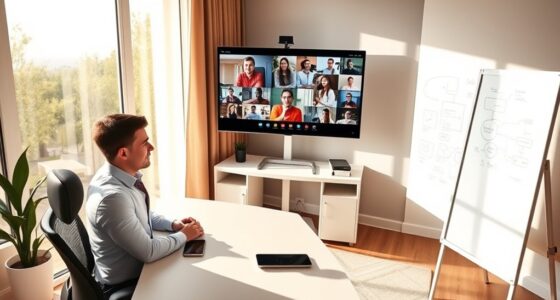
The “Camera On” policy often causes discomfort, privacy worries, and distractions, making virtual meetings less effective and more stressful. Instead, consider establishing inclusive norms that respect individual preferences, privacy, and health. Encourage participation through flexible options like audio-only, chat, or virtual backgrounds. Setting clear, respectful expectations helps foster genuine connection without forcing cameras on. If you want to explore practical strategies and real-world examples for creating a healthier, more inclusive meeting culture, keep going.
Key Takeaways
- Emphasize flexibility by offering alternatives like audio-only or chat participation to respect individual comfort.
- Establish inclusive norms that prioritize privacy, well-being, and personal circumstances over mandatory camera use.
- Model openness and positive reinforcement to foster trust and encourage voluntary camera engagement.
- Use virtual backgrounds and noise-canceling tools to reduce distractions and create a comfortable environment.
- Focus on active listening and respectful dialogue, valuing contributions regardless of camera status.
Why the “Camera On” Policy Doesn’t Fit Remote Work Today

While the idea of having cameras on during remote meetings might seem like a way to foster connection, it often does more harm than good. Relying on virtual presence as proof of engagement can lead to burnout and distractions. When everyone is expected to be on camera constantly, it can blur the lines of digital etiquette, making it feel intrusive or overwhelming. Not everyone has a perfect home environment, and forcing camera use ignores individual circumstances. Instead of building genuine connection, it can create pressure and discomfort. A better approach recognizes that effective communication doesn’t always require visual cues. Respecting personal boundaries and allowing flexibility helps maintain productivity while respecting your team’s diverse situations and promoting a healthier, more inclusive remote work culture. Additionally, protecting your savings by avoiding unnecessary risks can help ensure financial stability in uncertain times. Incorporating financial planning strategies, such as investing in Gold IRA Markets, offers a way to diversify and secure your long-term financial future. Recognizing the importance of remote work best practices can lead to more sustainable and respectful communication habits within teams. Moreover, understanding the role of technology in remote work can help organizations implement more effective and considerate policies, ensuring that technological tools serve to enhance rather than hinder collaboration.
The Drawbacks of Mandatory Camera Use: Privacy, Anxiety, and Discomfort

Mandatory camera use can infringe on your privacy and increase feelings of vulnerability during virtual meetings. When cameras are required, you might worry about exposing too much or having your personal space scrutinized, raising privacy concerns. This pressure can make you uncomfortable, especially if your environment isn’t ideal or you prefer to keep certain aspects private. Additionally, the constant need to appear “camera-ready” can heighten personal discomfort, leading to anxiety about your appearance or surroundings. These issues aren’t just superficial—they can affect your focus and overall well-being. When privacy feels compromised, and personal discomfort grows, it’s harder to engage genuinely in discussions. Recognizing these drawbacks highlights the need for a more flexible approach that respects individual boundaries and promotes a healthier remote work environment. Furthermore, understanding the importance of informational content can help foster more inclusive and empathetic communication standards. Incorporating privacy considerations into policies can support mental well-being and foster trust among team members. Introducing user comfort measures can further enhance engagement and reduce stress during virtual interactions. Considering personal boundaries related to camera use can help create a more respectful and supportive virtual environment, especially when acknowledging the benefits of respecting individual choices for mental health and productivity.
How Personal Circumstances Influence Meeting Comfort and Participation

Your comfort in meetings often depends on your personal circumstances, like privacy concerns or home environment. Distractions at home can make it harder to focus or participate fully. Additionally, health issues may affect your willingness or ability to keep the camera on during discussions.
Privacy Concerns Impact Comfort
Personal circumstances can substantially influence how comfortable you feel during meetings that use cameras. Privacy boundaries vary from person to person, affecting your sense of security and willingness to share your space visually. If you’re concerned about exposing personal details—like your home, belongings, or family—you might feel anxious or reluctant to turn on your camera. These privacy concerns directly impact your personal comfort, making you less engaged or open during discussions. Recognizing that everyone has different limits is essential. Respecting privacy boundaries helps create an environment where participants feel safe and included, whether they choose to turn their cameras on or off. Additionally, understanding the importance of personal comfort in small spaces can help foster more genuine participation and a healthier meeting culture. Being aware of home environment factors can also influence how willing someone is to share their space visually, which is an important aspect of creating an inclusive atmosphere. Considering filtration and privacy safeguards can further reassure participants and support a more open, trusting virtual environment. Implementing privacy management practices can help address concerns about security and privacy during virtual meetings.
Home Environment Distractions
Home environment distractions can substantially affect how comfortable you feel during virtual meetings. Background noise, like children’s voices or household appliances, can make it hard to focus and feel at ease. Home clutter, such as messy desks or visible personal items, may cause embarrassment or reduce your confidence in participating actively. These distractions can lead to missed information or feelings of self-consciousness, especially if your environment isn’t fully controlled. To help, consider creating a dedicated, tidy space for meetings, and use noise-canceling tools if possible. A cleaner setup minimizes visual clutter and background noise, making you more confident and engaged. Recognizing how your surroundings influence your participation allows you to better manage distractions and contribute more effectively. Incorporating organized routines can further reduce distractions and help maintain a calm meeting environment. Additionally, understanding home environment distractions can empower you to develop strategies that improve your overall comfort and participation levels. Being aware of sleep quality and ensuring restful nights can also enhance your focus and confidence during virtual meetings. Developing consistent daily habits can also support a more stable and distraction-free home environment, boosting your meeting experience. Moreover, managing technology issues promptly can prevent interruptions that disrupt your engagement.
Personal Health Considerations
Distractions from your environment can extend beyond noise and clutter to include health-related issues that impact your comfort during virtual meetings. Excessive screen time can lead to virtual fatigue, making it harder to stay engaged and focused. If you’re dealing with eye strain, headaches, or back pain, forcing yourself to keep the camera on might worsen your discomfort. Personal health circumstances vary, and respecting these differences helps create a more inclusive atmosphere. You may find that turning off your camera at times reduces strain and allows you to participate more comfortably. Prioritizing your health doesn’t mean disengaging; it means recognizing your limits and finding ways to contribute that don’t compromise your well-being. Clear communication about these needs promotes understanding and reduces pressure during virtual meetings. Incorporating skin care routines can also help maintain comfort for those with specific skin sensitivities. Being aware of personal health considerations and self-care strategies, such as adjusting your piercing jewelry to prevent irritation, ensures that everyone’s comfort and participation are valued equally.
Developing Inclusive Meeting Norms That Respect Privacy and Preferences

Creating inclusive meeting norms starts with recognizing that everyone has different comfort levels and privacy needs. To respect individual preferences, establish clear expectations and flexible options. Address privacy concerns by offering alternatives, like audio-only participation or chat engagement. Communicate openly about what’s comfortable for each person to foster trust. Consider these key points:
- Allow team members to choose whether to turn cameras on, based on their comfort
- Provide options for audio-only or text-based participation
- Avoid pressuring anyone to share more than they’re comfortable with
- Regularly check in to adapt norms as needs evolve
Practical Strategies for Encouraging Video Participation Without Mandates
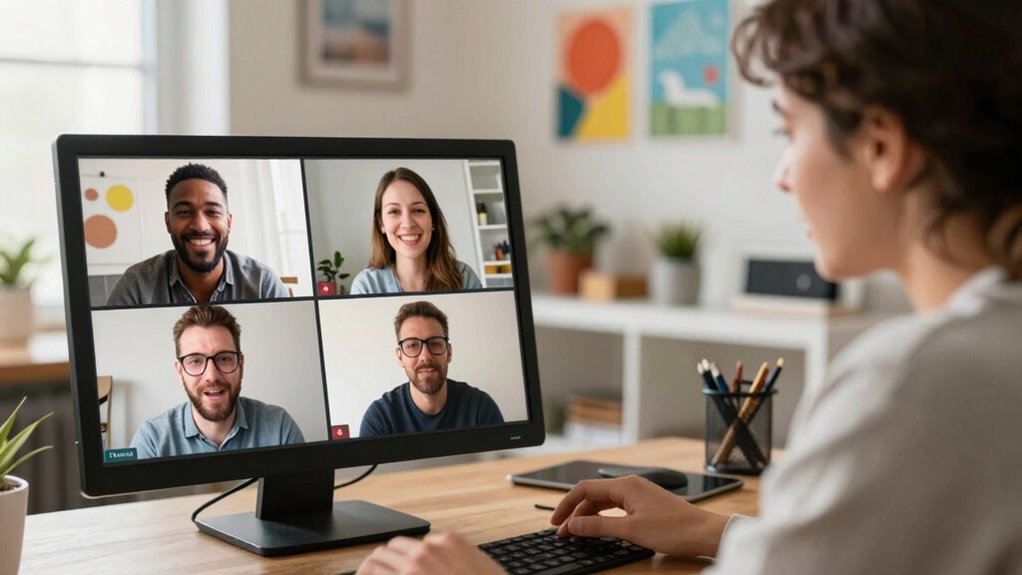
To encourage video participation without imposing rules, focus on building comfort and trust among team members. Clearly explain the benefits of having cameras on, like better connection and collaboration. When people see value and feel safe, they’re more likely to join in willingly.
Foster Comfort and Trust
Have you ever wondered how to make participants feel more comfortable turning on their cameras? Building trust starts with creating a safe space. Use positive body language and subtle visual cues, like nodding or smiling, to show you’re approachable. You can also:
- Share your own camera on to model openness
- Offer options like a profile picture or avatar
- Use gentle reminders that cameras are optional
- Praise those who participate visually to encourage others
These strategies foster comfort by reducing pressure and demonstrating understanding. When you pay attention to body language and visual cues, you signal that everyone’s participation is valued, not judged. This approach helps build trust naturally, making participants more willing to turn their cameras on without feeling forced.
Highlight Benefits Clearly
When you focus on clearly communicating the benefits of turning on cameras, participants are more likely to engage voluntarily. Explain how using virtual backgrounds can create a professional environment and reduce concerns about privacy or clutter. Emphasize that camera etiquette fosters a respectful and engaging conversation, making everyone feel more connected. Highlight that seeing each other promotes better communication, collaboration, and team cohesion. By framing these benefits upfront, you help participants see the value in turning on their cameras without feeling forced. Remember, clear messaging about the advantages builds motivation and trust. This approach reduces resistance and encourages a natural shift toward more consistent video participation, creating a more engaging and productive virtual environment.
How to Foster Engagement in Virtual Meetings Without Forcing Cameras On
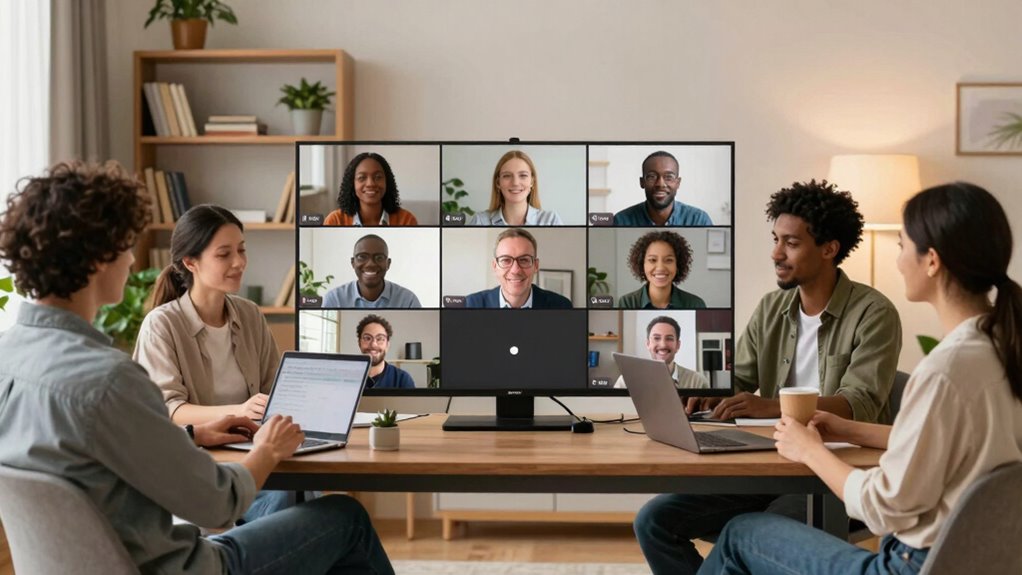
While forcing cameras on participants can feel intrusive, you can still encourage engagement by creating a welcoming and interactive virtual environment. Focus on fostering connections through active listening and clear communication. Use eye contact and positive body language when speaking to make participants feel seen and valued, even if their cameras stay off. You can also boost involvement by:
- Asking open-ended questions to prompt discussion
- Incorporating polls or chat prompts for input
- Recognizing contributions to build rapport
- Setting interactive activities that don’t require video
These strategies help participants feel connected and engaged without pressure to turn cameras on. When you emphasize inclusivity and respect, engagement naturally increases, making meetings more effective and less stressful.
Setting Clear Expectations for Respectful and Inclusive Virtual Meetings
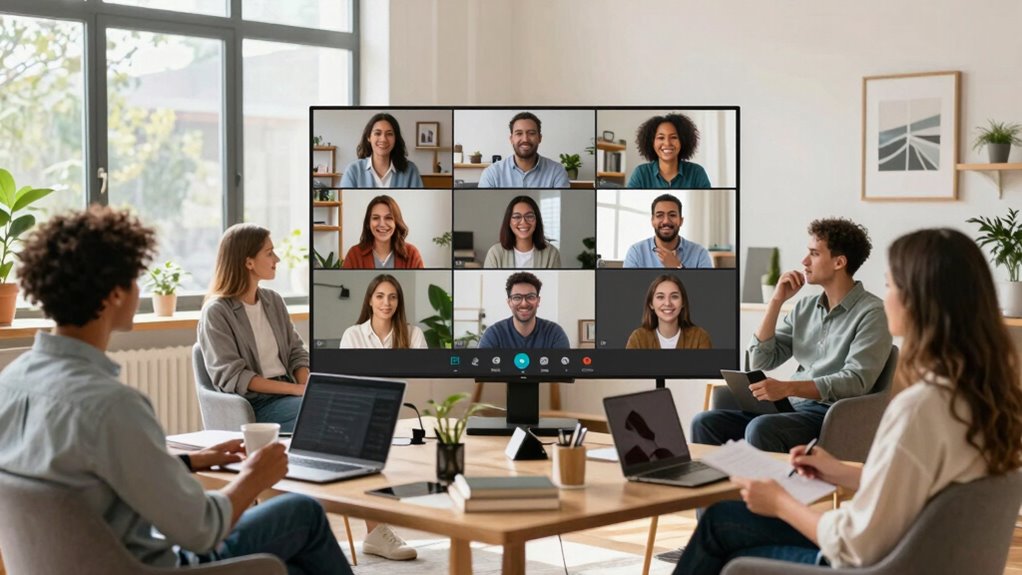
Establishing clear expectations at the start of virtual meetings sets the tone for respectful and inclusive participation. Make it clear that virtual etiquette, such as muting when not speaking and avoiding distractions, is essential. Set meeting boundaries by outlining appropriate behavior, like respecting each other’s opinions and refraining from interrupting. Clarify that everyone’s voice matters and encourage open, respectful dialogue. When participants understand these expectations upfront, it reduces misunderstandings and promotes a positive environment. Reinforce that inclusivity means welcoming diverse perspectives and being mindful of different backgrounds. By establishing these standards early, you create a space where everyone feels comfortable contributing, ensuring the meeting remains productive and respectful for all involved.
Tools and Tech to Support Flexible Video Participation
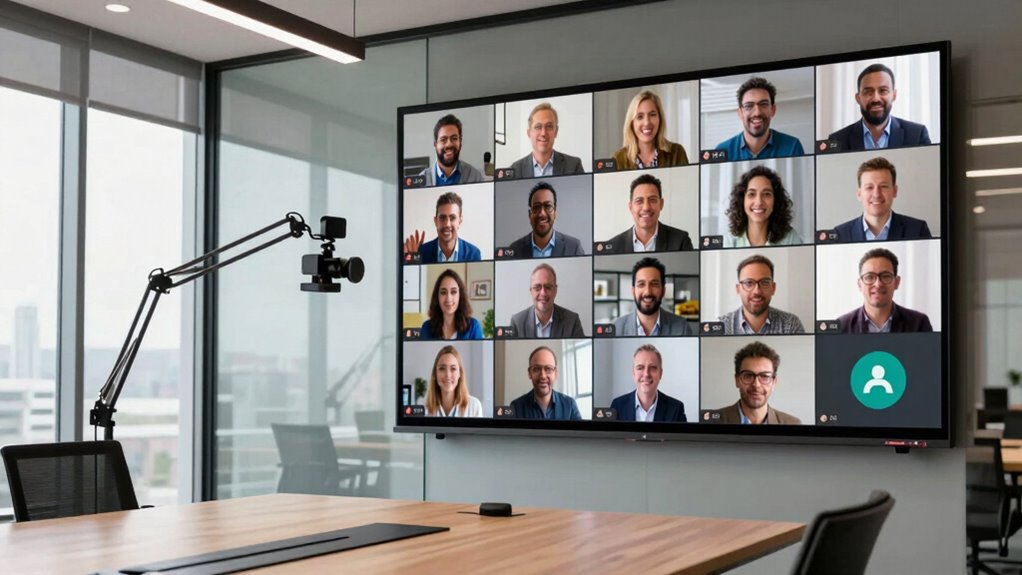
To make virtual meetings more effective, you need tools with seamless video integration that work smoothly across devices. A user-friendly interface guarantees everyone can participate without frustration or technical hurdles. When these features come together, they create a more inclusive and flexible video environment for all.
Seamless Video Integration
Seamless video integration has become essential for flexible participation in modern meetings and events. It allows you to switch between different setups effortlessly, creating a smooth experience for all. Tools that support virtual backgrounds help you maintain privacy and professionalism without distractions. Lighting adjustments ensure your image is clear and consistent, regardless of your environment. To enhance your setup, consider these features:
- Automatic virtual background removal for a natural look
- Real-time lighting adjustments to improve visibility
- Compatibility with various video conferencing platforms
- Easy integration with existing hardware and software
User-Friendly Interface
A user-friendly interface is essential for making flexible video participation accessible and efficient. It simplifies how you manage camera etiquette, encouraging users to stay engaged without technical frustrations. Intuitive controls for muting, turning cameras on or off, and adjusting virtual backgrounds help maintain professionalism and focus. Virtual backgrounds can hide clutter or distractions, supporting a more polished appearance. Clear prompts and minimal steps reduce confusion, especially for new users. Features like automatic lighting adjustments or noise suppression enhance video quality effortlessly. When your platform prioritizes ease of use, participants feel comfortable contributing, regardless of their technical skills. Ultimately, a streamlined interface fosters a more inclusive environment where everyone can participate confidently, respecting norms while minimizing obstacles to effective communication.
Real-World Examples: Companies Moving Beyond “Camera On” Policies

Many companies are recognizing that strict “camera on” policies can hinder productivity and employee comfort. Instead, they’re adopting flexible approaches. For example, some firms allow the use of virtual backgrounds to help employees feel more at ease and maintain privacy. Others are trimming meeting recordings, only saving essential parts to reduce digital clutter and respect privacy. Companies are also encouraging participants to turn cameras on only when necessary, fostering a more relaxed atmosphere. Additionally, some organizations provide training on effective virtual communication, emphasizing clarity over constant visibility. These strategies promote a healthier remote work environment, balancing engagement with employee well-being. By moving beyond rigid “camera on” rules, businesses are creating more inclusive, productive virtual meetings that respect individual comfort levels.
How to Transition Your Team Toward a More Inclusive Meeting Culture

Moving toward a more inclusive meeting culture begins with setting clear expectations and encouraging open communication. Start by discussing flexible policies around virtual backgrounds, allowing team members to choose comfort over uniformity. Emphasize that it’s okay to use virtual backgrounds or keep cameras off if they prefer, fostering a sense of safety. When it’s time to share screens, remind everyone to be mindful of what’s visible and to respect each other’s privacy. Encourage team members to explain their choices if they feel comfortable, creating a supportive environment. Consistently reinforce that participation looks different for everyone and that inclusivity benefits the whole team. By promoting transparency and understanding, you help build a culture where all feel valued and respected, regardless of camera or background preferences.
Frequently Asked Questions
How Can Managers Assess Engagement Without Video Participation?
You can assess engagement without video participation by paying attention to eye contact and body language. Observe if team members maintain eye contact through their responses and show interest with attentive posture, nodding, or leaning forward. You can also use regular check-ins, polls, or written feedback to gauge involvement. These cues help you understand their level of engagement, even when cameras are off, fostering a more inclusive and attentive environment.
What Are Alternative Ways to Build Team Connection Remotely?
You can build team connection remotely by fostering virtual presence through regular check-ins and interactive activities. Encourage emotional connectivity with personalized conversations, sharing successes and challenges. Use breakout rooms for smaller, more intimate interactions, and incorporate fun, collaborative projects. These efforts help team members feel seen and connected, strengthening bonds even without constant video. The goal is to create an environment where everyone feels valued and engaged, regardless of their physical presence.
How Do Cultural Differences Impact Camera Use Preferences?
Cultural perceptions greatly influence camera use preferences, as some cultures value face-to-face connection and see cameras as a sign of engagement, while others prioritize privacy and may prefer turning cameras off. You should respect diverse camera etiquette, recognizing that in some cultures, camera use might be seen as intrusive or unnecessary. By being mindful of these differences, you foster inclusivity and create a comfortable environment for all team members.
What Privacy Considerations Should Be Addressed in Flexible Policies?
Think of flexible camera policies as a dance where privacy concerns set the rhythm. You should establish clear consent protocols, making sure everyone feels comfortable before turning on their camera. Respect individual boundaries and provide options to opt out without pressure. Address privacy concerns openly, ensuring shared expectations are transparent. This way, everyone can participate confidently, knowing their privacy is protected, and the dance flows smoothly without stepping on toes.
How Can Organizations Measure the Success of New Meeting Norms?
You can measure the success of new meeting norms by tracking virtual engagement levels and inclusive participation. Pay attention to how often team members contribute, ask questions, or share ideas. Use surveys or feedback forms to gather insights on comfort and inclusivity. If participation improves and team members feel more involved, it indicates your norms are fostering a more effective, engaging, and inclusive meeting environment.
Conclusion
Instead of clinging to the “camera on” rule, imagine a future where every team member feels seen and respected—whether their camera is on or off. By embracing flexible norms, you create a space where participation flows naturally, not forced. After all, isn’t it time we stop treating video as a mandate and start valuing authentic connection? Let’s lead the charge toward inclusive meetings that truly work for everyone.