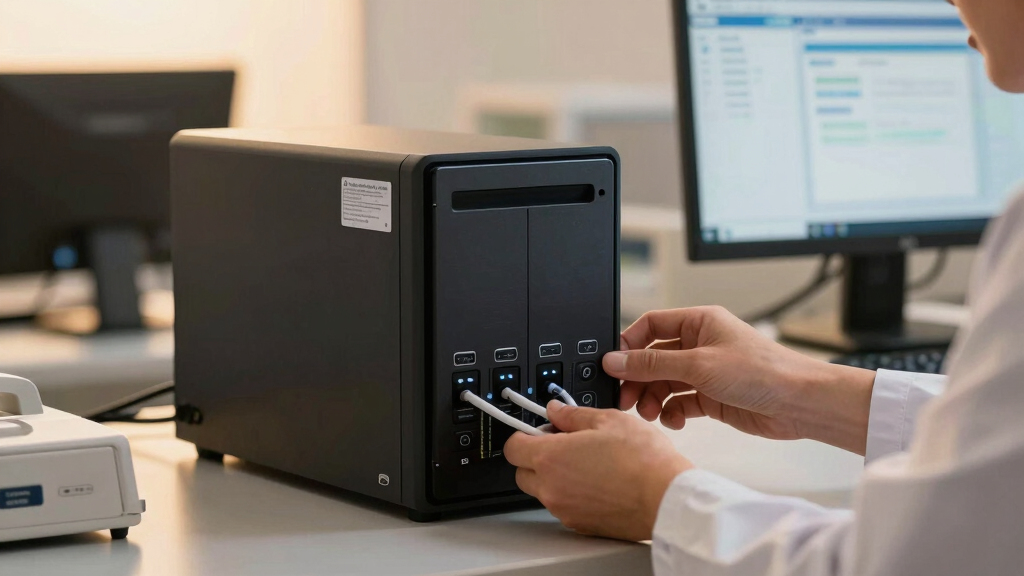
Choosing a secure NAS for healthcare offices involves balancing data security, compliance, ease of management, and affordability. For 2026, the leading option is the Synology DiskStation DS1827+ because of its robust security features and scalable storage. However, it comes with a higher price tag and complexity that might overwhelm smaller clinics. On the other hand, the QNAP TS-464 offers a user-friendly experience with strong security but less scalability, making it a good fit for smaller practices. Both options highlight the tradeoff between comprehensive security and ease of use, crucial for healthcare environments handling sensitive data.
Key Takeaways
- Security features such as encryption, access controls, and compliance certifications are non-negotiable for healthcare NAS.
- Scalability matters—larger clinics will need more storage and flexible expansion options.
- Ease of management can reduce operational overhead but might limit customization.
- Price varies significantly; investing in higher security can mean higher upfront costs.
- Network connectivity and remote management are critical for ongoing data integrity and quick recovery.
| APC Smart-UPS 500VA Lithium Battery Rackmount UPS with SmartConnect, SCL500RM1UC |  | Uninterruptible Power Supply for Healthcare Data Security | VA Rating: 500VA | Wattage: 400W | Form Factor: Rackmount | VIEW LATEST PRICE | See Our Full Breakdown |
More Details on Our Top Picks
APC Smart-UPS 500VA Lithium Battery Rackmount UPS with SmartConnect, SCL500RM1UC
The APC Smart-UPS 500VA stands out for its reliable power backup, a critical component for maintaining data integrity during outages. While it doesn’t directly provide storage or security features, its SmartConnect capability allows remote monitoring—an essential feature for healthcare offices that need constant uptime and quick response to power issues. Compared with network-attached storage, this UPS ensures that healthcare data remains protected from power fluctuations, but it requires pairing with a NAS or server to complete the security setup. Its main tradeoff is limited storage capacity and no direct data security features, making it more of an infrastructural component rather than a standalone security solution.
Pros:- Reliable power backup during outages
- Remote monitoring via SmartConnect
- Easy installation in rack environments
- LED indicators for quick status checks
Cons:- No direct data security or storage features
- Limited to power management
- Requires pairing with NAS or server for security
Best for: Healthcare offices needing reliable power backup with remote monitoring capabilities.
Not ideal for: Practices seeking integrated data security or storage solutions.
- VA Rating:500VA
- Wattage:400W
- Form Factor:Rackmount
- Input Voltage:120V
- Battery Type:Lithium
- Connectivity:SmartConnect
Bottom line: A vital power infrastructure component that supports healthcare data security indirectly.

How We Picked
Our selection process focused on NAS devices that meet healthcare-specific security and compliance standards like HIPAA and GDPR. We examined security features, scalability, user-friendliness, and integration capabilities, prioritizing products with proven reliability in sensitive environments. Cost-effectiveness was also considered, balancing features against typical healthcare IT budgets. We included a mix of enterprise-level solutions and smaller, more manageable options to cater to a range of healthcare office sizes and budgets.
Factors to Consider When Choosing Best Secure Nas For Healthcare Offices
Selecting the best secure NAS for a healthcare office requires understanding the balance between security features, compliance, scalability, and ease of management. Healthcare data is highly sensitive, so encryption, access controls, and audit capabilities are essential. Additionally, the size of your practice influences whether you need a scalable, enterprise-grade solution or a more straightforward system. This guide will walk you through the critical factors to consider, helping you identify the right device for your specific needs.Security and Compliance Features
For healthcare offices, security isn’t just a feature—it’s a necessity. Look for NAS devices that support encryption at rest and in transit, multi-factor authentication, and detailed audit logs. Compliance certifications like HIPAA or GDPR are also vital indicators that a device meets industry standards for data security. Keep in mind that having these features is a baseline; their implementation and ease of use will determine how effectively your staff can maintain security protocols.
Scalability and Storage Capacity
Depending on your practice size and data volume, your NAS needs to be scalable. Larger clinics handling extensive imaging, patient records, and backups require solutions with multiple bays and expansion options. Smaller offices may prioritize ease of setup over large-scale growth, opting for more compact, integrated options. Always check the maximum supported drives, RAID configurations, and expansion capabilities to ensure future growth won’t require a costly overhaul.
Ease of Management and Integration
Healthcare IT teams value solutions that are straightforward to manage, especially when rapid response to security threats or system failures is needed. Features like remote management, automatic firmware updates, and intuitive user interfaces can significantly reduce administrative overhead. Compatibility with existing infrastructure, such as directory services and backup systems, is equally important to avoid redundant workflows or security gaps.
Cost and Total Ownership
High security and scalability come with a price tag, but the total cost of ownership includes not just the initial purchase but ongoing maintenance, support, and potential expansion. While enterprise-grade NAS units may seem expensive upfront, they often deliver better value through durability and advanced security features. Smaller practices might prefer budget-friendly models that still meet core security requirements but may need upgrades sooner.
Frequently Asked Questions
Why is encryption vital for healthcare NAS devices?
Encryption ensures that patient data stored on the NAS remains confidential and protected against unauthorized access, especially if physical security is compromised or data is transmitted over insecure networks. Encryption at rest and in transit is essential for compliance with regulations like HIPAA, which mandate strict data security standards in healthcare environments.
How do I choose between a scalable and a compact NAS?
If your healthcare practice is growing or handles large volumes of data, a scalable NAS with multiple bays and expansion options makes sense. Smaller clinics with limited data needs might prefer a compact, all-in-one solution that is easier to manage and less costly upfront. The decision hinges on your current needs and anticipated growth.
What security certifications should I look for?
For healthcare, certifications like HIPAA compliance, GDPR readiness, and ISO 27001 are key indicators that a NAS has been tested against strict security standards. These certifications don’t guarantee perfect security but do serve as useful benchmarks for assessing a device’s security posture and reliability in sensitive environments.
How important is remote management for healthcare NAS?
Remote management capability allows IT staff to monitor system health, perform updates, and troubleshoot issues without physical access, which is critical for maintaining uptime and quick response times. Especially during emergencies or after-hours, remote access can prevent data loss and minimize downtime.
Can I use a regular NAS in a healthcare setting?
While some consumer-grade NAS devices can handle basic data storage, they often lack the advanced security, compliance, and management features required in healthcare. For protecting sensitive patient data and ensuring regulatory compliance, choosing a purpose-built, security-focused NAS is essential.
Conclusion
For healthcare offices with extensive data management needs and strict security requirements, enterprise-grade NAS solutions like the Synology DiskStation DS1827+ offer the best balance of security, scalability, and management features. Smaller practices or clinics just beginning to digitize patient data may find more suitable options among simplified, budget-friendly models that still prioritize core security measures. An investment in the right NAS device translates directly into safer patient information and smoother operational workflows.