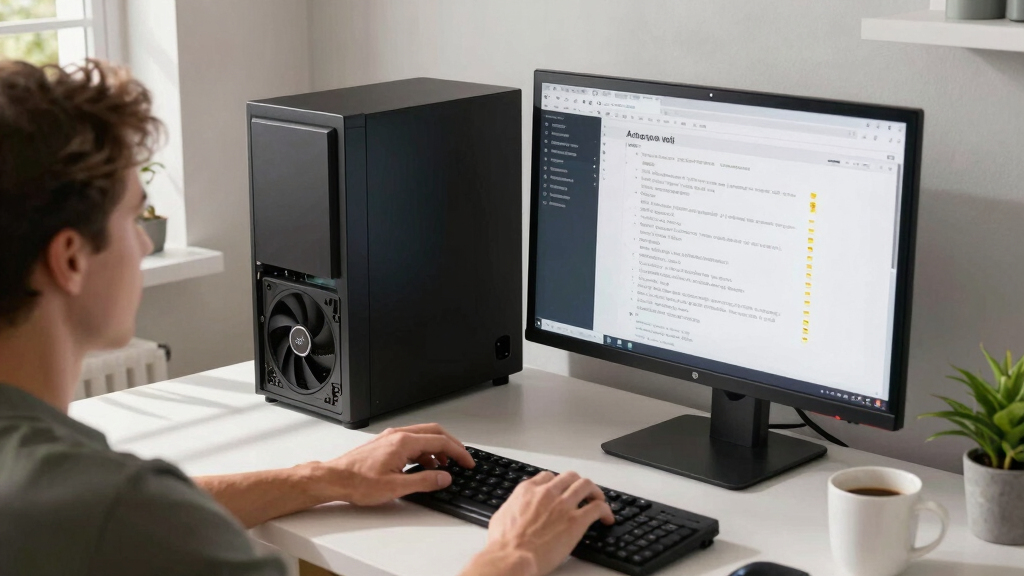

Choosing the best desktop GPU for local large language model (LLM) workflows involves balancing raw performance, memory capacity, and cost. The CyberGeek GeForce RTX 5090 stands out for its exceptional AI throughput, making it ideal for heavy inference tasks. The ASUS RTX 5080 OC offers a strong balance of performance and efficiency, suitable for most AI developers. Meanwhile, entry-level options like the HP GeForce GT 1030 are more suited for lighter workloads or hobbyists. The main tradeoffs involve balancing high-end capabilities against budget constraints and power requirements. Keep reading for a detailed breakdown of each option’s strengths and limitations, helping you find the best fit for your specific needs.
Open a free Amazon Business account
Business pricing, bulk buying and tax-exempt orders.
Create a free accountAs an affiliate, we earn on qualifying purchases.
Key Takeaways
- High VRAM capacity is essential for running large language models locally without bottlenecks.
- AI-specific features like Tensor Cores and dedicated inference hardware significantly boost performance.
- The best value options deliver solid inference speeds at a lower price point, ideal for budget-conscious users.
- Power consumption and physical size can impact compatibility with existing setups, especially for compact or power-sensitive environments.
- Premium GPUs provide the highest throughput but come with increased cost and energy demands, suitable for intensive AI workloads.


More Details on Our Top Picks
Deco Gear 49″ Curved Ultrawide Dual-QHD Monitor | 5120×1440 32:9 HDR400 | 120Hz VA Panel | USB-C 65W PD, FreeSync, PBP/PIP, KVM Switch | Built-in Speakers & Ergonomic Stand
This ultrawide monitor stands out for providing a seamless, expansive workspace that replaces dual monitors with one curved display, ideal for multitasking and creative workflows. Compared with the high-end GPUs like the RTX 5090, this monitor enhances productivity by displaying multiple sources simultaneously via PIP/PBP, making it a strong companion for local LLM workflows where multiple data streams need to be monitored. Its 120Hz refresh rate and 1ms response time ensure smooth visuals during fast-paced tasks, although it doesn’t impact raw AI processing power. The HDR support and 100% sRGB coverage deliver vibrant visuals for content creation, but color calibration may be necessary for professional-grade accuracy. Its USB-C port with 65W PD simplifies cable management, and the built-in KVM allows effortless device switching. This monitor is best suited for professionals who prioritize multitasking in content-heavy projects rather than raw AI model training. It’s less ideal for users needing high GPU compute power or gaming performance.
Pros:- Expansive 49-inch dual-QHD curved display for multitasking
- Fast 120Hz refresh rate with 1ms response time ensures smooth visuals
- Built-in KVM switch and USB-C 65W PD for cable management
Cons:- Limited color calibration out of the box, may need professional adjustment
- Not suitable for high-performance AI model training or heavy GPU compute tasks
Best for: Content creators, designers, and data analysts needing a large, multitasking-friendly display.
Not ideal for: AI researchers requiring dedicated GPU acceleration for model training or inference.
- Display Resolution:5120×1440
- Refresh Rate:120 Hz
- Response Time:1ms
- Ports:USB-C 65W, HDMI 2.0, DP 1.4, USB A/B
- Screen Size:49 inches
- Color Gamut:100% sRGB
Bottom line: Ideal for professionals focused on multitasking and content creation rather than raw AI processing power.
Lenovo ThinkStation P2 Tower Desktop AI PC, Intel Core Ultra 5 225, 32GB DDR5, 1TB SSD, Wi-Fi 7, Support 3-Display 4K, HDMI, DP, Optical Disc Drive, Windows 11 Pro, Business Workstation, w/Bundle
This workstation offers a powerful combination of an Intel Core Ultra 5 225 processor with 32GB DDR5 RAM and a 1TB SSD, making it well-suited for running large language models locally. Compared to GPU-heavy options like the RTX 5090, this system emphasizes CPU and fast storage to optimize inference workflows and data handling, ideal for AI developers who need reliable local compute without complex GPU setup. Its support for multiple 4K displays enhances visualization of large datasets and model outputs, though it lacks high-end GPU acceleration for training or heavy inference workloads. The Windows 11 Pro OS and extensive connectivity options streamline professional productivity. It’s perfect for small AI teams or individual researchers focused on deployment and testing, but less suitable for training hefty models or GPU-centric tasks that demand extreme graphics performance.
Pros:- Strong CPU performance with Intel Core Ultra 5 225
- Fast 1TB SSD for quick data access and model loading
- Supports three 4K displays for enhanced visualization
Cons:- Limited GPU power for training large models or inference acceleration
- No dedicated high-performance GPU included
Best for: AI developers and data scientists needing a reliable, multi-display workstation for inference and deployment.
Not ideal for: Heavy AI training or research requiring advanced GPU acceleration or large-scale model training.
- Processor:Intel Core Ultra 5 225
- RAM:32GB DDR5
- Storage:1TB SSD
- Display Support:3 x 4K
- Operating System:Windows 11 Pro
- Network:Wi-Fi 7
Bottom line: Best suited for inference, deployment, and visualization tasks rather than heavy training workloads.
CyberGeek GeForce RTX 5090 Overclocked Triple Fan Graphics Card, 32GB GDDR7, 28 Gbps, 512-bit, 3352 AI Tops, DLSS 4, AI Content Creation, Local LLM Inference, DP 2.1b x3, HDMI 2.1b, with GPU Holder
This GPU excels with 3352 AI TOPS, making it a top choice for heavy local LLM inference and AI content creation. Its 32GB GDDR7 VRAM and 28 Gbps memory speed outpace many competitors, providing ample headroom for larger models, complex multitasking, and demanding workloads. Compared to the RTX 5070 or 5080, this card offers significantly higher AI throughput, ideal for researchers or developers pushing the boundaries of on-device AI. The triple-fan cooling ensures sustained performance under heavy loads, and the included GPU holder supports long-term stability. However, its power consumption and size require a robust system and case compatibility, and it’s overly powerful for casual or light AI tasks. It’s best for users who need maximum AI inference capacity and gaming performance in one package.
Pros:- Massive 3352 AI TOPS for demanding inference tasks
- 32GB GDDR7 VRAM supports large models and heavy multitasking
- High bandwidth with 28 Gbps speed and 512-bit interface
Cons:- Requires a high-capacity power supply and large PC case
- Overkill for casual AI or gaming users
Best for: AI researchers and developers running large language models or AI content creation workloads locally.
Not ideal for: Budget-conscious users or those with limited case space who don’t need extreme AI throughput.
- VRAM:32GB GDDR7
- Memory Speed:28 Gbps
- AI Performance:3352 TOPS
- Display Outputs:3 x DP 2.1b, HDMI 2.1b
- Cooling:Triple Fan
- Interface:PCI-Express x16
Bottom line: Perfect for AI professionals needing maximum local inference power and high-end gaming performance.
HP EliteDesk Gaming Computer Tower | Intel i7 (3.40GHz) | GeForce GT 1030 (2GB) GPU | 16GB DDR3 RAM | 1TB SSD Solid State | 5G-WiFi + Bluetooth | Windows 11 | Home or Office PC (Renewed)
This system provides a basic setup with an Intel i7 CPU and a modest GeForce GT 1030 GPU, suitable for light AI workloads and general office tasks. Compared to dedicated workstations with high-end GPUs, it’s a cost-effective choice for users who only occasionally run small models or need a machine for everyday productivity. Its 16GB DDR3 RAM and 1TB SSD support smooth multitasking for light AI tasks, but the GPU’s limited 2GB VRAM and older architecture restrict performance in intensive local LLM inference or training. It’s best for entry-level users, students, or office environments, but not recommended for serious AI model development or heavy content creation.
Pros:- Affordable, budget-friendly system
- Fast SSD storage for quick data access
- Decent CPU performance for general tasks
Cons:- Limited GPU power with only 2GB VRAM
- Older DDR3 RAM limits future upgradeability
- Not suitable for demanding AI workloads
Best for: Students or small businesses performing light AI tasks or basic productivity work.
Not ideal for: AI researchers or developers running large models or heavy inference workloads locally.
- Processor:Intel i7 3.4GHz
- GPU:NVIDIA GeForce GT 1030 2GB
- RAM:16GB DDR3
- Storage:1TB SSD
- Connectivity:5G Wi-Fi, Bluetooth
- Operating System:Windows 11
Bottom line: A solid starter system for light AI and office tasks but unsuitable for serious local AI inference.
AI Workstation, Dual RTX 5060 Ti, 16GB VRAM, Ryzen 9600X, 16GB DDR5, 1TB NVMe. Local LLM Server, No Cloud. Coding Agent Ready, Pre-configured Ollama, OpenWebUI, ComfyUI
This AI workstation features dual RTX 5060 Ti GPUs with 16GB VRAM each, offering a combined power of 32GB VRAM ideal for large models and multi-GPU inference. Compared with single-GPU options like the RTX 5090, this setup provides excellent scalability for local LLM hosting and multi-user AI tasks, making it a favorite for AI developers needing heavy inference and content generation. Powered by a Ryzen 9600X and fast NVMe SSD, it ensures quick data throughput and responsiveness. Pre-installed with Ollama, OpenWebUI, and other AI tools, it’s ready for immediate deployment. Its main drawback is the high power and cooling demands, plus it’s overkill for small-scale AI tasks or casual use. Best suited for AI labs or enterprise-level AI inference locally.
Pros:- Dual RTX 5060 Ti GPUs with 16GB VRAM each for heavy inference
- Pre-installed AI software for quick setup
- High-speed NVMe storage for rapid data access
Cons:- High power consumption and cooling requirements
- Expensive and overpowered for small AI projects
- Requires a robust system and adequate case space
Best for: AI researchers and developers managing large models with multi-GPU inference locally.
Not ideal for: Single-user hobbyists or those with limited space and power capacity.
- GPUs:2 x RTX 5060 Ti 16GB
- VRAM:32GB total
- Processor:Ryzen 9600X
- Storage:1TB NVMe SSD
- Pre-installed Software:Ollama, OpenWebUI, ComfyUI
- Connectivity:2.5Gb Ethernet, Wi-Fi 6E
Bottom line: Best for AI professionals needing scalable, multi-GPU inference capabilities on a local server.
ASUS Prime GeForce RTX 5080 OC Edition Triple Fan Graphics Card, 16GB GDDR7, 1827 AI Tops, 5th Gen Tensor Cores, DLSS 4, PCIe 5.0, DP 2.1b x3, HDMI 2.1b, with GPU Holder
This ASUS RTX 5080 OC stands out for its exceptional AI inference capability, delivering 1827 TOPS powered by 5th Gen Tensor Cores, making it ideal for extensive local large language model workloads. Compared with the RTX 5070, it offers significantly higher AI performance, though it comes with a higher power draw and price. Its 16GB GDDR7 VRAM reduces bottlenecks during multitasking with large models, and PCIe 5.0 ensures future-proof bandwidth. While gaming performance is excellent with DLSS 4 and ray tracing, the primary focus on AI makes it less suited to budget-conscious users or those with smaller models. This GPU is best for AI professionals and power users who need maximum inference speed and VRAM headroom, but it’s not ideal for casual or entry-level creators.
Pros:- Exceptional AI inference performance with 1827 TOPS
- Large 16GB GDDR7 VRAM minimizes bottlenecks with big models
- Supports PCIe 5.0 for future compatibility and bandwidth
Cons:- High power consumption requiring 850W PSU
- Premium price point may be prohibitive for smaller operations
- Less optimized for gaming compared to dedicated gaming GPUs
Best for: AI researchers and enterprise-grade local inference setups requiring top-tier AI throughput and VRAM capacity.
Not ideal for: Budget-conscious hobbyists or users primarily interested in gaming without heavy AI workloads, due to its high cost and power requirements.
- VRAM:16GB GDDR7
- AI TOPS:1827
- Tensor Cores:5th Gen
- Memory Interface:256-bit
- Outputs:DP 2.1b x3, HDMI 2.1b
- Power Requirement:850W
Bottom line: This card makes the most sense for AI professionals and large-scale inference tasks where performance and VRAM are critical, not for casual or gaming-only users.
GIGABYTE AERO X16, Copilot+ PC – 165Hz 2560×1600 WQXGA – NVIDIA GeForce RTX 5070 – AMD Ryzen AI 9 HX 370-1TB SSD with 32GB DDR5 RAM
This GIGABYTE AERO X16 combines powerful specs with portability, featuring an RTX 5070 GPU and a 32GB DDR5 RAM, making it suitable for mobile creators and light AI workflows. Compared with the RTX 5080, it offers lower AI TOPS but excels in portability, weight (under 2kg), and battery life, making it ideal for on-the-go use. The 2560×1600 display with 165Hz refresh rate is a plus for visual work, and the AMD Ryzen AI 9 HX processor boosts overall productivity. Its compact form factor makes it less suitable for high-volume AI inference or large models, but it’s perfect for creators who need decent AI acceleration coupled with mobility. Not ideal if you require the highest AI throughput or VRAM capacity—this is a more balanced, portable option.
Pros:- Lightweight and portable at under 2kg
- High-refresh-rate 16:10 display for creative work
- Strong CPU with AMD Ryzen AI 9 HX and 32GB DDR5 RAM
Cons:- Lower AI TOPS (around 1650) than desktop GPUs like RTX 5080
- Limited VRAM (8GB GDDR6) for very large models
- Less upgrade flexibility compared to desktop cards
Best for: Creators and professionals who want a portable, high-performance laptop suitable for light AI tasks and content creation.
Not ideal for: Heavy AI inference or large language models where high TOPS and VRAM are essential, due to its lower AI performance and limited VRAM compared to desktops.
- Display:2560×1600, 165Hz
- GPU:NVIDIA RTX 5070
- Processor:AMD Ryzen AI 9 HX
- RAM:32GB DDR5
- Storage:1TB SSD
- Weight:1.9 kg
Bottom line: Ideal for mobile creators needing a balanced performance laptop for light AI and content work, not for heavy inference tasks.
AI Workstation, RTX 5060 Ti, 16GB VRAM, Ryzen 9600X, 16GB DDR5, 1TB NVMe. Local LLM Server, No Cloud. Coding Agent Ready, Pre-configured Ollama, OpenWebUI, ComfyUI
This AI workstation features a GeForce RTX 5060 Ti with 16GB VRAM, paired with a Ryzen 9600X for a solid balance of CPU and GPU performance for local AI development. Compared with higher-end options like the RTX 5070 or 5080, it offers a more affordable entry point with decent inference capabilities for small to medium models. Its pre-configured software stack with Ollama and WebUI tools makes setup straightforward, enabling immediate use for coding, inference, and creative AI tasks. The 16GB VRAM is sufficient for many LLMs but might fall short for very large models or heavy multitasking. This makes it suitable for small teams or hobbyists, though it’s not ideal for enterprise-scale workloads. It’s a good starting point for local AI projects without cloud dependency.
Pros:- Affordable entry point with 16GB VRAM
- Pre-installed with AI frameworks and tools for quick start
- Balanced CPU-GPU combo for small to medium models
Cons:- Limited VRAM for very large models or extensive multitasking
- Lower AI TOPS (~1570) compared to premium cards
- Less suitable for heavy enterprise inference workloads
Best for: Small AI teams, hobbyists, and developers seeking an affordable, ready-to-run local inference system.
Not ideal for: Large-scale inference or enterprise AI workloads demanding higher VRAM and GPU TOPS, where more powerful GPUs are necessary.
- GPU:RTX 5060 Ti
- VRAM:16GB
- Processor:Ryzen 9600X
- Storage:1TB NVMe SSD
- Memory:16GB DDR5
- Model TOPS:1570
Bottom line: A practical, budget-friendly choice for small AI projects and local inference without cloud reliance.
CyberGeek GeForce RTX 5070 Ti Overclocked Triple Fan Graphics Card, 16GB GDDR7, 1406 AI Tops, DLSS 4, AI Content Creation, LLM Inference, DP 2.1b UHBR20 x3, HDMI 2.1b, with GPU Holder
CyberGeek’s RTX 5070 Ti offers an overclocked experience with 1406 TOPS for AI inference, supported by 16GB GDDR7 VRAM and DLSS 4 for enhanced gaming and AI tasks. Compared with the RTX 5080, it provides a solid performance boost for AI workloads at a more accessible price, though it still requires a high-wattage PSU. Its triple-fan cooling ensures sustained performance during intensive inference and gaming, while the included GPU holder aids long-term stability. Its 1406 TOPS make it suitable for small to medium models, but it’s less future-proof than the 5080 for extremely large models or enterprise use. This GPU is best for creators and gamers who need a blend of AI acceleration and high-quality visuals, but it’s less suited for the heaviest inference workloads.
Pros:- Overclocked performance with 1406 TOPS
- Triple-fan cooling for sustained heavy workloads
- Includes GPU holder for long-term build stability
Cons:- Requires high-wattage power supply (850W)
- Price may be high for casual users
- Less VRAM than some desktop high-end GPUs
Best for: Enthusiast AI developers and gamers seeking a high-performance GPU with overclocking and robust cooling.
Not ideal for: Budget users or enterprise setups needing maximum VRAM and TOPS, since it balances performance with cost and power considerations.
- AI Tops:1406
- VRAM:16GB GDDR7
- Memory Bandwidth:896 GB/s
- Outputs:DP 2.1b x3, HDMI 2.1b
- Cooling:Triple fan
- Power:Requires 850W PSU
Bottom line: This GPU suits overclocking enthusiasts and creators who want strong AI and gaming performance in a balanced package.
CyberGeek GeForce RTX 5070 Ti Overclocked Triple Fan Graphics Card, 16GB GDDR7, 1406 AI Tops, DLSS 4, AI Content Creation, LLM Inference, DP 2.1b UHBR20 x3, HDMI 2.1b, with GPU Holder
CyberGeek’s RTX 5070 Ti offers an overclocked experience with 1406 TOPS for AI inference, supported by 16GB GDDR7 VRAM and DLSS 4 for enhanced gaming and AI tasks. Compared with the RTX 5080, it provides a solid performance boost for AI workloads at a more accessible price, though it still requires a high-wattage PSU. Its triple-fan cooling ensures sustained performance during intensive inference and gaming, while the included GPU holder aids long-term stability. Its 1406 TOPS make it suitable for small to medium models, but it’s less future-proof than the 5080 for extremely large models or enterprise use. This GPU is best for creators and gamers who need a blend of AI acceleration and high-quality visuals, but it’s less suited for the heaviest inference workloads.
Pros:- Overclocked performance with 1406 TOPS
- Triple-fan cooling for sustained heavy workloads
- Includes GPU holder for long-term stability
Cons:- Requires high-wattage power supply (850W)
- Price may be high for casual users
- Less VRAM than some desktop high-end GPUs
Best for: Enthusiast AI developers and gamers seeking a high-performance GPU with overclocking and robust cooling.
Not ideal for: Budget users or enterprise setups needing maximum VRAM and TOPS, since it balances performance with cost and power considerations.
- AI Tops:1406
- VRAM:16GB GDDR7
- Memory Bandwidth:896 GB/s
- Outputs:DP 2.1b x3, HDMI 2.1b
- Cooling:Triple fan
- Power:Requires 850W PSU
Bottom line: This GPU suits overclocking enthusiasts and creators who want strong AI and gaming performance in a balanced package.
CyberGeek GeForce RTX 5070 Ti Overclocked Triple Fan Graphics Card, 16GB GDDR7, 1406 AI Tops, DLSS 4, AI Content Creation, LLM Inference, DP 2.1b UHBR20 x3, HDMI 2.1b, with GPU Holder
CyberGeek’s RTX 5070 Ti offers an overclocked experience with 1406 TOPS for AI inference, supported by 16GB GDDR7 VRAM and DLSS 4 for enhanced gaming and AI tasks. Compared with the RTX 5080, it provides a solid performance boost for AI workloads at a more accessible price, though it still requires a high-wattage PSU. Its triple-fan cooling ensures sustained performance during intensive inference and gaming, while the included GPU holder aids long-term stability. Its 1406 TOPS make it suitable for small to medium models, but it’s less future-proof than the 5080 for extremely large models or enterprise use. This GPU is best for creators and gamers who need a blend of AI acceleration and high-quality visuals, but it’s less suited for the heaviest inference workloads.
Pros:- Overclocked performance with 1406 TOPS
- Triple-fan cooling for sustained heavy workloads
- Includes GPU holder for long-term stability
Cons:- Requires high-wattage power supply (850W)
- Price may be high for casual users
- Less VRAM than some desktop high-end GPUs
Best for: Enthusiast AI developers and gamers seeking a high-performance GPU with overclocking and robust cooling.
Not ideal for: Budget users or enterprise setups needing maximum VRAM and TOPS, since it balances performance with cost and power considerations.
- AI Tops:1406
- VRAM:16GB GDDR7
- Memory Bandwidth:896 GB/s
- Outputs:DP 2.1b x3, HDMI 2.1b
- Cooling:Triple fan
- Power:Requires 850W PSU
Bottom line: This GPU suits overclocking enthusiasts and creators who want strong AI and gaming performance in a balanced package.

How We Picked
Our evaluation focused on performance benchmarks relevant to local LLM inference, such as AI throughput (tops/sec), VRAM size, and specialized AI hardware features like Tensor Cores. We also considered build quality, power efficiency, and compatibility with common AI frameworks. Cost-to-performance ratio played a significant role, especially for those balancing budget constraints against workload demands. Finally, we prioritized models that offer scalability and future-proofing as LLM models continue to grow in size and complexity. The ranking reflects a mixture of raw performance, value, and suitability for different user profiles.Factors to Consider When Choosing Best Desktop Gpu For Local Llm Workflows
When selecting a desktop GPU for local LLM workflows, understanding your specific project needs and hardware constraints is essential. The right GPU will depend on the size of your models, workload frequency, and your budget. Beyond raw power, factors like memory capacity, compatibility, and AI feature sets can influence your experience and results. Making the right choices requires balancing these considerations to match your workflow demands and future plans.VRAM and Memory Bandwidth
For local LLM inference, VRAM size is perhaps the most critical factor. Large language models require significant memory, often exceeding 16GB for optimal performance, especially with larger models. Insufficient VRAM leads to model truncation or slower inference speeds. Additionally, memory bandwidth impacts how quickly data moves between the GPU and its VRAM, affecting inference throughput. Investing in a GPU with ample VRAM and high bandwidth can prevent bottlenecks and ensure smoother operation as models grow in size.
AI Hardware Features
Features like Tensor Cores, RT Cores, and dedicated AI accelerators can dramatically boost inference speeds. These hardware components are designed to optimize matrix operations common in neural network calculations. Choosing a GPU with advanced AI features can reduce inference latency and improve throughput, especially for real-time applications. However, be cautious: not all frameworks fully leverage these features, so compatibility with your preferred tools is equally important.
Power and Compatibility
High-performance GPUs often require substantial power supplies and proper case airflow. Ensure your system can support the GPU’s power draw and physical dimensions. Smaller or pre-built systems may struggle with larger, more powerful cards, which could necessitate upgrades or custom builds. Also, check for compatibility with your motherboard’s PCIe slots and whether your system supports features like PCIe 5.0 for maximum bandwidth.
Cost and Future-Proofing
While premium GPUs promise top-tier performance, they come at a steep price, which may not be justifiable for all users. Consider your current workload and projected growth—investing in a slightly more capable model can extend the lifespan of your setup. Conversely, mid-range options often deliver good performance at a fraction of the cost, suitable for lighter or less frequent inference tasks. Think about your budget relative to your performance needs to make a sustainable choice.
Software Ecosystem and Support
Ensure that your chosen GPU supports the AI frameworks you plan to use, such as TensorFlow, PyTorch, or ONNX. Compatibility issues can cause delays and frustration, especially with newer or less common hardware. It’s helpful to verify driver support, software updates, and community resources available for troubleshooting. Well-supported hardware reduces downtime and enhances your overall workflow experience.
Frequently Asked Questions
Can I use a gaming GPU for local LLM inference?
Yes, gaming GPUs like the GeForce RTX series can handle local LLM inference, especially if they have sufficient VRAM and AI features. However, they often lack the dedicated hardware, such as Tensor Cores, optimized for AI workloads, which means lower inference speeds compared to professional or AI-optimized cards. For casual or hobbyist use, gaming GPUs are a cost-effective choice, but for intensive or large-scale models, investing in a GPU designed for AI is advisable.
How much VRAM do I need for large language models?
For most large language models, 24GB of VRAM or more provides a comfortable margin to run models without frequent swapping or truncation. Smaller models or quantized versions can work well with 12-16GB. Keep in mind that as models grow in size and complexity, VRAM requirements increase proportionally. Choosing a GPU with ample VRAM ensures smoother inference and allows for experimentation with larger models in the future.
Is it worth paying extra for AI-specific features?
Investing in GPUs with dedicated AI hardware like Tensor Cores can significantly accelerate inference times, particularly for larger models or real-time applications. These features optimize matrix operations fundamental to neural networks, reducing latency and increasing throughput. For users who need fast, reliable results, paying more for these features is often justified. However, if your workload is light or infrequent, a more budget-friendly GPU without these features may suffice.
How do I choose between a professional workstation GPU and a gaming GPU?
Professional GPUs typically offer higher VRAM, better driver stability, and hardware specifically optimized for AI workloads, making them suitable for heavy inference tasks. Gaming GPUs are more affordable and readily available but may lack the same level of durability and AI optimization. The choice depends on your workload intensity, budget, and whether you prioritize reliability and scalability for ongoing projects or just need a capable, cost-effective solution for occasional inference.
Should I consider future-proofing when buying a GPU for LLMs?
Absolutely. As LLMs continue to evolve and increase in size, selecting a GPU with more VRAM, faster memory, and AI-optimized hardware can extend the useful lifespan of your setup. Investing in the latest generation hardware also ensures compatibility with upcoming software and frameworks, reducing the need for frequent upgrades. While future-proofing may require a higher initial investment, it can save money and hassle over the long term.
Conclusion
For most users seeking the best overall performance, the CyberGeek GeForce RTX 5090 provides unmatched inference speed and VRAM capacity. Budget-conscious hobbyists or small-scale developers will find the RTX 5070 Ti or RTX 5060 Ti offer compelling value. Those prioritizing stability and professional-grade features should consider the Lenovo ThinkStation P2 or similar workstations. Beginners or light users can start with the HP GeForce GT 1030 or similar entry-level options, while power users working with large models should lean toward high-end, AI-optimized cards for maximum throughput and scalability. As an affiliate, we earn on qualifying purchases.NFL season / tailgating Picks
team gear