

The best AI writing assistants in 2026 aren’t just software — they’re the systems and guides that teach you how to use AI without losing your own voice. My top overall pick is AI Writing Systems for Authors, because it treats AI as a long-term publishing asset rather than a shortcut, with scalable workflows that hold up across multiple books. Close behind, Writing With AI stands out for creative professionals who worry about sounding like a robot, and Prompt. Write. Repeat. wins for nonfiction authors who want a repeatable production system. The main tradeoff in this category is depth versus accessibility: the most powerful systems demand a real learning investment, while beginner-friendly guides get you productive faster but plateau sooner. Keep reading for the full breakdown of all eleven options.

Get business pricing on tech for your team
- Business-only prices and quantity discounts
- Tax-exempt purchasing
- Multiple users, one account, clear invoices
Key Takeaways
- Guides that teach repeatable workflows (AI Writing Systems for Authors, Prompt. Write. Repeat.) outperform one-off prompt lists because they compound in value across every project you write.
- Voice preservation is the biggest differentiator in this roundup — only Writing With AI and Write Better Books with AI make keeping your authentic style a central methodology rather than an afterthought.
- Niche targeting beats general coverage: the ChatGPT AI Book Writing Formula is narrower than the general guides but delivers more actionable results for coaches and therapists specifically.
- Beginner guides like Beginner’s Guide to Using an AI Writing Assistant get you productive in a weekend, but most writers outgrow them within a few months of regular use.
- Prompt-craft foundations (Writing AI Prompts For Dummies) are the best long-term investment because prompt skills transfer to every AI tool, insulating you from platform changes.
| Writing AI Prompts For Dummies |  | Best for Beginners | Format: Paperback / eBook | Publisher: For Dummies (Wiley) | Series: For Dummies | VIEW LATEST PRICE | See Our Full Breakdown |
| How to Build a Powerful AI Assistant: Training a Writing Partner and Personal Assistant for Everyday Use |  | Best for DIY Assistant Builders | Format: Book | Focus: Building and training a personal AI assistant | Topics: Writing assistance, everyday productivity, setup and usage | VIEW LATEST PRICE | See Our Full Breakdown |
| AI Writing Systems for Authors: How to Write Books Faster with AI, Build Scalable Writing Workflows, and Turn AI Into a Long-Term Asset |  | Best for Self-Published Authors | Format: Kindle eBook | Series: The AI Author Blueprint Series (Book 3) | Genre: Writing, Publishing, AI Productivity | VIEW LATEST PRICE | See Our Full Breakdown |
| Writing With AI: A Practical Guide to Tools, Workflows, and Writing in Your Own Voice |  | Best for Voice-Conscious Writers | Format: Book | Series: AI For Creative Professionals, Book 1 | Focus: AI tools and workflows with voice preservation | VIEW LATEST PRICE | See Our Full Breakdown |
| AI Writing Assistants: A Practical Guide |  | Best Quick-Reference Overview | Format: Book | Focus: AI writing assistants — tools, techniques, applications | Approach: Practical, hands-on | VIEW LATEST PRICE | See Our Full Breakdown |
| Write Better Books with AI: Use AI as Your Assistant to Write, Edit, and Publish High-Quality Books on KDP |  | Best for KDP Self-Publishers | Format: Digital book (Kindle) | Series: Digital Creativity (Book 3) | Topic: AI-assisted writing, editing, and self-publishing | VIEW LATEST PRICE | See Our Full Breakdown |
| AI Writing Assistant: Your Personal Content Creator | 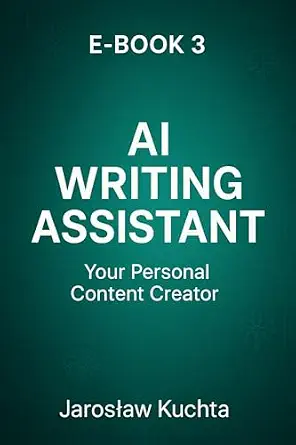 | Skip It — Too Little Information to Recommend | Format: Digital book | Topic: AI writing assistance and content creation | Series: None (standalone) | VIEW LATEST PRICE | See Our Full Breakdown |
| Prompt. Write. Repeat.: AI-Smart Nonfiction Book Writing System |  | Best Systematic Workflow for Nonfiction Authors | Format: Book | Series: Write with AI | Genre: Nonfiction Writing / AI Writing | VIEW LATEST PRICE | See Our Full Breakdown |
| AI Writing Assistants: Enhancing Creativity and Productivity |  | Big-Picture Overview Pick | Format: Not listed | Topic: AI writing assistants for creativity and productivity | Series: None indicated | VIEW LATEST PRICE | See Our Full Breakdown |
| Beginner’s Guide to Using an AI Writing Assistant (Beginner’s Guides Book 2) |  | Best for Absolute Beginners | Format: Digital book | Series: Beginner’s Guides | Book Number: Book 2 | VIEW LATEST PRICE | See Our Full Breakdown |
| ChatGPT AI Book Writing Formula: 9 Steps to Prompt, Write, and Publish a Non-Fiction, Client-Attraction Book for Coaches and Therapists |  | Best Niche Pick for Coaches and Therapists | Format: Book (digital/print) | Target Audience: Coaches, therapists, non-fiction authors | Topic: AI-assisted book writing with ChatGPT | VIEW LATEST PRICE | See Our Full Breakdown |
| AI writing assistant | Format | Series | Skill Level | Focus |
|---|---|---|---|---|
| Writing AI Prompts For Dummies | Paperback / eBook | For Dummies | Beginner | Prompt construction fundamentals |
| How to Build a Powerful AI Ass | Book | — | Intermediate | Building and training a personal AI assistant |
| AI Writing Systems for Authors | Kindle eBook | The AI Author Blueprint Series (Book 3) | Intermediate to advanced | Scalable AI writing workflows for authors |
| Writing With AI: A Practical G | Book | AI For Creative Professionals, Book 1 | Intermediate | AI tools and workflows with voice preservation |
| AI Writing Assistants: A Pract | Book | — | Beginner to intermediate | AI writing assistants — tools, techniques, applications |
| Write Better Books with AI: Us | Digital book (Kindle) | Digital Creativity (Book 3) | — | — |
| AI Writing Assistant: Your Per | Digital book | None (standalone) | — | — |
| Prompt. Write. Repeat.: AI-Sma | Book | Write with AI | Nonfiction authors seeking workflow structure | — |
| AI Writing Assistants: Enhanci | Not listed | None indicated | — | Conceptual overview rather than step-by-step method |
| Beginner’s Guide to Using an A | Digital book | Beginner’s Guides | Beginner | Fundamentals of using an AI writing assistant |
| ChatGPT AI Book Writing Formul | Book (digital/print) | Part of a series on AI for writers and authors | — | — |
More Details on Our Top Picks
Writing AI Prompts For Dummies
Writing AI Prompts For Dummies earns its spot as the friendliest entry point in this lineup. While titles like AI Writing Systems for Authors assume you already know what you want AI to do, this guide starts from the ground up, teaching prompt construction as a foundational skill that works with any writing assistant you eventually choose. The Dummies format means short chapters, plain language, and examples you can copy — a genuine advantage over the denser, workflow-heavy books in this roundup.
The tradeoff is scope: this won’t make you a book-producing machine the way the author-focused picks will. It’s about learning to talk to AI effectively, not building a publishing pipeline. Buyers wanting voice-preserving craft advice should look at Writing With AI instead.
Pros:- Recognizable beginner-friendly format with step-by-step progression
- Tool-agnostic prompt skills that transfer across ChatGPT, Claude, and other assistants
- Copy-ready examples that produce immediate, usable results
- Established publisher backing means consistent editing and structure
Cons:- Stops at prompting fundamentals — no deep writing workflows or publishing strategy
- Information may date quickly as AI tools change interfaces and capabilities
Best for: Complete beginners who want a trusted, structured introduction to prompting before committing to any single AI tool
Not ideal for: Experienced AI users or self-published authors — the basics here will feel repetitive and the publishing coverage is thin
- Format:Paperback / eBook
- Publisher:For Dummies (Wiley)
- Series:For Dummies
- Topic:AI prompt writing
- Skill Level:Beginner
- Focus:Prompt construction fundamentals
Our verdict“Choose this if you’ve never written a deliberate prompt and want a patient, structured teacher rather than a niche publishing manual.”
How to Build a Powerful AI Assistant: Training a Writing Partner and Personal Assistant for Everyday Use
This title takes a different angle than everything else here: instead of teaching you to use AI writing tools, it teaches you to build and train your own assistant that handles both writing and everyday productivity tasks. Compared with Writing AI Prompts For Dummies, which covers prompting broadly, this book goes deeper into configuration — treating the AI as a persistent partner you customize rather than a chat box you query.
That ambition is also its risk. The setup process it describes requires patience and comfort with trial and error, and unlike the craft-focused Writing With AI, the writing guidance here is secondary to the systems-building agenda. Buyers wanting a quick-start manual will find the initial chapters slow going.
Pros:- Covers both writing assistance and general personal productivity in one system
- Practical setup guidance rather than abstract theory
- Teaches reusable training methods that outlast any single tool
- Suits readers who want ownership over how their assistant behaves
Cons:- Limited verified content information makes quality hard to assess before buying
- Requires technical patience — not a pick-up-and-write-today solution
- Writing craft itself gets less attention than in dedicated writing guides
Best for: Productivity-minded readers who want one customized AI assistant spanning writing and daily tasks, and don’t mind hands-on setup
Not ideal for: Writers who just want better drafts today — the build-it-yourself approach demands time before it pays off
- Format:Book
- Focus:Building and training a personal AI assistant
- Topics:Writing assistance, everyday productivity, setup and usage
- Approach:Hands-on configuration and training
- Skill Level:Intermediate
- Audience:DIY productivity users
Our verdict“This makes the most sense for tinkerers who see AI as a long-term personal system to build, not a utility to rent by the prompt.”
AI Writing Systems for Authors: How to Write Books Faster with AI, Build Scalable Writing Workflows, and Turn AI Into a Long-Term Asset
Of all the books in this roundup, AI Writing Systems for Authors is the most commercially minded. Where Writing With AI centers on protecting your voice, this one — Book 3 of The AI Author Blueprint Series — is built around scalable production: repeatable workflows, faster book output, and treating AI as a durable business asset rather than a novelty. For self-publishers trying to sustain a catalog, that systems-first framing is exactly what generic guides skip.
The flip side is narrowness. Literary and non-self-publishing writers will find the volume-and-pipeline mindset misaligned with how they work, and compared with the beginner-friendly Dummies title, this assumes you already write competently and know the publishing landscape. It’s a specialization, and it behaves like one.
Pros:- Frames AI around long-term systems, not one-off prompt tricks
- Part of a structured series that builds progressively across volumes
- Directly addresses scalable output for authors maintaining catalogs
- Emphasizes workflow design that survives tool changes
Cons:- Niche focus on self-publishing leaves traditional and fiction-first writers underserved
- Being third in a series means it presumes familiarity with earlier material
- Sparse independent feedback available to gauge real-world results
Best for: Self-published and productivity-focused authors who want repeatable AI workflows to increase book output over time
Not ideal for: Literary writers or one-book authors — the scalable-production focus will feel like manufacturing advice for a craft pursuit
- Format:Kindle eBook
- Series:The AI Author Blueprint Series (Book 3)
- Genre:Writing, Publishing, AI Productivity
- Focus:Scalable AI writing workflows for authors
- Skill Level:Intermediate to advanced
- Audience:Self-published, productivity-focused authors
Our verdict“If you run your author career like a business and want AI as production infrastructure, this is the systems manual the other entries don’t attempt to be.”
Writing With AI: A Practical Guide to Tools, Workflows, and Writing in Your Own Voice
The standout promise of Writing With AI — first in the AI For Creative Professionals series — is right in its subtitle: keeping your own voice while using AI. That’s a real differentiator here. AI Writing Systems for Authors optimizes for speed and volume, which can flatten a writer’s style; this guide pushes in the opposite direction, treating AI as a collaborator that shouldn’t homogenize your prose. For novelists, essayists, and anyone whose voice is the product, that framing matters more than output statistics.
The compromise is pace. Writers chasing rapid multi-book production will find this slower and more craft-attentive than they want, and it’s less beginner-scaffolded than the Dummies guide — it assumes you already write and are wrestling with how AI fits into an existing practice.
Pros:- Directly addresses the biggest fear about AI writing: losing your distinctive style
- Practical, hands-on treatment of tools and workflows, not theory
- First entry in a series designed for continued creative-professional learning
- Tool-agnostic approach that isn’t locked to one assistant
Cons:- Very little publicly available content detail to evaluate depth before purchase
- Assumes existing writing skill — true novices get less scaffolding than beginner guides provide
Best for: Fiction writers, essayists, and creative professionals who want AI help without sounding like everyone else using the same tools
Not ideal for: High-volume content producers — the emphasis on voice preservation slows down the rapid-output workflows they’re after
- Format:Book
- Series:AI For Creative Professionals, Book 1
- Focus:AI tools and workflows with voice preservation
- Audience:Creative professionals and working writers
- Approach:Practical, hands-on
- Skill Level:Intermediate
Our verdict“This pick makes the most sense for writers whose livelihood depends on a recognizable voice and who refuse to trade it for speed.”
AI Writing Assistants: A Practical Guide
AI Writing Assistants: A Practical Guide plays the generalist role in this roundup. Instead of the deep vertical focus of AI Writing Systems for Authors or the voice-first lens of Writing With AI, it surveys the landscape: what writing assistants exist, what they’re good at, and how to apply them across everyday writing tasks. For someone deciding which kind of AI writing help they even need, that breadth is the point — it functions as a map before you pick a destination.
Breadth has a cost. This won’t take you as far down any single path as the specialized entries, and it lacks the structured beginner scaffolding that makes the Dummies title so approachable for total newcomers. It sits in the middle: more applied than theory books, less authoritative than any of the niche picks.
Pros:- Broad coverage across many writing use cases, not one niche
- Practical, applied orientation rather than philosophical discussion of AI
- Serves as a useful decision tool for choosing more specialized resources later
- Low-commitment introduction for casual or professional writers alike
Cons:- Limited published detail about the book’s actual contents makes it a bit of a blind buy
- Jack-of-all-trades scope means less depth than every specialized title in this roundup
Best for: Writers and professionals exploring AI assistance for the first time across varied tasks — emails, blogs, reports — who want a broad survey before specializing
Not ideal for: Buyers with a specific goal like publishing books on KDP — the general coverage won’t match the depth of the author-focused guides
- Format:Book
- Focus:AI writing assistants — tools, techniques, applications
- Approach:Practical, hands-on
- Coverage:General writing tasks across multiple tools
- Skill Level:Beginner to intermediate
- Audience:General writers and professionals
Our verdict“A sensible first shelf addition for general-purpose writers who want the lay of the land before committing to a specialized AI workflow book.”
Write Better Books with AI: Use AI as Your Assistant to Write, Edit, and Publish High-Quality Books on KDP
Among the books in this roundup, this one stands out for having the clearest ethical stance: AI works for you, not instead of you. That philosophy separates it from prompt-heavy titles like Prompt. Write. Repeat., which leans on systematized prompting, because here the emphasis stays on keeping your authorial voice intact while using AI for editing and refinement.
The coverage spans the entire self-publishing journey — writing, editing, and getting the book live on KDP — which makes this the most complete choice for authors whose end goal is an Amazon listing rather than general content creation. Compared with Writing With AI: A Practical Guide to Tools, Workflows, and Writing in Your Own Voice, this pick is narrower but more commercially focused.
The tradeoff is real: if you don’t publish on KDP, chunks of the guidance simply won’t apply, and the series format means some readers will want the companion volumes to fill gaps.
Pros:- Ethical framework positions AI as an assistant rather than a ghostwriter
- Covers the full pipeline from drafting through editing to KDP publishing
- Keeps creative control and author voice at the center of the method
- Part of a series that supports longer-term learning for self-publishers
Cons:- Deeply tied to KDP, limiting usefulness for authors publishing elsewhere
- Verifiable detail on depth and quality is thin, so buyers rely on the series reputation
Best for: Self-publishing authors who want AI help with editing and publishing while keeping full creative control of their KDP books
Not ideal for: Fiction writers or non-KDP writers, since much of the practical publishing guidance is tied to Amazon’s platform
- Format:Digital book (Kindle)
- Series:Digital Creativity (Book 3)
- Topic:AI-assisted writing, editing, and self-publishing
- Publishing Platform Focus:Amazon KDP
- AI Approach:Assistant model — author retains creative control
- Target Genre:General self-publishing (writing and editing)
Our verdict“This is the pick for authors whose real goal is a polished, published KDP book — with AI as the editor-in-chief’s assistant, never the writer.”
AI Writing Assistant: Your Personal Content Creator
Every roundup needs an honest caution flag, and this is mine. Unlike Write Better Books with AI, which states its method plainly, or Beginner’s Guide to Using an AI Writing Assistant, which at least signals its audience through the title, this listing offers no detailed description, no specifications, and no visible table of contents. That absence matters more here than in most categories: a book about content creation should demonstrate it can communicate clearly, and the product page doesn’t.
The title suggests a general-purpose content creation focus, which could appeal to marketers or bloggers, but that’s an assumption rather than a documented feature. Compared with the structured series entries elsewhere in this guide, there’s no way to verify the depth, methodology, or tool coverage before buying.
If you’re curious, sample it first. Otherwise, the alternatives in this lineup tell you exactly what you’re getting.
Pros:- Title suggests a broad content-creation focus rather than book-only workflows
- Positioned as a personal content creator guide, potentially useful across formats
- Could serve as a low-commitment curiosity purchase for AI-curious readers
Cons:- No detailed product description or specifications available to evaluate quality
- No series backing or companion volumes to indicate a proven framework
- Cannot verify methodology, tool coverage, or skill level before purchase
Best for: Buyers willing to preview a sample chapter before committing, who want a general content-creation angle
Not ideal for: Anyone who wants to know what a book covers before purchasing — the listing provides essentially no verifiable information
- Format:Digital book
- Topic:AI writing assistance and content creation
- Series:None (standalone)
- Target Audience:General content creators (implied by title)
- Detail Available:Minimal — no listed description or specs
Our verdict“Too opaque to recommend over better-documented alternatives — sample before buying, or choose a title that explains its method up front.”
Prompt. Write. Repeat.: AI-Smart Nonfiction Book Writing System
Where most entries in this roundup teach concepts, this one sells a repeatable system. The premise is right in the title: you prompt, you write, you repeat — a loop-based workflow that turns nonfiction book-writing into a process you can run book after book. That makes it a natural companion (or rival) to Write Better Books with AI: the KDP title focuses on quality control and publishing, while this one prioritizes throughput and structure for the drafting phase.
Compared with ChatGPT AI Book Writing Formula: 9 Steps to Prompt, Write, and Publish, which targets a very specific professional niche, this system stays open to nonfiction authors broadly. The Write with AI series framing suggests continued depth for readers who want more than one volume.
The catch: a system-first approach can feel mechanical, and there’s limited detail available on how much the book covers editing versus generating.
Pros:- Teaches a repeatable, systematic workflow rather than scattered tips
- Specifically designed for nonfiction, so structure and prompting guidance fit the genre
- Part of the Write with AI series for continued learning
- Streamlines the drafting process for authors producing multiple books
Cons:- Limited publicly available detail on content depth and coverage
- System-first approach can underemphasize voice, revision, and editing craft
Best for: Nonfiction authors and productivity-minded writers who want a structured, repeatable AI workflow for producing books consistently
Not ideal for: Writers who prize improvisation and voice-first drafting — the loop-based system may feel formulaic
- Format:Book
- Series:Write with AI
- Genre:Nonfiction Writing / AI Writing
- Core Method:Prompt-based writing system (prompt, write, repeat)
- Target Genre:Nonfiction books
- Skill Level:Nonfiction authors seeking workflow structure
Our verdict“The best choice for nonfiction authors who want a factory-style process — but pair it with a craft-focused book if voice matters to you.”
AI Writing Assistants: Enhancing Creativity and Productivity
This title takes the widest lens in the lineup. Rather than teaching one workflow like Prompt. Write. Repeat. or one publishing path like Write Better Books with AI, it explores the broader question of how AI assistants affect both creativity and productivity — a framing that suits professionals and writers who want context before committing to a specific method.
That breadth is a double-edged sword. For a reader choosing between task-specific books in this guide, this one works best as a conceptual primer or a first read, not a hands-on manual. Compared with Beginner’s Guide to Using an AI Writing Assistant, it aims at a more reflective audience rather than absolute newcomers.
The honest limitation: no description or review content is available to evaluate the quality, and the unknown format means buyers can’t confirm how practical versus theoretical the content actually is.
Pros:- Broad framing covers both creativity and productivity, not just mechanics
- Relevant across professions, not limited to book authors
- Useful as a first read before diving into workflow-specific titles
- Timely subject matter for writers evaluating AI adoption
Cons:- No description or review content available to verify depth or quality
- Format is unlisted, making it hard to confirm delivery and practicality
Best for: Writers and professionals who want a conceptual grounding in how AI assistants boost creativity and productivity before choosing a hands-on method
Not ideal for: Readers seeking step-by-step instructions — this is positioned as an exploration, not a tutorial
- Format:Not listed
- Topic:AI writing assistants for creativity and productivity
- Series:None indicated
- Focus:Conceptual overview rather than step-by-step method
- Audience:Writers and professionals exploring AI tools
- Detail Available:Minimal — no published description
Our verdict“A wide-angle introduction best paired with a more practical title — read it for perspective, not for a how-to system.”
Beginner’s Guide to Using an AI Writing Assistant (Beginner’s Guides Book 2)
Positioning matters in this lineup, and this book claims the entry-level slot cleanly. Where Prompt. Write. Repeat. assumes you’re ready to run a book-production system, and AI Writing Assistants: Enhancing Creativity and Productivity assumes you already know why you’re interested, this one starts at step zero: what an AI writing assistant is and how to actually use one.
The Beginner’s Guides series branding does real work here — it signals structured, jargon-light progression that a newcomer can trust, and Book 2 status suggests there’s a proven format behind it. For readers intimidated by the tool-focused depth of How to Build a Powerful AI Assistant, this is the gentler on-ramp.
The tradeoff is ceiling: beginners’ guides rarely go deep, so experienced writers will outgrow it quickly, and the lack of a published content overview means you can’t preview the chapter coverage.
Pros:- Accessible entry point with no assumed prior AI knowledge
- Structured series format supports progressive learning
- Gentler on-ramp than tool-building or system-focused titles
- Focused specifically on using an assistant rather than general AI theory
Cons:- No detailed description or content overview available to preview
- Low ceiling — experienced users will outgrow it quickly
Best for: Complete newcomers who feel overwhelmed by AI jargon and want a gentle, structured first guide before tackling advanced workflows
Not ideal for: Writers already comfortable with prompting and AI tools — the foundational content will feel slow and shallow
- Format:Digital book
- Series:Beginner’s Guides
- Book Number:Book 2
- Skill Level:Beginner
- Focus:Fundamentals of using an AI writing assistant
- Detail Available:Limited — no published content overview
Our verdict“Buy this if AI writing tools feel intimidating and you want a patient first teacher; skip it the moment you’re comfortable with the basics.”
ChatGPT AI Book Writing Formula: 9 Steps to Prompt, Write, and Publish a Non-Fiction, Client-Attraction Book for Coaches and Therapists
Most books in this roundup teach general AI writing workflows, but this one takes a different bet: that the reader already knows their profession and simply needs a repeatable formula to turn expertise into a book. The 9-step structure is the real draw — instead of scattered prompt tips, it walks from first prompt through publishing and promotion as one continuous pipeline aimed at client attraction, not royalties.
Compared with Prompt. Write. Repeat., which covers nonfiction broadly, this guide trades versatility for specificity: coaches and therapists get language and positioning advice that fits their fields. The tradeoff is real, though. General nonfiction writers will find entire chapters irrelevant, and unlike Writing With AI, it assumes baseline ChatGPT familiarity rather than teaching tool fundamentals from scratch.
Pros:- Structured 9-step formula turns a vague goal into a clear, sequenced process
- Written specifically for coaches and therapists rather than generic authors
- Covers prompting, writing, publishing, and promotion in one system
- Frames the book as a client-attraction asset, which matches how this audience measures ROI
Cons:- Very narrow niche focus limits usefulness outside coaching and therapy
- Assumes prior ChatGPT familiarity, so true beginners may need a companion guide
- Less depth on craft and voice than broader titles like Writing With AI
Best for: Coaches and therapists who want a marketing-focused, end-to-end roadmap for turning their practice expertise into a lead-generating book
Not ideal for: General writers or fiction authors — the client-attraction framing and professional-niche examples won’t map onto their goals
- Format:Book (digital/print)
- Target Audience:Coaches, therapists, non-fiction authors
- Topic:AI-assisted book writing with ChatGPT
- Structure:9-step formula
- Coverage:Prompting, writing, publishing, and promotion
- Genre:Writing & Publishing / Artificial Intelligence
- Series:Part of a series on AI for writers and authors
- Primary Goal:Client-attraction non-fiction book
Our verdict“If you’re a coach or therapist who wants a book as a client magnet and already knows ChatGPT basics, this focused formula beats any general AI writing guide — everyone else should pick a broader title.”

How We Picked
Since every product in this category is a guide to working with AI writing tools rather than the tools themselves, I judged them on what actually determines whether a writer succeeds: workflow clarity, voice preservation, scalability, and audience fit. A guide that shows you a complete system — from prompting through editing to publishing — ranks higher than one that offers scattered tips, because writers fail at integration, not at typing a prompt. I also weighed how honestly each guide handles AI’s limitations, since books that promise fully automated books tend to produce generic output.
The ranking also reflects durability and transferability. Guides built around prompt fundamentals survive tool updates and platform shifts, while guides tied to one specific tool’s interface age faster. Finally, I considered the reader each guide serves best: a complete beginner needs hand-holding and definitions, while an established author needs advanced delegation and editing systems. The ordering puts the guides with the broadest, most durable value first and the narrower or shallower options later — with the caveat that a niche pick can still be the right pick if it matches your situation exactly.
| AI writing assistant | Skill Level |
|---|---|
| Writing AI Prompts For Dummies | Beginner |
| How to Build a Powerful AI Ass | Intermediate |
| AI Writing Systems for Authors | Intermediate to advanced |
| Writing With AI: A Practical G | Intermediate |
| AI Writing Assistants: A Pract | Beginner to intermediate |
| Write Better Books with AI: Us | — |
| AI Writing Assistant: Your Per | — |
| Prompt. Write. Repeat.: AI-Sma | Nonfiction authors seeking workflow structure |
| AI Writing Assistants: Enhanci | — |
| Beginner’s Guide to Using an A | Beginner |
| ChatGPT AI Book Writing Formul | — |
Factors to Consider When Choosing AI Writing Assistants
Before picking a guide from this roundup, it helps to understand what actually separates a useful AI writing education from an expensive disappointment. These are the factors I’d weigh before committing to any single book.
Workflow Depth Versus Quick Tips
The most common mistake buyers make is choosing a book of prompts and expecting a system. Prompt collections feel productive immediately but leave you stuck the moment a project gets complicated, because they never teach you why a prompt works. A true workflow book covers the full arc — planning, drafting with AI, editing AI output, and finishing — so you can diagnose where your process breaks down. If you write occasionally, quick tips may honestly be enough. If you publish regularly or write long-form projects, the workflow guides in this roundup will repay the extra reading time many times over. Ask yourself whether you want to be faster this weekend or faster for the next two years.
Voice Preservation Methodology
Every guide in this category claims to help you ‘keep your voice,’ but very few explain the mechanics of doing it. Look for books that give you concrete techniques: feeding the AI samples of your past writing, editing rules that flag generic phrasing, and revision passes you perform yourself. This matters most in genres where readers buy you — memoir, coaching books, personal essays, and author-branded fiction. In commodity content like product descriptions, voice matters far less and speed matters more, so don’t overpay for voice training you won’t use. The gap between guides here is wide enough that it alone justified several ranking positions in this comparison.
Tool-Specific Versus Tool-Agnostic
Books tightly bound to one platform deliver faster initial results because the screenshots and examples match what you see on screen. The risk is obsolescence: AI tools change their interfaces and capabilities every few months, and a guide written for last year’s version can mislead you. Tool-agnostic books that teach prompt structure and process fundamentals age much better, at the cost of requiring you to translate examples to your own tool. My suggestion for most writers is one foundational, tool-agnostic book paired with free current documentation from your actual tool. That combination outperforms any single tool-specific book for longevity.
Matching the Guide to Your Output Goal
A guide optimized for nonfiction book production will actively frustrate a blogger, and vice versa, because the workflows differ at every step — research depth, chapter structure, editing cadence, and publishing path. Before buying, identify your primary output: books, client-attraction content, marketing copy, or mixed creative work. The niche guides in this roundup, like the one aimed at coaches and therapists, work precisely because they assume one output type and optimize everything for it. General guides are the safer choice only when your writing is genuinely varied. Buying for the writing life you actually have, rather than the one you imagine, is the single biggest saver of money and frustration here.
Honesty About AI’s Limitations
I’d treat a book’s attitude toward AI limitations as a quality signal. Guides that acknowledge where AI drafts go generic, hallucinate facts, or flatten nuance tend to have better editing chapters, because the authors have clearly worked with real output. Books promising that AI will write your book while you sleep produce exactly the kind of unedited, indistinguishable content that readers and platforms increasingly reject. This is also an ethical and commercial issue: Amazon’s KDP rules and reader expectations both penalize obviously machine-generated books. A guide that positions AI as an assistant you direct, rather than a ghostwriter you enable, will serve your reputation far better over a long writing career.
Frequently Asked Questions
Do I need one general guide or several specialized ones?
Most writers are better served by one strong foundational guide plus, at most, one specialized book for their main output type. Stacking multiple overlapping guides creates conflicting workflows, and you’ll spend more time comparing methods than writing. The exception is when your outputs genuinely differ — say, nonfiction books and client marketing copy — because no single guide covers both well. In that case, pick a workflow book for the long-form work and a niche book for the shorter-form work, and keep them mentally separate. If you’re just starting, one beginner guide is plenty until you hit its ceiling.
Will these guides become outdated as AI tools improve?
Tool-specific instructions will age — that’s unavoidable in a category where interfaces change quarterly. But the core skills these books teach, like prompt structure, iterative drafting, and AI-output editing, remain stable because they’re based on how language models work, not where the buttons sit. Guides focused on process fundamentals, such as the prompt-craft and workflow books ranked higher here, should stay useful for years. A practical hedge is to favor tool-agnostic books for your foundation and rely on free, current resources for tool mechanics. That way a platform redesign costs you nothing.
Can AI writing assistants actually help me keep my own voice, or is that marketing talk?
It’s real, but only if the guide teaches mechanics rather than slogans. The books that deliver on this show you how to prime the AI with samples of your past writing, set explicit style constraints in prompts, and run a personal editing pass that strips out generic phrasing. What doesn’t work is asking the AI to ‘write in my voice’ with no examples — the output will be pleasant and anonymous. Voice preservation is a skill you build, and the better guides in this roundup treat it as a repeatable editing discipline. Expect it to take a few projects before your AI-assisted drafts consistently sound like you.
Is it risky to publish AI-assisted books on Amazon KDP?
The risk comes from unedited, AI-generated content, not from AI-assisted writing. Amazon requires disclosure of AI-generated text and actively removes books that are clearly machine-produced with no human refinement, and readers increasingly spot and reject flat AI prose. The guides in this roundup that rank highest for publishing advice all take an assistant-not-ghostwriter stance: you outline, direct, fact-check, and rewrite substantially. Done that way, AI-assisted publishing is a legitimate and increasingly common practice. The guides worth buying are the ones that teach you where the line is and how to stay clearly on the right side of it.
I’m a complete beginner — should I start with a beginner guide or go straight to an advanced system?
Start with a beginner guide if you’ve never worked with an AI tool at all, because advanced workflow books assume vocabulary and habits you won’t have yet. The tradeoff is that beginner guides plateau fast — most writers outgrow them within a few months of steady use, so treat one as a stepping stone rather than a destination. If you’re already comfortable chatting with an AI tool and have written anything substantial before, skip the beginner tier entirely and go to a workflow book. The worst outcome is buying three beginner-level books that repeat each other. One entry point, then one system book, is the efficient path.
Conclusion
Best overall goes to AI Writing Systems for Authors, which offers the most complete and durable system for writers who publish regularly — its scalable workflows outlast tool changes and grow with you. Best value is Prompt. Write. Repeat., a focused nonfiction production system that delivers outsized results for its scope, while Writing With AI is the pick for creative professionals who refuse to sound like a machine. For beginners, Beginner’s Guide to Using an AI Writing Assistant is the gentlest entry point, and Writing AI Prompts For Dummies is the best foundational investment since prompt skills transfer to every tool you’ll ever use. Best for a specific need: the ChatGPT AI Book Writing Formula for coaches and therapists building client-attraction books, and Write Better Books with AI for self-publishers on KDP who want guardrails. Match the guide to the writing life you actually have, and the right choice from this lineup becomes obvious.
Fall Picks
fall essentials
As an affiliate, we earn on qualifying purchases.