

AI-powered sports analytics tools are transforming how teams and analysts interpret data, optimize strategies, and make decisions. The best overall pick, Game Changer, combines comprehensive metrics with user-friendly interfaces, making it ideal for both professionals and serious enthusiasts. Meanwhile, Insights from Sports Analytics stands out for its advanced predictive models, perfect for those focusing on long-term strategy. However, these tools often come with tradeoffs—some prioritize depth over usability, while others offer great value but lack advanced features. Keep reading for an in-depth comparison that reveals who each tool is best suited for and what to watch out for.

Get business pricing on tech for your team
- Business-only prices and quantity discounts
- Tax-exempt purchasing
- Multiple users, one account, clear invoices
Key Takeaways
- Top-tier tools like Game Changer excel in combining broad data coverage with actionable insights, making them ideal for strategic decision-makers.
- Predictive analytics and forecasting capabilities are the main differentiators among the best options, especially for betting or long-term planning.
- Ease of use varies widely; beginner-friendly tools often sacrifice depth, while advanced tools can be overwhelming without proper training.
- Pricing and licensing models differ significantly, with premium tools demanding higher investment but offering more comprehensive features.
- Most top options integrate with existing systems via APIs, so compatibility and ease of integration are key considerations.
| Sports Analytics: A Guide for Coaches, Managers, and Other Decision Makers |  | Best for Practical Decision-Making in Sports Management | Intended Audience: Coaches, Managers, Decision Makers | Content Focus: Practical applications in sports analytics | Technical Detail: Low; strategic overview | VIEW LATEST PRICE | See Our Full Breakdown |
| Insights from Sports Analytics |  | Best for Beginners and Enthusiasts Seeking Broad Understanding | Audience: Beginners, Sports Enthusiasts, Analysts | Coverage: Various sports and strategies | Technical Depth: Moderate; introductory to intermediate | VIEW LATEST PRICE | See Our Full Breakdown |
| Basketball Analytics: Spatial Tracking |  | Best for Advanced Basketball Data Analysis | Focus Area: Spatial tracking in basketball | Target Audience: Basketball coaches, analysts | Technical Details: Limited; specialized insights | VIEW LATEST PRICE | See Our Full Breakdown |
| Sports Analytics in Python |  | Best for Data Enthusiasts Learning Programming for Sports Analysis | Language: Python | Content Focus: Data analysis, visualization, modeling | Technical Level: Intermediate to advanced | VIEW LATEST PRICE | See Our Full Breakdown |
| Sport Business Analytics (Data Analytics Applications) |  | Best for Industry Professionals and Sports Business Students | Audience: Sports Business Professionals, Students | Content Focus: Data-driven decision making in sports industry | Technical Detail: Low; strategic emphasis | VIEW LATEST PRICE | See Our Full Breakdown |
| AI Playbook: How AI Is Transforming Football for Coaches, Officials, and Fans |  | Informative Overview | Focus Area: Football AI applications | Intended Audience: Coaches, officials, fans | Content Type: Conceptual and strategic insights | VIEW LATEST PRICE | See Our Full Breakdown |
| Sports Analytics: A Guide for Coaches, Managers, and Other Decision Makers | 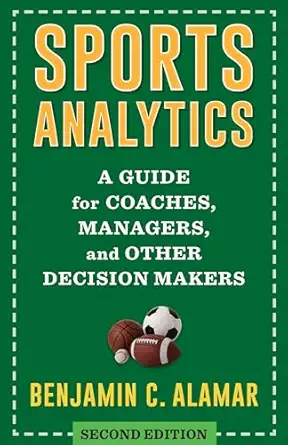 | Best for Practical Decision-Making | Focus Area: Sports analytics strategy | Intended Audience: Coaches, managers | Content Type: Practical guide | VIEW LATEST PRICE | See Our Full Breakdown |
| Tipster Robot: AI and Predictive Analytics for Sports Betting |  | Best for Bettors Using AI | Focus Area: AI in sports betting | Supported Sports: NBA, NFL, MLB | Approach: Step-by-step betting strategy | VIEW LATEST PRICE | See Our Full Breakdown |
| Game Changer: The Power of Sports Analytics from Player Metrics to Business Strategy |  | Most Comprehensive Industry Overview | Focus Area: Industry-wide sports analytics | Content Type: Broad overview | Audience: Sports professionals and enthusiasts | VIEW LATEST PRICE | See Our Full Breakdown |
| AI Edge Sports Betting System: A Step-by-Step Player Prop Strategy for NBA, NFL & MLB Using AI, Data, and Bankroll Discipline | 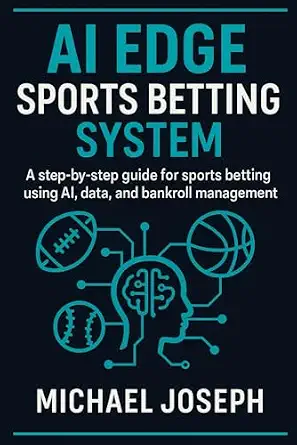 | Best for Serious Bettors Applying Data Strategy | Focus Area: Player prop betting | Supported Leagues: NBA, NFL, MLB | Methodology: Step-by-step data and bankroll strategy | VIEW LATEST PRICE | See Our Full Breakdown |
| Football Analytics with Python & R: Learning Data Science Through the Lens of Sports |  | Best for Data Science Beginners Interested in Sports Analytics | Format: Print and eBook | Language: English | Target Audience: Beginners in data science and sports analytics | VIEW LATEST PRICE | See Our Full Breakdown |
| Get in the Game: An Interactive Introduction to Sports Analytics |  | Best for Beginners and Enthusiasts Looking for Engagement | Format: Print and eBook | Language: English | Target Audience: Beginner sports analytics learners | VIEW LATEST PRICE | See Our Full Breakdown |
| Sports Analytics for Beginners: A Simple Guide to Understanding Data, Metrics, and AI in Sports |  | Best for Absolute Beginners Seeking Clear Explanations | Format: Print and eBook | Language: English | Target Audience: Complete beginners in sports analytics | VIEW LATEST PRICE | See Our Full Breakdown |
More Details on Our Top Picks
Sports Analytics: A Guide for Coaches, Managers, and Other Decision Makers
This book stands out for its focus on applying sports analytics directly to coaching and management decisions, making it ideal for those who want actionable insights. Unlike more technical books like Sports Analytics in Python, it emphasizes practical techniques over coding skills, though it lacks detailed case studies or sample data, which may limit its usefulness for in-depth analysis. It’s best suited for managers or coaches seeking a foundational understanding rather than advanced data modeling. The absence of technical specifics means it won’t satisfy analysts looking for deep dive strategies, but it delivers clear guidance for decision-makers. Overall, this book makes the most sense for sports leaders prioritizing strategic insights over technical complexity.
Pros:- Provides practical, easy-to-understand insights for decision-makers
- Covers a wide range of analytical techniques relevant to sports management
- Focuses on real-world applications to improve team performance
Cons:- Lacks sample data or concrete case studies for hands-on learning
- No detailed technical or statistical explanations included
Best for: Sports coaches and managers seeking practical, high-level data insights to improve team decisions
Not ideal for: Data analysts or technical professionals looking for detailed algorithms or programming guidance
- Intended Audience:Coaches, Managers, Decision Makers
- Content Focus:Practical applications in sports analytics
- Technical Detail:Low; strategic overview
Our verdict“A solid choice for sports decision-makers who want strategic insights without technical jargon.”
Insights from Sports Analytics
This book offers an extensive overview of sports analytics, making it suitable for those new to the field or professionals wanting a broad perspective, akin to Sports Analytics: A Guide for Coaches, Managers, and Other Decision Makers. Compared to the highly specialized Basketball Analytics: Spatial Tracking, it covers multiple sports and strategies with real-world examples, though it doesn’t delve deeply into technical details or advanced modeling. Its comprehensive approach makes it accessible for beginners, but the lack of detailed technical explanations may frustrate analysts seeking deeper insights. Additionally, no pricing or user ratings are available, which could be a drawback for buyers wanting more clarity on value. This pick is best suited for those starting out in sports analytics or wanting an overall picture.
Pros:- Broad coverage of sports analytics concepts and strategies
- Includes real-world examples and case studies for context
- Suitable for both beginners and intermediate users
Cons:- Lacks detailed technical explanations for complex topics
- No pricing or customer ratings to gauge value
Best for: Sports enthusiasts, students, or analysts beginning their journey in sports data analysis
Not ideal for: Advanced analysts or technical users needing detailed models or programming tutorials
- Audience:Beginners, Sports Enthusiasts, Analysts
- Coverage:Various sports and strategies
- Technical Depth:Moderate; introductory to intermediate
Our verdict“A practical entry-level resource ideal for newcomers aiming to grasp the fundamentals of sports analytics.”
Basketball Analytics: Spatial Tracking
This book specializes in spatial tracking technology in basketball, making it a strong choice for coaches and analysts focused on player movements and tactical insights, similar to Sports Analytics in Python but with a narrower focus. Compared to broader sports analytics books, it provides in-depth analysis of spatial data, though it doesn’t include technical specifications or implementation details, which might limit its usefulness for those wanting to develop their own tracking systems. Its specialized content suits professionals who need detailed understanding of spatial tracking but may overwhelm casual readers or those outside basketball. If your goal is to improve in-game strategies through movement analysis, this is a valuable resource, but it’s less helpful for general sports analytics needs. This book is best for basketball analysts seeking detailed spatial insights rather than broad data analysis.
Pros:- Provides in-depth insights into spatial tracking in basketball
- Enhances understanding of player movements and game tactics
- Useful for coaching and strategic planning
Cons:- Lacks detailed technical specifications or implementation guidance
- Too specialized for casual readers or non-basketball sports
Best for: Basketball coaches, analysts, or enthusiasts interested in advanced spatial tracking data
Not ideal for: Casual sports fans or analysts working across multiple sports without a focus on spatial data
- Focus Area:Spatial tracking in basketball
- Target Audience:Basketball coaches, analysts
- Technical Details:Limited; specialized insights
Our verdict“Ideal for advanced basketball professionals aiming to leverage spatial tracking for tactical improvements.”
Sports Analytics in Python
This book makes a compelling case for using Python in sports analytics, offering practical examples that appeal to aspiring data analysts and seasoned professionals alike, similar in scope to Insights from Sports Analytics. It covers data analysis, visualization, and modeling but falls short on detailed project case studies, which could leave readers wanting more real-world application. The reliance on prior Python knowledge means it’s less suited for complete beginners without programming experience, but it’s highly valuable for those ready to implement code-based solutions. Its comprehensive coverage makes it a strong introductory resource, yet the absence of step-by-step projects limits practical application for some learners. This pick is best for those comfortable with or eager to learn Python for sports data analysis.
Pros:- Covers key techniques like data analysis, visualization, and modeling
- Includes practical Python examples applicable to sports data
- Suitable for both beginners with some Python knowledge and experienced analysts
Cons:- Lacks detailed, real-world project case studies for hands-on learning
- Requires prior Python familiarity to maximize benefits
Best for: Sports data analysts and programmers seeking a practical Python-focused guide
Not ideal for: Complete beginners without Python experience or those seeking extensive case studies
- Language:Python
- Content Focus:Data analysis, visualization, modeling
- Technical Level:Intermediate to advanced
Our verdict“A practical programming guide perfect for analysts ready to code their sports analytics workflows.”
Sport Business Analytics (Data Analytics Applications)
This book explores how data analytics drives decision-making within the sports industry, making it particularly useful for sports business professionals and students, similar in intent to Insights from Sports Analytics but with a focus on industry applications rather than technical details. It offers practical insights into tools and techniques used in sports organizations but doesn’t include detailed technical implementation, which might limit its usefulness for analysts seeking hands-on skills. The lack of a specific edition or publication date could affect its current relevance, but the emphasis on strategic decision-making makes it valuable for industry insiders. If your primary goal is understanding how analytics influence business decisions, this is an excellent resource; for technical implementation, other books may be better. This book makes the most sense for sports business professionals aiming to improve organizational strategies using data.
Pros:- Provides practical insights into sports data applications in business
- Focuses on decision-making and strategic improvements
- Suitable for sports industry professionals and students
Cons:- Lacks detailed technical or implementation guidance
- No specific publication date or edition noted
Best for: Sports industry professionals and students interested in business applications of analytics
Not ideal for: Technical analysts or data scientists seeking detailed coding or modeling techniques
- Audience:Sports Business Professionals, Students
- Content Focus:Data-driven decision making in sports industry
- Technical Detail:Low; strategic emphasis
Our verdict“Ideal for sports business professionals looking to leverage analytics for strategic growth rather than deep technical skills.”
AI Playbook: How AI Is Transforming Football for Coaches, Officials, and Fans
This book stands out for providing a broad understanding of how AI is changing football, making it valuable for those seeking context rather than specific tools. Compared with other titles like Game Changer, it offers more strategic insights but lacks practical applications or software recommendations. It’s ideal for coaches, officials, and fans interested in the theoretical impact of AI, but it doesn’t offer hands-on tools or technical guidance. The lack of concrete examples makes it less suitable for readers wanting actionable strategies.
Pros:- Provides comprehensive insights into AI’s impact on football
- Accessible for readers new to sports technology concepts
- Useful for understanding broad strategic shifts
Cons:- No specific software tools or practical applications included
- Limited technical detail or case studies
- Lacks actionable analytics or data-driven strategies
Best for: Football coaches, officials, and fans seeking a conceptual understanding of AI’s role in the sport.
Not ideal for: Practitioners looking for detailed AI tools or software implementations for sports analytics.
- Focus Area:Football AI applications
- Intended Audience:Coaches, officials, fans
- Content Type:Conceptual and strategic insights
Our verdict“This book is best for those curious about AI’s influence in football rather than those seeking hands-on analytics tools.”
Sports Analytics: A Guide for Coaches, Managers, and Other Decision Makers
This guide is well-suited for decision-makers aiming to translate sports data into actionable strategies, making it more practical than AI Playbook. It covers core concepts and real-world applications, but the lack of detailed case studies or software reviews limits its usefulness for those wanting step-by-step implementation. It’s ideal for coaches and managers who need a foundational understanding but may fall short for data scientists or technical analysts seeking advanced tools.
Pros:- Offers practical applications for improving team performance
- Covers key analytics concepts in accessible language
- Useful for decision-makers without technical backgrounds
Cons:- No specific analytics tools or software tutorials included
- Limited depth on advanced analytical techniques
- Lacks detailed case studies or real-world examples
Best for: Sports coaches and managers looking for foundational strategies to incorporate analytics into decision-making.
Not ideal for: Technical analysts or data scientists seeking in-depth software reviews or coding techniques.
- Focus Area:Sports analytics strategy
- Intended Audience:Coaches, managers
- Content Type:Practical guide
Our verdict“This book is ideal for sports decision-makers wanting practical insights but not for technical users seeking detailed software guidance.”
Tipster Robot: AI and Predictive Analytics for Sports Betting
This book makes the most sense for bettors who want to leverage AI and predictive analytics, similar to how AI Edge Sports Betting System offers a step-by-step approach but with a focus on betting rather than analytics. While it provides valuable insights into AI-driven decision-making, it doesn’t reveal specific algorithms or success rates, which could be a drawback for serious bettors. Compared to more technical tools, it emphasizes strategy and discipline, making it suitable for those new to AI in betting.
Pros:- Provides AI-driven strategies for sports betting
- Covers multiple major leagues like NBA, NFL, and MLB
- Focuses on bankroll discipline for sustainable betting
Cons:- Lacks detailed explanation of underlying methodologies
- No data on success rates or efficacy
- Primarily strategy-focused without practical software tools
Best for: Bettors interested in applying AI and data analysis to improve their success rate in major sports leagues.
Not ideal for: Data analysts or sports professionals seeking detailed technical methodologies or software integrations.
- Focus Area:AI in sports betting
- Supported Sports:NBA, NFL, MLB
- Approach:Step-by-step betting strategy
Our verdict“This book suits bettors wanting a strategic, AI-based approach rather than those seeking technical or software-specific guidance.”
Game Changer: The Power of Sports Analytics from Player Metrics to Business Strategy
This book offers a broad look at how analytics transform sports, covering both player metrics and business strategies, making it broader than Sports Analytics: A Guide for Coaches, Managers, and Other Decision Makers. It’s ideal for sports professionals and enthusiasts who want to understand the impact of data across multiple facets of sports, yet it doesn’t delve into specific tools or technical details. Its wide scope makes it less practical for those seeking detailed implementation guidance but excellent for understanding the industry’s data-driven evolution.
Pros:- Provides a holistic view of analytics in sports
- Covers both player metrics and strategic business applications
- Accessible for a broad audience interested in industry trends
Cons:- Lacks specific technical details or software recommendations
- No information on editions or publisher details
- Broad overview may omit depth needed for technical application
Best for: Sports industry professionals and enthusiasts seeking a comprehensive understanding of analytics’ impact on sports business and performance.
Not ideal for: Technical analysts or data scientists looking for detailed analytics methodologies or software tutorials.
- Focus Area:Industry-wide sports analytics
- Content Type:Broad overview
- Audience:Sports professionals and enthusiasts
Our verdict“This book is best for those wanting to grasp how analytics influence the entire sports industry without needing technical implementation details.”
AI Edge Sports Betting System: A Step-by-Step Player Prop Strategy for NBA, NFL & MLB Using AI, Data, and Bankroll Discipline
This system makes the most sense for bettors who want a disciplined, data-driven approach to betting on player props in major leagues, similar to Tipster Robot. It emphasizes bankroll management and systematic strategy, but it offers no detailed explanation of its methodology or proven success rates, which may concern more analytical users. Its step-by-step format makes it accessible, yet it requires familiarity with betting strategies and data analysis to implement effectively.
Pros:- Utilizes AI and data analysis for informed betting decisions
- Focuses on bankroll discipline for sustainability
- Covers multiple major sports leagues
Cons:- No detailed description of the underlying methodology
- Success rate and efficacy are not provided
- Requires understanding of betting and data analysis
Best for: Bettors aiming to improve their success with a structured, data-driven approach to player props in NBA, NFL, and MLB.
Not ideal for: Casual bettors or those without prior experience in betting strategies and data analysis.
- Focus Area:Player prop betting
- Supported Leagues:NBA, NFL, MLB
- Methodology:Step-by-step data and bankroll strategy
Our verdict“This system is best for serious bettors seeking a structured, disciplined approach to sports betting with AI support.”
Football Analytics with Python & R: Learning Data Science Through the Lens of Sports
This book stands out for its practical approach, using football analytics to teach core data science concepts through Python and R. Compared with other resources like Get in the Game, it offers deeper technical insights, making it ideal for those looking to develop hands-on skills. However, it lacks detailed specifications or a structured curriculum, which could leave some learners wanting more guidance. Its focus on sports-specific examples makes it highly relevant for sports enthusiasts venturing into data science, but it might be less helpful for readers seeking a broad overview without coding. Tradeoffs include a steep learning curve for absolute beginners and no digital resources included.
Pros:- Provides hands-on coding examples with Python and R
- Focuses specifically on football analytics, making it highly relevant
- Ideal for learners interested in applying data science to sports
Cons:- No detailed curriculum or content outline provided
- Lacks customer reviews or ratings for validation
Best for: Beginners in sports analytics who want practical coding experience with Python and R.
Not ideal for: Readers seeking an overview of sports analytics concepts without programming or detailed technical depth.
- Format:Print and eBook
- Language:English
- Target Audience:Beginners in data science and sports analytics
- Focus:Football analytics with Python and R
- Skill Level:Beginner to Intermediate
Our verdict“This book is best suited for newcomers eager to learn sports analytics through practical coding projects, despite limited content structure.”
Get in the Game: An Interactive Introduction to Sports Analytics
This book makes the most sense for newcomers who prefer learning through interaction rather than passive reading, offering practical exercises and real-world examples to clarify data-driven decision-making in sports. Compared with Sports Analytics for Beginners, its interactive format helps solidify concepts through active participation, but it falls short on technical depth, making it less suitable for those seeking advanced insights. The lack of digital resources might be a drawback for learners who want supplementary tools, but the engaging approach compensates by making complex ideas accessible. This pick is ideal for those starting out in sports analytics with a preference for hands-on learning.
Pros:- Interactive content enhances engagement and understanding
- Provides practical insights with real-world examples
- Suitable for beginners and enthusiastic learners
Cons:- Lacks detailed technical depth for advanced users
- No digital resources or additional online content included
Best for: Beginners and sports enthusiasts who learn best through interactive exercises and practical examples.
Not ideal for: Experienced analysts seeking in-depth technical detail or advanced analytics techniques.
- Format:Print and eBook
- Language:English
- Target Audience:Beginner sports analytics learners
- Focus:Interactive sports analytics introduction
- Skill Level:Beginner
Our verdict“This book suits beginners who thrive on active participation and practical exercises to grasp sports analytics fundamentals.”
Sports Analytics for Beginners: A Simple Guide to Understanding Data, Metrics, and AI in Sports
This book makes the most sense for complete newcomers who need straightforward explanations of data, metrics, and AI concepts without technical jargon. Compared with Football Analytics with Python & R, it sacrifices depth for clarity, making it less suitable for those wanting hands-on coding or complex analysis. Its focus on core concepts and practical examples helps demystify sports analytics, but the absence of digital resources may limit self-guided learning for more tech-savvy readers. Ideal for beginners wanting an accessible overview rather than technical mastery.
Pros:- Provides clear, easy-to-understand explanations
- Covers key concepts in data, metrics, and AI
- Includes practical examples tailored for beginners
Cons:- Lacks technical depth for advanced practitioners
- No digital resources or supplementary materials included
Best for: Absolute beginners seeking a gentle introduction to sports data and AI concepts without prior technical knowledge.
Not ideal for: Intermediate or advanced users looking for detailed analytics techniques or coding tutorials.
- Format:Print and eBook
- Language:English
- Target Audience:Complete beginners in sports analytics
- Focus:Data, metrics, and AI fundamentals
- Skill Level:Beginner
Our verdict“This guide is best suited for absolute beginners needing a simple, accessible introduction to sports analytics concepts.”

How We Picked
Our evaluation focused on performance, usability, and versatility. We examined how well each tool leverages AI to generate meaningful insights, considering the complexity of its algorithms and the clarity of its output. Ease of setup and user experience were critical, as tools should be accessible to both technical analysts and coaches. We also looked at value for cost, ensuring the options represent different budgets and needs. Finally, we prioritized tools that offer integration capabilities and ongoing support, making them practical choices for real-world sports environments. This approach ensures our lineup covers a spectrum from beginner to advanced users, with clear distinctions based on their strengths and tradeoffs.
Factors to Consider When Choosing AI-powered Sports Analytics Tools
Choosing the right AI-powered sports analytics tool depends on your specific goals, technical expertise, and budget. Not all tools are created equal—some excel at predictive modeling, while others emphasize real-time analysis or user-friendly dashboards. To make an informed decision, consider these key factors that influence usability, effectiveness, and value in the long run.
Performance and Accuracy
For serious analysis, accuracy in data collection and AI modeling is paramount. Look for tools that use validated algorithms and have a track record of producing reliable insights. Overhyped models with flashy features may not deliver the precision needed for high-stakes decisions, such as player scouting or betting. Prioritize tools that demonstrate consistent performance across different sports and scenarios, and consider whether they provide transparency into their AI processes to better understand their outputs.
Usability and User Interface
An intuitive interface can significantly reduce the learning curve, especially if you lack a technical background. Tools designed with coaches or analysts in mind should simplify complex metrics into clear visualizations and actionable recommendations. Beware of overly complicated platforms that require extensive training or coding knowledge; these may limit your ability to leverage their full potential. Balance your needs between advanced features and ease of use to find a tool that fits your workflow.
Integration and Compatibility
The ability to connect with existing data sources, such as video feeds, player tracking systems, or management software, is a key factor. Compatibility ensures seamless data transfer and reduces manual input errors. Some tools offer open APIs or plug-ins, making integration straightforward. Avoid platforms that lock you into proprietary systems or require extensive customization, which can inflate costs and delay deployment.
Cost and Licensing
Pricing structures vary from subscription-based plans to one-time licenses, often reflecting the depth and scope of features. Budget-conscious buyers should prioritize tools that offer essential analytics without unnecessary extras. However, investing in higher-tier options can provide more comprehensive insights, especially for professional teams or betting firms. Carefully consider the long-term value, including support, updates, and scalability, before committing to a costly platform.
Support and Training
Robust customer support and accessible training resources can make or break your experience. Look for vendors that provide onboarding tutorials, responsive support channels, and ongoing updates. A platform with limited support may cause delays or frustrations, especially when troubleshooting complex AI models. Ensuring good vendor support helps maximize the tool’s potential and reduces downtime.
Frequently Asked Questions
Can I use these tools for amateur or recreational sports?
Yes, many AI-powered sports analytics tools are flexible enough to serve recreational sports enthusiasts or amateur teams. However, the depth of data and complexity of AI features may be scaled down for simpler use cases. Look for options that emphasize ease of use and basic metrics if your primary goal is improving team play or understanding player performance without extensive technical setup.
Are these tools suitable for real-time analysis during games?
Several tools in this lineup support real-time data processing, which can be invaluable for in-game strategy adjustments. Features like live player tracking, instant stats updates, and AI-driven suggestions can give teams a tactical edge. Nevertheless, real-time analysis requires reliable data feeds and fast processing, so verify that the chosen tool is compatible with your hardware and data sources before relying on it during competition.
How steep is the learning curve for advanced AI sports analytics tools?
The learning curve varies widely. User-friendly platforms are designed for coaches and analysts with limited technical background, offering guided dashboards and simplified reports. Conversely, advanced tools with deep analytics and coding capabilities may require familiarity with data science or programming languages like Python or R. Assess your team’s technical skills and willingness to learn when selecting a platform, and consider whether vendor training or community support is available.
What kind of data sources do these tools typically integrate with?
Most tools support integration with player tracking systems, video analysis platforms, and traditional statistics databases. Some also connect with wearable sensors or live broadcast feeds, enabling comprehensive data collection. Compatibility depends on the specific system architecture; therefore, confirm whether your existing data sources are supported before purchase. Proper integration streamlines analysis and saves time, making the entire process more efficient.
Is it worth investing in premium AI sports analytics tools?
Investing in premium tools often provides more advanced predictive models, better integration options, and dedicated support, which can be crucial for professional teams or betting operations. While the upfront cost is higher, the value lies in more accurate insights and faster decision-making. For casual or smaller-scale users, more affordable options may suffice, but always weigh the potential ROI—such as improved performance or winning odds—when choosing higher-end solutions.
Conclusion
For those seeking the best overall balance of features, Game Changer offers comprehensive insights suitable for professional teams and serious enthusiasts. Budget-conscious users or beginners will find Sports Analytics: A Guide for Coaches, Managers, and Other Decision Makers provides a straightforward introduction without sacrificing core functionality. If you prioritize long-term strategic planning or betting, tools like Tipster Robot or AI Edge Sports Betting System deliver specialized predictive capabilities. Overall, your choice should align with your experience level, goals, and budget—whether you want a simple, easy-to-use platform or a sophisticated AI system for high-stakes decisions.
Halloween Picks
halloween
As an affiliate, we earn on qualifying purchases.