
AI workflow automation platforms can connect apps, automate routine tasks, and add AI steps to business processes, but this roundup also includes books and courses that teach those skills rather than software platforms themselves. My best overall pick is Workflow Automation with Microsoft Power Automate for readers seeking a named platform and a path across cloud and desktop workflows. n8n Automation Platform Applications stands out for developers who need system integration, while AI Automation for Beginners offers a gentler starting point for non-coders. The main tradeoff is between hands-on platform depth and broader, more accessible AI workflow guidance. Read on for how the 14 options differ and which one best fits your goals.

Get business pricing on tech for your team
- Business-only prices and quantity discounts
- Tax-exempt purchasing
- Multiple users, one account, clear invoices
Key Takeaways
- Power Automate is the clearest platform-specific choice: its title directly addresses low-code cloud and desktop workflows, while many other entries are general guides rather than software platforms.
- n8n has the strongest developer-oriented pair: the experienced-user title emphasizes workflow design and system integration, while the crash course signals a more accessible learning path.
- Beginner-focused books prioritize a lower learning barrier: AI Automation for Beginners and The AI Builder focus on no-code workflows, though their titles suggest different ambitions, from simple tasks to professional skills.
- Claude and OpenClaw entries are tool-specific: they make more sense for readers already interested in those ecosystems than for buyers seeking a neutral platform comparison.
- Several titles focus on everyday or small-business use: these may help with practical process ideas, but they do not identify a single automation platform in their titles.
| n8n AI Automation Crash Course: Build No-Code Workflows and Smart Agents for AI-Powered Productivity |  | Best for n8n Beginners | Platform: n8n | Subject: AI-powered workflow automation | Approach: No-code workflow building | VIEW LATEST PRICE | See Our Full Breakdown |
| n8n Automation Platform Applications: Workflow Design and System Integration for Experienced Developers and Businesses |  | Best for Developer-Led Automation | Platform: n8n | Subject: Workflow design and system integration | Interface: Visual workflow designer | VIEW LATEST PRICE | See Our Full Breakdown |
| The Claude AI Bible: A Practical Guide to Workflows and Automation |  | Best for Claude Workflow Ideas | AI assistant: Claude | Subject: Workflows and automation | Approach: Claude as a working partner | VIEW LATEST PRICE | See Our Full Breakdown |
| Claude AI Operating System Volume 2: Connectors – Advanced Platforms and AI Workflows |  | Best for Claude Connector Workflows | Series: Claude AI Operating System, Volume 2 | AI ecosystem: Claude | Subject: Connectors and advanced platforms | VIEW LATEST PRICE | See Our Full Breakdown |
| Easy Office Automation with AI and Claude Skills: Design Smart AI Workflows for Documents, Data, and Business Processes | 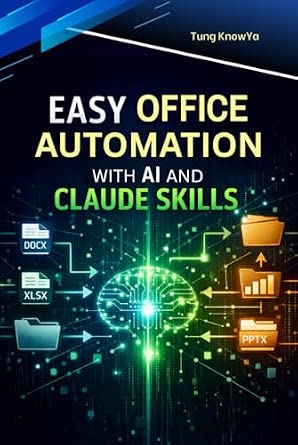 | Best for Office Process Automation | AI ecosystem: Claude | Approach: Claude skills | Subject: Office workflow automation | VIEW LATEST PRICE | See Our Full Breakdown |
| AI-Powered Automation and Workflows for Small Business Owners |  | Best for Small-Business Context | Format: Book | Subject: AI-powered automation and workflows | Intended audience: Small business owners | VIEW LATEST PRICE | See Our Full Breakdown |
| Workflow Automation with Microsoft Power Automate: Design and Scale AI-Powered Cloud and Desktop Workflows Using Low-Code Automation |  | Best for Microsoft Power Automate | Format: Not specified in provided product data | Platform: Microsoft Power Automate | Automation approach: Low-code | VIEW LATEST PRICE | See Our Full Breakdown |
| AI Automation for Everyday Work Master: Build Self-Running Digital Systems |  | Best for Routine-Task Automation | Format: Not specified in provided product data | Subject: AI automation for everyday work | Stated goal: Build self-running digital systems | VIEW LATEST PRICE | See Our Full Breakdown |
| OpenClaw Crash Course: Build AI Automations, Workflows, Skills, MCP Integrations, Content Creation and Apps with OpenClaw |  | Best for OpenClaw Builders | Format: Not specified in provided product data | Platform: OpenClaw | Coverage: AI automations, workflows, and skills | VIEW LATEST PRICE | See Our Full Breakdown |
| AI Automation for Beginners: Build Simple Workflows Without Coding |  | Best for No-Code Beginners | Format: Not specified in provided product data | Intended level: Beginner | Coding requirement: Designed for use without coding | VIEW LATEST PRICE | See Our Full Breakdown |
| The AI Builder: From Complete Beginner to AI Automation Professional – Build Chatbots, Automate Workflows, and Deploy AI Agents Without Writing Code | 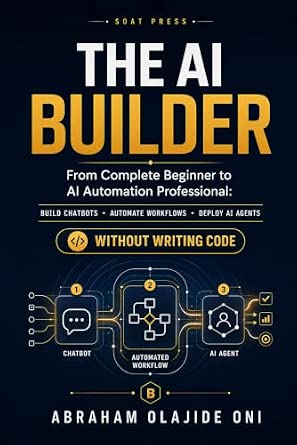 | Best Step-by-Step No-Code Guide | Format: Step-by-step guide | Intended level: Complete beginner to professional | Coding approach: No-code | VIEW LATEST PRICE | See Our Full Breakdown |
| AI Automation: From Tasks to Autonomous Workflows (AI Mastery Lab) |  | Best for Exploring Autonomous Workflows | Series: AI Mastery Lab | Subject: AI automation | Workflow scope: Tasks to autonomous workflows | VIEW LATEST PRICE | See Our Full Breakdown |
| AI for Everyday Automation: 7 AI Workflows to Save Hours at Work Every Week |  | Best for Practical Workplace Routines | Workflow count: 7 | Subject: AI-powered everyday automation | Use case: Routine workplace tasks | VIEW LATEST PRICE | See Our Full Breakdown |
| AI Workflow and Automation System – Workflow Lift Professional Series | 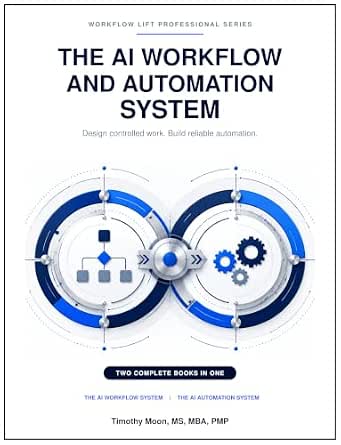 | Best for Structured Professional Processes | Series: Workflow Lift Professional Series | Subject: AI workflow and automation system | Primary focus: Controlled, repeatable work processes | VIEW LATEST PRICE | See Our Full Breakdown |
| AI workflow automation platform | Subject | Format |
|---|---|---|
| n8n AI Automation Crash Course | AI-powered workflow automation | — |
| n8n Automation Platform Applic | Workflow design and system integration | — |
| The Claude AI Bible: A Practic | Workflows and automation | Practical guide |
| Claude AI Operating System Vol | Connectors and advanced platforms | — |
| Easy Office Automation with AI | Office workflow automation | — |
| AI-Powered Automation and Work | AI-powered automation and workflows | Book |
| Workflow Automation with Micro | — | Not specified in provided product data |
| AI Automation for Everyday Wor | AI automation for everyday work | Not specified in provided product data |
| OpenClaw Crash Course: Build A | — | Not specified in provided product data |
| AI Automation for Beginners: B | — | Not specified in provided product data |
| The AI Builder: From Complete | — | Step-by-step guide |
| AI Automation: From Tasks to A | AI automation | — |
| AI for Everyday Automation: 7 | AI-powered everyday automation | — |
| AI Workflow and Automation Sys | AI workflow and automation system | — |
More Details on Our Top Picks
n8n AI Automation Crash Course: Build No-Code Workflows and Smart Agents for AI-Powered Productivity
This crash course is the most approachable entry point here for readers who want to build AI workflows in n8n without starting with code. Its step-by-step lessons, practical examples, and templates are aimed at turning the idea of a smart agent into a workflow a beginner can adapt. Compared with n8n Automation Platform Applications, it favors guided, no-code learning over complex system design and developer-level customization. That makes it a better fit for learning the basics, but a weaker choice for teams handling advanced integrations or demanding production requirements. The description also notes that some familiarity with n8n may help, so complete newcomers could need extra orientation. I’d choose it to get hands-on with introductory n8n automations, not as a substitute for deeper technical training.
Pros:- Provides a hands-on introduction to AI-powered n8n workflows
- Emphasizes no-code approaches for non-technical learners
- Includes practical examples and templates that can inform early projects
- Covers smart agents as a way to automate repeatable tasks
Cons:- May assume basic familiarity with the n8n platform
- Offers limited depth for advanced automation scenarios
- The supplied description does not identify specific integrations or technical requirements
Best for: New n8n users who want guided examples and templates for building introductory AI workflows without writing code
Not ideal for: Experienced developers or businesses planning complex, customized integrations that need advanced architecture and maintenance guidance
- Platform:n8n
- Subject:AI-powered workflow automation
- Approach:No-code workflow building
- Featured topic:Smart agents
- Learning format:Step-by-step crash course
- Learning resources:Practical examples and templates
- Intended audience:Beginners
Our verdict“Choose this course if you want a guided, no-code start with n8n rather than advanced developer-focused workflow design.”
n8n Automation Platform Applications: Workflow Design and System Integration for Experienced Developers and Businesses
For buyers who need more than introductory AI recipes, this n8n guide centers on complex workflow design, system integration, and customization through code. Its visual designer can help developers map processes while retaining the flexibility to adapt integrations to business needs. That puts it on the opposite end of the lineup from n8n AI Automation Crash Course, which prioritizes accessible, no-code learning and ready-to-use examples. The tradeoff is a steeper learning curve: the described approach expects technical skill, especially for setting up and maintaining advanced integrations. The open-source positioning may suit organizations seeking control and customization, but it does not remove the work of implementation. I’d shortlist it for a developer-led team, not for an office user looking for a quick first automation.
Pros:- Combines a visual workflow designer with code-based customization
- Describes support for integrations across third-party services
- Open-source positioning offers flexibility for developer-led projects
- Targets complex workflows and business-scale use cases
Cons:- Steep learning curve for users without development experience
- Advanced integrations require technical setup and ongoing maintenance
- The supplied description does not specify deployment requirements or particular integrations
Best for: Developers and technically capable business teams designing customized n8n workflows across multiple systems
Not ideal for: Non-technical users who want guided, no-code setup or a beginner-oriented introduction to AI automation
- Platform:n8n
- Subject:Workflow design and system integration
- Interface:Visual workflow designer
- Customization:Code-supported
- Platform model:Open-source
- Integration focus:Third-party services
- Intended audience:Experienced developers and businesses
Our verdict“Choose this guide if your team has developers to build and maintain customized n8n integrations.”
The Claude AI Bible: A Practical Guide to Workflows and Automation
This guide’s stated focus is using Claude as a working partner, with repeatable workflows and smart automation. That gives it a narrower role than the n8n titles: it is oriented around Claude-led work patterns rather than a named workflow platform for building and connecting automations. Compared with Claude AI Operating System Volume 2: Connectors, this title sounds more suited to practical workflow ideas than connector implementation. The available product information is sparse, however; it does not explain which workflows are covered, how instructions are organized, or whether examples include technical setup. That limits how confidently I can recommend it to buyers seeking a specific automation method. It makes the most sense for Claude users looking for repeatable ways to structure tasks, provided they are comfortable with the limited detail available.
Pros:- Centers on repeatable workflows with Claude
- Frames Claude as a working partner for tasks
- Covers smart automation as a stated subject
Cons:- The supplied description gives no examples of specific workflows
- No technical specifications or integration details are provided
- Its scope is less clearly defined than the connector-focused Claude volume
Best for: Claude users seeking a practical guide to repeatable task workflows and general automation ideas
Not ideal for: Buyers who need documented connector instructions, named integrations, or confirmed technical specifications before choosing a guide
- AI assistant:Claude
- Subject:Workflows and automation
- Approach:Claude as a working partner
- Workflow focus:Repeatable workflows
- Automation focus:Smart automation
- Format:Practical guide
Our verdict“Consider this guide for Claude workflow concepts, but choose a more fully specified resource if you need implementation detail.”
Claude AI Operating System Volume 2: Connectors – Advanced Platforms and AI Workflows
This volume is the most connector-specific option in the Claude group, with guidance on linking platforms and building AI workflow pipelines inside the Claude ecosystem. Its examples and implementation steps suggest a more technical, reference-oriented role than The Claude AI Bible, whose supplied description emphasizes general repeatable workflows without identifying connector coverage. That focus can help readers who already know what they want to connect, but it also narrows the book’s usefulness: the material is tied to Claude, and the description flags a technical level that may challenge beginners. The stated lack of extensive hands-on exercises is another drawback for readers who learn by building. I’d favor it when connector choices and workflow integration are the main problem, not when you need a broad, platform-neutral introduction.
Pros:- Focuses specifically on connector technologies and platform integrations
- Describes practical examples and step-by-step implementation guidance
- Targets robust AI pipelines within the Claude ecosystem
- Organizes material as a reference for workflow integration topics
Cons:- Technical content may be difficult for beginners
- Claude-specific coverage limits applicability to other ecosystems
- The description notes limited hands-on exercises or interactive labs
Best for: Technically confident Claude users who need guidance on connectors and integrations for AI workflow pipelines
Not ideal for: Beginners or teams seeking broad, platform-neutral automation instruction with substantial interactive practice
- Series:Claude AI Operating System, Volume 2
- AI ecosystem:Claude
- Subject:Connectors and advanced platforms
- Workflow focus:AI workflow integration and pipelines
- Learning resources:Examples and step-by-step guidance
- Intended level:Technical and advanced
- Practice format:Limited hands-on exercises and interactive labs
Our verdict“Choose this volume if you need Claude-focused connector guidance and already have enough technical background to apply it.”
Easy Office Automation with AI and Claude Skills: Design Smart AI Workflows for Documents, Data, and Business Processes
This guide takes the most workplace-specific angle in this batch: using Claude skills to reduce repetitive work across documents, data, and business processes. That makes it a more natural fit for office teams than n8n Automation Platform Applications, which is framed around technical system integration and developer customization. The appeal here is the focus on familiar work outputs rather than platform architecture. Its limitation is that the supplied description does not name particular Claude skills, integrations, or implementation examples, so I can’t tell how directly the guidance maps to a buyer’s existing tools. It also appears narrower than a general workflow platform guide, since the approach is tied to Claude. I’d consider it for people seeking AI-assisted office process ideas, while buyers needing verified connector details should look elsewhere.
Pros:- Targets common office work involving documents and data
- Connects Claude skills with business process automation
- Focuses on reducing repetitive tasks
- Addresses both personal and business workflows
Cons:- The supplied description does not identify specific Claude skills or integrations
- No technical specifications or concrete implementation examples are provided
- Claude-centered guidance may not suit teams using other AI ecosystems
Best for: Office professionals and small business operators who want to reduce repetitive document, data, and process work using Claude
Not ideal for: Developers building cross-platform integrations or buyers who need specified connectors, technical requirements, and implementation examples
- AI ecosystem:Claude
- Approach:Claude skills
- Subject:Office workflow automation
- Workflow areas:Documents, data, and business processes
- Stated goal:Reduce repetitive work
- Intended use:Personal and business workflows
Our verdict“Choose this guide for Claude-oriented office workflow ideas, but look elsewhere for detailed cross-platform integration instructions.”
AI-Powered Automation and Workflows for Small Business Owners
Small-business focus gives this book a distinct place in a roundup otherwise centered on named platforms and tools. Its title signals guidance for owners thinking about how AI workflows could fit day-to-day operations, rather than a platform-specific course like Workflow Automation with Microsoft Power Automate. That may suit readers who want a business-oriented starting point before choosing software. The limitation is that the available product information confirms only the subject and book format; it does not specify examples, technical depth, or supported tools. I would treat it as an introductory business lens, not a substitute for hands-on platform instruction. Buyers who need steps for building cloud and desktop flows may get more concrete direction from the Power Automate title, while owners seeking small-business framing may prefer this one.
Pros:- Aims its subject at small-business owners rather than a general technical audience
- Focuses on AI-powered automation and workflows
- Book format offers a non-platform-specific entry point
Cons:- Available product details do not identify specific tools or integrations
- No information is provided about chapter coverage, practical exercises, or technical depth
Best for: Small-business owners who want an AI automation introduction framed around business workflows before committing to a specific platform
Not ideal for: Readers who need confirmed platform tutorials, detailed technical examples, or documented coverage of particular AI tools
- Format:Book
- Subject:AI-powered automation and workflows
- Intended audience:Small business owners
- Product type:Educational book
- Platform coverage:Not specified in provided product data
- Contents:Further details not provided
Our verdict“Choose this book for a small-business-oriented introduction, but pick a platform-specific guide if you need confirmed build instructions.”
Workflow Automation with Microsoft Power Automate: Design and Scale AI-Powered Cloud and Desktop Workflows Using Low-Code Automation
Microsoft Power Automate makes this the clearest pick here for readers who have already chosen an automation platform. The description specifically points to low-code cloud and desktop workflows, so the subject reaches beyond broad AI productivity advice and into designing and scaling flows within one ecosystem. Compared with AI-Powered Automation and Workflows for Small Business Owners, this title offers a more defined technical lane; compared with the OpenClaw course, it centers on Microsoft’s automation platform rather than OpenClaw skills and integrations. That focus is also its main tradeoff: the material may be less useful to readers working across other platforms or looking for a tool-neutral overview. The available data does not state edition, exercises, or specific integrations, so buyers should not assume coverage beyond the described Power Automate scope.
Pros:- Explicit focus on Microsoft Power Automate
- Covers both cloud and desktop workflows
- Addresses designing and scaling low-code automation
- Connects AI-powered workflows with a named platform
Cons:- Platform-specific focus limits usefulness for readers using other automation ecosystems
- Provided product data does not detail exercises, integrations, or the depth of AI coverage
Best for: Microsoft 365 users, IT staff, and low-code builders who need guidance on cloud and desktop workflow automation with Power Automate
Not ideal for: Readers seeking platform-neutral AI automation instruction or training focused on OpenClaw, n8n, or other tools
- Format:Not specified in provided product data
- Platform:Microsoft Power Automate
- Automation approach:Low-code
- Workflow types:Cloud and desktop
- AI focus:AI-powered workflows
- Stated scope:Design and scale workflows
Our verdict“Pick this guide if your workflows are built around Microsoft Power Automate; choose a broader guide if platform flexibility matters more.”
AI Automation for Everyday Work Master: Build Self-Running Digital Systems
This guide is aimed at readers who want to turn repeated work into self-running digital systems, with the promised payoff of less manual effort and fewer opportunities for human error. That everyday-operations angle differs from OpenClaw Crash Course, which is tied to a specific platform and spans skills, MCP integrations, and app building. It also sounds broader than the explicitly beginner-focused AI Automation for Beginners, though the description warns that setup can be complex and the learning curve may challenge nontechnical readers. That creates a practical gap: the goal is useful, but the provided details do not name platforms, workflows, or prerequisites. I would favor it when the priority is streamlining routine work across business operations, while readers who need guided no-code basics may find the beginner title a safer starting point.
Pros:- Targets routine-task automation and self-running digital systems
- Aims to reduce manual work and human error
- Frames automation as a way to simplify business operations
- Speaks to productivity across organizational workflows
Cons:- The description flags a steep learning curve for nontechnical users
- Initial setup may be complex and resource-intensive
- Available details do not identify platforms, integrations, or specific examples
Best for: Operations-minded business owners and team leads who want to reduce repetitive work and are prepared to handle setup
Not ideal for: Nontechnical beginners who need a gentle, clearly documented first project or readers who require named platform-specific instructions
- Format:Not specified in provided product data
- Subject:AI automation for everyday work
- Stated goal:Build self-running digital systems
- Target tasks:Routine tasks and business operations
- Promised outcomes:Less manual effort and fewer errors
- Stated setup demand:Potentially complex and resource-intensive
Our verdict“Choose this for an operations-focused push to automate recurring work if you can manage a demanding setup process.”
OpenClaw Crash Course: Build AI Automations, Workflows, Skills, MCP Integrations, Content Creation and Apps with OpenClaw
OpenClaw-specific instruction is the defining advantage here: the stated scope joins automations and workflows with skills, MCP integrations, content creation, and apps. The product description also promises step-by-step projects, which gives it a more build-oriented profile than the business overview in AI-Powered Automation and Workflows for Small Business Owners. Its breadth may help readers connect automation work to practical outputs, but it also asks more of the learner. The description says complete beginners without prior OpenClaw experience may find it overwhelming, and its exclusive ecosystem focus narrows what carries over to other platforms. Compared with the Power Automate book, this is the better fit for OpenClaw users exploring MCP and app creation, not for Microsoft-centered workflow design.
Pros:- Covers OpenClaw automations, workflows, and skills
- Includes MCP integrations alongside content creation and apps
- Description promises step-by-step, practical projects
- Connects workflow concepts with building functional AI solutions
Cons:- The scope may overwhelm learners new to OpenClaw
- Exclusive focus on OpenClaw limits platform portability
- Provided details do not specify prerequisites or project difficulty
Best for: OpenClaw users who want guided projects spanning AI workflows, MCP integrations, content creation, and apps
Not ideal for: Complete beginners without OpenClaw familiarity or readers seeking skills that transfer broadly across automation platforms
- Format:Not specified in provided product data
- Platform:OpenClaw
- Coverage:AI automations, workflows, and skills
- Integration topic:MCP integrations
- Additional topics:Content creation and apps
- Teaching approach:Step-by-step practical projects
Our verdict“Choose this course if you already want to build within OpenClaw and value a project-led path across integrations and apps.”
AI Automation for Beginners: Build Simple Workflows Without Coding
No-code entry point is the clearest reason to choose this guide: it targets readers who want simple AI workflows without programming and promises jargon-free explanations, step-by-step instruction, and practical examples. That makes it a more approachable first step than OpenClaw Crash Course, whose wider coverage includes MCP integrations and apps and may overwhelm people new to its platform. It also sets a lower technical bar than the Power Automate guide, which focuses on designing and scaling cloud and desktop workflows. The tradeoff is limited depth: readers with advanced experience or complex automation needs may outgrow its simple scenarios. I would choose it to learn basic workflow concepts and everyday applications, not as a reference for sophisticated integrations or large-scale systems.
Pros:- Written for beginners with clear, jargon-free explanations
- Focuses on workflows that do not require coding
- Promises step-by-step instruction
- Includes practical examples and everyday use cases
Cons:- May be too basic for readers with advanced AI experience
- Limited depth on complex automation scenarios
- Provided details do not identify specific platforms or integrations
Best for: First-time AI automation learners, freelancers, and office workers who want to build simple workflows without coding
Not ideal for: Experienced automation builders or teams that need complex integrations, advanced architecture, or large-scale workflow guidance
- Format:Not specified in provided product data
- Intended level:Beginner
- Coding requirement:Designed for use without coding
- Workflow scope:Simple AI workflows
- Teaching approach:Step-by-step instructions
- Example focus:Practical everyday tasks
Our verdict“Start here if you want approachable, no-code workflow basics, but choose a more advanced platform guide for complex systems.”
The AI Builder: From Complete Beginner to AI Automation Professional – Build Chatbots, Automate Workflows, and Deploy AI Agents Without Writing Code
The AI Builder is the broadest on-ramp in this group for readers who want to move from basic concepts to building chatbots, automating workflows, and deploying AI agents without code. Its visual-tool focus makes it a better fit for non-programmers than the developer-oriented n8n Automation Platform Applications, while its professional implementation angle reaches further than the everyday-task focus of AI for Everyday Automation. That range is also its main compromise: readers seeking one tightly scoped workflow may find the material spread across too many goals, and advanced developers may want deeper technical treatment. I’d choose it when learning a reusable no-code approach matters more than mastering a single platform or use case.
Pros:- Covers a progression from beginner foundations to professional automation goals
- Emphasizes no-code visual tools for readers without programming experience
- Includes practical examples involving chatbots and automated workflows
- Addresses AI agents as well as routine workflow automation
Cons:- Broad coverage may leave readers wanting more depth in a specific area
- Advanced developers may find the technical treatment too introductory
Best for: Beginners and non-programmers who want a guided path from basic visual automation to chatbots and AI agents.
Not ideal for: Experienced AI developers seeking low-level implementation detail, or readers who want a short guide focused on one workflow.
- Format:Step-by-step guide
- Intended level:Complete beginner to professional
- Coding approach:No-code
- Tool approach:Visual tools
- Topics:Chatbots, workflow automation, and AI agents
- Example focus:Practical chatbot and workflow examples
- ASIN:9786884825
Our verdict“Choose this guide if you want a broad, no-code learning path that spans chatbots, workflows, and AI agents.”
AI Automation: From Tasks to Autonomous Workflows (AI Mastery Lab)
AI Automation: From Tasks to Autonomous Workflows signals a focus on moving beyond isolated task assistance toward workflows that can operate with greater autonomy. That framing gives it a different place in this roundup from AI for Everyday Automation, which describes a set of practical workplace workflows, and The AI Builder, which explicitly emphasizes no-code instruction across chatbots, workflows, and agents. The available product information does not specify tools, technical level, examples, or implementation steps, so I can’t recommend it as a proven hands-on guide or compare its instructional depth with confidence. It may suit readers drawn to the autonomous-workflow concept, but buyers who need clear platform guidance or ready-to-use templates should choose a better-documented option.
Pros:- Centers on the progression from individual tasks to autonomous workflows
- Its topic is distinct from guides focused only on routine workplace tasks
- The title makes its subject area clear
Cons:- Available product information does not identify tools or platforms covered
- No supplied details confirm the intended skill level or amount of hands-on instruction
- Specific examples and implementation methods are not described
Best for: Readers curious about the idea of moving from individual AI-assisted tasks to autonomous workflows, who are comfortable checking the book’s contents before buying.
Not ideal for: Buyers who need documented tool requirements, step-by-step examples, or confirmed beginner-friendly instructions.
- Series:AI Mastery Lab
- Subject:AI automation
- Workflow scope:Tasks to autonomous workflows
- Product format:Not specified in supplied product data
- Tools covered:Not specified in supplied product data
- Skill level:Not specified in supplied product data
- ASIN:B0HKCGLWBQ
Our verdict“Consider it for its autonomous-workflow focus, but choose a more fully documented guide if you need confirmed tools and practical instructions.”
AI for Everyday Automation: 7 AI Workflows to Save Hours at Work Every Week
AI for Everyday Automation is the most tightly scoped option here: it centers on seven AI-powered workflows for routine workplace tasks rather than a broad education in automation systems. That makes it easier to connect the material to day-to-day office work than The AI Builder, whose remit also includes chatbots and AI agents. The guide is described as non-technical and offers ready-to-use templates, a useful match for professionals who want a starting point rather than an extended learning path. Its limits are just as specific: the workflows may not map to every job, some familiarity with AI tools may help, and routine tasks still need human judgment. I’d favor this over more expansive guides when immediate workplace applications are the priority.
Pros:- Organized around seven practical workplace workflows
- Provides ready-to-use workflow templates
- Aims at non-technical professionals rather than developers
- Keeps its focus on routine work applications
Cons:- Some familiarity with AI tools may be needed to apply the workflows
- The examples may not fit every job function
- Routine tasks still require human review rather than full automation
Best for: Non-technical office professionals seeking reusable AI workflow templates for recurring workplace tasks.
Not ideal for: Readers building custom agents or automations for specialized roles, or those looking for platform-specific technical instruction.
- Workflow count:7
- Subject:AI-powered everyday automation
- Use case:Routine workplace tasks
- Intended audience:Non-technical professionals
- Included approach:Ready-to-use AI workflow templates
- Expected familiarity:Basic familiarity with AI tools may help
- ASIN:B0GZGPHQPV
Our verdict“Pick this for practical, template-led workplace automation; choose The AI Builder instead for broader no-code learning across agents and chatbots.”
AI Workflow and Automation System – Workflow Lift Professional Series
AI Workflow and Automation System is positioned around controlled, repeatable processes, making it the most operations-focused choice among these four. Its emphasis on reliability and professional use separates it from AI for Everyday Automation, which is framed around seven practical routines, and from The AI Builder, which foregrounds no-code learning. This system may appeal to teams that need workflows designed to run consistently, especially where process structure matters more than a broad introduction. The tradeoff is a higher configuration burden: the description says technical expertise may be needed, and it does not name supported platforms, integrations, or specific AI design features. I’d shortlist it for process-minded professionals, but verify its tooling and implementation requirements before committing.
Pros:- Focuses on controlled, repeatable workflow design
- Targets complex professional processes rather than only everyday tasks
- AI-driven design tools are presented as a way to simplify workflow creation
- Part of a professional series aimed at advanced use
Cons:- Configuration may require technical expertise
- Supplied product details do not identify supported platforms or integrations
- The specific advanced features and implementation steps are not described
Best for: Operations professionals or technically capable teams seeking structured, repeatable automation for complex processes.
Not ideal for: Beginners who want guided no-code instruction, or buyers who need confirmed platform and integration details before choosing.
- Series:Workflow Lift Professional Series
- Subject:AI workflow and automation system
- Primary focus:Controlled, repeatable work processes
- Workflow scope:Complex tasks
- Design approach:AI-driven workflow design tools
- Intended use:Professional and enterprise processes
- Configuration:May require technical expertise
- ASIN:B0HLV8RCMH
Our verdict“Choose this for structured professional processes if your team can handle configuration and can confirm the required tooling.”

How We Picked
I ranked these options by how clearly their stated focus matches a buyer searching for AI workflow automation platforms. The list mixes a platform-specific learning resource with books and courses about automation, AI assistants, and workflow design; I distinguish those formats rather than treating every title as automation software. The strongest matches name a recognizable platform or technical workflow focus, then make the intended audience and learning path clear.
I also weighed audience fit, apparent technical depth, coverage of integrations or deployment, and usefulness for moving from a concept to a working process. Titles with specific platform scope or a defined use case rank ahead of broad AI automation topics because they offer a clearer route to choosing and applying a tool. Since the supplied information is limited to titles, I do not infer features, curriculum details, or hands-on performance that are not stated; readers should check each listing for format, contents, and supported platform versions.
| AI workflow automation platform | Format |
|---|---|
| n8n AI Automation Crash Course | — |
| n8n Automation Platform Applic | — |
| The Claude AI Bible: A Practic | Practical guide |
| Claude AI Operating System Vol | — |
| Easy Office Automation with AI | — |
| AI-Powered Automation and Work | Book |
| Workflow Automation with Micro | Not specified in provided product data |
| AI Automation for Everyday Wor | Not specified in provided product data |
| OpenClaw Crash Course: Build A | Not specified in provided product data |
| AI Automation for Beginners: B | Not specified in provided product data |
| The AI Builder: From Complete | Step-by-step guide |
| AI Automation: From Tasks to A | — |
| AI for Everyday Automation: 7 | — |
| AI Workflow and Automation Sys | — |
Factors to Consider When Choosing AI Workflow Automation Platforms
Before choosing, separate the automation platform you want to operate from the learning material that teaches you how to use it. A book or course can clarify workflows, but it is not itself software, and a broad AI guide may not cover the integrations your work depends on.
Decide Whether You Need Software or Instruction
Start by identifying the thing you expect to purchase: a live service, a training course, or a reference book. This roundup’s titles are learning resources, so they can inform a platform choice but do not replace a platform subscription or account. A common mistake is choosing a guide because it promises automation without checking whether it teaches a specific tool or only offers general concepts. If you already have access to a platform, favor material tied to that system and its terminology. If you are still comparing tools, choose instruction that explains workflow design and integration decisions rather than assuming a single product is right for every task. Check the publication date and platform version before relying on instructions for a fast-changing AI product.
Match Technical Depth to Your Starting Point
Be honest about your comfort with APIs, data formats, permissions, and troubleshooting. No-code does not mean no decisions: even visual workflow builders require users to map fields, handle exceptions, and decide what happens when an AI response is incomplete. A beginner guide may be a better first step if you need to understand triggers and actions before building larger systems. Developer-focused material can save time when you already manage integrations or need to reason about more complex workflows. Paying for advanced instruction too early can leave you with concepts you cannot apply, while an entry-level guide may feel limiting if you already build automations. Look for a learning path that fits your current skills and the next project you actually plan to automate.
Check Integration Needs Before Committing
List the apps and data sources a workflow must connect, including any tools that hold sensitive or business-critical information. A platform can be easy to learn yet unsuitable if it cannot connect to a required system or if the connection depends on custom work. Guides centered on n8n, Microsoft Power Automate, Claude, or OpenClaw may help with a particular ecosystem, but their value depends on whether that ecosystem matches your environment. Confirm connector availability, authentication requirements, and any limits on data movement directly with the platform provider. Avoid choosing on the basis of an impressive example that uses apps you do not have. Integration fit often matters more to a real workflow than the number of AI features in a product description.
Choose the Right Amount of AI Autonomy
Not every process should run without human review. For tasks that affect customer records, finances, or external communications, begin with AI drafting or classification followed by approval rather than giving an agent authority to complete every action. Broader material about autonomous workflows can introduce useful design ideas, but the title alone does not tell you how carefully it addresses error handling or oversight. Decide which steps can be automated safely, which need a human checkpoint, and what should happen when the model is uncertain. More autonomy can reduce manual work, but it can also make mistakes propagate faster. Favor learning resources that help you think through controls, testing, and recovery—not only how to make a workflow run.
Account for Maintenance and Ownership
A workflow is not finished when it runs once; connectors, app permissions, prompts, and business rules can change. Before automating a process, decide who will monitor failures, update credentials, and revise steps when the underlying work changes. This matters especially for small teams, where an automation that only one person understands can become a source of operational risk. A guide focused on practical business workflows may help identify candidate tasks, while developer-oriented resources may better fit teams that maintain integrations themselves. Write down the process owner and a fallback for manual work before deploying a workflow. The best learning choice is one that prepares you for upkeep as well as setup.
Pay for Specificity, Not Just Ambition
Advanced wording in a title does not guarantee that a resource matches your project or provides enough depth. A platform-specific guide is more useful when you have already chosen that platform; a broader guide can be a better fit when you are still learning what to automate. Compare the stated audience, named tools, examples, and promised outcomes, then inspect sample pages or course details when available. A premium or professional-level resource makes sense when it addresses a real requirement—such as complex integrations, team deployment, or a defined business process—that a basic introduction does not cover. Do not pay for advanced topics simply because they sound more powerful. Match the scope of the material to the complexity of your next workflow.
Frequently Asked Questions
Are these 14 options software platforms or learning resources?
They are presented as books and courses, not as 14 live automation software services. Some focus on named ecosystems such as n8n, Claude, OpenClaw, or Microsoft Power Automate, while others teach broader AI workflow ideas. Use them to learn, plan, or compare approaches, then confirm platform access, connector availability, and service terms with the software provider. If you need a tool to run workflows, a guide alone will not perform that work.
Which option makes the most sense if I have not built a workflow before?
AI Automation for Beginners: Build Simple Workflows Without Coding is the most directly beginner-oriented by title and is a sensible starting point for basic concepts. The AI Builder also signals a no-code path, but its stated goal extends toward professional skills, chatbots, and AI agents. Before choosing, check whether the material names the platform you expect to use and whether it starts with foundational steps. A broad introduction is useful for learning the vocabulary, but a tool-specific guide may be more actionable once you have selected your software.
Should I choose an n8n resource or the Power Automate guide?
Choose based on the platform you expect to use and the work you need it to support, not on a general assumption that one is better. The Power Automate title specifically points to low-code cloud and desktop workflows, making it the clearer fit for someone seeking guidance tied to that Microsoft tool. The n8n applications title signals experienced-user workflow design and system integration, while the n8n crash course sounds aimed at a more approachable learning path. Check the current platform documentation and the resource’s coverage before deciding, since the titles alone cannot confirm connector details or depth. If you have not selected a platform, compare the integrations and operating requirements of each service first.
Do I need coding skills to learn AI workflow automation?
No-code workflows can be built without writing traditional code, but practical automation still involves structured thinking. You may need to map data fields, set conditions, manage permissions, and handle failures even in a visual interface. Beginner-oriented options in this roundup explicitly emphasize workflows without coding, while the experienced n8n title signals a more technical audience. Coding knowledge can help when a connector is missing or a workflow needs custom logic, but it is not a prerequisite for learning basic automation patterns. Start with the simplest process you can describe clearly, then add complexity only when the tool requires it.
How can I tell whether an AI workflow is safe to run without approval?
Judge the consequences of an incorrect action before deciding how much independence to give a workflow. Low-impact tasks such as sorting internal notes may be suitable for more automation after testing, while messages to customers, payments, or changes to important records call for human review. Check whether the platform supports approvals, logs, retries, and a way to stop or reverse actions, and verify those capabilities in its current documentation. Test with sample data and unusual cases before connecting a workflow to live operations. A learning resource can explain design ideas, but your organization remains responsible for access controls, data handling, and oversight.
Conclusion
Best overall: choose Workflow Automation with Microsoft Power Automate if you want a clearly platform-specific learning path across cloud and desktop workflows. Best value in learning scope: AI Automation for Everyday Work Master is a reasonable starting point for readers focused on general work systems, though its title does not name a particular platform. Best premium or advanced direction: consider n8n Automation Platform Applications if you are an experienced user focused on system integration. Best for beginners: start with AI Automation for Beginners; choose The AI Builder if you want a broader no-code path toward agents and professional skills. For specific needs, pick the n8n crash course for an introductory n8n route, the Claude titles for Claude-centered workflows, or the OpenClaw course for that ecosystem. Check each resource’s contents and current tool compatibility before buying, since these are guides rather than automation software.
Evergreen bestsellers Picks

Dyson V8 Cyclone Cordless Vacuum

Vitamix 5200 Blender with 64 oz. Container, Black

Ninja Kitchen System Blender and Food Processor with BlendSense Technology, 1800-Watt, 72 oz, Black (TB401)
As an affiliate, we earn on qualifying purchases.