
Choosing the best GPU workstation for AI analytics workflows involves balancing raw processing power, expandability, and cost. The top pick, the Lenovo ThinkStation P2 Tower, offers a robust combination of performance and reliability suited for demanding AI tasks. The reComputer Super J4012 stands out for edge AI applications with its NVIDIA Jetson Orin NX integration, while the High Speed GEEKOM IT13 provides a compact, versatile option for lighter workloads. Tradeoffs across this category often revolve around balancing high-end GPU capabilities against price and form factor constraints. Continue reading for a detailed breakdown to find the best fit for your AI analytics needs.
Open a free Amazon Business account
Business pricing, bulk buying and tax-exempt orders.
Create a free accountAs an affiliate, we earn on qualifying purchases.
Key Takeaways
- High-end GPU power is essential for large-scale AI workloads but often comes at a significantly higher cost.
- Form factor and expandability are critical factors—compact mini PCs may limit future upgrades, while full towers offer more flexibility.
- Integrated AI hardware like NVIDIA Jetson Orin NX can be a game-changer for edge AI but may lack the raw GPU power for extensive workloads.
- Balanced systems like the Lenovo ThinkStation P2 provide a middle ground with strong specs and upgrade paths.
- Price sensitivity varies: premium workstations deliver maximum performance, but mid-tier options can suffice for many AI tasks.


More Details on Our Top Picks
Asustor Drivestor 2 Gen 2 AS1202T, 2 Bay NAS, Quad-Core 1.7GHz CPU, 2.5GbE Port, 1GB DDR4, 3 USB 3.0, Network Attached Storage for Personal and Home Cloud Backup (Diskless)
This NAS stands out for its simplicity and affordability, making it ideal for users needing reliable personal cloud storage without ongoing subscription costs. Unlike the reComputer Super J4012, which is tailored for edge AI workloads, the AS1202T excels in easy file sharing, multimedia streaming, and data backup. Its quad-core 1.7GHz CPU and 2.5GbE port support smooth transcoding and fast local network speeds, but it lacks the processing power required for AI analytics. The 1GB DDR4 RAM and limited upgrade options mean it’s best suited for light to moderate data tasks rather than intensive workflows. The tool-free setup and cross-platform sharing make it beginner-friendly, but its modest hardware limits AI-specific applications.
Pros:- Subscription-free private cloud with local control
- Supports 4K video transcoding for multimedia use
- Easy setup suitable for beginners
Cons:- Limited processing power for AI analytics
- Only 1GB DDR4 RAM restricts multitasking and large data handling
Best for: Home users or small offices needing secure, subscription-free cloud storage and multimedia streaming.
Not ideal for: AI researchers or data scientists looking for high-performance GPU-enabled workstations for analytics workflows.
- CPU:Quad-Core 1.7GHz
- Network Interface:2.5GbE port
- RAM:1GB DDR4
- USB Ports:3 USB 3.0
- Storage Bays:2 Bay
- Warranty:3 Years
Bottom line: This NAS is ideal for individuals or small households prioritizing data backup and media streaming over AI workloads.
Height Adjustable RGB GPU Stand with Temperature Display, 5V 3PIN Video Card Support Holder, Anti Sag Bracket & Magnetic Base for PC Graphics Cards
This support stand offers real-time GPU temperature monitoring and vibrant ARGB lighting, making it perfect for PC builders who want to combine performance monitoring with aesthetic flair. Compared with the reComputer Super J4012, which is a dedicated edge AI platform, this stand focuses on hardware support and visual customization. Its adjustable height (35 to 157mm) and anti-sag bracket protect your GPU from long-term damage, while the magnetic base simplifies installation without tools. However, it’s not designed for high-performance workloads or AI processing. The RGB lighting and temperature display add a visual upgrade but don’t contribute to raw computational power, making it unsuitable for AI workflows that require GPU acceleration.
Pros:- Real-time GPU temperature display
- Customizable ARGB infinity lighting effects
- Adjustable height and anti-sag support
Cons:- No computational or AI processing capabilities
- Designed solely for physical support, not performance
Best for: Gamers, PC enthusiasts, or streamers wanting to support their high-end GPUs and enhance their case aesthetics.
Not ideal for: AI developers or data analysts requiring GPU compute support for machine learning workloads.
- Support Height:35-157mm
- Lighting:ARGB 5V 3PIN
- Display:GPU Temperature
- Base:Magnetic non-slip
- Design:Infinity mirror
- Build Material:Plastic/Metal
Bottom line: This stand is perfect for gamers and PC modders seeking GPU support combined with lighting effects, but not for AI analysis tasks.
reComputer Super J4012 – Advanced Edge AI Computer with NVIDIA Jetson Orin NX 16GB
This compact system delivers exceptional AI performance with up to 157 TOPS using the NVIDIA Jetson Orin NX 16GB, making it highly suitable for vision AI, robotics, and autonomous applications. It surpasses the HP EliteDesk Gaming PC in AI-specific capabilities, thanks to its dedicated GPU module and industrial-grade thermal engineering. The vacuum copper heat pipe and active cooling ensure stable operation under full load, crucial for continuous AI inference. Its connectivity options, including multiple USB, HDMI, CSI camera ports, and support for frameworks like ROS and Hugging Face, make it versatile for development. Nonetheless, it’s not a general-purpose workstation and lacks the raw CPU power for traditional workflows or heavy data processing—its focus is strictly AI edge deployment.
Pros:- Up to 157 TOPS performance in MAXN mode
- Full thermal stability under demanding loads
- Rich connectivity for multi-camera and IoT projects
Cons:- Limited to edge AI workloads, not full desktop productivity
- Power cable not included, requiring additional setup
Best for: AI researchers, robotics engineers, or vision system developers needing a portable yet powerful edge AI platform.
Not ideal for: Data scientists or AI analysts requiring GPU-accelerated workstations for large-scale training or analytics.
- Processor:NVIDIA Jetson Orin NX 16GB
- Performance:Up to 157 TOPS
- Thermal Design:Copper heat pipe, active cooling
- Connectivity:USB 3.2, HDMI, CSI, CAN
- Storage:128GB NVMe SSD
- Operating System:JetPack 6.2 Linux
Bottom line: This device is ideal for deploying high-performance vision AI at the edge but isn’t suited for traditional workstation tasks or large data analytics.
HP EliteDesk Gaming Computer Tower | Intel i7 (3.40GHz) | GeForce GT 1030 (2GB) GPU | 16GB DDR3 RAM | 1TB SSD Solid State | Windows 11 | Home or Office PC (Renewed)
This renewed desktop offers an Intel Core i7 and dedicated GeForce GT 1030 GPU, providing basic acceleration for entry-level AI tasks or general productivity. Compared with the Lenovo ThinkStation P2, which features DDR5 memory and support for more advanced workflows, this HP system is more affordable but significantly less capable for high-end AI workloads. Its 16GB DDR3 RAM and older GPU limit its performance ceiling, making it suitable only for light AI experimentation or hobbyist projects. The 1TB SSD ensures fast boot and load times, but the system’s older hardware restricts scalability for serious AI analytics or large data processing, making it a good choice for beginners or budget-conscious users.
Pros:- Affordable, renewed option
- Decent CPU speed for everyday tasks
- Solid state storage for quick access
Cons:- Older DDR3 RAM limits multitasking and large data handling
- Limited GPU power for AI acceleration
Best for: Students, hobbyists, or small startups starting with entry-level AI projects and basic compute needs.
Not ideal for: Professional AI developers or data scientists requiring GPU acceleration and high RAM capacity for workloads.
- CPU:Intel Core i7 3.4GHz
- GPU:GeForce GT 1030 2GB
- RAM:16GB DDR3
- Storage:1TB SSD
- Operating System:Windows 11
- Form Factor:Tower
Bottom line: This system is suitable for entry-level AI learning and general use but falls short for serious AI analytics or enterprise workflows.
Lenovo ThinkStation P2 Tower Desktop AI PC, Intel Core Ultra 5 225, 32GB DDR5, 1TB SSD, Wi-Fi 7, Support 3-Display 4K, HDMI, DP, Optical Disc Drive, Windows 11 Pro, Business Workstation, w/Bundle
The Lenovo ThinkStation P2 combines a powerful Intel Core Ultra 5 225 CPU with 32GB DDR5 RAM, offering a robust platform for high-end AI analytics, data processing, and professional workloads. Its support for three 4K displays, Wi-Fi 7, and an extensive set of ports—including HDMI, DisplayPort, and optical drive—make it a versatile choice for demanding AI research and enterprise deployment. Compared to the reComputer Super J4012, which is oriented toward edge AI, the P2 excels in traditional workstation environments, with faster DDR5 memory and Windows 11 Pro for productivity. Its price reflects this performance, and while it’s excellent for large datasets and analytical workflows, it’s overkill for simple AI training or hobbyist projects. Its high expandability and enterprise features make it suitable for professional AI teams.
Pros:- High-capacity 32GB DDR5 RAM
- Supports multiple 4K displays for visualization
- Enterprise-grade connectivity and reliability
Cons:- Higher cost compared to entry-level options
- Overpowered for small or casual projects
Best for: Data scientists, AI analysts, and enterprise teams demanding high-performance, scalable AI workstations.
Not ideal for: Individual hobbyists or small startups on a tight budget needing basic AI support.
- CPU:Intel Core Ultra 5 225
- RAM:32GB DDR5
- Storage:1TB SSD
- Display Support:3 x 4K
- Connectivity:Wi-Fi 7, HDMI, DP
- OS:Windows 11 Pro
Bottom line: This workstation is ideal for professionals and organizations needing scalable, high-performance AI analytics and data workflows.
High Speed GEEKOM IT13 Mini PC 2026 with 13th Gen Intel i5-13600H |16GB RAM | 1TB SSD | Windows 11 Pro | 2 X USB4.0(40Gbps) | Quad Display| WiFi 6E |SD Slot | Intel NUC13 Replacement Desktop Computers
This mini PC stands out for its powerful 13th Gen Intel i5-13600H processor, which offers impressive performance for AI analytics, especially compared to less robust mini desktops. The inclusion of 16GB RAM and a 1TB PCIe Gen4 SSD ensures swift data processing and multitasking, making it a strong choice for those needing a small but capable workstation. Unlike larger, more expensive workstations, this model provides a compact footprint without sacrificing much in performance, though it doesn’t match the raw GPU power of larger systems like the reComputer Super J4012. Its support for quad display output via USB4 and HDMI is ideal for multi-monitor setups, critical for AI workflows that benefit from visual data analysis. However, its integrated graphics limit high-end GPU tasks, making it less suitable for deep learning model training. Compared with the HP EliteDesk, it offers more modern connectivity options like WiFi 6E and USB4, but at a lower GPU capacity. Overall, this pick makes the most sense for AI practitioners who need a powerful, space-saving machine with excellent connectivity and upgradeability.
Pros:- Powerful 13th Gen Intel i5-13600H processor with 12 cores and 4.8 GHz boost
- Supports quad display output for extensive multitasking
- Fast PCIe Gen4 NVMe SSD for quick data access and processing
- Tri-Band WiFi 6E and 2.5G Ethernet for ultra-fast connectivity
Cons:- Limited graphics performance due to integrated Intel Iris Xe
- No dedicated GPU option, restricting heavy AI model training
- Small size limits internal expansion compared to full-sized workstations
Best for: AI developers and data scientists who need a compact, high-performance PC for multitasking and visualization without the need for dedicated GPU acceleration.
Not ideal for: Deep learning researchers requiring heavy GPU compute power or those working with large-scale neural network training that exceeds integrated graphics capabilities.
- Processor:13th Gen Intel Core i5-13600H, 12 cores, up to 4.8 GHz
- Memory:16GB DDR4 RAM (expandable to 128GB)
- Storage:1TB PCIe Gen4 NVMe SSD
- Graphics:Intel Iris Xe Graphics
- Connectivity:Tri-Band WiFi 6E, Bluetooth 5.2, 2 x USB4.0 (40Gbps), dual HDMI 2.0
- Display Support:Quad 8K via USB4 and HDMI
- Dimensions:4.6 x 4.4 x 1.9 inches
- Power Consumption:90 Watts
- Warranty:3 years
Bottom line: This mini PC is ideal for AI professionals who prioritize space-saving design, fast connectivity, and strong CPU performance over GPU-intensive tasks.
How We Picked
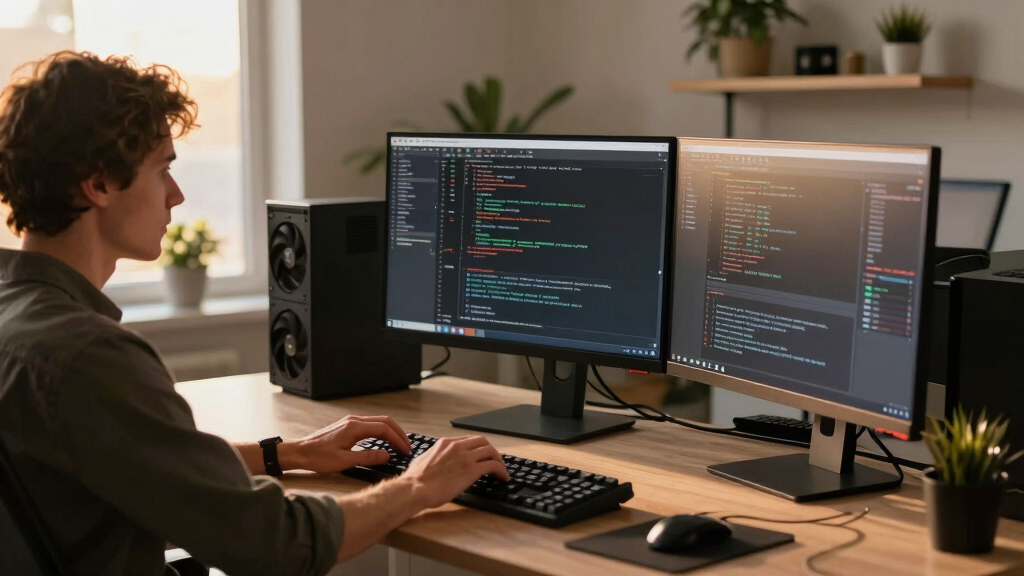
Our evaluation focused on performance capabilities, expandability, build quality, and value for AI analytics workflows. We prioritized systems equipped with dedicated GPUs capable of handling large models and data sets, along with reliable hardware for continuous operation. Compatibility with AI frameworks and ease of upgrades also influenced rankings. To ensure relevance, we selected a range of form factors—from compact mini PCs to full towers—catering to different workspace constraints. Ultimately, our goal was to identify options that offer a tangible balance between power, flexibility, and cost for AI professionals.
Factors to Consider When Choosing Best Gpu Workstation For Ai Analytics Workflows
When selecting a GPU workstation for AI analytics, several factors come into play beyond raw specs. Understanding these can help avoid pitfalls like overpaying for unnecessary performance or choosing a system too limited for future needs. Consider your workload size, upgrade potential, form factor, and budget to make a smarter choice. A well-matched workstation should streamline your AI development without sacrificing scalability or breaking the bank.
GPU Power and Compatibility
The backbone of any AI workstation is its GPU. For large models or data-intensive tasks, a high-end GPU like NVIDIA RTX A6000 or similar is often necessary. Compatibility with popular AI frameworks such as TensorFlow or PyTorch is also key. Remember, more GPU VRAM and CUDA cores translate into faster training times and smoother workflows, but they also significantly impact cost. Balance your needs with your budget to avoid overspending on unnecessary GPU specs.
Expandability and Upgradability
AI workflows often evolve, requiring more GPU power or additional storage over time. Systems with accessible PCIe slots, ample RAM slots, and upgrade-friendly power supplies are preferable. Avoid compact mini PCs if you anticipate scaling up, as their limited expansion options can become a bottleneck. Prioritize platforms that allow for future GPU upgrades and increased memory—this flexibility can extend the lifespan of your investment.
Form Factor and Space Constraints
Workstation size matters, especially if your workspace is tight. Full towers offer maximum expansion but require more space, while compact units and mini PCs save room but may limit future upgrades. Consider your physical workspace and how much hardware you can accommodate. Sometimes, a smaller form factor can suffice for less demanding tasks but may need to be replaced sooner as your AI projects grow.
Budget and Total Cost of Ownership
Initial purchase price is just one aspect; consider ongoing costs like power consumption, cooling, and maintenance. Premium workstations with high-end GPUs tend to consume more power and require better cooling solutions, increasing operational costs. Conversely, mid-tier systems may offer better value for smaller projects but could limit performance for large-scale AI workloads. Setting a clear budget aligned with your performance needs helps avoid overspending or under-provisioning.
Reliability and Support
AI workloads can run for extended periods, making hardware reliability critical. Look for systems with solid warranties, reputable brands, and accessible support channels. Enterprise-grade components typically withstand longer use and offer better stability. Investing in reliable hardware reduces downtime and maintenance costs, which is especially important for professional or commercial workflows.
Frequently Asked Questions
Can I upgrade the GPU later if my AI workload grows?
Many workstations, especially full tower models like the Lenovo ThinkStation P2, are designed with upgradeability in mind. They often feature accessible PCIe slots and sufficient power supply capacity to support higher-performance GPUs in the future. However, compact systems like mini PCs may have limited or no upgrade options. Before purchasing, verify the motherboard and power supply specifications to ensure they can accommodate future upgrades without requiring a full replacement.
Is a more expensive workstation always better for AI analytics?
Not necessarily. While higher-end workstations with top-tier GPUs deliver superior performance, they may be overkill for smaller or less complex AI projects. A system that matches your current workload provides good value and can be upgraded over time. Over-investing in hardware you don’t need can lead to unnecessary expenses, so it’s important to assess your specific requirements and future growth plans carefully.
How important is the CPU in a GPU-focused AI workstation?
The CPU supports the GPU and overall system performance, especially during data preprocessing and model training orchestration. For AI workloads, a balanced system with a capable multi-core CPU ensures smooth operation and reduces bottlenecks. While the GPU handles the heavy lifting, neglecting CPU performance can slow down overall workflows, making it worth considering a modern, multi-core processor even in GPU-centric builds.
Should I prioritize form factor or expandability?
This depends on your workspace and future plans. If space is limited, a compact workstation or mini PC may be necessary, but you should be aware of potential upgrade limitations. If you anticipate ongoing AI projects or scaling up, a full tower offers more room for GPUs, RAM, and additional components. Balancing current space constraints with future needs will help you choose a system that remains effective over time.
What role does RAM play in AI analytics performance?
RAM is vital for handling large datasets and maintaining smooth multitasking during AI development. For most AI workflows, at least 32GB of RAM is recommended, with higher capacities beneficial for more complex models or multi-tasking environments. Insufficient RAM can lead to slowdowns and increased processing times, so investing in ample memory ensures your system can keep up with demanding data workloads without bottlenecks.
Conclusion
For those seeking the best overall performance, the Lenovo ThinkStation P2 strikes an excellent balance of power, expandability, and reliability, making it ideal for professional AI workflows. Budget-conscious users or startups might find the GEEKOM IT13 Mini PC sufficient for lighter tasks, offering great value in a compact form. If premium hardware and maximum performance are your priority, investing in high-end GPUs within a workstation like the Lenovo ThinkStation P2 makes sense. Beginners or those with limited space should consider smaller, more integrated options, while enterprises needing scalable solutions should look for systems with future-proof upgrade paths. Tailor your choice to your current needs and growth plans for the best long-term investment.
Fall Picks
fall essentials
As an affiliate, we earn on qualifying purchases.