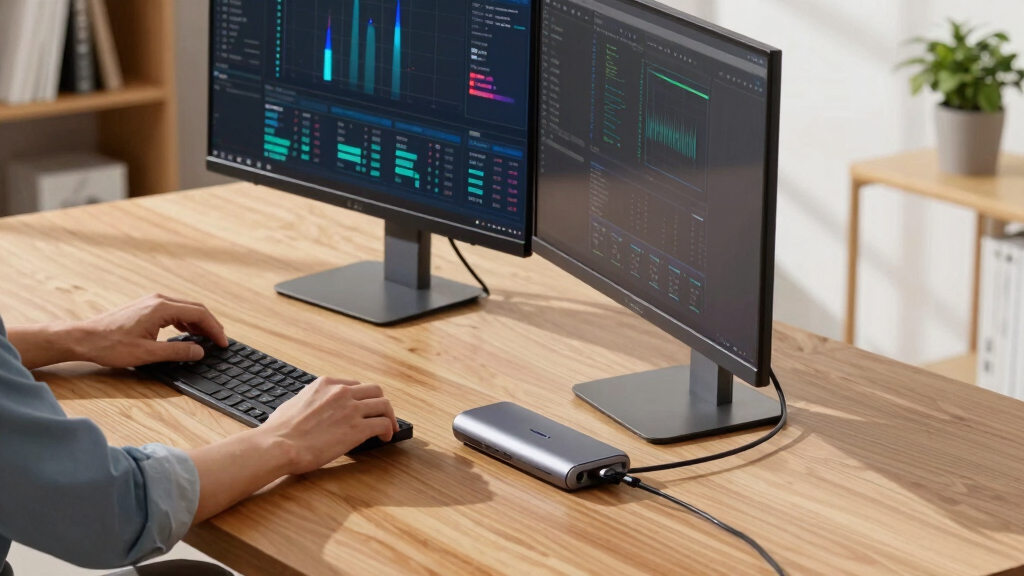
Finding the best thunderbolt docking station for dual monitors requires balancing performance, compatibility, and price. The Plugable Thunderbolt 4 Dock stands out for its blazing-fast data transfer and reliable dual 4K support, making it ideal for demanding workflows. The Anker Prime TB5 offers a versatile array of ports and high-resolution display support, perfect for power users. Meanwhile, the Plugable USB C Triple Display Dock provides strong multi-monitor support at a more accessible price point, though it lacks some of the fastest data transfer features found in premium models. The main tradeoffs involve balancing maximum performance with cost and ease of setup. Keep reading for a complete breakdown of these options to find the best fit for your needs.

Get tech for your team delivered free — and shop member deals
- Fast, free delivery on millions of items
- Access to Prime Big Deal Days deals on October 6–7
- Prime Video, Amazon Music and more included
Key Takeaways
- High data transfer speeds and dual 4K support are hallmarks of premium thunderbolt docks, but they come with a higher price tag.
- Compatibility with various laptop brands and operating systems remains crucial; some docks work better with macOS, others with Windows.
- Port variety and usability matter — docks with more ports can reduce the need for additional hubs or adapters.
- Power delivery (PD) support varies widely; selecting a dock with sufficient wattage ensures your laptop charges during use.
- Build quality and cooling are often overlooked but impact long-term reliability, especially in high-performance models.


More Details on Our Top Picks
Plugable USB C Triple Display Docking Station | 100W PD, 3x HDMI (1x 4K 30Hz, 2x 1080p 60Hz), 6x USB 5Gbps Ports | Windows, macOS, ChromeOS Compatible – Enhance Productivity with Multi-Monitor Support
This dock stands out for supporting up to three displays with native GPU output, bypassing DisplayLink limitations seen in products like the Anker Dual Monitor Hub. It supports the latest Apple Silicon systems, including M4/M5 chips, making it ideal for MacBook users needing reliable multi-monitor setups. Compared with less robust options, it offers 100W Power Delivery and enterprise-level compatibility, but it involves drivers for DisplayLink on macOS, which can add setup complexity. Its build quality and support are top-tier, though it can run warm under heavy use. This makes it perfect for professionals who need multi-monitor reliability across different OS environments without sacrificing performance.
Pros:- Supports three extended HDMI displays with native GPU output for high-quality video
- 100W Power Delivery ensures continuous host charging
- Universal compatibility with USB-C, USB4, and Thunderbolt systems
Cons:- Requires driver installation on macOS, which can be a hurdle for some users
- Runs warm during extended use, potentially affecting longevity
Best for: IT professionals and enterprise users who require multi-monitor support with reliable network and device connectivity across Windows, macOS, and ChromeOS.
Not ideal for: Linux users or those seeking a plug-and-play setup without driver installation, as it lacks Linux support and requires drivers on macOS.
- Video Output:3x HDMI (1x 4K@30Hz, 2x 1080p@60Hz)
- Power Delivery:100W
- USB Ports:6x USB 3.0
- Compatibility:Windows, macOS, ChromeOS
- Supported OS:Windows 10/11, macOS 11+, ChromeOS
- Size:7.87″ L x 3.3″ W x 1.2″ H
Bottom line: This dock is best suited for organizations and power users who need reliable, multi-OS enterprise-grade dual or triple monitor setups with robust connectivity.
Anker Prime Docking Station, 14-Port with 160W Max Output, 10Gbps Fast Data Transfer, Real-Time Smart Interface, Audio and Ethernet Ports, Dual 4K Displays for Dell, HP, Lenovo and More
This model makes the most sense for users needing a comprehensive port array and high-power charging—ideal for busy offices with multiple peripherals. It supports dual 4K monitors via HDMI, but note that on macOS, displays are mirrored, not extended, unlike the Plugable dock. Compared to the Plugable, it offers more ports and higher wattage (160W), but lacks native GPU output, relying instead on DisplayLink for video, which may introduce slight compression artifacts. Its data transfer rate of 10Gbps across multiple ports enhances productivity, though its size and complexity might be overkill for casual users. It’s a strong choice for power users who prioritize port variety and fast data throughput over native GPU support.
Pros:- Supports dual 4K@60Hz HDMI displays in Windows, mirrored on macOS
- 160W power output for charging multiple devices simultaneously
- 13 ports including Ethernet, audio, SD card reader, and multiple USBs
Cons:- Uses DisplayLink technology for video, which can cause slight compression artifacts
- Limited to mirroring on macOS, not extending displays
Best for: Power users and small office setups that need to connect multiple peripherals, dual 4K monitors, and fast data transfer in a single compact device.
Not ideal for: Creative professionals requiring precise color fidelity and native GPU performance, especially on macOS, where mirroring limits extendability.
- Video Output:2x HDMI 4K@60Hz
- Power Output:160W
- USB Ports:14 total, including USB-C and USB-A
- Ethernet:Gigabit Ethernet
- Size:Approximately 8.9″ x 3.3″ x 0.9″
- Compatibility:Windows 10/11, ChromeOS, macOS (mirroring only)
Bottom line: Ideal for users needing extensive peripheral connections and dual 4K display capability with high power output, especially in office environments.
Anker Laptop Docking Station Dual Monitor, 8-in-1 USB C Hub, 4K Dual Monitor with 2 HDMI, 1 Gbps Ethernet Hub, 85W Power Delivery, SD Card Reader, for XPS and More (Charger not Included)
This compact dock is perfect for casual users or those new to multi-monitor setups who want a straightforward, plug-and-play experience. It supports dual 4K@30Hz via HDMI, but the video quality and refresh rate are lower compared to more advanced docks. Unlike the Plugable or Anker’s higher-end models, it offers only 8-in-1 connectivity, which may limit expandability for power users. It’s compatible with USB-C, USB4, and Thunderbolt, but lacks native GPU support, relying on DisplayLink for video output. Its 85W Power Delivery is sufficient for most laptops but not optimized for heavy workloads. Best suited for home offices or students seeking an affordable dual monitor solution with minimal fuss.
Pros:- Supports dual 4K displays at 30Hz via HDMI
- Compact and lightweight design
- Includes SD card reader and gigabit Ethernet
Cons:- Limited to 30Hz refresh rate on dual 4K displays, not ideal for gaming or professional editing
- No native GPU support, dependent on DisplayLink drivers
Best for: Students and home users who need a simple, affordable dual monitor station with basic connectivity.
Not ideal for: Creative professionals or enterprise users demanding native GPU support and high refresh rates for graphics-intensive tasks.
- Video Output:2x HDMI 4K@30Hz
- Power Delivery:85W
- USB Ports:2x USB-A, 1x USB-C
- Ethernet:1Gbps
- Size:4.65″ L x 2.01″ W x 0.69″ H
- Compatibility:USB-C, USB4, Thunderbolt
Bottom line: Best for beginners or budget-conscious users who need reliable dual monitor support without high performance demands.
This dock is tailored for users who want flexibility with multiple video outputs and a substantial power supply. It supports three monitors in Windows via MST technology, but due to system limitations, Mac users will only get mirroring instead of extended desktop. Compared to Plugable’s native GPU output, this unit relies on DisplayStream Compression for triple 4K, which might impact image fidelity slightly. Its 110W power supply ensures high-performance charging, suited for demanding workloads. The multiple ports—including USB-C, USB-A, Ethernet, and SD/TF cards—make it a versatile choice for professionals needing all-in-one connectivity. It’s perfect for office environments where multiple displays and peripherals are essential, but less so for Mac users seeking native GPU performance.
Pros:- Supports three external monitors with MST technology on Windows
- Includes gigabit Ethernet, SD/TF card reader, and multiple USB ports
- 110W Power Delivery provides reliable charging
Cons:- On macOS, only mirroring, not extending, is supported
- Relies on DisplayStream Compression for triple 4K, which could slightly affect image quality
Best for: Windows-based professionals who need flexible multi-display setups with extensive peripheral and charging capabilities.
Not ideal for: Mac users or those wanting true native GPU support for high-end creative workflows.
- Video Output:3x Display (2x HDMI, 1x DisplayPort)
- Power Output:110W
- USB Ports:5x USB 3.0, 1x USB-C
- Ethernet:Gigabit Ethernet
- Size:Approximately 11″ x 4.5″ x 1.2″
- Compatibility:Windows 10/11, limited on macOS
Bottom line: Ideal for Windows users needing multi-monitor versatility and extensive peripheral options in a single dock.
Plugable Thunderbolt 4 Dock with 100W Charging, Thunderbolt Certified, Laptop Docking Station Dual Monitor Single 8K or Dual 4K HDMI for Windows and Mac, 4X USB, Gigabit Ethernet (TBT4-UD5)
This dock is a standout for Thunderbolt 4 compatibility, offering 40Gbps speeds and support for dual 4K @60Hz or an 8K display, making it ideal for high-end creative and productivity workflows. It’s recognized as the Best Thunderbolt Dock 2025 by Wirecutter, and its build quality, reliability, and performance are top-tier. Compared to other docks like the Plugable USB C Triple Display Dock, it offers native GPU output without reliance on DisplayLink, resulting in crisper images and less lag. Its 13 ports, including multiple USB, Ethernet, SD, and audio, make it a comprehensive workstation hub. The 100W charging supports most laptops, but some Mac models may only get 15W downstream charging. This makes it perfect for professionals seeking cutting-edge Thunderbolt performance with extensive connectivity.
Pros:- Supports dual 4K@60Hz or 8K single display with Thunderbolt 4/5
- 40Gbps data transfer speed for demanding workflows
- Includes 4 USB ports, Gigabit Ethernet, SD card reader, and audio
Cons:- Dual display support is limited to certain M1/M2/M3 Pro/Max systems
- Some Mac systems only support a single display, limiting versatility
Best for: Creative professionals and power users with Thunderbolt 4 or 5 laptops who need high-speed, dual 4K or 8K support with maximum future-proofing.
Not ideal for: Mac users with older M1/M2 systems or Windows users with non-Thunderbolt USB-C ports, as dual display support is limited in some configurations.
- Video Output:2x HDMI 4K@60Hz or 1x 8K
- Data Transfer:40Gbps
- Power Delivery:100W (Certified)
- USB Ports:4x USB 3.2
- Ethernet:Gigabit
- Size:8.9″ x 3.3″ x 0.9″
Bottom line: Best suited for high-end creative workflows and future-proofing with Thunderbolt 4/5, offering maximum performance and expandability.
USB C Docking Station Dual Monitor Adapter for Dell HP, Laptop Docking Station 3 Monitors Quad Display USB C Hub Dongle to 4K HDMI+DP+VGA,3 USB2.0,100W PD,8 in 1 Thunderbolt Dock for Lenovo,Surface
This docking station stands out for offering a versatile 8-in-1 setup that supports up to four display outputs, including dual HDMI, DisplayPort, and VGA, making it ideal for users who need multiple screens but are budget-conscious. Compared to more advanced options like the Anker Prime TB5 Dock, it prioritizes display variety over ultra-high resolutions, capping at 1080p on some ports when VGA is active. Its 100W charging is sufficient for most laptops, but the lack of an included power supply and potential resolution limitations on MacOS can be drawbacks for power users or Mac users seeking seamless dual 4K output. The extensive compatibility with various laptops makes it a flexible choice, yet the resolution reduction with VGA and the absence of a dedicated power adapter mean this is better suited for moderate multitasking setups rather than professional video editing or high-end graphics work.
Pros:- Supports up to four display outputs, including HDMI, DisplayPort, and VGA
- Affordable price point with extensive device compatibility
- Provides 100W charging for most laptops
Cons:- Limited to 1080p resolution when VGA is used, affecting display clarity
- No included power adapter, which could complicate setup and power management
- MacOS users experience mirror mode only, limiting extended desktop options
Best for: Budget-conscious professionals or students who need multiple screens and basic connectivity without demanding 4K resolutions on all outputs.
Not ideal for: Power users or creatives requiring full 4K output on both monitors and dedicated power delivery, especially on Mac systems where mirror mode is the default.
- Video Outputs:2 HDMI 4K@60Hz, 1 DisplayPort 4K@60Hz, 1 VGA 1080p
- Power Delivery:100W input, 87W output
- USB Ports:3 USB 2.0 ports
- Compatibility:Dell, HP, Lenovo, Surface, MacBook Pro/Air
- System Support:Windows, macOS
- Max Resolution:Up to 4K on HDMI and DP, 1080p on VGA
Bottom line: This dock is ideal for users needing multiple displays on a budget, but it sacrifices some resolution and flexibility for lower-cost multi-monitor setups.
Anker Prime TB5 Docking Station, 14-in-1 Thunderbolt 5 Dock with 120Gbps Max Transfer, Thunderbolt Dock with 140W Max Charging, Cooling System, Up to 8K, Dual Display for TBT 5/4 Laptops
The Anker Prime TB5 Dock shines for its impressive 14-in-1 port array, including Thunderbolt 5 ports capable of dual 8K@60Hz displays, making it the top choice for high-end creators and professionals who need maximum resolution and rapid data transfer. Its 120Gbps bandwidth outperforms the other options, like the USB C Docking Station, which is limited to 4K or triple display support. The built-in active cooling system ensures sustained performance during intensive workflows, a crucial feature for prolonged professional use. However, the high price and the requirement for Thunderbolt 5 compatible laptops may exclude casual users or those with older hardware. Also, the dock’s inability to support external USB-A hubs due to internal architecture limits expandability if you rely on legacy peripherals. This pick is best for users who demand the absolute best in display clarity and transfer speeds, with less concern for budget or compatibility with older systems.
Pros:- Supports dual 8K@60Hz displays, unmatched for high-resolution workflows
- 120Gbps data transfer speeds enable rapid large file handling
- 140W charging supports power delivery for demanding laptops
- Active cooling system maintains performance under load
Cons:- Premium price point not suitable for casual or budget buyers
- Limited compatibility with non-Thunderbolt 5/4 laptops
- Cannot support external USB-A hubs internally, limiting peripheral expandability
Best for: Creative professionals and power users working with large files and dual 8K displays on Thunderbolt 5 or Thunderbolt 4 laptops.
Not ideal for: Casual users or those with older Thunderbolt 3 or USB-C laptops who won’t benefit from the advanced display and transfer capabilities, or for budget-sensitive buyers.
- Video Output:Dual 8K@60Hz via Thunderbolt 5
- Data Transfer:120Gbps maximum
- Power Delivery:Up to 140W
- Ports:2 Thunderbolt 5, 2 USB-C, 3 USB-A, SD/TF card readers, Ethernet, Audio, HDMI/DisplayPort
- Cooling System:Active cooling
- Compatibility:Thunderbolt 5/4 laptops, Windows and Mac
Bottom line: This dock is perfect for users who need the highest resolution and fastest data transfer, provided their laptop supports Thunderbolt 5.
How We Picked
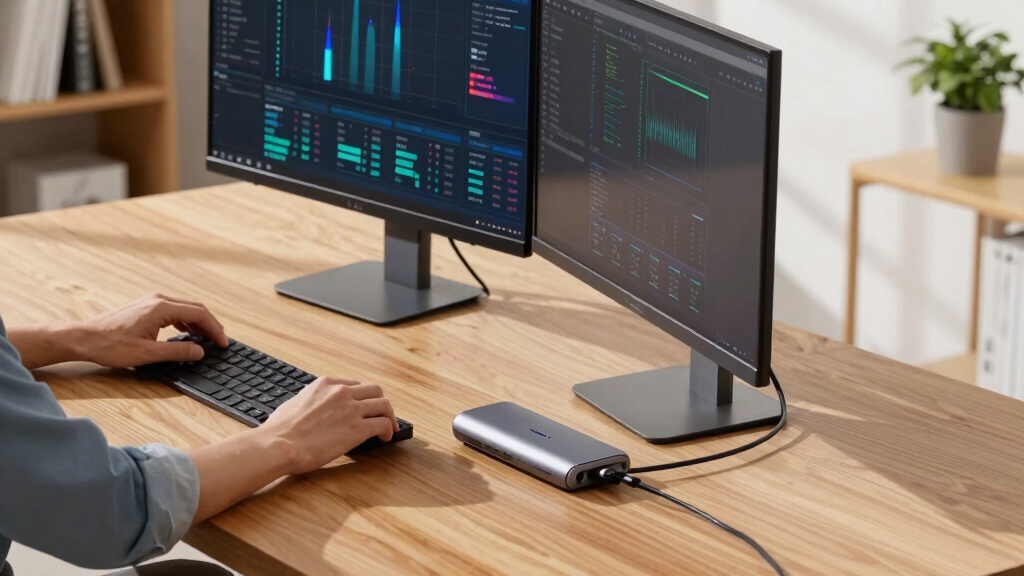
To determine the best thunderbolt docking stations for dual monitors, I focused on key factors that directly impact user experience and value. Performance metrics like data transfer speeds, display resolution support, and power delivery capabilities were prioritized, as these define how well the dock handles demanding workflows. Compatibility across different operating systems and laptop brands was also essential, ensuring broad usability. Build quality and user-friendly features, such as port arrangement and cooling, played a role in the rankings. Products were rated based on how well they balance these factors against price, making sure each option offers a distinct advantage for specific user needs.Factors to Consider When Choosing Best Thunderbolt Docking Station For Dual Monitors
Choosing the right thunderbolt docking station for dual monitors involves understanding several critical factors. Beyond just port count and resolution support, considering performance, compatibility, and future-proofing can help prevent costly upgrades or setup issues later. It’s also important to recognize the tradeoffs between high-end features and affordability, especially if your workflow demands maximum performance. This guide will outline the key considerations to help you make an informed decision tailored to your specific needs.Performance and Data Transfer Speed
High data transfer speeds are essential for demanding tasks such as large file transfers or video editing. Thunderbolt 4 and Thunderbolt 5 provide the fastest rates, with up to 40Gbps and 120Gbps respectively, ensuring minimal latency and maximum throughput. If your work involves frequent large data movements, investing in a dock with the latest Thunderbolt standard makes sense. However, for lighter use like web browsing or document editing, a slightly lower speed might suffice, allowing for more budget-friendly options.
Display Support and Resolution
The core reason for choosing a Thunderbolt dock is dual monitor support, often at 4K or even 8K resolutions. Not all docks can handle multiple 4K displays smoothly; some are limited to one 4K and others support dual 4K at 60Hz. If high refresh rates are critical, verify the dock’s specifications before purchasing. Also, consider whether your laptop’s graphics hardware can fully leverage the dock’s capabilities, as bottlenecks can occur if your system isn’t powerful enough.
Power Delivery and Charging
Power delivery (PD) ensures your laptop charges while connected, reducing cable clutter. Docks offering 85W or more are suitable for most ultrabooks and MacBooks, but some high-performance laptops need 100W or more. Be mindful that some docks claim high wattage but don’t deliver the full amount under load, so checking real-world reviews helps. A dock with insufficient PD can lead to slower charging or even draining your battery during intensive tasks.
Port Variety and Usability
Beyond Thunderbolt ports, look for additional USB-A, USB-C, Ethernet, SD card readers, and audio jacks. More ports reduce the need for extra hubs but can complicate the layout. Consider your workflow: if you connect peripherals frequently, prioritize docks with easy-access ports and logical arrangements. Additionally, some docks feature dedicated charging ports or security locks, adding convenience and security.
Build Quality and Future-Proofing
Durable materials and effective cooling extend a dock’s lifespan, especially if you plan to leave it plugged in constantly. Cooling fans or ventilation can prevent overheating during prolonged use. Investing in a future-proof model with Thunderbolt 5 support and high-resolution capabilities can also protect your investment as your hardware upgrades. Keep in mind that higher-priced docks often have better build quality but weigh this against your actual needs.
Frequently Asked Questions
Can I connect more than two monitors with a Thunderbolt dock?
Many Thunderbolt docks support dual monitors, but some high-end options extend support to three or more displays, often through daisy chaining or multiple video outputs. Check the specifications carefully, especially resolution limits and bandwidth, to ensure the dock can handle your desired setup. Keep in mind that connecting multiple high-resolution monitors may require a more powerful GPU or specific port configurations on your laptop. If multi-monitor support is critical, focus on docks explicitly rated for multiple 4K or 8K displays.
Will a Thunderbolt dock work with my MacBook and Windows laptop?
Most Thunderbolt docks are designed for cross-platform compatibility, but it’s essential to verify compatibility with your specific operating system and hardware. Some docks are optimized for macOS, offering seamless integration and driver support, while others are tailored for Windows. In general, Thunderbolt 4 and 5 docks tend to support both platforms reliably. Double-check the manufacturer’s specifications to avoid compatibility issues, especially with advanced features like Ethernet or SD card readers.
Is it better to buy a dock with Thunderbolt 4 or Thunderbolt 5 support?
Thunderbolt 5 offers higher maximum transfer speeds and potentially more future-proofing, but Thunderbolt 4 currently covers most needs with 40Gbps speeds and broad compatibility. If your workflow involves very large data transfers, 8K video editing, or multiple high-res displays, opting for Thunderbolt 5 could be beneficial. For typical dual monitor setups and general productivity, Thunderbolt 4 remains more than adequate and is usually more widely available at a lower price point.
How do I know if my laptop supports Thunderbolt docking?
Check your laptop’s specifications for Thunderbolt ports, which are usually marked with a lightning bolt icon. Not all USB-C ports support Thunderbolt; some only support standard USB-C, which lacks the bandwidth and features needed for high-performance docks. If your laptop has a Thunderbolt port, verify the version (4 or 5) for compatibility and performance expectations. Updating your system’s BIOS and drivers can also improve compatibility with newer docks.
What is the main difference between Thunderbolt 4 and Thunderbolt 5 docks?
The primary difference lies in maximum data transfer speeds, with Thunderbolt 5 supporting up to 120Gbps compared to Thunderbolt 4’s 40Gbps. Thunderbolt 5 also offers increased bandwidth for multiple high-resolution displays and faster data transfer, making it more future-proof. However, Thunderbolt 4 remains highly capable for most dual monitor setups and offers broader compatibility. Your choice depends on whether your workflow demands the highest speeds and future readiness or if current performance suffices.
Conclusion
For most users seeking a reliable, high-performance setup, the Plugable Thunderbolt 4 Dock offers impressive dual 4K support and blazing fast transfer speeds, making it the best overall choice. If your priority is versatility and a broad port selection, the Anker Prime TB5 fits well, especially for power users. Budget-conscious buyers who still want solid dual monitor support may prefer the Plugable USB C Triple Display Dock. Professionals working with high-resolution media or future-proofing should consider the Anker Prime TB5 or the Anker Prime TB5. Beginners or those with basic needs might find a less expensive USB-C option adequate, but for demanding workflows, investing in a high-end Thunderbolt dock ensures stability and performance over time.Fall Picks
fall essentials
As an affiliate, we earn on qualifying purchases.