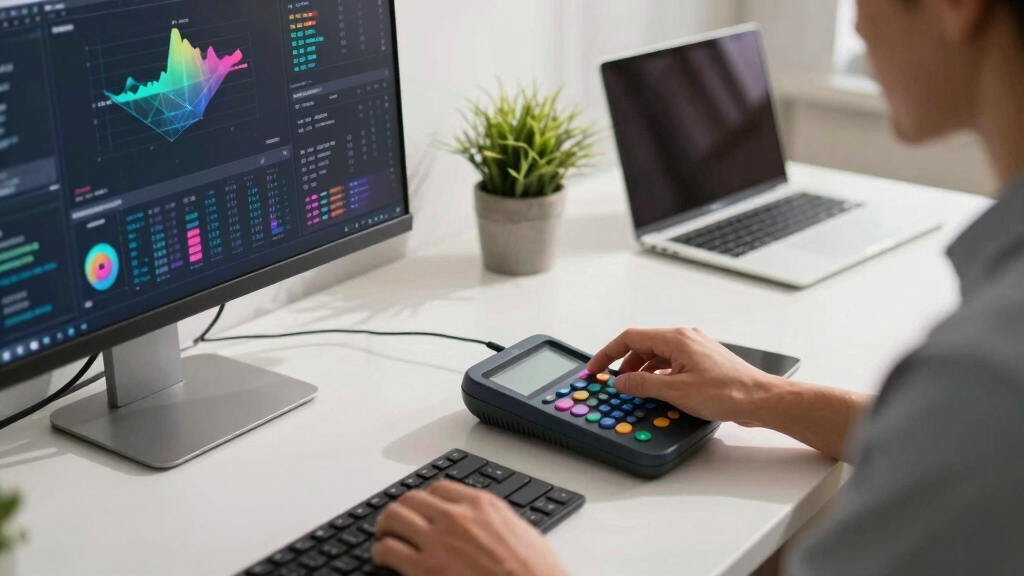
Choosing the best monitor calibrator for data visualization requires balancing accuracy, ease of use, and compatibility with your display technology. The Calibrite ColorChecker Display Pro stands out as the overall top choice, offering precise calibration and intuitive software. The Datacolor Spyder X Pro is a strong contender for those seeking quick, reliable results without fuss. However, budget constraints or specific display types may lead you to different options, each with their own tradeoffs. Continue reading for a detailed breakdown of these top calibrators and how to pick the right one for your workflow.
Key Takeaways
- Calibration accuracy varies significantly; top picks consistently deliver precise color reproduction essential for data visualization.
- Ease of use and software interface are critical, especially for users who calibrate frequently or lack technical expertise.
- Compatibility with different display types (LCD, OLED, Mini LED) influences choice—some calibrators are optimized for certain technologies.
- Budget options often trade off some precision or features but can still serve well for non-critical visualization tasks.
- Future-proofing features like support for high brightness displays or HDR can extend the lifespan of your calibration investment.
| Calibrite ColorChecker Display Pro (CCDIS3) |  | Best Overall for Versatile Professional Calibration | Display Aspect Ratio: 16:9 | Screen Finish: Matte | Display Type: LED | VIEW LATEST PRICE | See Our Full Breakdown |
| Datacolor Spyder Celebration Kit – Monitor Calibrator & Color Checker |  | Best for Complete Color Management Toolkit | Product Dimensions: 10.35 x 5.39 x 10.35 inches | Item Weight: 2.42 pounds | Customer Reviews: 4.0 out of 5 stars | VIEW LATEST PRICE | See Our Full Breakdown |
| Calibrite Display Plus HL Monitor Calibration Colorimeter for Mini LED OLED and Bright Displays |  | Best for HDR and Ultra-Bright Display Calibration | Sensor Type: High luminance HL sensor | Maximum Nits: 10,000 nits | Display Compatibility: Mini LED, OLED, HDR monitors | VIEW LATEST PRICE | See Our Full Breakdown |
| Datacolor Spyder X Pro Monitor Calibrator |  | Best for Ease of Use and Speed | Color Engine: Lens-based | Calibration Targets: 12 predefined | Light Monitoring: Room-light | VIEW LATEST PRICE | See Our Full Breakdown |
| Calibrite Display 123 Monitor Calibration Colorimeter for Photo Editing and Color Accurate Viewing |  | Best for Beginners and Dual-Display Setup | Monitor calibration colorimeter: Yes | Software workflow: Easy 1 2 3 | Connection: USB C | VIEW LATEST PRICE | See Our Full Breakdown |
| Datacolor SpyderPro Monitor Calibrator & Screen Color Calibration Tool |  | Best Overall for Versatile Color Accuracy | Product Dimensions: 2.99 x 2.99 x 0.5 inches | Item Weight: 5 ounces | ASIN: B0DDYHHRWF | VIEW LATEST PRICE | See Our Full Breakdown |
| Datacolor Spyder4Pro Colorimeter for Display Calibration |  | Best for Professional-Grade Calibration | Sensor Type: Full-spectrum seven-color sensor | Calibration Features: Color and brightness calibration, ambient light sensing, monitor quality analysis | Compatibility: Multiple displays including LED, CRT, laptops, iPads, iPhones | VIEW LATEST PRICE | See Our Full Breakdown |
| Calibrite Display Pro HL Monitor Calibration Colorimeter for LCD, Mini LED, and OLED Displays |  | Best for High-Luminance Modern Displays | Display Aspect Ratio: 16:9 | Display Technology: LCD, mini-LED, OLED | Brightness: 3000 candela_per_square_meter | VIEW LATEST PRICE | See Our Full Breakdown |
| Calibrite Video Photo Kit with Display Plus HL Colorimeter and ColorChecker Passport Video 2 |  | Best for High-Luminance Video and Photo Work | Includes: Colorimeter, ColorChecker Passport Video 2, case | Display Brightness Support: Up to 10,000 nits | Compatibility: Mini-LED, OLED, HDR displays | VIEW LATEST PRICE | See Our Full Breakdown |
| Calibrite Creator Kit with Display 123 Colorimeter and ColorChecker Passport Video 2 |  | Best for Photographers and Filmmakers | Includes: Colorimeter, ColorChecker Passport Video 2, case | Display Brightness Support: Up to 10,000 nits | Compatibility: HDR, OLED, mini-LED displays | VIEW LATEST PRICE | See Our Full Breakdown |
More Details on Our Top Picks
Calibrite ColorChecker Display Pro (CCDIS3)
The Calibrite ColorChecker Display Pro stands out for its high repeatability, making it ideal for professionals who need consistent color results across different sessions. Its optical design, diffuser arm, and tripod compatibility allow for precise monitor and projector profiling, which is especially valuable when compared to simpler devices like the Calibrite Display 123. While its connection options are limited to a single USB port, it compensates with reliable performance. This device is best suited for photographers, designers, and videographers who require accuracy and repeatability, though it might be overkill for casual users or those with basic calibration needs. The absence of extensive software details and a higher price point are minor drawbacks, but the consistent calibration quality makes it a top choice for professional workflows.
Pros:- High repeatability ensures consistent color profiles over time
- Versatile design supports both monitor and projector calibration
- Optical sensor with rotatable diffuser arm for flexible setup
Cons:- Limited connectivity with only one USB port
- Lack of detailed software compatibility information
Best for: Professional photographers, videographers, and designers who need precise, repeatable color calibration for both displays and projectors.
Not ideal for: Casual users or hobbyists who prefer a simpler, more affordable calibration solution without needing projector support.
- Display Aspect Ratio:16:9
- Screen Finish:Matte
- Display Type:LED
- Brightness:200 nits
- Measurements Item Dimensions:5.5″D x 2.2″W x 7.5″H
- Display Resolution:1200 dpi or higher
Our verdict“This device is best for professionals prioritizing accuracy and versatility over simplicity and budget.”
Datacolor Spyder Celebration Kit – Monitor Calibrator & Color Checker
The Datacolor Spyder Celebration Kit offers an extensive set of tools, including a monitor calibrator, SpyderCube, and SpyderCheckr 24, making it ideal for users who need comprehensive color control. Compared to the Spyder X Pro, this kit provides more hardware for white balance and color correction, which is especially useful for photographers working across various lighting conditions. However, user reviews show mixed satisfaction, and the system requires some technical understanding to operate effectively. This kit is well-suited for advanced hobbyists or professionals managing workflows that demand meticulous color accuracy, though it may be less appealing for beginners or those seeking a straightforward calibration device. Its complexity and lack of clear pricing could be hurdles for some.
Pros:- Includes multiple calibration tools for comprehensive color management
- Compatible with advanced display types like OLED and mini-LED
- Ensures accurate white balance and consistent color correction
Cons:- Mixed reviews indicate inconsistent user experiences
- Requires some technical knowledge for setup and use
Best for: Photographers and color-conscious creatives seeking a full suite for precise color calibration and correction across multiple tools.
Not ideal for: Beginners or casual users who prefer simple, plug-and-play solutions without extra hardware or complexity.
- Product Dimensions:10.35 x 5.39 x 10.35 inches
- Item Weight:2.42 pounds
- Customer Reviews:4.0 out of 5 stars
- First Available:November 25, 2024
Our verdict“This kit is best for users who need a full-color management toolbox, despite its complexity and mixed reviews.”
Calibrite Display Plus HL Monitor Calibration Colorimeter for Mini LED OLED and Bright Displays
The Calibrite Display Plus HL excels at calibrating high-luminance displays, supporting HDR and mini LED screens up to 10,000 nits, a feature that sets it apart from general-purpose calibrators like the Spyder X Pro. Its high-luminance sensor and advanced PROFILER software enable precise calibration and validation for professional broadcast and creative work, making it a clear choice for high-end display environments. However, this device is tailored for professionals and demanding users, not casual or standard monitor calibration, and it demands a higher level of technical understanding. Its complexity and high price point mean it’s best suited for those working with HDR content or multi-monitor professional setups rather than everyday use.
Pros:- Measures displays up to 10,000 nits for HDR calibration
- Includes powerful PROFILER software with advanced options
- Supports broadcast standards and multi-monitor profiling
Cons:- Designed for professional use, not casual users
- Requires software setup and calibration knowledge
Best for: Broadcast professionals, HDR creators, and high-end display users needing ultra-bright and high-dynamic-range calibration.
Not ideal for: Casual users or those with standard monitors, as it’s designed for specialized, high-luminance displays and includes complex software setup.
- Sensor Type:High luminance HL sensor
- Maximum Nits:10,000 nits
- Display Compatibility:Mini LED, OLED, HDR monitors
- Software:Calibrite PROFILER
- Connectivity:USB C with USB A adapter
- Weight:0.14 kg
Our verdict“This pick makes the most sense for high-end professionals working with HDR and ultra-bright displays who need precise calibration tools.”
Datacolor Spyder X Pro Monitor Calibrator
The Spyder X Pro is designed for users who prioritize quick, accurate calibration with minimal fuss. Its lens-based color engine ensures high precision, and the calibration process takes just 1-2 minutes, making it more convenient than traditional devices like the ColorChecker Display Pro. While it offers support for multiple monitors and includes before-and-after evaluation features, it may be less suitable for those unfamiliar with calibration procedures, as some setup knowledge enhances its effectiveness. This model’s simplicity and speed make it ideal for busy professionals or enthusiasts who want reliable results without complex configuration, though more advanced workflows might require additional tools.
Pros:- High-precision, lens-based color engine
- Fast calibration process (1-2 minutes)
- Supports multiple monitors for consistent color
Cons:- May be complex for complete beginners unfamiliar with calibration
- Requires some setup knowledge for best results
Best for: Photographers, designers, and videographers who need fast, reliable calibration without extensive technical setup.
Not ideal for: Users seeking detailed multi-device profiling or working with projectors, as it focuses primarily on monitor calibration.
- Color Engine:Lens-based
- Calibration Targets:12 predefined
- Light Monitoring:Room-light
- Compatibility:Multiple monitors
- Speed:Fast (1-2 minutes)
Our verdict“This pick suits busy professionals who want quick, accurate calibration with minimal hassle and support for multiple screens.”
Calibrite Display 123 Monitor Calibration Colorimeter for Photo Editing and Color Accurate Viewing
The Calibrite Display 123 offers an easy, guided calibration process suitable for photographers and creators new to color management. Its ability to calibrate up to two monitors makes it appealing for users who want consistent color across dual screens, which is common in photo editing workflows. The built-in before-and-after comparison helps verify calibration accuracy without additional tools. Compared to more advanced devices like the Display Plus HL, it’s simpler and more accessible, though it’s limited to only two displays and lacks features like ambient light measurement. This device is ideal for beginners or those with a small, dual-monitor setup, but it may fall short for high-end or multi-monitor professional environments.
Pros:- Supports calibration for up to two monitors
- Simple, guided workflow suitable for beginners
- Includes built-in before-and-after comparison
Cons:- Limited to two displays, not suitable for larger setups
- Lacks advanced features like ambient light measurement
Best for: Beginners, hobbyists, and photographers managing two displays who need straightforward, reliable calibration.
Not ideal for: Power users with multiple monitors beyond two, or professionals requiring HDR and high-luminance calibration features.
- Monitor calibration colorimeter:Yes
- Software workflow:Easy 1 2 3
- Connection:USB C
- Dimensions:34mm tall x 37mm diameter
- Supports:2 displays
Our verdict“This device is best for newcomers or small-scale creators needing easy calibration for two screens without complexity.”
Datacolor SpyderPro Monitor Calibrator & Screen Color Calibration Tool
The Datacolor SpyderPro stands out for its ability to deliver precise color calibration across a wide range of monitor types, including LCD, LED, and OLED screens. Compared with the Spyder4Pro, it offers a more user-friendly interface and supports unlimited displays, making it ideal for multi-monitor setups. While the need for a nonstandard battery can complicate maintenance, its broad compatibility and advanced calibration features make it a reliable choice for professionals who require consistent color accuracy. However, some users report variability in customer support quality, and the pricing isn’t explicitly listed, which might deter budget-conscious buyers.
bestFor: Creative professionals managing multiple displays who need reliable, comprehensive calibration tools.
notIdealFor: Casual users or those with limited technical knowledge, as the software and setup can be somewhat complex.
- Ensures accurate color display across various monitor types
- Supports multiple languages and operating systems
- User-friendly software with advanced calibration features
- Supports unlimited displays seamlessly
- Requires a nonstandard battery, which may be hard to find
- Customer support experiences vary and are not always prompt
Verdict: This option is best suited for professionals who need flexible, reliable calibration across multiple screens.
- Product Dimensions: 2.99 x 2.99 x 0.5 inches
- Item Weight: 5 ounces
- Item Model Number: SP2024PRO
- Batteries: 1 nonstandard battery required
Pros:- Ensures accurate color display across various monitor types
- Supports multiple languages and operating systems
- User-friendly software with advanced calibration features
Cons:- Requires a nonstandard battery, which may be hard to find
- Customer rating indicates some users may experience issues
- Product Dimensions:2.99 x 2.99 x 0.5 inches
- Item Weight:5 ounces
- ASIN:B0DDYHHRWF
- Item Model Number:SP2024PRO
- Batteries:1 nonstandard battery required
Our verdict“This calibrator excels for users who need broad compatibility and detailed control across multiple monitors.”
Datacolor Spyder4Pro Colorimeter for Display Calibration
The Spyder4Pro offers high accuracy with its full-spectrum sensor, making it ideal for photographers and designers aiming for precise color management. Compared to the SpyderPro, it provides more specialized calibration tools, including ambient light sensing and monitor quality analysis, which elevate its suitability for professional workflows. However, its complexity and higher price point could pose barriers for casual users or hobbyists. The software, while powerful, has a learning curve that might require some time to master, but it ultimately supports consistent results on multiple device types, including iPads and iPhones.
bestFor: Professional photographers and designers who demand meticulous color accuracy and need comprehensive calibration features.
notIdealFor: Beginners or casual users who prefer straightforward, plug-and-play calibration tools without a steep learning curve.
- High accuracy with a full-spectrum seven-color sensor
- Includes ambient light sensing for optimal calibration
- Recalibration feature for ongoing accuracy
- Compatible with multiple display types and devices
- Designed primarily for professional use, may be complex for casual users
- Price may be high for non-professional buyers
Verdict: This product is best suited for professionals needing meticulous and adaptable calibration tools for diverse displays.
- Sensor Type: Full-spectrum seven-color sensor
- Calibration Features: Color and brightness calibration, ambient light sensing, monitor quality analysis
- Compatibility: Multiple displays including LED, CRT, laptops, iPads, iPhones
- Recalibration: ReCAL feature available
Pros:- High accuracy with a full-spectrum sensor
- Includes ambient light sensor for adaptive calibration
- Supports multiple devices and display types
Cons:- Designed mainly for professional use, may be complex for newcomers
- High cost relative to casual options
- Recalibration software has a learning curve
- Sensor Type:Full-spectrum seven-color sensor
- Calibration Features:Color and brightness calibration, ambient light sensing, monitor quality analysis
- Compatibility:Multiple displays including LED, CRT, laptops, iPads, iPhones
- Recalibration:ReCAL feature for ongoing adjustments
Our verdict“This calibrator is ideal for professionals who need detailed control and flexibility in calibration workflows.”
Calibrite Display Pro HL Monitor Calibration Colorimeter for LCD, Mini LED, and OLED Displays
The Calibrite Display Pro HL makes a compelling choice for professionals working with high-brightness screens, supporting up to 3000 nits, which is essential for accurate calibration of OLED, mini LED, and HDR displays. Compared with the Spyder4Pro, its ability to measure luminance levels up to 3000 nits sets it apart, making it suitable for high-end visual workflows. However, its USB-C dependency may require adapters, adding a layer of complexity for some setups. Its software supports both Mac and Windows, but its primary focus on high-luminance displays might be overkill for users with standard monitors, where simpler tools suffice.
bestFor: Professionals handling HDR content, high-end photo editing, or display calibration for modern, high-brightness screens.
notIdealFor: Casual users or those with standard LCD monitors who won’t benefit from the high luminance measurement capabilities.
- Supports luminance calibration up to 3000 nits
- Compatible with LCD, mini LED, OLED displays
- Comprehensive profiling software for Mac and Windows
- Supports multi-display workflows for consistent color
- Requires USB-C connection, may need adapters
- Designed mainly for professional use, complex for beginners
Verdict: This tool is best for professionals working with high-dynamic-range and high-brightness displays needing precise luminance control.
- Display Aspect Ratio: 16:9
- Display Technology: LCD, mini-LED, OLED
- Brightness: 3000 candela_per_square_meter
- Display Resolution: QHD 1440p
- Connectivity: USB Type C
- Weight: 4.8 ounces
Pros:- Supports high luminance measurement up to 3000 nits
- Calibrates a variety of modern display types
- Includes robust profiling software for Mac and Windows
- Facilitates multi-display consistency
Cons:- Requires USB-C connection, may need adapters
- Primarily aimed at professionals, complex for casual use
- Display Aspect Ratio:16:9
- Display Technology:LCD, mini-LED, OLED
- Brightness:3000 candela_per_square_meter
- Display Resolution:QHD 1440p
- Connectivity Technology:USB Type C
- Weight:4.8 ounces
Our verdict“This calibrator suits high-end professionals demanding precise luminance and color calibration for HDR and OLED screens.”
Calibrite Video Photo Kit with Display Plus HL Colorimeter and ColorChecker Passport Video 2
The Calibrite Video Photo Kit combines a high-luminance colorimeter with the versatile ColorChecker Passport Video 2, making it a strong choice for professionals needing comprehensive calibration for both monitors and cameras. Its support for displays up to 10,000 nits is unmatched, making it ideal for high-end HDR and OLED workflows. Compared with standalone calibrators like the Display Pro HL, this kit provides additional tools for white balance, exposure, and camera matching, streamlining complex workflows. A notable limitation is its limited customer reviews, which can make assessing long-term reliability challenging. Its price, while justified for high-end professionals, may be a barrier for smaller studios or hobbyists.
bestFor: Video and photo professionals needing to calibrate both displays and cameras for high-luminance content.
notIdealFor: Beginners or users with less demanding calibration needs, given the specialized nature of the kit.
- Supports high luminance calibration up to 10,000 nits
- Includes comprehensive tools for camera and display calibration
- Helps achieve consistent color and exposure across devices
- Suitable for HDR, OLED, and mini-LED displays
- Limited customer reviews, making long-term reliability uncertain
- Requires software download, which may have a learning curve
Verdict: This kit is best for high-end video and photo professionals managing HDR content across multiple devices.
- Includes: Colorimeter, ColorChecker Passport Video 2, protective case
- Display Brightness Support: Up to 10,000 nits
- Compatibility: Mini-LED, OLED, high-luminance displays
- Weight: 0.15 g
- Model Number: CCPLHL-PPV2
Pros:- Supports high luminance up to 10,000 nits
- Provides comprehensive calibration tools for videos and photos
- Helps ensure consistency across multiple high-end devices
- Includes camera matching features
Cons:- Limited customer reviews, indicating less proven reliability
- Requires software setup and learning
- Price might be high for smaller operations
- Includes:Colorimeter, ColorChecker Passport Video 2, case
- Display Brightness Support:Up to 10,000 nits
- Compatibility:Mini-LED, OLED, HDR displays
- Weight:0.15 g
- Model Number:CCPLHL-PPV2
Our verdict“Ideal for professionals needing precise calibration across high-luminance displays and camera workflows in HDR environments.”
Calibrite Creator Kit with Display 123 Colorimeter and ColorChecker Passport Video 2
The Calibrite Creator Kit combines a reliable Display 123 colorimeter with the versatile ColorChecker Passport Video 2, providing a comprehensive suite for photographers and filmmakers. It excels in ensuring consistent exposure, white balance, and accurate color across multiple cameras and displays, streamlining complex production workflows. While details on software compatibility are limited, its focus on professional video and photo calibration makes it particularly suitable for those who need dependable, portable tools. The lack of extensive customer feedback and unclear pricing might cause hesitation for buyers seeking proven long-term solutions.
bestFor: Photographers and filmmakers needing a portable, reliable calibration kit for multi-camera workflows.
notIdealFor: Casual hobbyists or those whose primary need is simple monitor calibration without camera integration.
- Provides accurate monitor calibration and color control
- Helps achieve consistent exposure and white balance
- Reduces trial-and-error adjustments in post-production
- Portable and easy to use on location or in studio
- Limited details on software compatibility
- No explicit calibration targets included or specified
- Price is not listed, making budget assessment difficult
Verdict: This kit is best for professionals in photography and filmmaking seeking dependable, portable calibration tools for complex workflows.
- Includes: Colorimeter, ColorChecker Passport Video 2, protective case
- Display Brightness Support: Up to 10,000 nits
- Compatibility: HDR, OLED, mini-LED displays
- Weight: 0.15 g
- Model Number: CCPLHL-PPV2
Pros:- Ensures consistent color and exposure across multiple devices
- Supports high-luminance displays up to 10,000 nits
- Helps streamline multi-camera workflows
- Portable and easy to use in various environments
Cons:- Limited customer reviews, making reliability uncertain
- Details on software compatibility are scarce
- Price not specified, requiring further research
- Includes:Colorimeter, ColorChecker Passport Video 2, case
- Display Brightness Support:Up to 10,000 nits
- Compatibility:HDR, OLED, mini-LED displays
- Weight:0.15 g
- Model Number:CCPLHL-PPV2
Our verdict“Ideal for professionals needing portable, high-precision calibration for video and photo production pipelines.”
How We Picked
These products were evaluated based on calibration accuracy, software usability, build quality, compatibility with various display types, and value for money. Priority was given to tools that deliver consistent, repeatable results suitable for data visualization, where color precision directly impacts the quality of insights. We also considered ease of setup and whether the calibrator supports the latest display technologies. Rankings reflect a balance between professional-grade performance and practical usability for a broad range of users, from hobbyists to professionals.Factors to Consider When Choosing Best Monitor Calibrator For Data Visualization
Selecting the best monitor calibrator for data visualization involves understanding how calibration tools impact your color accuracy and workflow. Beyond basic features, it’s important to consider how well a calibrator integrates with your display technology and how easy it is to use regularly. The right choice depends on your specific needs, whether you require high precision or a simple, quick calibration process. Here are key factors to guide your decision:Calibration Accuracy and Precision
For data visualization, the primary goal is achieving consistent, accurate colors that reflect real-world data. Look for calibrators with high delta E accuracy ratings, as these measure the discrepancy between the displayed and actual colors. Professional-grade tools often include advanced features like 3D LUT support, which improves color fidelity, especially in complex workflows. Remember, the most precise calibration is worthless if the software isn’t reliable or easy to operate regularly.
Display Compatibility and Technology Support
Different display types—such as OLED, Mini LED, or traditional LCD—may require specific calibration methods. Some calibrators excel with certain technologies, offering tailored profiles that optimize color accuracy. Check whether the device supports your display’s maximum brightness levels and HDR features if applicable. Mismatched calibration tools can lead to inaccurate results, making it essential to verify compatibility before purchasing.
Ease of Use and Software Interface
Calibration is often a routine task; thus, user-friendly software can save time and reduce errors. Look for tools with clear instructions, straightforward workflows, and automatic profile management. Some options provide guided calibration steps or cloud-based storage for profiles, which can streamline your process, especially if you manage multiple monitors or need to calibrate frequently.
Value and Future-Proofing
While premium calibrators come with higher price tags, they often include features that extend their usability, like support for larger color gamuts or high-brightness displays. Consider your long-term needs: investing in a more capable device can prevent premature obsolescence. Conversely, budget calibrators may suffice for less critical tasks but might lack support for emerging display standards or advanced color spaces.
Maintenance and Calibration Frequency
All calibration tools require periodic recalibration to maintain accuracy, but some devices include automatic reminders or easier procedures. Think about how often you’ll need to calibrate and whether the device’s calibration process is manageable without specialized knowledge. Efficient tools reduce downtime and help sustain data integrity over time.
Frequently Asked Questions
How often should I calibrate my monitor for data visualization?
The frequency of calibration depends on your workflow and display usage, but generally, calibrating once every 2 to 4 weeks helps maintain color accuracy. If you work with critical color data or have a display that changes over time, more frequent calibration may be necessary. Regular calibration ensures your visualizations remain consistent, especially important for color-sensitive data analysis.
Can I use a consumer-grade calibrator for professional data visualization?
Yes, many consumer-grade calibrators provide sufficient accuracy for non-critical data visualization tasks. However, for professionals requiring precise color matching and strict standards, higher-end tools with advanced features like 3D LUT support are recommended. Using a less capable device may introduce subtle inaccuracies that affect your data interpretation.
Are there calibration tools that support HDR and high-brightness displays?
Some premium calibrators now support HDR and high-brightness displays, ensuring accurate color reproduction in demanding scenarios. These tools typically include specialized sensors and software updates to handle wider color gamuts and luminance ranges. If your workflow involves HDR content or high-brightness screens, verify the device’s specifications before purchasing.
Is it worth investing in a calibration device with software automation?
Automation features can significantly reduce calibration time and improve consistency, making them a worthwhile investment, especially for users who calibrate frequently. Automated routines minimize user error and streamline the process, which is beneficial for maintaining ongoing color accuracy in data visualization tasks. Consider this feature if calibration is a recurring part of your workflow.
What should I prioritize: higher accuracy or ease of use?
For data visualization, accuracy generally takes precedence because the integrity of your data depends on precise color reproduction. However, ease of use is also important to ensure consistent calibration over time without frustration. The best approach often involves balancing both: choosing a device that offers high accuracy with an intuitive interface to facilitate regular calibration routines.