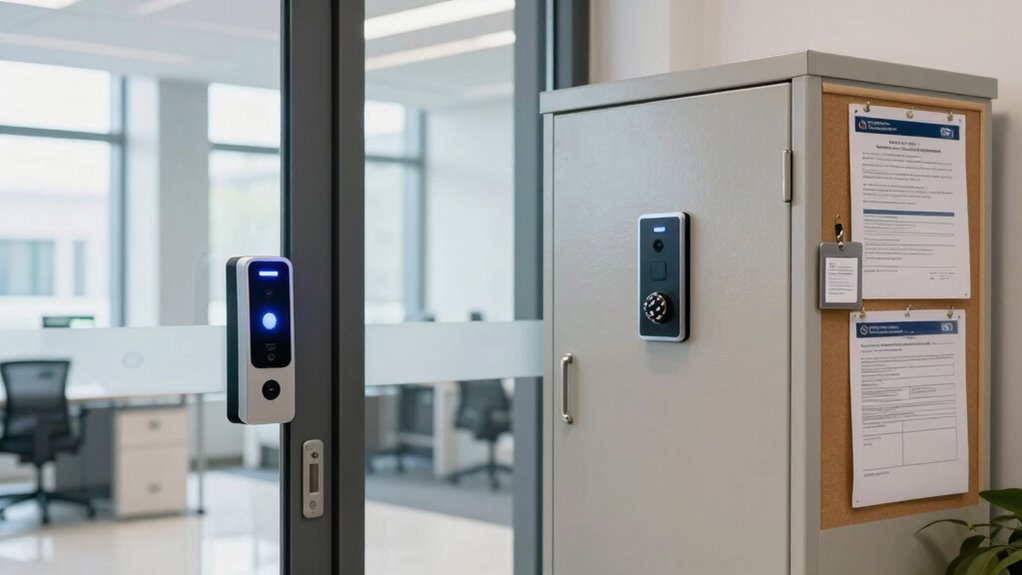

Physical security focuses on tangible measures like access controls, security guards, and surveillance to prevent unauthorized physical entry and protect assets. Compliance security controls, on the other hand, guarantee you follow legal, industry, or organizational standards through audits, documentation, and procedures. Both work together to strengthen your security posture—physical security stops threats at the door, while compliance controls reduce legal and operational risks. Exploring these differences further can help you build a more robust security strategy.
Key Takeaways
- Physical security involves tangible measures like access controls and surveillance to prevent unauthorized physical access.
- Compliance security controls focus on adhering to legal standards through audits, documentation, and policies.
- Physical security aims to protect assets from theft, vandalism, and sabotage proactively.
- Compliance controls ensure regulatory requirements are met and reduce legal and financial risks.
- Both types of controls create a layered defense, enhancing overall organizational security.

Have you ever wondered how organizations protect their assets beyond just following rules? It’s a good question because understanding the difference between physical security and compliance security controls is key to safeguarding your organization. Physical security focuses on the tangible measures you put in place to prevent unauthorized access to facilities, equipment, and sensitive areas. This involves access control systems like keycards, biometric scanners, security guards, and surveillance cameras. These measures help limit entry to authorized personnel only, reducing the risk of theft, vandalism, or sabotage. Effective physical security is about risk management—identifying vulnerabilities in your physical environment and implementing controls to minimize those risks. For example, if a server room contains critical infrastructure, you’d want strict access control to ensure only trusted employees can enter. This proactive approach helps prevent breaches before they happen, making your organization’s assets less vulnerable. Recognizing the importance of security controls helps organizations develop a comprehensive approach to risk mitigation. Additionally, integrating physical security with other security strategies creates a layered defense that enhances overall protection. Building awareness around security best practices also contributes significantly to a strong security posture. Incorporating security technologies such as alarm systems and intrusion detection can further strengthen your physical defenses and deter potential intruders.
On the other hand, compliance security controls are about adhering to legal, industry, or organizational standards to meet specific regulatory requirements. These controls are often driven by policies and frameworks like HIPAA, GDPR, or ISO standards. Compliance ensures that your organization follows prescribed procedures and maintains documentation to demonstrate accountability. While compliance controls might include regular audits, data encryption, or employee training, they’re primarily about reducing legal and financial risks associated with non-compliance. They establish a baseline for security practices but don’t always address the physical threats directly. For example, ensuring your organization conducts regular security awareness training is a compliance measure that helps prevent social engineering attacks, but it doesn’t physically restrict access to your data centers. Understanding the distinction is crucial because they complement each other. Physical security controls are your first line of defense—stopping threats at the door—while compliance controls help you meet legal obligations and maintain consistent security practices. Both are essential for comprehensive risk management. When you combine strict access control measures with thorough compliance procedures, you create a layered defense that’s more effective at protecting your organization’s assets. Ultimately, safeguarding your organization involves a balanced approach that addresses both the tangible physical risks and the intangible regulatory requirements. Recognizing the difference ensures you implement the right controls in the right places, making your security posture stronger and more resilient against a variety of threats.
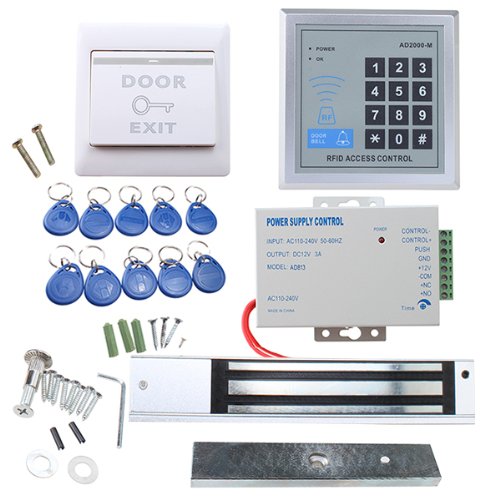
AGPTEK RFID Door Access Control System Kit 280kg Electric Magnetic Lock
- Modern Access Control: RFID proximity door system kit
- Reliable Data Security: Advanced CPU and circuit protection
- Multiple Access Methods: Cards, passwords, or hybrid
As an affiliate, we earn on qualifying purchases.
As an affiliate, we earn on qualifying purchases.
Frequently Asked Questions
How Do Physical and Compliance Security Controls Overlap?
Physical and compliance security controls overlap mainly through environmental safeguards and access management. You set environmental safeguards like fire suppression and climate control to protect assets, which also meet compliance standards. Access management involves controlling who enters secure areas, ensuring only authorized personnel have entry, fulfilling both physical security and compliance requirements. This overlap helps streamline security efforts, making it easier to meet regulatory standards while safeguarding your assets effectively.
What Industries Prioritize Physical Security Over Compliance?
In industries like manufacturing, healthcare, and data centers, you prioritize physical security over compliance because access control and security layering are critical to protect assets and personnel. You focus on controlling entry points, monitoring sensitive areas, and layering security measures to prevent unauthorized access. These sectors often require immediate physical safeguards to guarantee safety and security, making physical security the top priority over compliance alone.
Can Physical Security Alone Ensure Regulatory Compliance?
Physical security alone can’t guarantee regulatory compliance. You need access control to restrict entry and threat detection to identify potential risks. Relying solely on physical measures leaves gaps in documentation, monitoring, and reporting required by regulations. To meet compliance standards, you must integrate physical security with cyber security practices, policies, and procedures. This all-encompassing approach helps you effectively protect assets and demonstrate compliance during audits.
How Are Security Audits Different for Physical and Compliance Controls?
Security audits for physical and compliance controls differ mainly in scope. For physical security, you focus on access control and threat mitigation, checking if locks, surveillance, and barriers are effective. Compliance audits, however, review policies, documentation, and adherence to regulations. You verify that controls meet legal standards, ensuring both physical access and data protection are properly managed. The goal is to identify gaps and improve overall security posture.
What Are the Challenges in Integrating Both Security Controls?
You face challenges integrating physical and compliance security controls because balancing risk assessments across both areas can be complex. You need to guarantee policies align without gaps, which requires ongoing employee training to handle evolving threats. Coordinating technology, procedures, and staff understanding demands a strategic approach, making sure physical security measures support compliance standards. This integration ensures thorough protection but needs continuous effort and clear communication to succeed.

USB Fingerprint Reader for Windows 10/11 ONLY, Windows Hello Fingerprint Scanner for PC Login, Match-in-Sensor Security, Plug & Play, 4ft Extension Cable (Not for Mac/Linux) (Black)
- Windows Hello Compatibility: Unlock Windows PCs with fingerprint
- Secure Authentication: Biometric data stored locally
- Not for Mac/Linux: Designed for Windows 10/11 only
As an affiliate, we earn on qualifying purchases.
As an affiliate, we earn on qualifying purchases.
Conclusion
Understanding the difference between physical and compliance security controls helps you better protect your assets. While physical controls prevent unauthorized access, compliance controls ensure you meet legal standards. Notably, a recent survey found that 60% of data breaches stem from physical security failures. By integrating both types effectively, you can greatly reduce risks and safeguard your organization’s reputation. Remember, security isn’t just about compliance—it’s about proactively defending what matters most.

Blink Outdoor 4 – Wireless smart security camera, two-year battery life, 1080p HD day and infrared night live view, two-way talk. Sync Module Core included – 3 camera system
- Battery Life: Up to two years of battery life
- Video Quality: 1080p HD live view
- Night Vision: Infrared night vision
As an affiliate, we earn on qualifying purchases.
As an affiliate, we earn on qualifying purchases.

JWM RFID Guard Tour System with Download Station, Long Range Reading
- Dual Frequency Checkpoint Reading: Detects 2.4GHz and 125kHz tags at different ranges
- Multifunction Patrol Device: Includes flashlight, display, compass, and temperature
- High-Speed Download Station: Enables quick data transfer
As an affiliate, we earn on qualifying purchases.
As an affiliate, we earn on qualifying purchases.