

Software built with coding agents is often described in terms of speed. How many prompts were sent, how quickly a prototype appeared, how much code an agent generated before breakfast. Those numbers can be striking, but they avoid the more important question: did anyone verify that the software actually worked?
AI Tools & ML · Gewerkton
21 packages is the headline. Verification is the story.
A solo founder directed Codex and Claude through one compressed night of software delivery—then required tests designed to expose failure, not reward plausible-looking output.
in one night
The fleet’s output had to survive deliberate attempts to prove it wrong. Speed increased capacity; it did not redefine acceptable evidence.
Agents built. The founder set the standard.
Codex and Claude supplied software-building capacity. The solo founder directed the work and decided what counted as proof.
From site activity to unambiguous evidence
Gewerkton applies the software story’s central idea to construction: capturing more matters only when the result remains clear enough to coordinate real work.
“On site, what counts is what’s proven.”
Voice capture → working context → coordination
Provider choice without regional lock-in
Customers can bring their own keys and select the provider and region. Data can reside in an EU cloud or on the organisation’s own infrastructure.
Local language, unchanged evidence original
EU, US and APAC teams can work in their own languages while the original evidence remains the unambiguous reference—from capture to report.
Gewerkton offers a more substantive answer. The voice-first construction documentation and defect management platform was built by a solo founder directing a fleet of coding agents using Codex and Claude. In one night, that fleet shipped 21 software packages. The unusual part is not merely the volume. The packages were verified with negative controls and mutation tests, applying standards designed to expose failures rather than accepting output because it looked plausible.
The resulting product is aimed at a similarly difficult coordination problem: turning what happens on a construction site into usable, unambiguous evidence across projects, trades, systems, regions and languages. Gewerkton is in beta now, with a public beta planned for fall 2026.

3pcs Inductance Tester, Type-C Powered High Precision Mainboard Coil Testing Tool, Quick Fault Check Inductor Tester for Mobile Phone Electronic Components
- Live-Circuit Testing: Test inductors without soldering or removal
- Type-C Power Supply: Powered via any Type-C port, no batteries needed
- One-Press Operation: Instantly ready with a single button press
As an affiliate, we earn on qualifying purchases.
As an affiliate, we earn on qualifying purchases.
Twenty-one packages is the headline; verification is the story
A solo founder shipping 21 software packages in one night would be easy to present as another tale of AI-assisted velocity. But speed alone says little about the quality of a software system. Coding agents can produce large amounts of work quickly; the challenge is establishing whether that work survives deliberate attempts to prove it wrong.
That is why the negative controls and mutation tests matter. They shift the story away from visual confidence and towards verification. The point is not that agents can make output appear complete. It is that their output was subjected to checks intended to distinguish functioning software from software that merely passes a casual inspection.
This approach also says something about the founder’s role. Directing a coding-agent fleet is not the same as handing over responsibility. Codex and Claude supplied software-building capacity, while the founder directed the work and imposed the verification standards. The agents increased the amount that could be shipped in a compressed period; they did not remove the need to decide what counted as acceptable evidence.
That principle has a direct parallel in Gewerkton’s market. Construction projects produce a constant stream of spoken instructions, site observations, defects, photos, reports, decisions and handovers. Capturing more information is useful only if the result remains clear enough to support the people coordinating the work. Gewerkton’s marketing line puts it plainly: “On site, what counts is what’s proven.”

Clean Code: A Handbook of Agile Software Craftsmanship (Robert C. Martin Series)
As an affiliate, we earn on qualifying purchases.
As an affiliate, we earn on qualifying purchases.
A voice-first route from the site to evidence
Gewerkton is a branded house with three product lines: Field, Studio and Cloud. Each addresses a different part of the same flow, from site capture to plans, models, operations and third-party coordination.
Gewerkton Field is the voice-first construction site app. It turns dictation into evidence, defects and daywork reports, and also covers takt and portal use. The emphasis on voice reflects the conditions in which site information is created: during active work, across distributed locations and among people who may not share the same language.
Gewerkton Studio is the browser workspace for plans and models. Where no model exists, the site team can create one in the browser. That makes the model part of the working environment even when a project does not begin with one already available.
Gewerkton Cloud handles operations and model/data coordination between Field, Studio and third parties. It is the product line that joins the capture and workspace layers to the wider project environment. Data residency is a choice: teams can use an EU cloud or their own infrastructure.
Together, the three lines describe a continuous system without pretending that every project begins in the same place. A team may be dictating information on site, working with plans and models in a browser, creating a model where none exists, or coordinating data with third parties. Cloud provides the operational connection between those activities.

Automated Software Testing: Introduction, Management, and Performance: Introduction, Management, and Performance
As an affiliate, we earn on qualifying purchases.
As an affiliate, we earn on qualifying purchases.
BYO-AI means choosing the provider and the region
The coding story behind Gewerkton involves Codex and Claude, but the product itself is not tied to a single AI provider. Its BYO-AI model supports 13 providers, allows customers to bring their own keys and makes the region selectable. The available regional choice spans EU, US and Asian providers, including providers in mainland China.
This is more than a long integration list. Provider choice and regional choice are separate practical requirements for global projects. A company may have existing AI-provider relationships, its own keys or a preference based on where a project operates. Gewerkton’s approach lets the organisation make that selection without vendor lock-in.
The same principle appears in its data-residency options. The choice between an EU cloud and the organisation’s own infrastructure gives teams two clearly stated deployment paths. Combined with BYO-AI, it keeps decisions about AI providers, regions and infrastructure with the organisation using the platform.
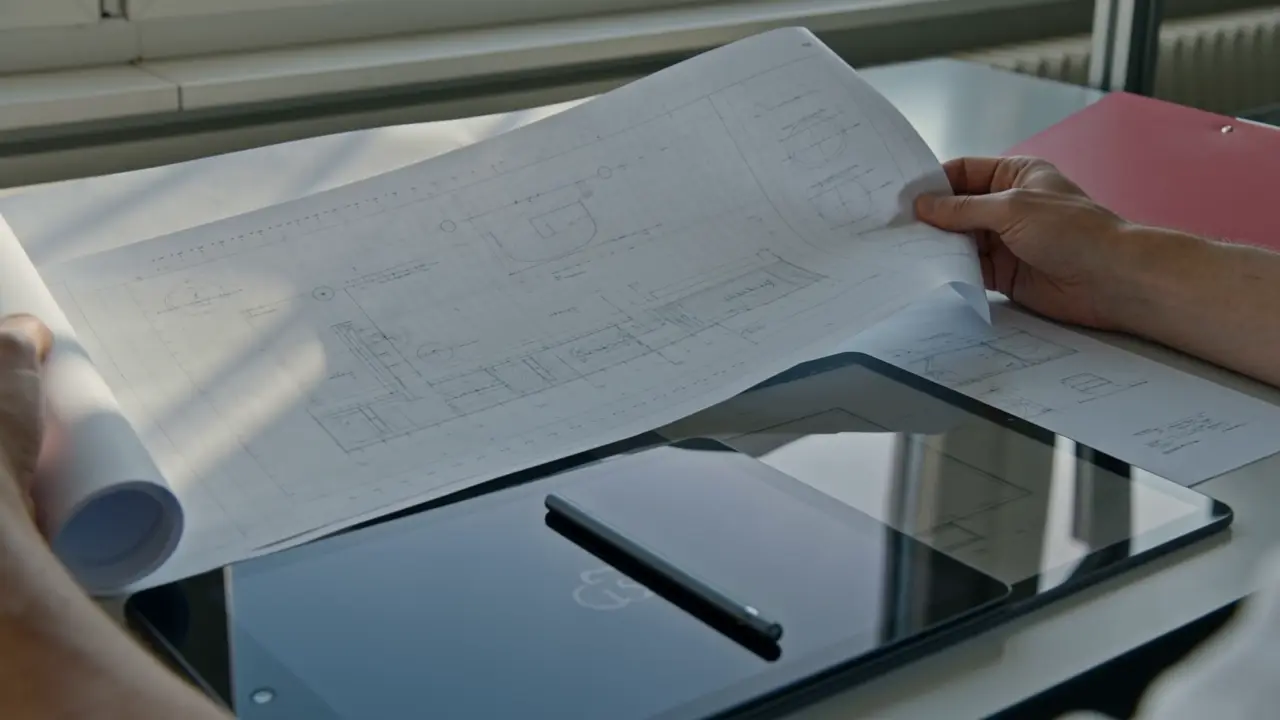
Gewerkton was born in the German market and retains its deepest commercial integration there, including GAEB, REB, XRechnung and DATEV. But the product is designed for global markets rather than being framed as a local tool with translation added later. It supports 27 content languages and regional provider choice across Europe, the United States and Asia.

Beyond Vibe Coding: From Coder to AI-Era Developer
As an affiliate, we earn on qualifying purchases.
As an affiliate, we earn on qualifying purchases.
One project, several regions, 27 languages
The international case becomes clearest when teams from the EU, US and APAC are working on the same project. Each team can work in its own language while the evidence original stays unambiguous. That distinction matters: multilingual access should help people understand and act without blurring the original record from which the project evidence was created.
For projects in Asia, the platform supports Chinese, Korean and Vietnamese crews, with multilingual handling from capture to report. Data residency remains selectable, including the choice enabled by the platform’s regional AI-provider coverage and its EU-cloud-or-own-infrastructure deployment model.
This is not only a language feature. It is an operating model for projects whose participants may be separated by geography, infrastructure, trade and working language. The platform connects voice-first capture with reports, evidence, models and operational coordination while retaining the evidence original as the unambiguous reference.
The breadth is also visible on Gewerkton’s marketing site. The site is available in 27 languages and uses zero trackers, has no cookie banner and runs on a fully egress-free architecture. Its media bank contains more than 51 self-produced clips and posters. Those details reflect an international product that is presenting its own material across the same number of content languages supported by the platform.
Different construction fields, recurring evidence problems
The platform’s deployment fields cover projects with very different physical and organisational conditions. What connects them is the need to capture events where they happen and coordinate the resulting information without losing the original evidence.
Wind farms and renewables
Wind farms and renewable-energy projects can involve distributed sites and rotating crews. Field acceptance must continue even when connectivity does not. Gewerkton supports offline capture in dead zones, allowing site information to be recorded in environments where a permanent connection cannot be assumed.
Data centres and industrial plants
Data centres and industrial plants often have many trades working in parallel under tight deadlines. In this setting, meeting decisions can become trade-sorted task lists. The value lies in moving from discussion to work organised around the trades responsible for carrying it out.
Housing and building construction
For housing and building construction, the workflows include defects with a photo and deadline, dictated daywork reports and a signature on the device at handover. These are direct site activities rather than abstract administrative categories: recording what needs attention, documenting work by voice and completing the handover on the available device.
Infrastructure and tunnels
Infrastructure and tunnel projects bring long durations and many change orders. Instructions can be backed by the original audio, preserving the source alongside the subsequent project record. This is where the promise that the evidence original stays unambiguous becomes particularly concrete.

Cross-border teams
Cross-border work brings the platform’s language, provider and coordination choices together. EU, US and APAC teams can work on one project in their own languages. Field captures what happens on site, Studio provides the browser environment for plans and models, and Cloud coordinates operations and model/data flows with third parties.
These deployment fields do not require the product to claim that every construction environment is identical. A wind farm’s dead zone is not the same problem as parallel trades inside a data centre, and a tunnel’s long sequence of change orders differs from a housing handover. The shared requirement is reliable movement from site activity to evidence and coordinated action.
Cloud is where the system becomes operational
Field may provide the most immediate expression of the voice-first idea, because it starts with people speaking on site. Studio gives plans and models a browser workspace, including a way for the site team to create a model when none exists. Cloud carries the broader story because it coordinates operations and model/data exchange across those product lines and with third parties.
That coordination is essential to the product’s international position. Supporting 27 content languages is one layer. Offering 13 AI providers with bring-your-own-key access is another. Regional selection across the EU, US and Asia, including mainland China, adds deployment choice. Cloud is where the information moving through Field and Studio connects to the operating context around them.
For a team assessing the beta, the central question is therefore not simply whether voice can produce a report. It is whether site capture, evidence, plans, models, operational data and third-party coordination can remain connected across the project. Gewerkton Cloud is the line designed to coordinate that system.
A beta built with unusually visible discipline
Gewerkton should be judged at its stated stage. It is in beta now, and the public beta is planned for fall 2026. The 21 packages shipped in one night demonstrate what a solo founder can produce by directing a fleet of coding agents, but they do not change that status.
What makes the build story notable is the combination of compressed output and explicit verification. Negative controls and mutation tests are a more meaningful standard than confidence based on appearance. They show an effort to test whether the agent-produced work behaves as intended and whether the checks can detect deliberately introduced problems.
The product that emerged follows the same editorial logic. Voice is useful because it captures activity where work happens. Multiple languages are useful because global teams need to participate. Provider choice is useful because organisations operate across regions and do not all want the same AI vendor. Cloud coordination is useful because captured information must move between the site, browser workspaces and third parties.
There is plenty in AI software that can be made to sound dramatic. A solo founder, two families of coding agents and 21 packages shipped overnight certainly qualify. Yet Gewerkton’s stronger proposition is less theatrical: verify the software, preserve the evidence original, give teams regional and provider choice, and connect the site record to the rest of the project. On a construction site, proof is the part that lasts.