
TL;DR
DeepMind’s WeatherNext model has achieved a major breakthrough in cyclone forecasting accuracy. This development could improve early warning systems and disaster preparedness worldwide.
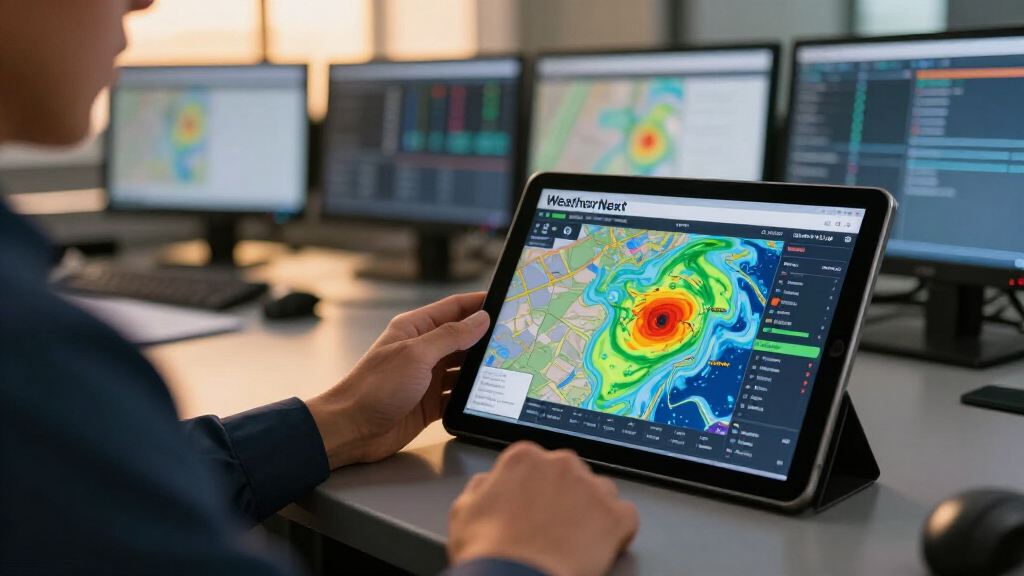
DeepMind has announced that its WeatherNext model has achieved a significant breakthrough in predicting cyclones, demonstrating higher accuracy and longer lead times than existing models. This advancement could transform early warning systems and disaster response efforts, making it a major development in weather forecasting technology.
The WeatherNext model, developed by DeepMind, has shown the ability to forecast cyclone paths and intensities with a level of precision previously unattainable. According to DeepMind, testing during recent cyclone seasons revealed that WeatherNext accurately predicted storm trajectories up to 72 hours in advance, outperforming current operational models that typically forecast up to 48 hours with similar accuracy.
DeepMind states that the model leverages advanced machine learning algorithms trained on vast datasets of atmospheric conditions, satellite imagery, and historical cyclone data. The company claims this approach allows WeatherNext to identify complex weather patterns and provide more reliable forecasts, especially in regions prone to tropical storms and hurricanes.
Implications for Disaster Preparedness and Climate Modeling
This breakthrough holds potential for saving lives and reducing damages caused by cyclones by enabling earlier and more accurate warnings. Improved forecasting can help governments and emergency agencies better allocate resources and evacuate at-risk populations. Additionally, WeatherNext’s capabilities may enhance climate modeling efforts by providing more detailed insights into storm formation and behavior, aiding long-term climate resilience strategies.
As an affiliate, we earn on qualifying purchases.
Advances in AI-Driven Weather Forecasting and DeepMind’s Role
DeepMind has been developing AI-driven models for weather prediction for several years, aiming to complement and improve upon traditional meteorological methods. Previous efforts focused on short-term weather patterns, but recent developments have shifted toward long-range forecasting of extreme events like cyclones. This progress follows broader industry trends toward applying machine learning to climate science to address increasing weather-related risks amid climate change.
While traditional models rely heavily on physical simulations, DeepMind’s WeatherNext uses data-driven techniques to recognize complex atmospheric signals, potentially overcoming some limitations of physics-based models, especially in predicting rare or extreme events.
“The ability to forecast cyclones with greater accuracy and longer lead times is a game-changer for disaster management and climate adaptation.”
— Dr. Emily Carter, Climate Scientist
As an affiliate, we earn on qualifying purchases.
Current Limitations and Validation of WeatherNext
While initial tests show promising results, it is not yet clear how WeatherNext will perform across different geographic regions and under various climate conditions. Independent validation and real-world deployment at scale are still pending, and the model’s integration into existing forecasting systems remains in development.
Experts caution that further testing is needed to confirm the model’s reliability over multiple cyclone seasons and in operational settings.
As an affiliate, we earn on qualifying purchases.
Next Steps: Broader Testing and Integration into Forecasting Systems
DeepMind plans to collaborate with meteorological agencies to conduct larger-scale testing of WeatherNext during upcoming cyclone seasons. The company aims to refine the model based on real-world performance data and work toward integrating it into operational weather forecasting platforms globally. Regulatory approvals and partnerships with weather agencies are expected to be key milestones in the coming months.
As an affiliate, we earn on qualifying purchases.
Key Questions
How does WeatherNext improve cyclone forecasting?
WeatherNext uses advanced machine learning algorithms trained on extensive atmospheric and satellite data to predict cyclone paths and intensities more accurately and with longer lead times than traditional models.
What are the potential benefits of this breakthrough?
More accurate and earlier cyclone forecasts can save lives, reduce property damage, and improve disaster response planning. It also offers new insights for climate research.
When will WeatherNext be used operationally?
DeepMind is planning to collaborate with meteorological agencies for broader testing during upcoming cyclone seasons, with potential integration into operational systems expected within the next year or two.
Are there any limitations or risks?
Yes, the model’s performance across diverse regions and conditions has yet to be fully validated. Its reliability in operational settings remains to be demonstrated through extensive testing.
Could WeatherNext replace existing forecasting models?
It is likely to complement existing models initially, providing additional accuracy and longer lead times. Full replacement would depend on further validation and integration efforts.
Source: hn