
🔍 Read the full analysis: Choosing External GPUs For AI Tasks In 2026 on ThorstenMeyerAI.com

Get tech for your team delivered free — and shop member deals
- Fast, free delivery on millions of items
- Access to Prime Big Deal Days deals on October 6–7
- Prime Video, Amazon Music and more included
TL;DR
In 2026, selecting the right external GPU depends on compatibility, performance, and budget. The Razer Core X V2 remains the top choice for reliability, while other models suit specific needs. Key factors include connection standards, power, and cooling.
In 2026, the market for external GPUs (eGPUs) tailored for AI workloads continues to expand, with the Razer Core X V2 recognized as the top overall pick due to its reliable compatibility and robust power delivery. This development matters because AI tasks often demand high-performance graphics processing, which can be challenging for laptops and mini PCs to handle internally. External GPUs provide a flexible, upgradeable solution for professionals and enthusiasts seeking to accelerate AI training and inference without replacing entire systems.
The Razer Core X V2 remains the leading choice among eGPU enclosures in 2026, praised for its compatibility with a wide range of laptops via Thunderbolt 3 and Thunderbolt 4, and its power delivery capacity of up to 650W. For more details, see the original analysis of top external GPUs. It supports most high-end graphics cards, making it suitable for demanding AI workloads. The ASUS ROG XG Mobile stands out for gamers and AI developers needing extreme graphics performance, thanks to its high bandwidth and dedicated cooling system. Meanwhile, the MINISFORUM DEG1 offers excellent value, supporting flagship GPUs at a lower cost, though with some tradeoffs in size and portability.
Consumers face tradeoffs such as size, compatibility, and cost. Smaller, portable models like the Razer Core X V2 are ideal for mobility but may support fewer high-power cards. Larger enclosures support full-sized GPUs and advanced cooling but are less portable. Connectivity standards like Thunderbolt 3/4 and USB4 are crucial, as they determine data transfer speeds and compatibility. Power delivery and thermal management are critical, especially for high-performance AI tasks that can generate significant heat and require substantial wattage. Pricing varies from budget models under $300 to premium enclosures exceeding $1,000, with higher costs generally reflecting better build quality and future-proofing.
The 10 picks
- 1
 ASUS ROG XG Mobile (2025) External Graphics Card with NVIDIA GeForce RTX 5090View on Amazon →
 - 2ASUS ROG XG Mobile (2025) External Graphics Card with NVIDIA GeForce RTX 5070 TiView on Amazon →
- 3
 Razer Core X V2 External Graphics Enclosure (eGPU)View on Amazon →
 - 4
 AOOSTAR AG02 OCuLink eGPU Dock with 800W PSU and USB4 Port, External GPU Dock…View on Amazon →
 - 5
 External GPU Dock Station, Mini eGPU Enclosure Compatible with Thunderbolt 3/…View on Amazon →
 - 6
 MINISFORUM DEG1 eGPU Dock, External GPU Docking Station for RTX 4090, AMD RX…View on Amazon →
 - 7
 OwlTree PCIe 5.0 x4 128Gbps eGPU Dock for 50 Series Graphics Cards, M.2 NVMe…View on Amazon →
 - 8
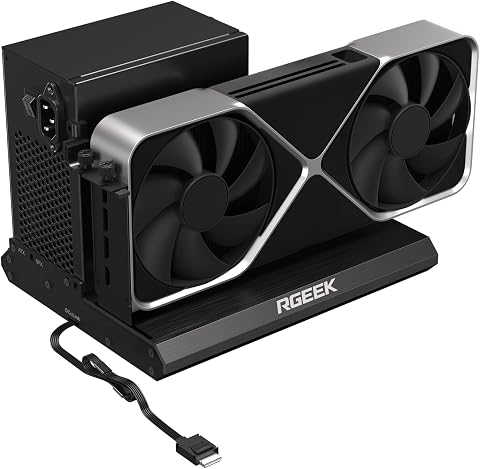 RGEEK OCuLink eGPU Dock PCIe 5.0 x4 for External Graphics CardView on Amazon →
 - 9
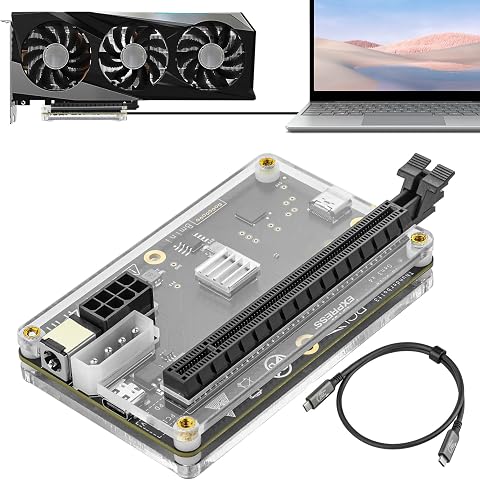 PCIe 3.0 x16 22Gbps eGPU Dock with Thunderbolt 4 Cable for Windows/LinuxView on Amazon →
 - 10
 OCuLink eGPU Dock, PCIe 4.0 x4 64Gbps, 19.7-inch SFF-8611 Cable, External GPU…View on Amazon →
Impact of eGPU Choices on AI Workflows in 2026
The selection of external GPUs in 2026 directly influences AI development and deployment. Reliable, high-capacity enclosures enable faster training, inference, and experimentation, especially for users with laptops or mini PCs that lack internal upgrade paths. As AI models grow more complex, the demand for high-performance graphics accelerators increases, making the right eGPU choice critical for researchers, developers, and enterprises. Compatibility and performance bottlenecks can hinder progress, so understanding the latest hardware options and standards is vital for maximizing productivity and ROI in AI projects.Evolution of External GPUs for AI in 2026
External GPUs have been evolving rapidly since their initial introduction, with 2026 marking a pivotal year as AI workloads become more demanding. Earlier models prioritized gaming, but recent developments focus on supporting high-end professional GPUs capable of handling large-scale AI training and inference. The adoption of Thunderbolt 4 and USB4 standards has improved data transfer speeds and compatibility, expanding the potential for AI accelerations outside traditional data centers. Major brands like Razer, ASUS, and MINISFORUM continue to innovate, balancing size, power, and thermal management to meet the diverse needs of AI practitioners. The market’s growth reflects a broader trend toward portable yet powerful computing solutions, especially as AI becomes integral across industries.Outstanding Questions on Compatibility and Future Upgrades
It is not yet clear how upcoming GPU architectures and evolving connectivity standards will impact eGPU compatibility and performance in 2026. While current models support most high-end cards, future hardware may introduce new requirements or bottlenecks. Additionally, some users report inconsistent performance with certain laptops due to BIOS or firmware limitations, which remain unresolved. The long-term durability of high-wattage enclosures under continuous AI workloads also warrants further testing, and the pace of technological innovation suggests that new form factors or standards could emerge within the year.Upcoming Releases and Standards for AI-Optimized eGPUs
Next steps include the release of new GPU architectures optimized for AI, such as NVIDIA’s upcoming Ada series and AMD’s RDNA 4, which may require updated enclosures with higher power support and improved thermal solutions. Industry standards like Thunderbolt 5 and USB4 Gen 3 are expected to enhance data speeds further, promoting broader compatibility and performance gains. Manufacturers are also likely to introduce more portable, high-capacity models tailored for AI developers, with features like integrated cooling and modular power supplies. Monitoring these developments will be essential for users planning to upgrade or purchase new eGPU setups in 2026.
Key Questions
Can I use an external GPU with any laptop for AI tasks?
No, compatibility depends mainly on the presence of Thunderbolt 3, Thunderbolt 4, or USB4 ports. Even with these ports, some laptops may have BIOS or firmware limitations that prevent external GPU use. Always verify your device’s specifications before purchasing an eGPU enclosure.
Is an external GPU worth it for AI development on a laptop?
For users running AI workloads that exceed internal GPU capabilities, an external GPU can significantly improve training and inference speeds. However, the benefits depend on connection standards, GPU support, and thermal management. It is most advantageous for professionals requiring high-performance computing without upgrading their entire system.
What is the best connection type for high-performance AI workloads?
Thunderbolt 3 and Thunderbolt 4 are currently the best options due to their high data transfer rates of up to 40Gbps. USB4 also offers promising performance but varies depending on device support. Choosing an eGPU enclosure supporting Thunderbolt standards ensures optimal performance for AI tasks.
How do I choose the right eGPU for my AI needs?
Assess your device’s supported connection standards, power requirements, and physical space. Consider your performance needs—whether portability or maximum GPU support—and balance these with your budget. Prioritize models with robust cooling and power delivery to handle demanding AI workloads effectively.
Source: ThorstenMeyerAI.com
Fall Picks
fall essentials
As an affiliate, we earn on qualifying purchases.