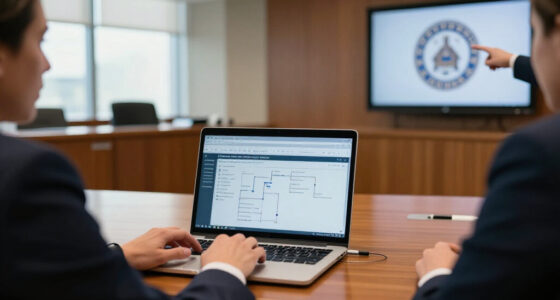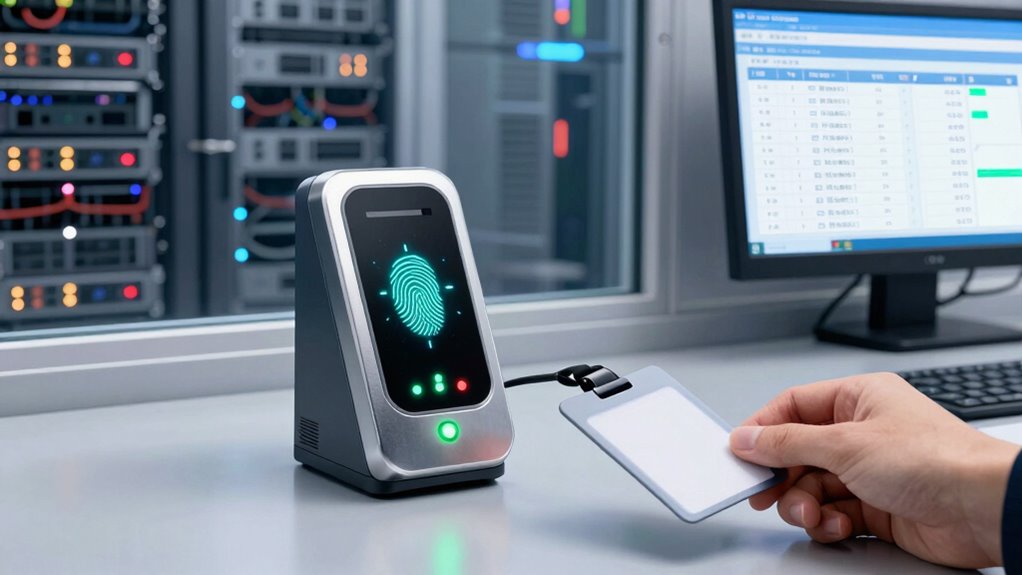

Badge systems, biometric locks, and audit trails work together to create a strong security framework. Badge systems provide quick access control using ID cards with embedded info, while biometric locks verify identities through unique physical traits like fingerprints or facial patterns. Audit trails record every access attempt, helping monitor activity and investigate incidents. When integrated properly, they form a resilient setup that prevents unauthorized access. Keep exploring to see how these elements combine for maximum protection.

Get business pricing on tech for your team
- Business-only prices and quantity discounts
- Tax-exempt purchasing
- Multiple users, one account, clear invoices
Key Takeaways
- Badge systems issue ID cards with embedded info for quick access verification and are cost-effective but rely on strict security protocols.
- Biometric locks use unique physical traits like fingerprints or facial recognition for nearly foolproof, real-time identity verification.
- Securing biometric data involves encryption and regular updates to prevent breaches and ensure privacy compliance.
- Audit trails log all access attempts, helping monitor activity, investigate incidents, and maintain accountability.
- An integrated security architecture combines badge systems, biometric locks, and audit trails for comprehensive asset protection.
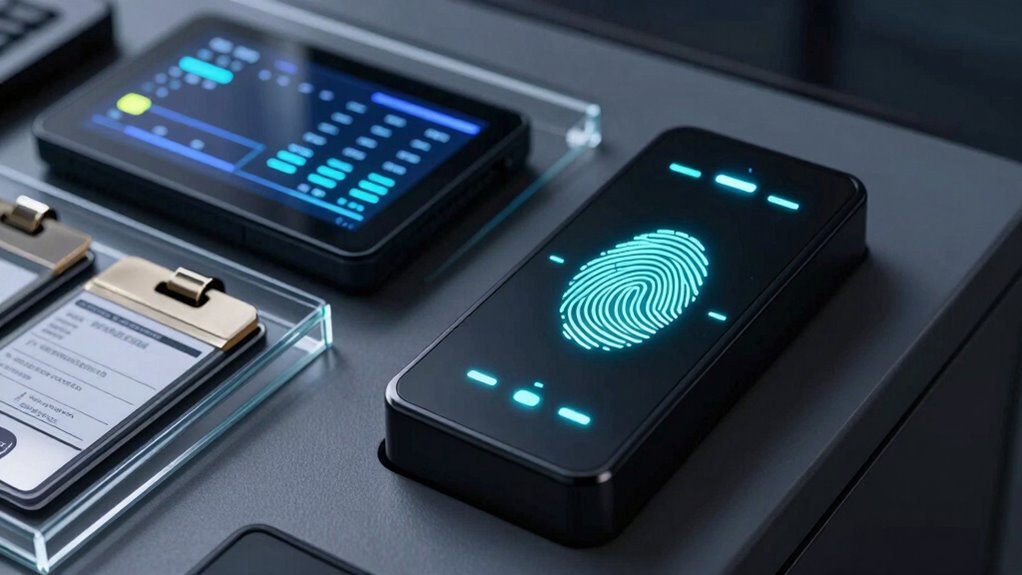
In today’s security landscape, badge systems, biometric locks, and audit trails play essential roles in protecting assets and guaranteeing authorized access. As someone responsible for security, you understand that implementing effective access control measures is fundamental to prevent unauthorized entry and maintain safety. Badge systems serve as a foundational tool in this effort. They typically involve issuing identification cards that employees or visitors must display to gain entry. These badges often contain embedded information like photo IDs, access levels, or barcodes, which security personnel or automated systems scan to verify identity quickly. Badge systems are straightforward and cost-effective, but they’re only as strong as the security protocols backing them. You need to guarantee that badge issuance, activation, and deactivation follow strict procedures to prevent badge theft or misuse.
Badge systems are essential, cost-effective tools that require strict procedures to prevent misuse and ensure security.
Moving beyond traditional badges, biometric locks introduce a new layer of security that relies on unique physical traits such as fingerprints, iris patterns, or facial recognition. When you use biometric locks, you’re leveraging the fact that these identifiers are nearly impossible to duplicate or forge. This makes unauthorized access considerably more difficult compared to traditional badge systems. Biometric authentication provides real-time verification, ensuring that the person requesting access is genuinely who they claim to be. As you implement biometric locks, it’s essential to follow security protocols around data privacy and storage, guaranteeing biometric data is protected against breaches. These systems often integrate with existing access control frameworks, creating a seamless barrier that only authorized individuals can surpass. Additionally, understanding the importance of biometric data security is vital to prevent misuse or theft of sensitive information. Implementing encryption protocols for biometric data adds an extra layer of protection against potential cyber threats. Furthermore, regularly updating biometric systems helps defend against emerging vulnerabilities and ensures ongoing security.
Audit trails are another key component of modern security strategies. They record every access attempt—successful or not—providing a detailed log of who entered where and when. As someone managing security, you depend on audit trails to monitor activity, identify suspicious behavior, and investigate incidents. These logs serve as digital footprints, helping you establish accountability and compliance with security standards. To maximize their effectiveness, you must guarantee audit trails are exhaustive, tamper-proof, and regularly reviewed. Automated alerts for unusual activity can also notify you of potential breaches before they escalate. Regular audits of these logs are crucial to ensure ongoing integrity and compliance with security policies. Properly maintained audit trails also support security compliance efforts and help in legal investigations if needed.
Altogether, integrating badge systems, biometric locks, and audit trails creates a resilient security architecture. You need to prioritize clear policies around access control, enforce strict security protocols, and keep systems updated to adapt to evolving threats. When these elements work in harmony, they form a formidable defense that safeguards your assets while maintaining smooth, authorized access for legitimate users.
As an affiliate, we earn on qualifying purchases.
Frequently Asked Questions
How Do Biometric Locks Handle False Acceptance or Rejection Rates?
Biometric locks manage false acceptance and rejection rates by calibrating their sensors and algorithms to balance security and convenience. When false acceptance occurs, the system minimizes such errors through advanced matching techniques and stricter thresholds. For false rejection, it improves accuracy with better data quality and adaptive learning. You can often adjust sensitivity settings to reduce these rates, ensuring the lock recognizes authorized users while blocking unauthorized access effectively.
What Are the Common Vulnerabilities of Badge Systems?
You should know that badge systems face vulnerabilities like potential credential management issues, which can lead to unauthorized access if badges are lost or stolen. Additionally, weak access control protocols may allow tailgating or impersonation. Hackers could also exploit system software vulnerabilities to bypass security. To mitigate these risks, you need robust credential management, regularly update access controls, and implement strong authentication measures to protect your facility effectively.
Can Audit Trails Be Manipulated or Tampered With?
Imagine a whisper of wind shifting a leaf—manipulating audit trails isn’t impossible. If you don’t safeguard data integrity and implement strong system encryption, someone could tamper with records. Hackers might alter logs or erase footprints, making it seem like genuine actions never happened. Without proper protections, audit trails become vulnerable, risking the accuracy of records. To prevent this, you must guarantee data integrity and use robust system encryption.
How Do Biometric Systems Comply With Privacy Regulations?
Biometric systems comply with privacy regulations by addressing privacy concerns through strict data handling practices. You’re protected because these systems use data encryption to secure your biometric information, preventing unauthorized access. Regulations require companies to obtain your consent and limit data storage duration. By implementing these measures, biometric systems guarantee your privacy is maintained while providing secure access controls, aligning with legal standards and building user trust.
What Is the Cost Difference Between These Security Systems?
Think of choosing a security system like selecting a vehicle; some are sleek sports cars, others reliable trucks. Biometric locks often cost more upfront due to advanced tech, while badge systems and audit trails usually have lower installation expenses. Your cost comparison depends on features and scale, but generally, biometric systems demand higher initial investment, whereas badge systems and audit trails offer more budget-friendly options with simpler installation processes.
As an affiliate, we earn on qualifying purchases.
Conclusion
So, after all this talk about badge systems, biometric locks, and audit trails, you’d think security is foolproof. But here’s the irony—you can have the most advanced tech, yet human error or clever hackers might still find a way in. It’s almost poetic how the very tools designed to keep you safe can sometimes be the weakest link. Ultimately, staying vigilant and adaptable is your best defense—because technology alone isn’t foolproof.
As an affiliate, we earn on qualifying purchases.
biometric facial recognition lock
As an affiliate, we earn on qualifying purchases.
As an affiliate, we earn on qualifying purchases.
Fall Picks
fall essentials
As an affiliate, we earn on qualifying purchases.