

You often underestimate how survey methodology biases your CSAT scores. Factors like poorly designed questions, biased timing, and selective distribution skew results and hide real issues. Response bias inflates or deflates scores, masking true customer sentiment. If you ignore these flaws, you might trust inaccurate data. By understanding these biases, you can uncover the real picture behind your scores. Keep going, and you’ll discover ways to improve your feedback process and get more reliable insights.

Get tech for your team delivered free — and shop member deals
- Fast, free delivery on millions of items
- Access to Prime Big Deal Days deals on October 6–7
- Prime Video, Amazon Music and more included
Key Takeaways
- Survey design and question phrasing can lead to unintentional bias in CSAT scores.
- Response bias from customers with extreme opinions often skews satisfaction metrics.
- Timing of surveys post-interaction influences the authenticity of customer feedback.
- Selective survey distribution may not accurately represent the entire customer base.
- Teams may underestimate bias effects, leading to overconfidence in inflated CSAT results.
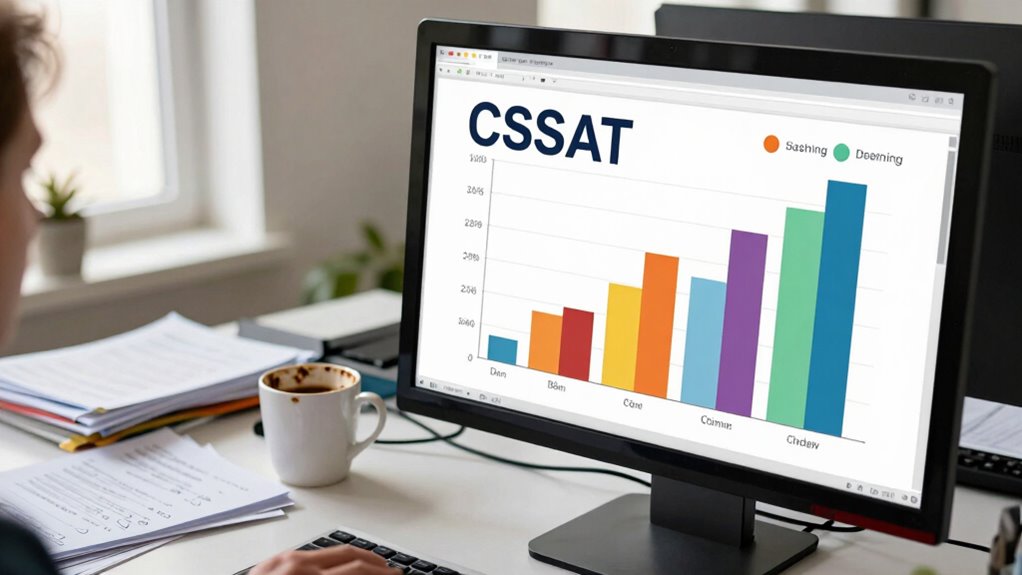
Customer Satisfaction (CSAT) scores are often considered reliable indicators of a team’s performance, but behind the scenes, they may be more biased than companies admit. When you rely on these scores to gauge success, it’s essential to understand how survey methodology influences the results. The way surveys are designed, distributed, and analyzed can considerably distort the true picture of customer sentiment. For example, if surveys are only sent to a select group or timed at specific moments, the data may not accurately reflect the broader customer experience. This selective approach can introduce response bias, skewing results in a way that favors positive feedback or masks underlying issues.
Survey timing and selectivity can distort CSAT results, hiding true customer sentiment and masking underlying issues.
Response bias is a common problem that can distort CSAT scores more than you might realize. Customers who have strong feelings—either very positive or very negative—are more likely to respond than those with neutral opinions. This self-selection creates a biased sample that doesn’t represent the full customer base. If most respondents are those with extreme experiences, your CSAT scores could appear artificially high or low, leading you to make decisions based on incomplete data. Recognizing response bias is essential for understanding the limitations of your survey data and avoiding overconfidence in the scores. Additionally, understanding the influence of survey design**** can help organizations craft questions that elicit more genuine responses.
The way you craft your survey questions also impacts response bias. Leading or ambiguous questions can influence how customers respond, either encouraging overly positive or overly negative feedback. Additionally, the timing of your survey matters—sending it immediately after a positive interaction might yield better scores than waiting until a customer’s experience has faded or they’ve encountered issues elsewhere. Ignoring these factors in your survey methodology risks inflating or deflating your CSAT scores, giving you a distorted view of performance. Understanding how survey methodology influences results is crucial for accurate interpretation. A deeper understanding of response bias can help organizations develop better strategies to gather authentic feedback. Moreover, implementing robust data collection practices can mitigate some of these biases and lead to more reliable insights.
Customer Satisfaction Survey Design Tools
As an affiliate, we earn on qualifying purchases.
As an affiliate, we earn on qualifying purchases.
Frequently Asked Questions
How Do Bias Issues in CSAT Scores Affect Overall Customer Experience?
Bias issues in CSAT scores can distort customer perception, making it seem like your team performs better or worse than it truly does. This affects data integrity, leading you to make decisions based on inaccurate insights. As a result, you might overlook areas needing improvement or over-invest in strengths. Addressing bias helps guarantee your customer feedback accurately reflects experiences, allowing you to enhance overall customer satisfaction and build trust.
Are Certain Industries More Prone to CSAT Bias Than Others?
Like a 19th-century telegraph, industry variations and cultural influences shape CSAT biases greatly. You’ll find sectors like hospitality or retail more prone to bias due to personal interactions, while tech industries might be less affected. Cultural influences also play a role, as customer expectations differ globally. Recognizing these factors helps you interpret CSAT scores more accurately, ensuring you address genuine concerns rather than skewed perceptions.
What Methods Are Used to Identify Bias in CSAT Data?
You can identify bias in CSAT data through methods like data normalization, which adjusts scores for comparison, and examining survey design to spot leading questions or timing issues. Analyzing response patterns helps reveal inconsistencies or skewed results. By scrutinizing these aspects, you guarantee your data reflects genuine customer sentiment rather than biased responses, allowing for more accurate insights and better decision-making.
Can Bias in CSAT Scores Be Completely Eliminated?
You can’t completely eliminate bias in CSAT scores because customer perception shapes data accuracy. While you can implement rigorous methods to reduce bias, some influences are inevitable due to subjective experiences. Aiming for the most objective data helps, but understanding that perception varies means some bias remains. Ultimately, continuous monitoring and refining your approach improve insights, even if perfection remains out of reach.
How Do Biased CSAT Scores Impact Employee Evaluations?
Biased CSAT scores can negatively impact your employee evaluations by skewing performance metrics, which may lead to unfair assessments. This can hurt employee morale, making team members feel undervalued or misunderstood. If the scores aren’t accurate, decisions based on this data become unreliable, affecting promotions or rewards. To maintain fairness, it’s essential to recognize biases and guarantee data accuracy, fostering a more motivated and transparent work environment.
CSAT Response Bias Mitigation Software
As an affiliate, we earn on qualifying purchases.
As an affiliate, we earn on qualifying purchases.
Conclusion
So, next time you see a team proudly claiming their CSAT scores are flawless, ask yourself—are they truly revealing the whole story? Bias in customer satisfaction surveys isn’t just an occasional slip; it’s more common than many admit. If we accept this, how can we genuinely trust the metrics that shape our decisions? Remember, transparency often begins with questioning what’s right in front of us.
Customer Feedback Collection Devices
As an affiliate, we earn on qualifying purchases.
As an affiliate, we earn on qualifying purchases.
Survey Question Validation Tools
As an affiliate, we earn on qualifying purchases.
As an affiliate, we earn on qualifying purchases.
Halloween Picks
halloween
As an affiliate, we earn on qualifying purchases.