

To guarantee your customers truly understand your SLA, use simple, everyday language instead of technical jargon. Be specific with timelines, metrics, and service commitments, avoiding vague phrases that can create confusion. Incorporate visual aids like charts or bullet points to highlight key points clearly. Clear, straightforward communication builds trust, reduces misunderstandings, and strengthens your relationship. Want practical tips to make your SLA crystal clear? Keep exploring to find out how you can perfect your approach.

Get business pricing on tech for your team
- Business-only prices and quantity discounts
- Tax-exempt purchasing
- Multiple users, one account, clear invoices
Key Takeaways
- Use simple, everyday language instead of technical jargon.
- Clearly define service levels with concrete metrics and timelines.
- Highlight key commitments using bullet points or visual elements.
- Avoid vague phrases; specify exclusions and limitations explicitly.
- Present information in a clear, structured format for quick comprehension.
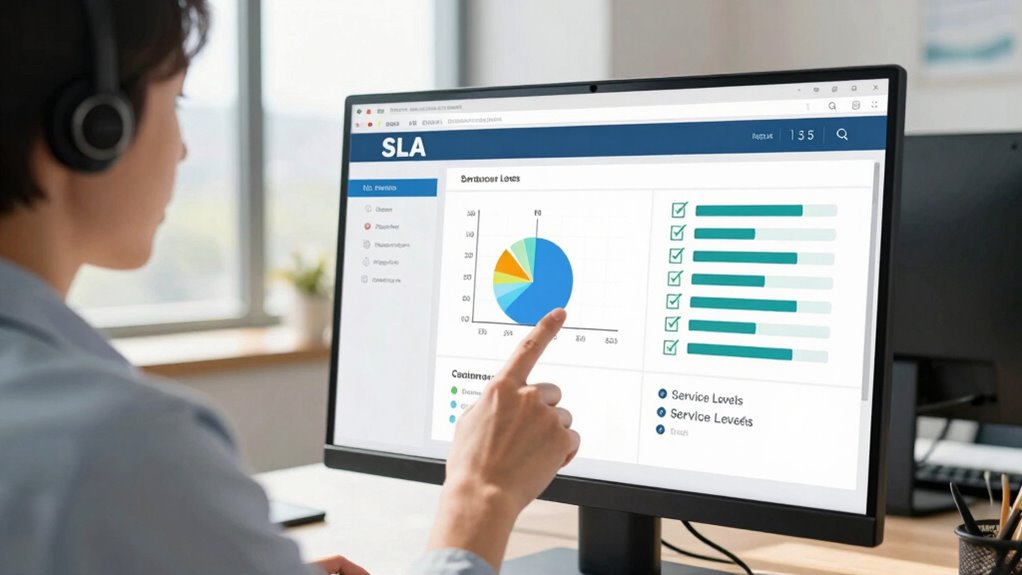
Have you ever wondered if your customers truly understand the Service Level Agreement (SLA) language you use? It’s a common concern because, all too often, SLA documents become dense, filled with technical jargon that leaves your clients feeling confused rather than confident. Achieving service transparency is essential here; it’s about making sure your customers see clearly what they’re signing up for and what to expect. If your SLA language isn’t straightforward, you risk misunderstandings, unmet expectations, and strained relationships. To foster trust, you need your customers to grasp the core commitments without having to decipher complex legalese.
Simplify your SLA language to build trust, ensure clarity, and strengthen customer relationships through transparency.
Clear communication is key to expectation clarity. When your SLA language is simple, direct, and easily understandable, your clients know exactly what services they’ll receive, how and when they’ll receive them, and what’s not included. Instead of vague statements like “reasonable efforts will be made,” specify concrete timelines or performance metrics. This way, expectations are set upfront, and there’s less room for disputes or disappointment later. Remember, your goal is for your clients to walk away with a clear picture—no guesswork, no ambiguity.
Using plain language doesn’t mean sacrificing professionalism; it means prioritizing your customers’ understanding. Avoid industry jargon and technical terms unless you’ve explicitly explained them. Instead, opt for everyday language that resonates with your audience. For example, rather than saying “service levels shall be maintained in accordance with KPI benchmarks,” say “we will respond to your support requests within 24 hours, five days a week.” This approach makes the SLA accessible and builds confidence that you’re transparent about your commitments.
Incorporate visual elements where possible, like charts or bullet points, to highlight key points. Visuals help break down complex information into digestible pieces, reinforcing service transparency and expectation clarity. When your clients see their responsibilities and your commitments laid out clearly, they’re more likely to trust your organization and feel assured about the service quality they’ll receive.
Ultimately, the language you choose makes a significant difference. When your SLA communicates openly and plainly, it demonstrates your dedication to service transparency. It shows your customers that you respect their need for clarity and that you’re committed to meeting their expectations. As a result, you’ll foster stronger relationships built on understanding, trust, and mutual accountability. Clear, straightforward language isn’t just good communication; it’s a strategic tool to ensure your customers genuinely understand what they’re getting—and that’s the foundation of a successful service agreement. A focus on service transparency can significantly improve client satisfaction and loyalty.
As an affiliate, we earn on qualifying purchases.
Frequently Asked Questions
How Can I Customize My SLA to Fit My Business Needs?
You can customize your SLA by clearly defining your specific business needs and incorporating service customization options that match those needs. Focus on setting measurable performance metrics, tailored response times, and support levels that align with your operations. Regularly review and update the SLA to reflect any changes in your business, ensuring your service agreements remain relevant and effective. This proactive approach helps you deliver better value and maintain strong customer satisfaction.
What Common SLA Mistakes Should I Avoid as a Customer?
You should avoid overlooking clear service metrics and escalation procedures, or you might find yourself stuck in confusion during issues. It’s easy to assume everything is covered, but vague metrics or vague escalation steps can delay resolution. Always guarantee your SLA clearly defines measurable service standards and explicit escalation paths. This way, you prevent misunderstandings, hold providers accountable, and keep your business running smoothly without unexpected surprises.
How Do SLA Penalties Impact Service Quality?
Penalty enforcement in SLAs directly impacts service quality by ensuring accountability. When penalties are clearly defined and enforced, you hold providers responsible for shortcomings, motivating them to maintain high standards. This focus on service accountability encourages consistent performance, reducing downtime and issues. Ultimately, strict penalty enforcement leads to better service quality, as providers have a tangible incentive to meet or exceed the agreed-upon service levels.
What Are the Key Terms Customers Should Look for in an SLA?
You should look for clear service level metrics and performance benchmarks in your SLA. These terms specify what service levels you can expect and how performance is measured. Confirm that penalties or remedies are outlined if benchmarks aren’t met. A transparent SLA helps you understand your rights, guarantees reliable service, and makes it easier to evaluate if the provider meets their commitments. Clarity here keeps everyone accountable.
How Often Should an SLA Be Reviewed and Updated?
You should review and update your SLA regularly, ideally every 6 to 12 months, to ensure it reflects current service metrics and business needs. During contract renewal, it’s vital to revisit the SLA to address any changes in performance expectations or emerging issues. Regular updates help maintain clear communication, improve service quality, and prevent misunderstandings, guaranteeing both parties stay aligned and satisfied with the agreement.
customer service agreement bullet point templates
As an affiliate, we earn on qualifying purchases.
As an affiliate, we earn on qualifying purchases.
Conclusion
By speaking your customers’ language, you plant seeds of trust that grow strong roots over time. When your words shine like a guiding lighthouse in a storm, customers feel safe and understood, knowing their needs are met. Clear, relatable communication isn’t just a promise—it’s the anchor that keeps your relationship steady amid changing tides. Embrace simplicity and honesty; it’s the beacon that turns fleeting interactions into lasting bonds.
As an affiliate, we earn on qualifying purchases.
service level agreement explanation book
As an affiliate, we earn on qualifying purchases.
As an affiliate, we earn on qualifying purchases.
Halloween Picks
halloween
As an affiliate, we earn on qualifying purchases.