For support agents, keep customer communication, tickets, or chat windows on one screen so you can respond quickly without switching apps. Use the second monitor for reference materials, diagnostic tools, and FAQs to troubleshoot efficiently. Position your workflow to minimize movement and avoid clutter. Properly calibrated monitors reduce eye strain, helping you stay comfortable during long shifts. Want to optimize your setup even more? Keep exploring to discover key tips that make your work smoother.

Get business pricing on tech for your team
- Business-only prices and quantity discounts
- Tax-exempt purchasing
- Multiple users, one account, clear invoices
Key Takeaways
- Display active customer communication, tickets, and chat windows on the primary screen for easy management.
- Keep reference materials, diagnostic tools, and knowledge bases on the secondary monitor for quick access.
- Position frequently used applications and tools centrally to streamline troubleshooting workflows.
- Tuck secondary references and less critical apps to the sides to reduce visual clutter.
- Calibrate monitors for consistent color and brightness, ensuring comfortable viewing during extended support sessions.
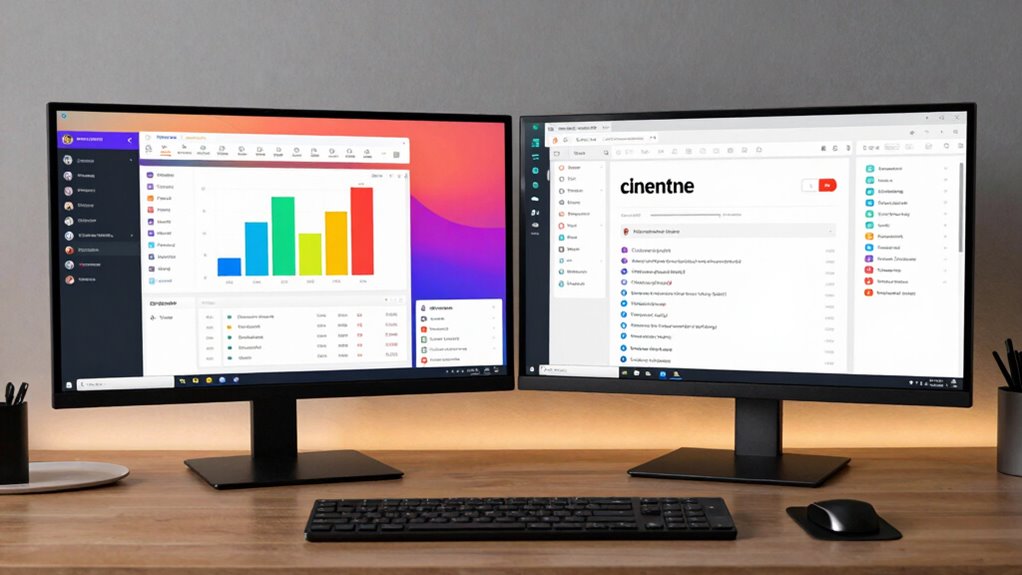
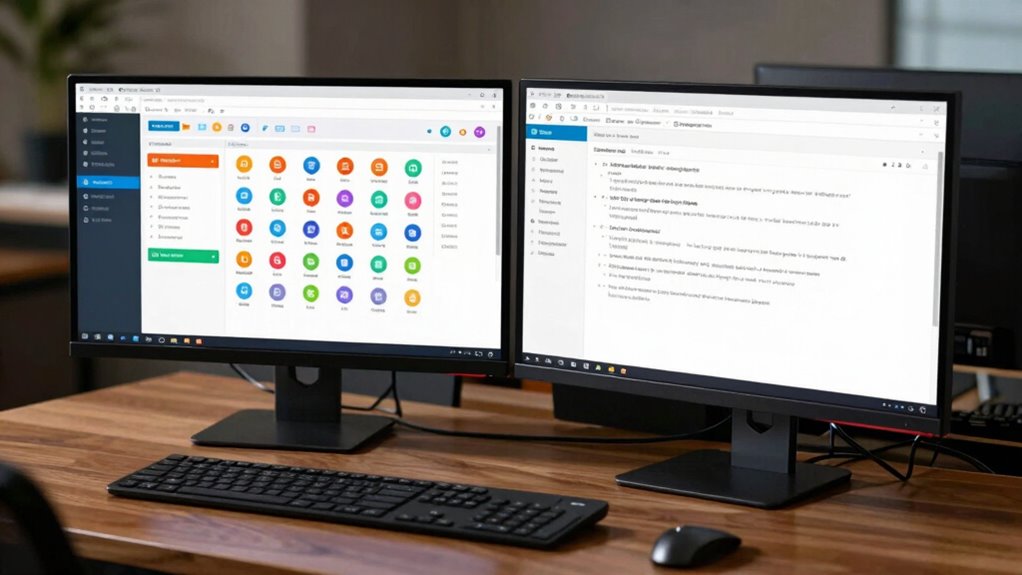
Using dual monitors can markedly boost your efficiency as a support agent by allowing you to manage multiple tasks simultaneously. To make the most of this setup, you need to focus on creating an ergonomic setup that minimizes strain and maximizes comfort. Position your monitors at eye level so your neck stays straight, and keep them about an arm’s length away to reduce eye strain. Proper monitor calibration is also essential; guarantee your screens display accurate colors and brightness levels to prevent eye fatigue and improve visibility. When your monitors are calibrated correctly, you’ll find it easier to read fine details in logs, support tickets, or troubleshooting diagrams, making your work more accurate and less frustrating.
Optimal dual monitor setup enhances support efficiency, reduces eye strain, and improves task accuracy through proper positioning and calibration.
On one screen, you should keep your main support ticket or customer communication window open. This is where you’ll handle the ongoing conversations, track issues, and respond to customer queries. By dedicating a specific monitor to active communication, you avoid clutter and can monitor chats or emails without switching windows constantly. The second monitor becomes your workspace for reference materials, knowledge bases, or diagnostic tools. Having these resources readily available helps you troubleshoot faster and reduces the need to switch between tabs or applications, which can break your focus and slow you down. Additionally, ensuring your workspace is ergonomically optimized can help prevent discomfort during long shifts and maintain your productivity. Being mindful of visual workflow**** and how you arrange your applications can further enhance your efficiency.
You also want to balance your workload visually. For example, if you’re troubleshooting a problem, keep the customer’s issue details on one screen, and your diagnostic or remote access tools on the other. This setup allows you to cross-reference information swiftly, which improves resolution times and customer satisfaction. When configuring your dual monitors, consider the flow of your tasks and arrange applications accordingly. Keep frequently used tools front and center, while secondary references or less critical windows can be tucked to the sides. This minimizes unnecessary movement and keeps your workflow smooth. Additionally, proper monitor calibration ensures that your visual environment is comfortable, reducing eye strain and fatigue over long shifts. Remember that monitor calibration involves adjusting brightness, contrast, and color settings to match your working environment, which contributes significantly to visual comfort.
As an affiliate, we earn on qualifying purchases.
Frequently Asked Questions
How Do Dual Monitors Improve Support Agent Productivity?
Dual monitors boost your productivity by creating an ergonomic workspace that reduces strain and enhances focus. You can easily customize your software layouts, dedicating one screen to customer chats and the other to troubleshooting tools or knowledge bases. This setup minimizes toggling between windows, speeds up response times, and keeps your workspace organized, enabling you to assist customers more efficiently and comfortably.
What Are the Best Monitor Sizes for Support Agents?
In this game of size matters, 24 to 27 inches often hit the sweet spot for support agents. These sizes provide ample screen real estate without overwhelming your workspace. Opt for high monitor resolution, like 1080p or 1440p, to keep visuals crisp. Pair your monitor with ergonomic accessories, like adjustable stands, to reduce strain. This combo helps you stay productive and comfortable, making your workday smoother from start to finish.
How Do I Set up Dual Monitors Quickly?
To set up dual monitors quickly, start by connecting each monitor with the appropriate cables, guaranteeing proper cable management to avoid tangles. Turn on both screens and access your display settings to calibrate each monitor for color consistency. Adjust the display arrangement to match your workspace layout. This efficient setup minimizes clutter, enhances productivity, and ensures your monitors are calibrated for a seamless viewing experience.
Are There Specific Monitor Brands Recommended for Support Roles?
Imagine Sarah, a support agent, switching to Dell UltraSharp monitors; they’re reliable, offer excellent monitor calibration, and come with ergonomic accessories like adjustable stands. Brands like Dell, LG, and ASUS are recommended for support roles because they prioritize color accuracy, durability, and ergonomic design. Choosing these brands helps you reduce eye strain and boost productivity, ensuring your workspace stays comfortable and efficient during long support sessions.
How Do I Prevent Eye Strain With Dual Monitor Setups?
To prevent eye strain with dual monitors, you should use ergonomic accessories like adjustable monitor stands and anti-glare filters to reduce glare and improve comfort. Make certain to calibrate your screens regularly to guarantee consistent brightness and color, which minimizes eye fatigue. Additionally, follow the 20-20-20 rule—every 20 minutes, look at something 20 feet away for at least 20 seconds—to give your eyes a break.
As an affiliate, we earn on qualifying purchases.
Conclusion
Using dual monitors can boost your efficiency, allowing you to handle support tickets and access resources simultaneously. In fact, support agents with dual screens report a 15% increase in productivity. By strategically placing essential tools on one screen and communication channels on the other, you streamline your workflow and reduce errors. Embracing this setup not only enhances your performance but also improves customer satisfaction, making it a smart investment for any support team.
adjustable monitor arm for dual screens
As an affiliate, we earn on qualifying purchases.
As an affiliate, we earn on qualifying purchases.
As an affiliate, we earn on qualifying purchases.
Halloween Picks
halloween
As an affiliate, we earn on qualifying purchases.