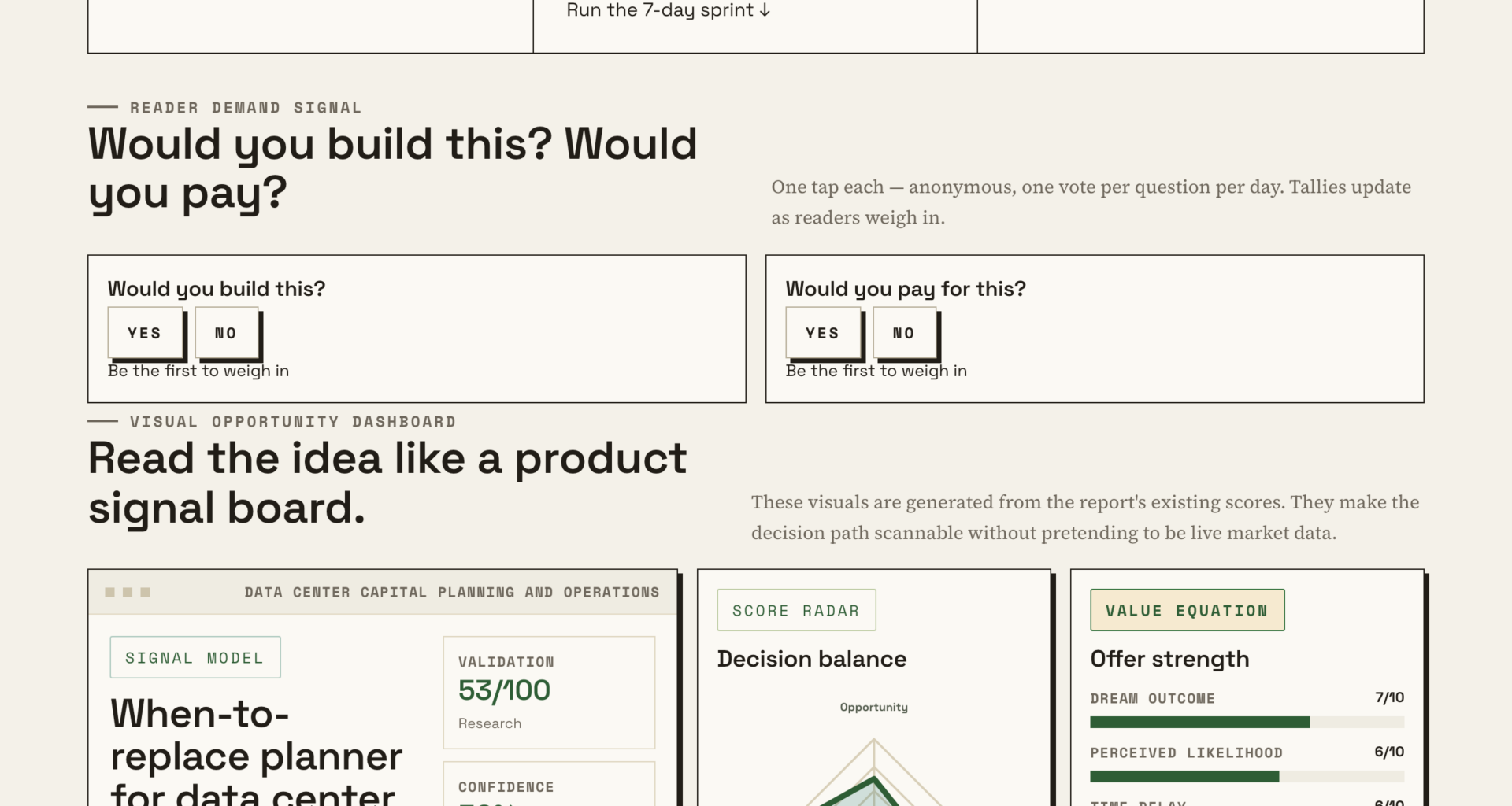

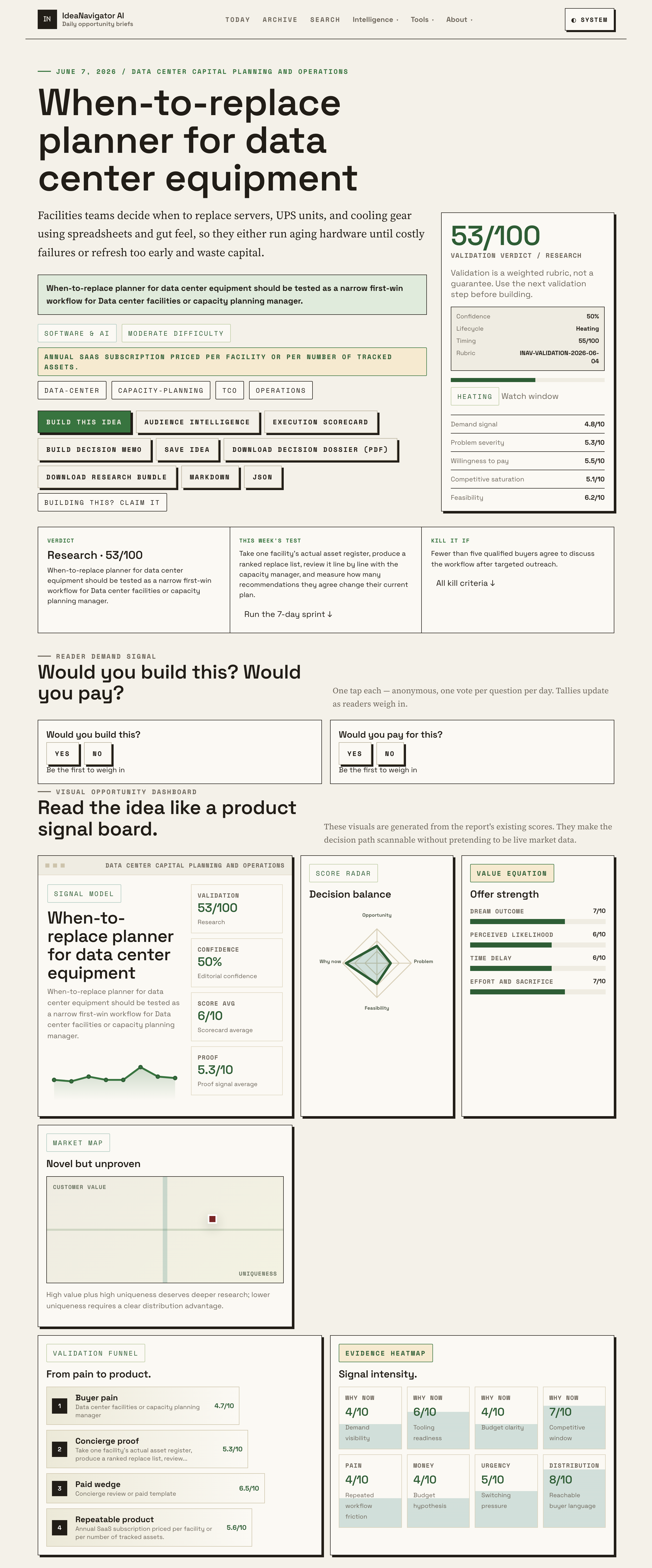
📊 Full opportunity report: Key Signs It's Time To Replace Your Data Center Equipment on IdeaNavigator AI — validation score, market gap, and execution plan.

Get business pricing on tech for your team
- Business-only prices and quantity discounts
- Tax-exempt purchasing
- Multiple users, one account, clear invoices
TL;DR
Data center facilities managers can now identify when hardware needs replacement using a new predictive planner. This development aims to improve decision-making amid rising energy costs and aging infrastructure, reducing costly failures and capital waste.
Data center facilities managers now have a new tool to identify when hardware should be replaced, based on asset age, energy consumption, and failure risk. This development aims to optimize equipment lifecycle decisions amid rising operational costs and aging infrastructure, making replacement timing more data-driven and less reliant on intuition.
The new planner ingests a facility’s asset list, including data on age, power draw, and maintenance costs, then produces a ranked list of equipment to replace. It compares the rising costs of energy and potential failures against the efficiency gains of newer hardware. This approach helps facilities teams avoid running aging equipment until failure or prematurely replacing hardware, which can waste capital.
According to sources familiar with the project, validation involves applying the planner to a real facility’s asset register, reviewing the recommendations with the capacity manager, and measuring alignment with current replacement plans. Early testing shows promising agreement, suggesting the tool could significantly improve capital planning accuracy.
Why Data-Driven Replacement Planning Matters
This development matters because it addresses a key challenge for data center operations: deciding the optimal time to replace aging hardware. As energy costs rise and hardware becomes more efficient, making informed replacement decisions can reduce operational expenses and prevent costly failures. The new planner offers a scalable, data-driven approach that could transform how facilities manage equipment lifecycles, potentially saving millions annually across the industry.
As an affiliate, we earn on qualifying purchases.
Growing Pressure on Data Center Equipment Replacement Decisions
Traditionally, facilities teams relied on spreadsheets and gut instinct to determine when to replace servers, UPS units, and cooling systems. However, rising energy costs and increasing hardware complexity have made these decisions more difficult. Hardware now lasts longer but becomes less efficient over time, and failures can lead to significant downtime and costs. The new planner aims to fill this gap by providing a systematic, data-based method for replacement scheduling, a step forward in data center capacity planning.
“The replacement planner offers a more precise way to balance energy costs and failure risks, helping facilities managers make better-informed decisions.”
— an anonymous researcher
As an affiliate, we earn on qualifying purchases.
Uncertainties About Adoption and Effectiveness
It is not yet clear how widely the replacement planner will be adopted across the industry or how accurately it will predict optimal replacement timing in diverse data center environments. Further testing and validation are ongoing, and results may vary depending on facility size, hardware types, and operational practices.
As an affiliate, we earn on qualifying purchases.
Next Steps for Validation and Industry Adoption
The next phase involves applying the planner to multiple facilities to assess its accuracy and usability. Facilities managers will compare recommendations with current plans and operational outcomes. If successful, the tool could be commercialized as a SaaS product, with ongoing updates to improve predictive accuracy and user experience. Widespread industry adoption will depend on demonstrated cost savings and ease of integration into existing workflows.
energy-efficient data center cooling systems
As an affiliate, we earn on qualifying purchases.
As an affiliate, we earn on qualifying purchases.
Key Questions
How does the replacement planner determine when equipment should be replaced?
The planner analyzes data on asset age, energy consumption, maintenance costs, and failure risk to generate a ranked list of equipment that should be replaced now versus later, based on economic and operational factors.
Can this tool be used for all types of data center hardware?
The initial focus is on servers, UPS units, and cooling equipment. Its effectiveness for other hardware types will depend on data availability and validation results during ongoing testing.
What are the main benefits of using this replacement planner?
It helps facilities managers make more accurate, data-driven decisions, reducing unnecessary capital expenditure and preventing costly failures by timing replacements more precisely.
When will this tool be available for general use?
The product is currently in testing with early adopters. A commercial launch could occur within the next year if validation proves successful.
What are the limitations of the current version?
Its accuracy depends on the quality of input data and the specific characteristics of each facility. Further validation is needed to confirm its effectiveness across diverse environments.
Source: IdeaNavigator AI
Fall Picks
fall essentials
As an affiliate, we earn on qualifying purchases.