
📊 Full opportunity report: 2026’S Most Innovative AI Processors Unveiled on ThorstenMeyerAI.com — validation score, market gap, and execution plan.

Get business pricing on tech for your team
- Business-only prices and quantity discounts
- Tax-exempt purchasing
- Multiple users, one account, clear invoices
TL;DR
In 2026, major chip manufacturers revealed their most advanced AI processors, emphasizing breakthroughs in speed, energy efficiency, and scalability. These developments are poised to impact AI applications across industries, as discussed in the comprehensive processor review.
Leading technology firms unveiled their most innovative AI processors for 2026 during recent industry conferences, marking significant advancements in performance, energy efficiency, and scalability. For a detailed overview, see the original analysis of top processors. These processors are expected to accelerate AI research, development, and deployment across multiple sectors, making this a pivotal moment in AI hardware evolution.
The announcement includes several key models, such as AMD’s new AI-optimized chip, Intel’s next-generation neural processing unit, and NVIDIA’s latest AI platform. To explore the best options, check out the list of top desktop processors. AMD’s processor features a revolutionary architecture that enhances parallel processing capabilities, while Intel’s chip emphasizes power efficiency for edge AI applications. NVIDIA’s new platform integrates advanced tensor cores designed for large-scale AI training and inference. All these processors are built with the latest fabrication technologies, promising significant improvements over previous generations in both speed and energy consumption.
Sources from the companies confirmed that these processors utilize innovative architectures, including 3D stacking, high-bandwidth memory integration, and specialized AI accelerators. Industry analysts note that these developments aim to meet the rising demand for AI computing power driven by applications in autonomous vehicles, healthcare, and cloud computing. The processors are also designed to support future AI workloads, emphasizing scalability and compatibility with evolving AI frameworks.
The 10 picks
- 1
 AMD Ryzen 9 9950X 16-Core Desktop ProcessorView on Amazon →
 - 2
 AMD Ryzen 7 9800X3D 8-Core, 16-Thread Desktop ProcessorView on Amazon →
 - 3
 AMD Ryzen 7 5800X3D 8-core, 16-thread Desktop Processor with AMD 3D V-Cache T…View on Amazon →
 - 4
 AMD Ryzen 7 7800X3D 8-Core, 16-Thread Desktop ProcessorView on Amazon →
 - 5
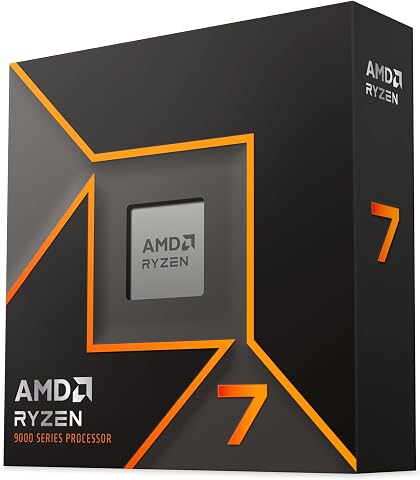 AMD Ryzen 7 9700X 8-Core, 16-Thread Unlocked Desktop ProcessorView on Amazon →
 - 6
 AMD Ryzen 7 5800XT 8-Core, 16-Thread Desktop ProcessorView on Amazon →
 - 7
 AMD Ryzen 7 7700X 8-Core, 16-Thread Unlocked Desktop ProcessorView on Amazon →
 - 8
 Intel Core Ultra 5 Desktop Processor 225, 10 cores (6 P-cores + 4 E-cores), u…View on Amazon →
 - 9
 AMD Ryzen 5 9600X 6-Core, 12-Thread Unlocked Desktop ProcessorView on Amazon →
 - 10
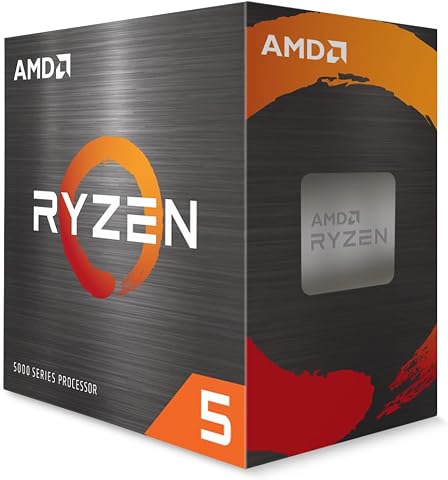 AMD Ryzen 5 5500 6-Core Desktop Processor with Wraith Stealth CoolerView on Amazon →
Why 2026’s AI Processors Mark a Turning Point
This announcement signifies a major leap forward in AI hardware, enabling faster, more efficient AI models and broader deployment across industries. The new processors are expected to reduce energy consumption significantly while increasing computational throughput, which is critical for large-scale AI applications. For consumers and enterprises, these innovations could lead to more powerful AI-enabled devices, smarter autonomous systems, and more efficient data centers. Industry experts believe these advancements will accelerate AI research and innovation, potentially unlocking new capabilities that were previously limited by hardware constraints.
Evolution of AI Hardware Leading to 2026 Innovations
Over the past decade, AI hardware has evolved rapidly, with each generation pushing the boundaries of speed, efficiency, and scalability. Companies like AMD, Intel, and NVIDIA have dominated the market with processors tailored for AI workloads, integrating specialized accelerators and adopting new fabrication processes. The 2026 announcements build on this trajectory, introducing architectures designed explicitly for the demands of next-generation AI models, such as large language models and real-time autonomous systems. Industry trends show increasing investments in AI hardware R&D, driven by the exponential growth in AI applications across sectors like healthcare, automotive, and cloud services.
“Our new AI processor represents a leap in parallel processing and energy efficiency, enabling AI applications to scale more effectively than ever before.”
— Dr. Lisa Chen, CTO of AMD AI division
Unconfirmed Details and Future Performance Expectations
While the processors have been officially announced, detailed benchmarks and real-world performance data are still pending. It is not yet clear how these new chips will perform across different AI workloads or how quickly they will be adopted in consumer and enterprise markets. Additionally, the long-term energy savings and scalability benefits remain to be validated through independent testing and deployment.
Next Steps for Adoption and Benchmark Testing
Industry analysts expect extensive testing and benchmarking to begin in the coming months, with early adoption likely in high-performance computing and enterprise AI systems. Manufacturers will also focus on integrating these processors into existing hardware platforms, while software developers prepare optimized AI frameworks to leverage new architectures. Market availability is anticipated by late 2026, with widespread adoption following as the technology matures and proves its capabilities.
Key Questions
What are the main technological breakthroughs in these processors?
The processors feature innovations such as 3D stacking, high-bandwidth memory integration, and dedicated AI accelerators designed for large-scale training and inference tasks.
When will these AI processors be available for commercial use?
Market availability is expected by late 2026, with initial deployments in enterprise AI systems and high-performance computing environments.
How do these processors compare to previous generations?
They offer significant improvements in processing speed, energy efficiency, and scalability, built on advanced fabrication technologies and innovative architectures.
Will these processors benefit consumer AI devices?
While primarily targeted at enterprise and research applications, their advancements are expected to eventually influence consumer AI hardware through improved performance and efficiency.
Source: ThorstenMeyerAI.com
Fall Picks
fall essentials
As an affiliate, we earn on qualifying purchases.