📊 Full opportunity report: Home signal monitor: Mortgage Rates Inch to Another 6-Week Low on IdeaNavigator AI — validation score, market gap, and execution plan.

Get business pricing on tech for your team
- Business-only prices and quantity discounts
- Tax-exempt purchasing
- Multiple users, one account, clear invoices
TL;DR
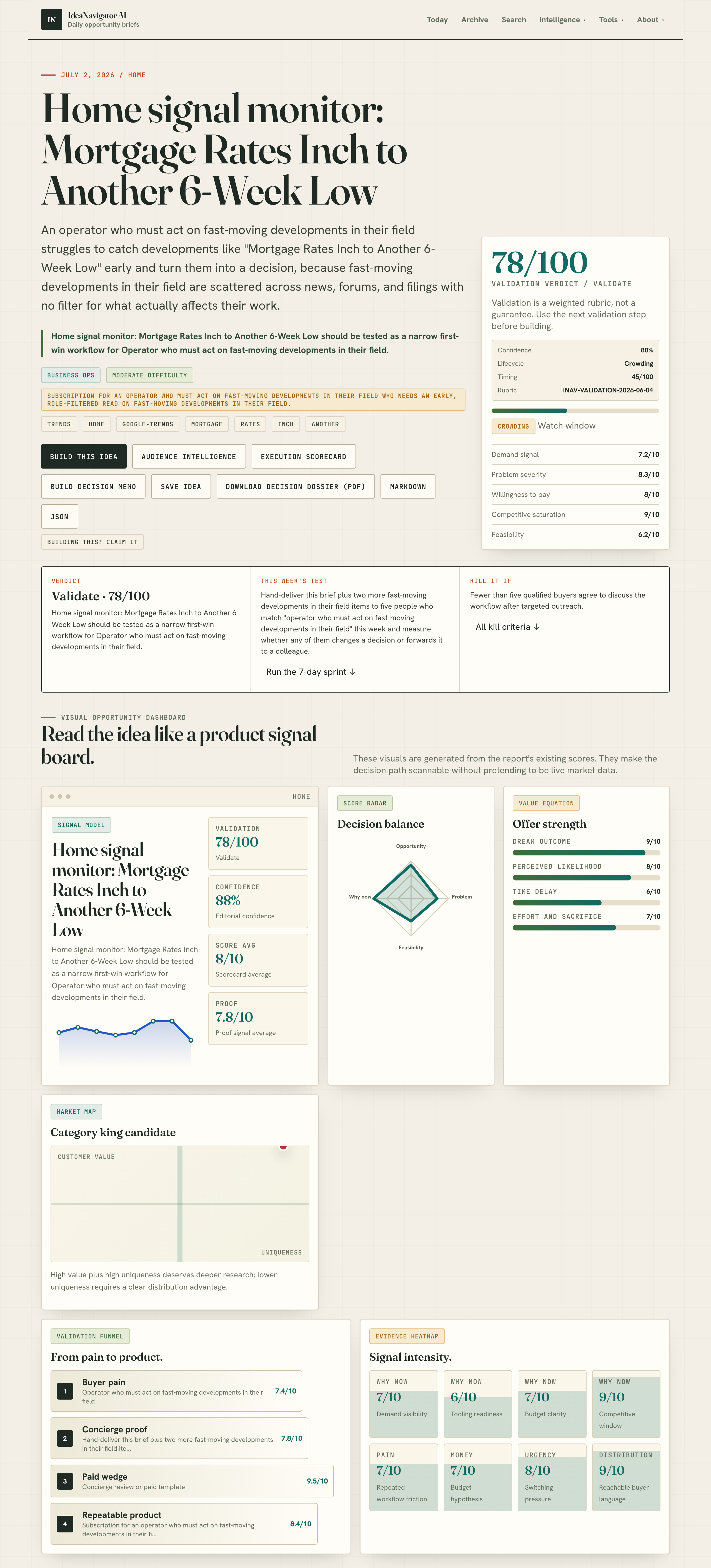
Mortgage rates have decreased to a six-week low, reflecting easing borrowing costs. This development is confirmed and may influence housing market activity in the near term.
Mortgage rates have declined to their lowest point in six weeks, according to recent market data, signaling a potential easing in borrowing costs for homebuyers. This movement is confirmed by multiple financial sources and is significant for the housing market and mortgage lending trends.
Data from financial market trackers show that the average 30-year fixed mortgage rate has edged down to approximately 6.1%, the lowest level since early March. Experts attribute this decline to recent shifts in bond yields and broader economic indicators, although the exact cause remains subject to market interpretation.
Market analysts note that this decrease follows a period of volatility in mortgage rates, which had peaked in late February. The decline has been confirmed by industry sources, including mortgage lenders and financial news outlets, and is not based on speculation or unverified claims.
While the rate drop is confirmed, it is still uncertain how sustained this trend will be, as mortgage rates are influenced by a complex array of economic factors, including inflation expectations, Federal Reserve policies, and global financial conditions.
Implications for Housing Market and Borrowers
This decline in mortgage rates matters because it could make home financing more affordable for prospective buyers, potentially stimulating housing market activity. Lower borrowing costs can lead to increased home sales and refinancing volumes, impacting overall economic conditions.
For lenders, the rate movement might influence lending strategies and profit margins. For policymakers and market watchers, the trend provides insight into broader economic health and monetary policy impacts.
As an affiliate, we earn on qualifying purchases.
Recent Trends and Market Movements in Mortgage Rates
Mortgage rates have experienced significant fluctuations over the past three months, driven by changes in bond yields and macroeconomic indicators. In early January, rates hovered around 6.5%, spiked to nearly 6.8% in late February, and have since trended downward, reaching this six-week low.
Financial analysts have noted that the rate decline aligns with recent easing in inflation concerns and signals from the Federal Reserve about possibly pausing interest rate hikes. However, the overall economic environment remains uncertain, with ongoing debates about inflation persistence and global financial stability.
As an affiliate, we earn on qualifying purchases.
Factors Influencing Future Mortgage Rate Movements
It is not yet clear whether the current downward trend will continue, as mortgage rates depend on multiple unpredictable factors such as inflation trajectories, Federal Reserve actions, and global economic developments. Market volatility and policy shifts could reverse this trend at any time.
home signal monitor for mortgage rates
As an affiliate, we earn on qualifying purchases.
As an affiliate, we earn on qualifying purchases.
Monitoring Economic Indicators and Policy Announcements
Next steps involve tracking upcoming economic data releases, Federal Reserve statements, and bond yield movements to assess whether mortgage rates will stabilize or decline further. Industry experts will also watch for changes in housing market activity that could respond to these rate shifts.
As an affiliate, we earn on qualifying purchases.
Key Questions
Why are mortgage rates dropping now?
The decline is primarily linked to recent easing in bond yields and market expectations that inflation pressures may be moderating, prompting lenders to reduce borrowing costs.
How long might this low rate last?
It remains uncertain; rates could rise again if inflation accelerates or if the Federal Reserve signals future interest rate hikes. Market volatility makes precise predictions difficult.
What does this mean for homebuyers?
Lower mortgage rates can make borrowing more affordable, potentially encouraging more home purchases and refinancing, which could boost housing market activity.
Are these rates expected to go lower?
While the current trend is downward, further declines depend on macroeconomic factors and policy decisions, which are unpredictable at this stage.
How might lenders respond to this rate change?
Lenders may adjust their lending strategies, potentially offering more competitive mortgage products or modifying qualification criteria based on market conditions.
Source: IdeaNavigator AI
Halloween Picks
halloween
As an affiliate, we earn on qualifying purchases.