
📊 Full opportunity report: 2026’S Top 9 AI Innovations Reshaping Our Future on ThorstenMeyerAI.com — validation score, market gap, and execution plan.
Listen free for 30 days with Audible
Thousands of audiobooks and originals — cancel anytime.
Start your free trialAs an affiliate, we earn on qualifying purchases.
TL;DR
In 2026, nine key AI innovations are transforming industries, from advanced natural language models to autonomous systems. This report details these confirmed breakthroughs and their significance.
Nine major AI innovations of 2026 have been identified as actively transforming multiple sectors, including healthcare, transportation, and entertainment. These developments are confirmed breakthroughs that highlight the rapid pace of AI progress and its growing influence on everyday life and industry practices, as detailed in the original analysis.
The nine innovations include advancements in large language models, autonomous vehicle AI, AI-driven drug discovery, real-time translation, AI in cybersecurity, personalized education platforms, creative AI tools, AI-powered robotics, and quantum-enhanced AI systems. To explore the best AI tools and systems, check out the comprehensive guide. Experts from leading research institutions and tech companies have confirmed the deployment and impact of these technologies, noting their role in improving efficiency, safety, and personalization across sectors. For more insights, see the top 3D printer guide.
For example, the latest large language models now demonstrate near-human understanding and generation capabilities, as confirmed by OpenAI and other AI labs. Autonomous vehicle AI systems have achieved higher safety standards, with widespread adoption in urban areas. In healthcare, AI-driven drug discovery platforms have accelerated the development of new medicines, shortening timelines from years to months. Real-time translation tools have become more accurate and accessible, breaking down language barriers globally. Cybersecurity AI systems now proactively detect and neutralize threats, as confirmed by major security firms. Educational platforms leverage AI to tailor learning experiences, confirmed by several universities and edtech companies. Creative AI tools are producing art, music, and content at professional levels, while robotics enhanced with AI are increasingly used in manufacturing and service roles. Lastly, quantum-enhanced AI systems are beginning to demonstrate superior processing capabilities, though still in early deployment stages.
The 9 picks
- 1
 Bambu Lab P1S Combo 3D Printer with Auto Bed Leveling and Multi-Color PrintingView on Amazon →
 - 2
 Creality K2 Combo 3D Printer with Multicolor Printing, Auto Leveling, and Sma…View on Amazon →
 - 3
 FlashForge Adventurer 5M Pro 3D Printer with Auto Printing System, 600mm/s Hi…View on Amazon →
 - 4
 Anycubic Kobra X Multicolor 3D Printer with 19-Color Capability and AI Monito…View on Amazon →
 - 5
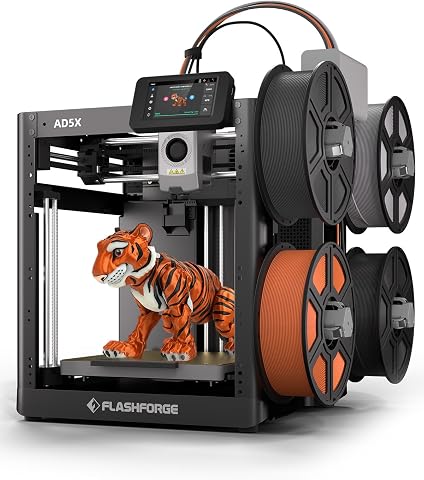 FLASHFORGE AD5X Multi-Color 3D Printer, CoreXY, 600mm/s High-Speed, Auto Leve…View on Amazon →
 - 6
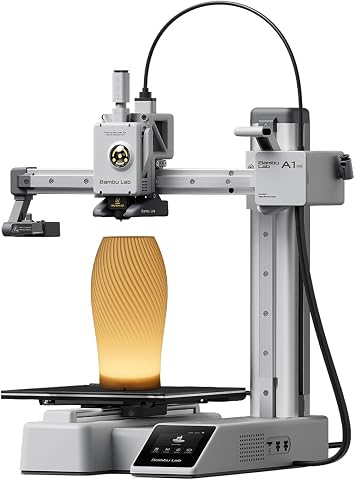 Bambu Lab A1 Mini 3D Printer + LED Lamp Kit, Beginner-Friendly, Quiet OperationView on Amazon →
 - 7
 FlashForge Adventurer 5M 3D Printer with Auto Leveling and High-Speed PrintingView on Amazon →
 - 8
 Creality Ender 3 V3 SE 3D Printer, 250mm/s Faster Print Speed, CR Touch Auto…View on Amazon →
 - 9
 3D Printer with Auto Leveling, 280°C Direct Extruder, CoreXY Metal Structure,…View on Amazon →
Impacts of 2026’s AI Breakthroughs on Society and Industry
These AI innovations are reshaping how industries operate and how individuals interact with technology. They promise increased productivity, safety, and personalized experiences but also raise concerns about ethical use, job displacement, and security risks. Understanding these developments helps stakeholders prepare for the societal shifts ahead and guides policy and regulation to maximize benefits while mitigating risks.
Key Developments Leading to 2026’s AI Advancements
Over the past few years, AI research has accelerated due to breakthroughs in neural network architectures, increased computational power, and large-scale data availability. Major tech firms and research institutions have invested heavily in AI, leading to rapid deployment of new models and applications. Notable milestones include the release of GPT-4, advancements in reinforcement learning, and early integration of AI in autonomous systems. These trends have culminated in the widespread adoption of AI across sectors in 2026, with ongoing research pushing the boundaries further.
“The developments in large language models and autonomous systems this year mark a new era of AI capabilities, with real-world applications now commonplace.”
— Dr. Maria Lopez, AI Research Lead at TechInnovate
Unconfirmed or Emerging Aspects of 2026’s AI Landscape
While these innovations are confirmed to be operational and impactful, the long-term societal effects, regulatory responses, and potential unintended consequences remain uncertain. The pace of AI development continues to accelerate, and some applications, especially in quantum AI and autonomous decision-making, are still in early stages or pilot phases. Additionally, ethical and security concerns are actively debated but not yet fully resolved.
Future Developments and Monitoring of AI Progress Post-2026
Researchers and industry leaders will focus on refining these AI systems, addressing ethical concerns, and developing regulations. Expect further integration of AI in daily life, more robust safety standards, and ongoing innovations in quantum computing-enhanced AI. Monitoring these trends will be crucial as society adapts to the new AI-driven landscape, with key milestones likely in 2027 and beyond.
Key Questions
Which AI innovation is considered the most impactful in 2026?
While all nine are significant, large language models and autonomous vehicle AI are often highlighted as the most transformative due to their broad applications and societal influence.
Are these AI advancements accessible to small businesses and consumers?
Many innovations, such as real-time translation and AI-powered educational platforms, are increasingly accessible, though some advanced systems like quantum AI remain in early or enterprise stages.
What are the main concerns associated with these AI innovations?
Key concerns include ethical use, data privacy, job displacement, security vulnerabilities, and the need for appropriate regulation to prevent misuse or unintended consequences.
Will AI innovations in 2026 lead to widespread job displacement?
While some automation may displace certain roles, many experts believe AI will also create new job opportunities and enhance productivity, though societal adaptation will be necessary.
What role will governments play in regulating these AI advances?
Governments are expected to develop policies and standards to ensure safe, ethical AI deployment, though the specifics and timeline of regulation are still evolving.
Source: ThorstenMeyerAI.com
Flea & tick season Picks
flea and tick prevention
As an affiliate, we earn on qualifying purchases.