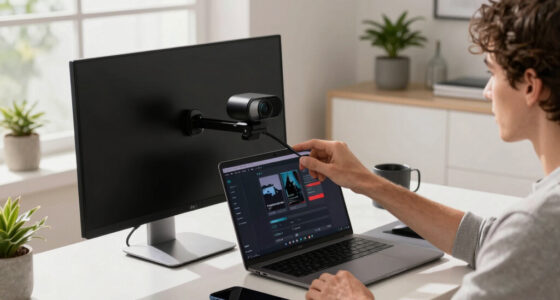
A well-designed remote manager scorecard gives you clear, real-time insights into your team’s performance and communication, helping you spot issues before they worsen. It tracks key metrics like participation, responsiveness, and engagement, revealing underlying problems such as burnout or unclear communication. By consistently using this tool, you foster accountability and transparency, enabling targeted improvements. Keep exploring to discover how to set up a scorecard that uncovers the true challenges your team faces.

Get business pricing on tech for your team
- Business-only prices and quantity discounts
- Tax-exempt purchasing
- Multiple users, one account, clear invoices
Key Takeaways
- A well-designed scorecard tracks engagement, communication, and performance metrics to identify underlying issues early.
- It highlights declines in participation or responsiveness indicating burnout or disengagement.
- Clear measurement of communication effectiveness uncovers messaging gaps and support deficiencies.
- Real-time feedback and well-being metrics help reveal underlying morale or recognition problems.
- Consistent use fosters accountability, transparency, and strategic insights to address root causes effectively.
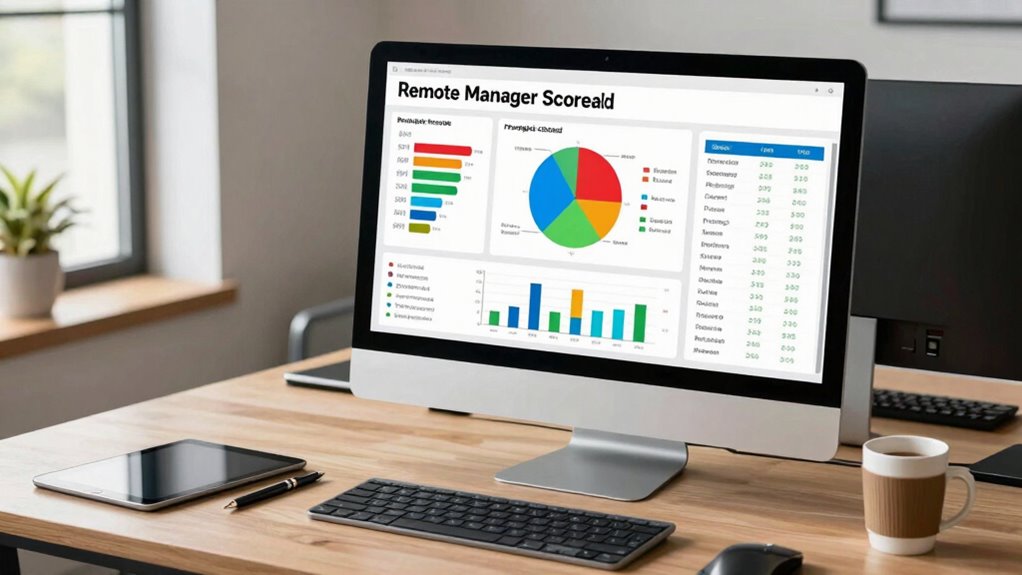
Managing a remote team can be challenging, but a well-designed scorecard makes it easier to track performance and guarantee accountability. When your team works from different locations, it’s easy for issues to go unnoticed or for communication to break down. That’s where a solid scorecard comes in, helping you identify real problems before they escalate. One of the key areas to focus on is employee engagement. If your team members aren’t actively engaged, productivity drops, and morale suffers. By including metrics that measure participation in meetings, responsiveness to tasks, and overall enthusiasm, you gain a clear picture of how connected your employees feel to their work and the organization. Incorporating performance metrics that reflect employee well-being can also provide insights into potential burnout or disengagement issues.
Communication strategies are equally essential. Remote work often hampers informal interactions that naturally foster collaboration and clarity. Your scorecard should track the effectiveness of your communication efforts—like response times, clarity of instructions, and the frequency of one-on-one check-ins. When these indicators fall below expectations, you’ll know it’s time to adjust your approach. Maybe you need to introduce more structured updates or utilize different collaboration tools to bridge gaps. This real-time feedback allows you to implement targeted changes, ensuring your team stays aligned and motivated. Additionally, understanding communication effectiveness helps you identify specific areas where messaging might be unclear or insufficient. Regularly reviewing these metrics can also help you optimize your overall remote work environment, making it more productive and engaging. Recognizing the importance of remote management strategies can further enhance your team’s cohesion and performance. Establishing clear performance expectations is also essential to maintain consistent standards across your remote team.
A thorough scorecard also sheds light on underlying issues that might not be immediately obvious. For instance, if you notice a decline in employee engagement scores, it could point to burnout, lack of recognition, or misaligned goals. Similarly, poor communication metrics might reveal that certain team members aren’t receiving enough support or that your messaging needs to be clearer. These insights help you address problems directly rather than just managing symptoms, saving you time and frustration.
When you use your scorecard consistently, you build a culture of accountability. Your team learns that their performance is monitored fairly and transparently, encouraging them to take ownership of their responsibilities. This transparency fosters trust and motivates employees to improve their engagement and communication efforts. Also, by setting clear, measurable goals on your scorecard, everyone understands what success looks like, which boosts overall performance.
Ultimately, the remote manager scorecard isn’t just about tracking numbers; it’s a strategic tool that reveals the core issues affecting your team’s success. By paying close attention to employee engagement and communication strategies, you can proactively address problems, foster a healthier remote work environment, and lead your team more effectively.
remote team performance scorecard
As an affiliate, we earn on qualifying purchases.
As an affiliate, we earn on qualifying purchases.
Frequently Asked Questions
How Is the Scorecard Customized for Different Industries?
You customize the scorecard for your industry by integrating specific industry benchmarks, which reflect the unique performance standards you need to meet. Using tailored customization strategies, you can adjust metrics and KPIs to align with your sector’s priorities. This approach helps you identify real problems more effectively, ensuring your remote management efforts are relevant and impactful. By focusing on industry-specific data, you make smarter decisions that drive better results.
What Are Common Challenges in Implementing the Scorecard?
You face common challenges like ensuring leadership alignment and maintaining data accuracy. Aligning leaders around the scorecard’s purpose can feel like herding cats, while inaccurate data risks misleading decisions. You must foster open communication, set clear expectations, and establish reliable data collection processes. Overcoming these hurdles requires persistent effort and collaboration, but doing so helps you release honest insights, improve remote management, and drive meaningful organizational growth.
How Often Should the Scorecard Be Updated?
You should update your scorecard regularly, ideally weekly or bi-weekly, to keep performance metrics current. Frequent updates allow you to identify issues quickly and strengthen feedback loops, ensuring continuous improvement. Consistent review helps you spot trends and adjust strategies promptly. If your team’s workload fluctuates, adapt the update frequency accordingly, but maintaining a steady rhythm keeps everyone aligned and focused on key objectives.
Can Remote Teams Influence Their Own Scores?
Yes, remote teams can influence their own scores by taking ownership of their performance metrics. When you foster team autonomy, members feel empowered to identify areas for improvement and implement solutions proactively. By actively engaging with performance metrics, your team can adjust strategies, improve collaboration, and boost overall scores. This sense of responsibility encourages accountability and ongoing growth, ultimately leading to better results and a stronger, more motivated remote team.
What Tools Integrate With the Scorecard for Real-Time Tracking?
You can integrate tools like Slack, Trello, or Jira with the scorecard for real-time tracking. These tools enable automation integration, so updates automatically reflect on your scorecard. Data visualization features help you quickly interpret team performance metrics, making it easier to identify issues at a glance. By connecting these tools, you streamline your workflow, stay informed, and proactively address problems, ensuring your remote team stays aligned and productive.
employee engagement tracking tools
As an affiliate, we earn on qualifying purchases.
As an affiliate, we earn on qualifying purchases.
Conclusion
So, here’s the irony: your remote manager scorecard might perfectly highlight every flaw, yet you’ll still keep pretending everything’s fine. You’ll keep pushing through, ignoring the real problems hiding behind the metrics. But someday, that façade will crack, revealing the truth you’ve refused to see. Maybe then, you’ll realize that uncovering the issues is the first step to fixing them—and that ignoring them only makes things worse. Don’t wait too long; the truth’s hiding in plain sight.
remote communication effectiveness tools
As an affiliate, we earn on qualifying purchases.
As an affiliate, we earn on qualifying purchases.
As an affiliate, we earn on qualifying purchases.
Halloween Picks
halloween
As an affiliate, we earn on qualifying purchases.