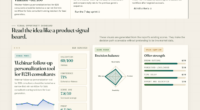
📊 Full opportunity report: The Nordics: Protect the Worker, Not the Job on ThorstenMeyerAI.com — validation score, market gap, and execution plan.
TL;DR
Nordic countries adopt a model that emphasizes protecting workers rather than jobs, enabling smoother transitions in automation. This approach reduces resistance to change and supports economic adaptability.
Nordic countries are implementing policies that prioritize protecting workers over preserving specific jobs, a strategy that supports smoother transitions amid increasing automation and technological change.
The core of the Nordic model, known as ‘flexicurity,’ combines flexible hiring and firing laws with generous unemployment benefits and active labor market policies. This approach treats jobs as temporary and workers as permanent, enabling rapid adaptation to economic shifts. Denmark exemplifies this with its ‘golden triangle’—combining flexibility, income security, and active labor policies—allowing workers to transition into new roles without destitution.
Unlike models that emphasize job preservation at all costs, the Nordic approach accepts that some jobs may be temporary or disappear, focusing instead on safeguarding the individual worker. This reduces resistance to automation and technological change, as workers are less fearful of losing their livelihoods. Countries like Norway have also established sovereign wealth funds, creating collective ownership of capital that further supports societal resilience during economic shifts.
Experts note that this model fosters a pro-technology stance among Nordic unions, which tend to welcome automation rather than oppose it, because the social safety net makes the transition survivable for workers.
Protect the Worker, Not the Job
Where Germany saves the job, the Nordics let the job go and catch the worker. The counterintuitive result: unions that welcome automation — because the person is protected even when the role isn’t.
Independent commentary, produced with AI assistance under human editorial oversight. The views are the author’s own and may change. This is analysis, not policy, economic, investment, or legal advice. Descriptions of flexicurity, Nordic active-labor spending, Finland’s basic-income experiment, and Norway’s sovereign wealth fund reflect publicly reported information as of mid-2026 and may change. This phase maps differing approaches and endorses none; contested questions are presented with competing views, not a verdict. Country and program names are referenced for analysis and imply no affiliation.
Implications of Worker-Centric Policies for Innovation
This approach matters because it offers a blueprint for managing automation and economic disruption without widespread resistance. By focusing on protecting individuals rather than jobs, Nordic countries create a social environment conducive to innovation and adaptation. This can serve as a model for other regions seeking to balance technological progress with social stability.

All Employees are Marketers: Real-life, Proven, Employee-driven Strategies to Get More Customers… Get More Referrals… Get More Revenues… and Get More Profits!
As an affiliate, we earn on qualifying purchases.
As an affiliate, we earn on qualifying purchases.
Historical and Policy Foundations of the Nordic Model
The Nordic ‘flexicurity’ model originated in Denmark during the 1990s, as a deliberate policy choice to combine labor market flexibility with social security. It is characterized by weak employment protections, high unemployment benefits, and substantial investment in active labor market policies, including retraining and job-search support. Norway’s sovereign wealth fund, accumulated from oil revenues, exemplifies collective capital ownership that cushions the economy during downturns. These policies contrast with other European models that prioritize job preservation, such as Germany’s Kurzarbeit system.
Recent discussions focus on how these policies facilitate adaptation to automation, with Nordic countries generally more receptive to technological change due to their social safety nets and active labor policies.
“The Nordic model’s core strength is its focus on safeguarding the individual worker, which creates a societal environment where automation is less feared and more embraced.”
— Thorsten Meyer, expert on Nordic policies

Child Support Enforcement Program
As an affiliate, we earn on qualifying purchases.
As an affiliate, we earn on qualifying purchases.
Unresolved Questions About Model Scalability
It remains unclear whether the Nordic approach can be effectively scaled or adapted to larger, more diverse economies with different social and political contexts. Questions also persist about the long-term sustainability of sovereign wealth funds and whether similar policies can be implemented elsewhere without cultural shifts.

Active Labor Market Policies in Europe: Performance and Perspectives
As an affiliate, we earn on qualifying purchases.
As an affiliate, we earn on qualifying purchases.
Future Policy Developments and Global Adoption
Nordic countries are likely to continue refining their active labor policies and social safety nets, especially as automation accelerates. International interest in their model may grow, prompting debates on how to adapt its principles to other regions. Monitoring policy experiments and economic outcomes will be crucial in assessing its broader applicability.
flexicurity training programs
As an affiliate, we earn on qualifying purchases.
As an affiliate, we earn on qualifying purchases.
Key Questions
How does the Nordic model differ from other European labor policies?
The Nordic model combines weak employment protection laws with high unemployment benefits and active labor market policies, focusing on individual worker protection rather than job preservation. Other models, like Germany’s Kurzarbeit, emphasize freezing jobs during downturns.
Can this model handle large-scale automation and AI-driven changes?
Proponents argue that its emphasis on worker resilience and active retraining makes it well-suited to manage automation, but questions remain about its scalability and long-term fiscal sustainability.
What role do sovereign wealth funds play in this approach?
In Norway, the sovereign wealth fund acts as a collective ownership of capital, providing economic stability and enabling the country to adapt to shifts from labor to capital income. It is a key part of their resilience strategy.
Is this approach applicable outside Nordic countries?
While some principles are transferable, cultural, political, and economic differences may limit direct adoption. The model’s success depends on specific institutional and social contexts.
Source: ThorstenMeyerAI.com